In-Depth Analysis of the New Fraud Scheme Involving "Mistaken Transfers," Turning Innocent Individuals into Unwitting Mules. The Mechanics of the Scheme, Risks for Investors, and International Practices in Combating Money Laundering.
A new fraudulent scheme is spreading in Russia, where "mistaken" money transfers are being used as a tool for laundering funds. What may seem like a random transfer to your account at first glance could be part of a larger financial scam. One such "gift" has already landed a single mother from Astrakhan in court for fraud.
How the "Mistaken Transfer" Scheme Works
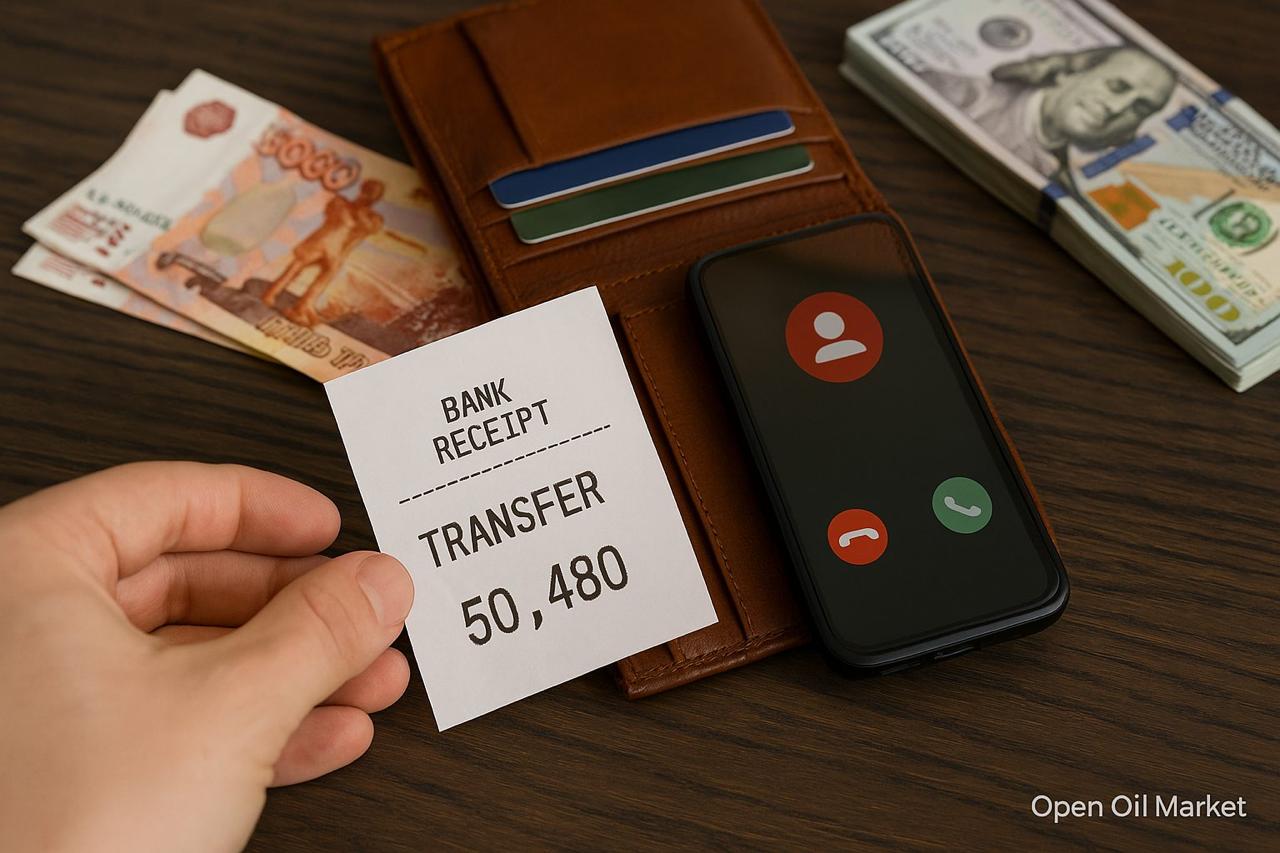
The mechanics of this scheme are straightforward: fraudsters suddenly transfer a small sum of money, often a few thousand rubles, to a random stranger's account. Following this, a call or message arrives: a stranger with a sob story pleads for the return of the money, claiming that it was mistakenly sent to your account. Usually, the reason provided is an exaggerated or touching legend (for instance, the money was meant for a sick relative, but the sender mixed up the card number). By returning what are considered "foreign" funds, citizens inadvertently become embroiled in a series of suspicious transactions.
- Step 1: The illegally obtained money (often from online casinos, fraudulent schemes, or illegal crypto exchanges) is broken down into smaller amounts and transferred to the accounts of random individuals.
- Step 2: Upon receiving the transfer, the victim "bites" on the fabricated story and, at the request of the fraudster, sends the money to the criminals' designated accounts (not back to where it originated!).
- Step 3: The money arrives at a criminal-controlled account, now regarded as "clean" funds. Tracking them becomes more challenging, and the recipient of the transfer effectively becomes an accomplice in the laundering process.
Example: A "Mistaken" Transfer of 40,000 and a Case Involving 1.5 Million
A recent case in Astrakhan showcased how dangerous this scheme can be. A single mother of several children received 40,000 rubles on her card from an unknown sender. Soon after, she received a call from a man who claimed he had mistakenly sent the money instead of to his sick grandmother. Believing the story, she returned the 40,000 to the specified details. Shortly thereafter, the bank blocked her account, and the police summoned her for questioning. This seemingly innocent situation turned out to be part of a large fraudulent case: the 40,000 was one transfer in a chain totaling 1.5 million rubles. Now she has been named as a subject in a fraud case and as an accomplice to a criminal group. Such an involvement could result in a penalty of up to six years in prison.
Criminals' Objective: Legalization of "Dirty" Money
Why are criminal groups willing to "share" their money with random individuals? The goal is to create a façade of legitimate transactions and establish a pseudo-legal connection between the victim and themselves. The return of the "mistaken" transfer records a financial link between the recipient and the criminals. These pseudo-one-time operations facilitate the laundering of illegally obtained funds without raising suspicions within the banking monitoring systems. Moreover, the legally innocent-looking reverse transfer lays the groundwork for subsequent transactions. No matter how complex the routes are structured, involving third-party accounts as intermediaries is unavoidable.
Sympathy and Fear: A Web of Manipulation
The "mistaken transfer" scheme does not operate through cyberattacks but rather manipulates human emotions. In the vast majority of cases, recipients of the money strive to return the foreign funds, genuinely believing in the sender's described concept of "justice." This psychological trait is exploited by the fraudsters. When a sympathetic request fails to have the desired effect, they switch to another tactic—playing the role of law enforcement, claiming that the funds received are illegal (for instance, meant to finance terrorism). Under the threat of criminal prosecution, the fake law enforcement demands that a significant sum be transferred to a "safe" account. In this way, intimidation and blackmail come into play, making individuals panic and comply with the fraudsters.
Legal Risks: From Account Blocking to Criminal Charges
Even if the victim acted without malicious intent, the consequences can be devastating. Russian legislation views such assistance as complicity in fraud (Article 159 of the Criminal Code) or involvement in money laundering (Articles 174 and 174.1). Proving direct intent is challenging, which brings the concept of indirect intent into play: an individual "should have foreseen" what was happening. Objective signs of complicity include: quick transfer of received funds, failing to report a suspicious transfer to the bank, and deleting communications with the requester.
In addition to the criminal case itself, financial repercussions may ensue. According to Law 115-FZ, a bank is required to block any account that exhibits the "receive — instant send" scheme. This preventive blocking means that regardless of any subsequent penalties, you may lose access to banking services for a long time.
The Scale of the Problem: Increase in Cases and Typical Victims
As of 2025, there are already several hundred such cases. Most subjects are ordinary people: pensioners, mothers on maternity leave, students who simply felt sympathy for the requester. They now find themselves under investigation, with frozen accounts, and a real prospect of imprisonment.
How to Protect Yourself: Advice from Banks and Lawyers
Experts agree: in the case of unexpected money being credited to your card, do not return it directly at the request of the caller. No matter how much you want to help the mistaken sender, it is better to direct them to their bank to reclaim the mistakenly transferred funds there. Upon receiving a strange transfer, the account holder should immediately contact their bank. The best option is to visit the branch personally and submit a statement about the external payment of unknown origin. If that is not possible, call the bank's support service or hotline, state the date, amount, and sender of the transfer, and document the fact of the inquiry. This will help eliminate any suspicions of passive involvement in the laundering scheme.
- Do not return transferred funds directly to a stranger—you cannot be sure of their legal origin.
- Do not spend unexpected receipts until the nature of them is clarified.
- Immediately call your bank and document the inquiry about receiving money of unknown origin.
- In the case of pressure or threats from the "sender," immediately contact the police and provide call recordings or text communications.
Global Perspective: Money Mules and the Fight Against Money Laundering
Schemes where innocent citizens become unwitting accomplices are widespread globally. In international practice, these intermediaries are referred to as "money mules." According to estimates from European banks, hundreds of millions of dollars are laundered annually through mule networks. The FBI, Europol, and other bodies worldwide warn: even inadvertent complicity in the movement of illegal money risks criminal charges and financial sanctions. For investors and all participants in the financial market, this highlights the importance of stringent adherence to AML procedures and vigilance when transferring money. New money laundering schemes in Russia again underscore the necessity for every participant in the financial system to approach any unexpected money transfers with heightened caution.