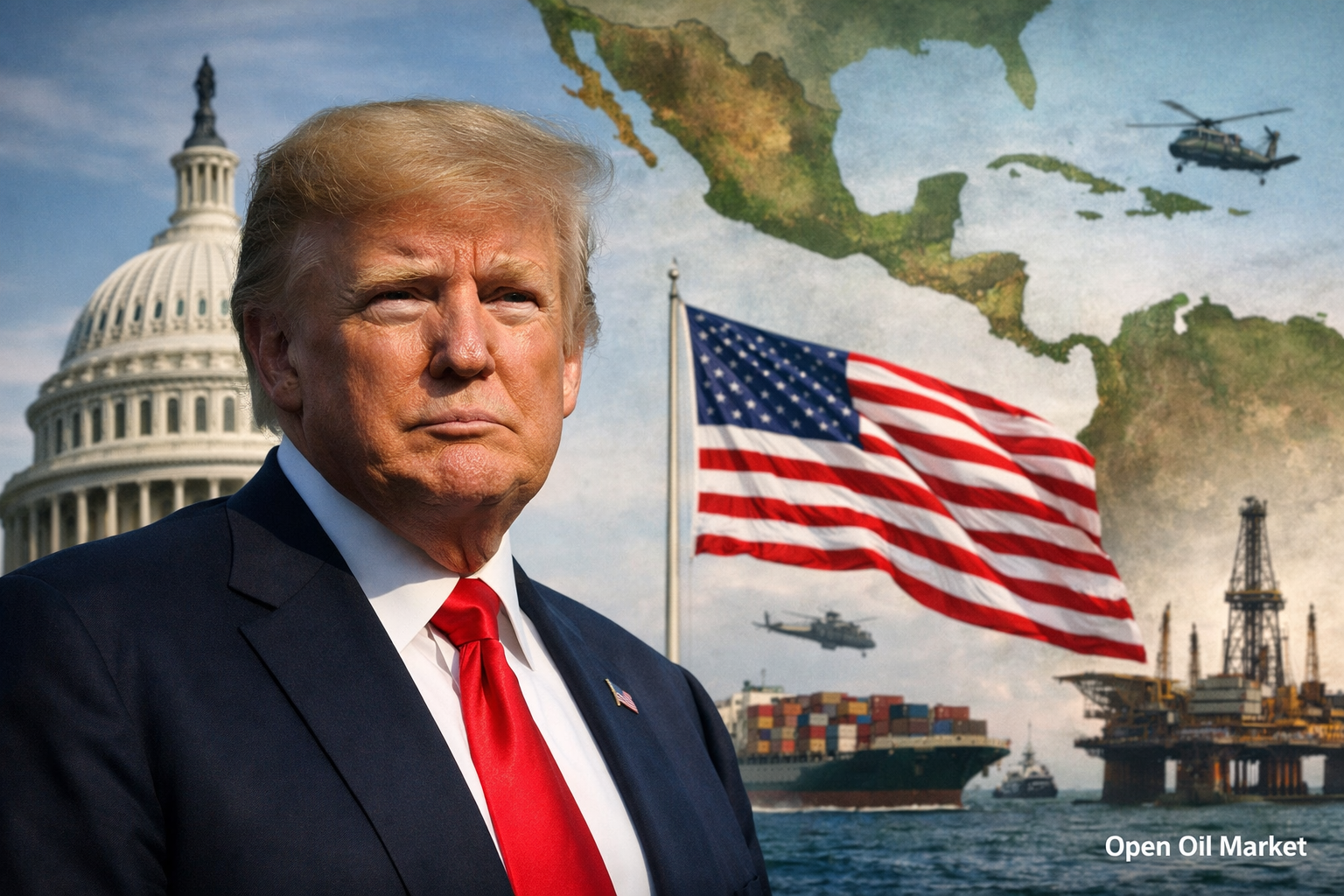
Trump Revives the Monroe Doctrine: Implications for Investors and Markets in the Western Hemisphere
The term "Monroe Doctrine," once considered a historical relic, is re-emerging in the political lexicon of the United States. In 2025, Washington's official strategic rhetoric designates the Western Hemisphere as a priority zone of interest, focusing on security, migration, drug trafficking, control of maritime routes, and competition with external players for infrastructure, resources, and supply chains. For global investors, this is not merely an academic debate about 19th-century diplomacy, but a practical factor in reassessing country risks, scenarios involving sanctions, trade conditions, and project viability in Latin America and the Caribbean.
The Monroe Doctrine and Trump's "New Version": History, Logic, and Investment Consequences
1) Why the Monroe Doctrine is Back on the Agenda
The return to the Monroe Doctrine essentially marks a return to the logic of "spheres of influence," albeit in a modern framework. Central to this discussion are four interlinked themes:
- Geopolitics of the Western Hemisphere: U.S. competition with external power centers for ports, telecom infrastructure, energy, and logistics.
- Nearshoring and Supply Chains: relocating production closer to the U.S. market, increasing the importance of Mexico, Central America, the Caribbean, and the northern part of South America.
- Security: migration flows, drug trafficking, maritime routes, and the fight against transnational criminal networks.
- Sanctions and Access to Capital: heightened likelihood of "targeted" restrictions and a reassessment of access to dollar liquidity and U.S. markets.
For investors, this implies that the risk premium across various jurisdictions may change more rapidly than macroeconomic indicators, and political decisions could exert a stronger influence on funding costs and currency trajectories.
2) The Origins of 1823: What Was Actually Declared
The classic Monroe Doctrine was articulated in President James Monroe's message to Congress on December 2, 1823. Within its original logic, it was a signal to European powers: further colonization and forceful intervention in the affairs of the states in the Americas would be perceived as a threat to U.S. interests and security. The United States, while declaring its unwillingness to interfere in European conflicts, recognized existing European colonies in the Americas without claiming a revision of them "in the moment."
It is crucial to understand that the Monroe Doctrine began as a warning against external expansion in the Western Hemisphere, not as a formal "license" for U.S. intervention in neighboring countries. However, subsequent history has demonstrated how political formulas evolve alongside shifts in the balance of power.
3) Three Principles of the Monroe Doctrine: Briefly and to the Point
In practical terms, the Monroe Doctrine boils down to three core principles of U.S. foreign policy in the Western Hemisphere:
- Division of Spheres of Influence: Europe and the Americas are regarded as distinct political spaces.
- Non-Colonization: new colonies established by European powers in the Americas are unacceptable.
- Non-Intervention: external powers must not intervene in the affairs of independent states in the Americas.
For markets, the key takeaway is that if these principles are "activated" in contemporary U.S. politics, the likelihood of protectionist measures, control of strategic assets, and increased oversight of transactions in infrastructure, energy, extractives, and communications will rise.
4) Evolution: Roosevelt's Corollary and the Shift to "Police" Logic
A significant turning point came with the early 20th-century interpretation often referred to as Roosevelt's Corollary (1904). Whereas the Monroe Doctrine primarily served as a "barrier" against European colonization, the corollary introduced the thesis that the U.S. had the right to intervene as a "last resort" to prevent external interference and "chronic instability," which included debt crises and threats of forceful debt collection by European creditors.
From an investment perspective, this creates an important historical parallel: issues of debt, default, creditors, and political pressure are re-emerging in the discussion about regional stability—now in the realities of the 21st century, where sovereign bonds are not the only concern but also concessions, offtake contracts, project financing, and port control.
5) The Cold War and 1962: The Doctrine as a "Red Line"
During the Cold War, the Monroe Doctrine was used as a political argument to limit the military presence of external powers in the Western Hemisphere. The symbolic peak was the Cuban Missile Crisis in 1962 when the placement of Soviet missiles in Cuba was perceived by the U.S. as an unacceptable shift in the balance of power at its borders. This episode cemented in American political culture the idea that the emergence of external military infrastructure in the region could provoke a sharp reaction.
Today, direct analogies require caution; however, the very logic of "preventing strategic opportunities for external powers" is once again becoming part of the public discourse. For investors, this underscores the importance of analyzing not only macroeconomics but also the ownership structure of assets, sources of equipment, creditors, and technological dependencies.
6) After the 1990s: Globalization Followed by a Return to Geo-Economics
From the 1990s to the 2010s, the focus of the global economy shifted toward globalization, and countries in Latin America actively diversified their external ties and financing. However, in the 2020s, geo-economics has gained strength: trade wars, sanctions, technology control, and "friendly" supply chains (friendshoring) have become the new norm.
In this context, the Monroe Doctrine in its modern interpretation is less about the 19th century and more about managing access to critically important assets (ports, canals, energy networks, LNG logistics, data centers, communication cables, critical mineral deposits) and the political consolidation of U.S. priorities in the Western Hemisphere.
7) The "Trump Corollary": What the New Version Implies
In the public discourse of late 2025, the term "Trump Corollary" has emerged in reference to the Monroe Doctrine as an effort to formalize a course aimed at strengthening American influence in the Western Hemisphere and limiting the ability of "external" competitors to control strategic assets or to establish threatening capabilities in the region.
Practically speaking, this course is usually broken down into the following tools:
- Deals and Pressure via Trade Policy: conditions for market access to the U.S., tariff and non-tariff measures, and reassessment of preference regimes.
- Sanction Architecture: targeted restrictions against individuals, companies, specific sectors, and financial channels.
- Security and Law Enforcement Agenda: bolstering measures against drug trafficking and transnational networks, controlling maritime routes.
- Supply Chain Reconfigurations: stimulating nearshoring and projects that reduce dependency on external suppliers.
For capital markets, this could translate to more frequent "jumps" in risk based on news, an increasing role of political signals, and higher volatility in specific countries and sectors.
8) What Changes for Investments in Latin America and the Caribbean
The key effect of the "reactivation" of the Monroe Doctrine is a rise in regional heterogeneity in the eyes of global capital. The market will more clearly differentiate countries based on criteria such as political compatibility, funding sources, and the structure of strategic projects.
Practical channels of influence on investments include:
- Infrastructure and Logistics: ports, container terminals, railways, digital infrastructure—subject to stricter compliance and scrutiny of beneficiaries.
- Energy: oil, gas, electricity, and fuel chains—higher risk of regulatory changes and political conditions for projects.
- Mining and Critical Minerals: lithium, copper, nickel, and rare earth elements—heightened interest and competition, potentially stricter localization and control conditions.
- Sovereign Debt: increased sensitivity to sanction risks, relationships with the U.S., and creditor composition.
Conversely, a possible benefit for countries integrated into a nearshoring strategy could be an influx of direct investments, an increase in industrial employment, an expansion of export niches, and a strengthening of certain currencies and local capital markets.
9) Investor Checklist: How to Factor the Monroe Doctrine into Strategy
If the Monroe Doctrine is returning to practical U.S. foreign policy, it is important for investors to translate this into measurable parameters for risk management:
- Exposure Map: portfolio allocation by countries in the Western Hemisphere (sovereign risk, banks, infrastructure, energy, telecom).
- Sanctions Screening: beneficiaries, creditors, equipment suppliers, counterparties in offtake and EPC contracts.
- Legal Resilience: arbitration clauses, jurisdictions, covenants, step-in opportunities, and operator changes.
- Political Triggers: elections, migration crises, spikes in violence, major deals with external players related to ports/telecom/energy.
- Currency Contour: hedging, stress tests for devaluation, and capital movement restrictions.
Additionally, a scenario approach should be considered:
- Base Scenario: strengthening political control without large-scale escalation; increased compliance and selective sanctions.
- Tough Scenario: stringent restrictions against specific regimes/sectors; deterioration of liquidity and increased risk premium.
- Positive Scenario: accelerated nearshoring, increased investments in industry and infrastructure "for the U.S. market."
10) Conclusion: The Monroe Doctrine as a Factor in Risk Pricing
The Monroe Doctrine is not merely a historical term; it serves as a convenient framework through which the U.S. articulates the priority of the Western Hemisphere and limits the influence of external competitors. When coupled with nearshoring, sanction policies, and the scramble for strategic assets, it becomes a factor of "risk pricing" for Latin America and the Caribbean.
For global investors, the key recommendation is simple: focus not only on inflation, interest rates, and budgets but also on the geopolitical compatibility of projects, the ownership structure of infrastructure, and potential foreign policy triggers. In an environment where U.S. foreign policy increasingly influences capital costs, the Monroe Doctrine becomes an applied element of investment analysis—on par with credit quality and balance of payments.