Cryptocurrency News for March 9, 2026: Global Trends in the Digital Asset Market, Stablecoin Regulation, Institutional Demand, and Analysis of Key Cryptocurrencies
The global cryptocurrency market enters a new week with heightened sensitivity to macroeconomic factors, regulation, and institutional demand. For investors, this means the focus is gradually shifting from simply tracking Bitcoin and altcoin movements to a more intricate picture: the decisions being made by regulators, the behaviour of stablecoin issuers, the sustainability of demand from funds, and the liquidity dynamics of major digital assets.
As of March 9, 2026, the central theme for the global crypto market is not only volatility but also the struggle for the rules of the game. This is why today’s cryptocurrency news is becoming increasingly dependent on politics, oversight, exchange infrastructure operations, and the industry's ability to integrate into the global financial system. For investors, this is a key moment: the digital assets market is becoming less of a niche segment and increasingly part of the broader financial landscape.
Main Story of the Day: The Crypto Market Awaits Clarity on Regulation
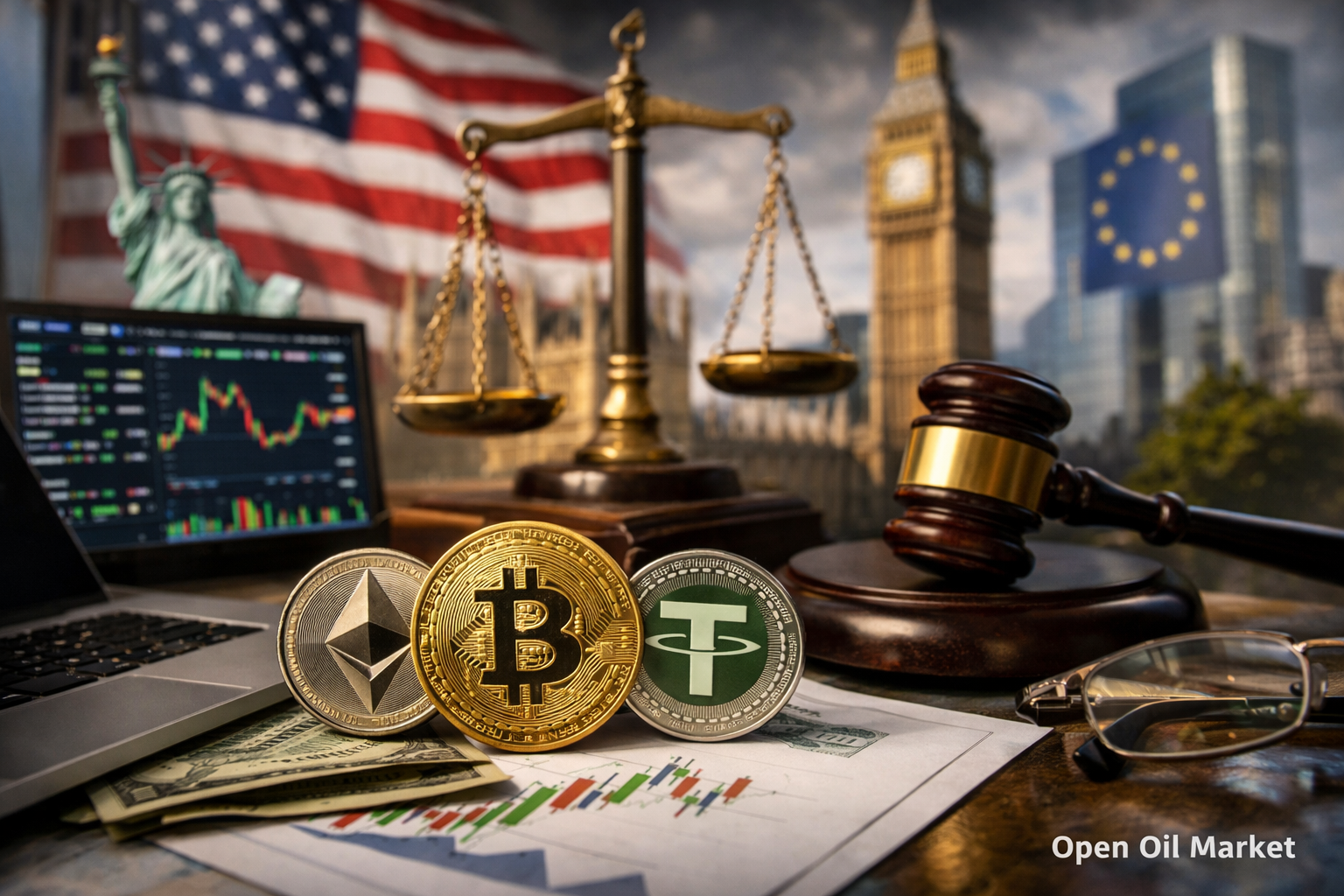
One of the most significant factors for the cryptocurrency market at the start of the week is the ongoing discussion surrounding the American model of digital asset regulation. For market participants, this is not just a matter of legal technicalities but also the future structure of the industry. The delineation of powers between regulators will have profound implications for the prospects of exchanges, token issuers, custodians, DeFi projects, and stablecoins.
Investors are closely monitoring whether the market will gain a more predictable regulatory environment. If the regulatory framework is established, it could bolster the positions of institutional players, enhance market transparency, and support long-term demand for the largest cryptocurrencies. However, if the process drags on, the digital assets market risks remaining under ambiguous rules, which traditionally heightens volatility.
Stablecoins Become a Systemic Topic for the Global Market
By 2026, stablecoins have evolved from being merely a technical tool within the crypto ecosystem to a substantive topic for central banks, commercial banks, payment infrastructure, and legislators. Stablecoins are increasingly viewed as a bridge between traditional finance and digital assets.
This is why the market is now assessing not just the capitalisation of the largest tokens but also how quickly stablecoins begin to influence:
- Liquidity movements within cryptocurrency exchanges;
- International settlements and cross-border transfers;
- Competition with bank deposits;
- New models of tokenised financial products.
For investors, this is an important signal. The growing role of stablecoins makes the cryptocurrency market more mature, but it simultaneously intensifies regulatory pressure. The closer digital dollars and other stable tokens come to the actual financial system, the higher the probability of new requirements regarding reserves, reporting, audits, and AML controls.
Compliance and Transaction Monitoring Take Centre Stage
A distinct line in cryptocurrency news is the strong emphasis on compliance. For the global market, this is fundamentally important: the year 2026 is shaping a new standard in which the crypto industry must not only demonstrate technological innovation but also prove its ability to operate within the bounds of financial oversight.
This changes perceptions of the sector in several ways:
- Large institutional investors have more reasons to enter the digital assets market.
- Projects with weak transparency appear increasingly vulnerable.
- Stablecoins, exchanges, and payment services are increasingly aligning with traditional financial institutions' requirements.
For the market, this presents a dual factor. On one hand, stringent controls put pressure on some transactions and reduce industry flexibility. On the other hand, the increase in transparency standards can strengthen global investors' trust in the largest cryptocurrencies and infrastructure players.
Bitcoin and Ethereum Remain the Core of Global Demand
At the start of the week, Bitcoin and Ethereum hold their status as key benchmarks for the entire crypto market. Bitcoin continues to be perceived as a primary indicator of risk appetite within digital assets, while Ethereum is seen as the essential infrastructure platform for smart contracts, DeFi, tokenization, and on-chain economics.
For investors, it is important to note that the market increasingly evaluates these assets based on various logics:
- Bitcoin - as a quasi-macro asset sensitive to capital flows, ETF interest, and global risk appetite.
- Ethereum - as an infrastructure asset dependent not only on price but also on network activity, application ecosystem, and technological development.
Consequently, any cryptocurrencies news regarding regulation, ETF movements, institutional purchases, and the tokenization of financial assets primarily reflects on the perceptions of these two market leaders.
Altcoins Compete Again for Investor Attention
After periods of Bitcoin dominance, the market is reallocating attention among the largest altcoins. However, unlike previous cycles, investors are now assessing not just speculative potential but the quality of the ecosystem, applied demand, token models, and community sustainability.
The most notable areas of interest in the global market include:
Platform Blockchains
- Solana
- BNB
- Cardano
- TRON
Payment and Settlement Stories
- XRP
- stablecoins USDT and USDC
High-Risk Market Beta Assets
- Dogecoin
- some large speculative tokens from the second tier
This signifies that the cryptocurrency market remains multi-layered. Investors now require more than just a broad understanding of market direction; they need to differentiate assets into infrastructural, settlement, speculative, and institutionally significant categories.
Top 10 Most Popular Cryptocurrencies as of March 9, 2026
From the perspective of global investor attention, liquidity, and market capitalisation, the following digital assets remain at the centre:
- Bitcoin (BTC)
- Ethereum (ETH)
- Tether (USDT)
- XRP (XRP)
- Solana (SOL)
- BNB (BNB)
- Dogecoin (DOGE)
- USD Coin (USDC)
- Cardano (ADA)
- TRON (TRX)
It is important to note for publication purposes: the popularity of cryptocurrencies today is defined not only by capitalisation but also by market depth, brand recognizability, role in payment infrastructure, support from exchanges, and involvement from institutional participants.
What the Current Situation Means for Investors
Cryptocurrency news for March 9, 2026, provides investors with several practical conclusions.
- First: the market remains global and increasingly relies on decisions from the USA, Europe, and major financial centres.
- Second: stablecoins are becoming not an auxiliary element but one of the centres of the entire digital economy.
- Third: institutional interest supports the market but does not eliminate high sensitivity to news flow.
- Fourth: there is a growing divide in cryptocurrencies between quality infrastructure assets and weaker speculative stories.
This means that in the current phase of the market, a passive strategy merely following general growth appears less effective than selectively allocating capital between industry leaders, infrastructure projects, and high-liquidity assets.
What to Watch for in the Coming Days
At the beginning of the new week, participants in the digital assets market should be attentive to several indicators:
- new signals from the USA regarding the regulation of cryptocurrencies and stablecoins;
- trends in institutional demand for the largest digital assets;
- news regarding the tokenization of financial instruments;
- liquidity behaviour in Bitcoin, Ethereum, and major altcoins;
- changes in global risk sentiment against the backdrop of macroeconomics and geopolitics.
If this agenda remains constructive, the cryptocurrency market could establish a basis for a more stable restoration of trust. Conversely, if regulatory disputes intensify and the external environment deteriorates, investors may shift their focus back to protective positioning within the crypto market.
Cryptocurrencies as of March 9, 2026, are no longer just a story about the rise or fall of individual coins. This is a market where technologies, politics, payment infrastructure, institutional money, and global competition for financial models intersect. Therefore, the main topic of the day—regulation and stablecoins—appears to be the most crucial for the global audience of investors.
For professional market participants, the current week could be indicative: it will demonstrate how ready the crypto industry is to move forward as a mature segment of global finance and not just a territory of high volatility. In such an environment, key advantages are held not by those chasing any movement but by those who can distinguish short-term noise from fundamental changes in the architecture of the digital market.