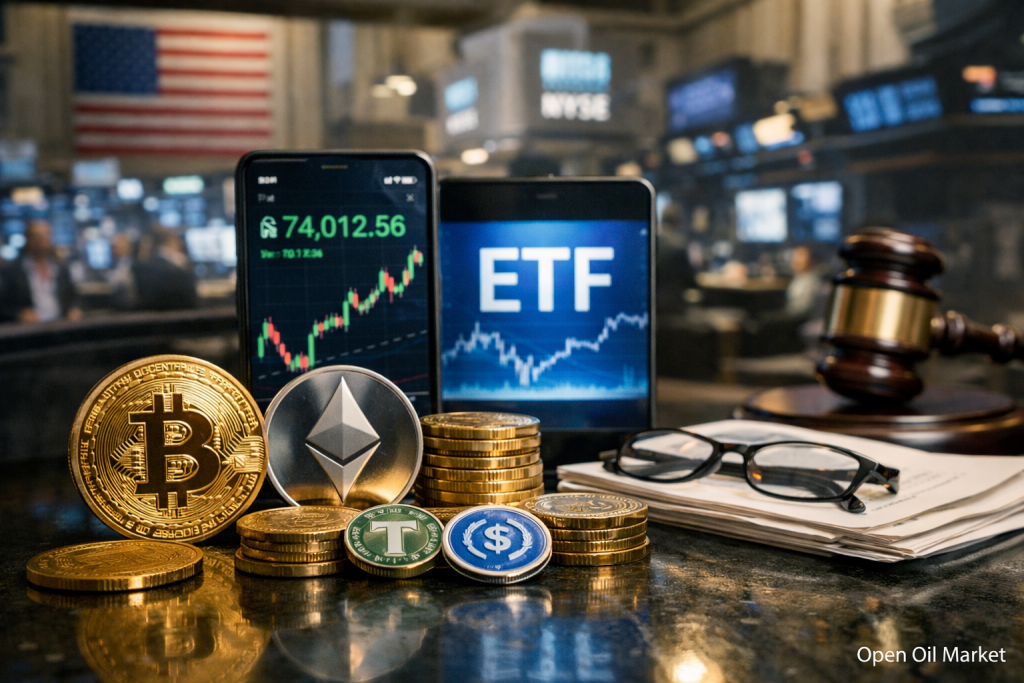
Current Cryptocurrency News as of December 17, 2025: Bitcoin and Ethereum Dynamics, Digital Asset Market State, Institutional Investors, and a Review of the Top 10 Most Popular Cryptocurrencies Worldwide.
The cryptocurrency market continues to demonstrate a downturn in mid-December amid global uncertainty. Bitcoin (BTC) has dropped to around $85,000, reaching its lowest values in the last two weeks, while Ethereum (ETH) is once again trading below $3,000. Investors are exercising caution due to macroeconomic risks and declining liquidity as the year comes to a close. Nevertheless, major institutional players maintain optimism: leading companies are increasing their investments in digital assets and expanding their blockchain operations, indicating confidence in the long-term prospects of the cryptocurrency market.
Cryptocurrency Market: December Decline
The entire digital asset market has declined along with traditional stock markets. The total cryptocurrency market capitalization is currently around $3 trillion, approximately 5% lower than the previous day's level. Risky assets are under pressure due to ongoing macroeconomic uncertainty: investors are concerned about high interest rates and potential economic slowdown in 2026. An additional factor has been the correction in the technology sector: the sell-off of shares of several artificial intelligence companies has diminished risk appetite and negatively affected digital assets. Furthermore, liquidity in the market has decreased towards the end of the year, exacerbating price volatility for crypto assets.
Bitcoin: A Volatile Year and Current Levels
Bitcoin remains the barometer of the entire cryptocurrency market. In 2025, the first cryptocurrency experienced extremely volatile dynamics: after a rapid rally and setting a historical peak (over $125,000 in early October), a significant plunge followed. Currently, BTC is trading around $85,000, effectively returning to early-year levels. There is thus a risk of ending the year with a negative result – the first time since 2022.
Bitcoin's volatility is largely attributed to external factors. The correlation between BTC and stock indices has noticeably increased due to the influx of traditional investors into the market, meaning that turmoil in the stock market (such as the correction of overvalued tech stocks) directly impacts cryptocurrency. Currently, signs of increased caution are observable in the Bitcoin market: margin trading volumes and activity on the BTC blockchain have declined to annual lows.
Nevertheless, long-term holders continue to accumulate bitcoins, anticipating future growth in the asset's value. Several analysts also remain optimistic; for instance, the investment firm Grayscale suggests that Bitcoin could reach a new price peak as early as the first half of 2026, based on historical cycles (following the last halving) and expected easing of macroeconomic conditions.
Ethereum and Altcoins: Mixed Dynamics
The second-largest cryptocurrency by market capitalization, Ethereum, generally mirrors the market dynamics. Currently, Ether (ETH) is trading around $3,000, having risen to $4,000 during the autumn surge. Over the past few weeks, the value of ETH has declined by approximately 10%, reflecting the overall correction of the sector.
Most major altcoins are also under pressure. For instance, Ripple (XRP) briefly dropped below the psychological mark of $2 this week amid the broader sell-off. Binance Coin (BNB), Cardano (ADA), and Solana (SOL) have lost some value in December following Bitcoin's lead. However, certain projects are standing out: TRON (TRX) has managed to show growth for the year, securing its position among the top ten cryptocurrencies by market capitalization, thanks to robust user demand.
Institutional Players Strengthening Presence
Institutional investors are actively penetrating the cryptocurrency market. BlackRock, the world's largest asset management company, has announced the expansion of its cryptocurrency team, opening seven new positions related to digital assets in the U.S. and Asia. The company plans to enhance its range of cryptocurrency investment products (including developing exchange-traded funds based on digital assets) and seek strategic opportunities in Asia, signaling its long-term commitments to blockchain.
Another example is MicroStrategy, led by Michael Saylor, which continues to increase its BTC holdings. In December, the firm acquired nearly $1 billion in bitcoins for the second time, despite the recent price decline, demonstrating confidence in the long-term value of the asset.
It is worth noting that amid December's price declines, some institutional players are locking in short-term profits. Mid-month, the U.S. saw outflows from exchange-traded crypto funds: both Bitcoin and Ethereum ETFs recorded substantial capital outflows following inflows in the fall. Nevertheless, the overall trend remains positive – the introduction of the first spot Bitcoin ETFs this year and growing involvement from financial giants indicate the strengthening of cryptocurrencies' positions within the traditional financial industry.
Regulators and Banks: A Course Towards Integration
The regulatory environment surrounding cryptocurrencies is gradually becoming more favorable. The U.S. Financial Stability Oversight Council (FSOC) has significantly softened its rhetoric regarding crypto assets and stablecoins in its annual report for 2025. The document emphasizes the transition from a focus on risks to recognizing the potential for integrating digital assets into the financial system and supporting responsible innovation in the industry. This shift signals that authorities are increasingly viewing cryptocurrencies as an inevitable part of the economy, necessitating regulatory adaptation rather than outright bans.
Traditional banks are also making strides towards blockchain technologies. For example, JPMorgan Chase announced on December 15 the launch of the first tokenized money market fund on the Ethereum blockchain. The bank invested $100 million of its own funds in this pilot project, showcasing its desire to leverage the advantages of tokenization for traditional financial products. Experts note that such initiatives by major banks reflect a trend towards the convergence of traditional finance and cryptocurrency technologies – from issuing digital bonds to creating real-time payment infrastructure on the blockchain.
Stablecoins: A Driver of Mass Adoption
Stablecoins – crypto assets pegged to fiat currencies – are becoming a key link between traditional finance and blockchain. Their total market capitalization has already exceeded $250 billion, with tokens like Tether (USDT) and USD Coin (USDC) widely used for transactions and cross-border remittances in the digital economy. Experts predict that it is stable digital currencies that could initiate the next global "supercycle" of growth in the industry. Over the next five years, the widespread adoption of stablecoins could generate more than 100,000 new payment systems worldwide, leading to a significant restructuring of traditional financial infrastructure and accelerating the mass adoption of cryptocurrencies in everyday transactions.
Top 10 Most Popular Cryptocurrencies
- Bitcoin (BTC) – The first and largest cryptocurrency in the world, created in 2009. Bitcoin is regarded as "digital gold" and the main benchmark of the crypto market, with a market capitalization of around $1.7 trillion (with a price of about $85,000 per coin).
- Ethereum (ETH) – The leading platform for smart contracts and the second-largest digital asset by market capitalization. Launched in 2015, the Ethereum blockchain serves as the foundation for a decentralized applications ecosystem (DeFi, NFT, etc.). The ETH token has a capitalization of approximately $370 billion (price around $3,000).
- Tether (USDT) – The largest stablecoin, pegged to the U.S. dollar at a 1:1 ratio. It acts as a digital equivalent of the dollar in the cryptocurrency market and is widely used by traders for quickly moving liquidity between exchanges. The capitalization of USDT is about $186 billion, with a stable price of ~$1.
- Binance Coin (BNB) – The native token of the Binance cryptocurrency exchange and its blockchain ecosystem. It is used to pay fees on the platform and functions within the Binance Smart Chain network. BNB remains one of the most valuable crypto assets, with a capitalization of around $122 billion (price about $888).
- Ripple (XRP) – A cryptocurrency developed by Ripple for fast and inexpensive international payments. XRP is intended for use by banks and payment systems as an alternative to traditional bank transfers. The coin ranks among the top five largest, with a capitalization of around $120 billion (price ~$2).
- USD Coin (USDC) – The second-largest stablecoin, backed by the U.S. dollar. Issued by the Centre consortium (Circle and Coinbase), it is known for high transparency of reserves and is widely used in trading and the DeFi sector. The capitalization of USDC is about $78 billion.
- Solana (SOL) – A high-speed blockchain offering a scalable platform for smart contracts and decentralized applications. Solana attracts DeFi and NFT projects due to low fees and high network throughput. The capitalization of SOL is estimated at approximately $74 billion (price around $130).
- TRON (TRX) – A blockchain platform focused on the entertainment and digital content sector. TRON provides infrastructure for creating decentralized applications and issuing stablecoins with minimal fees. Its cryptocurrency TRX has a capitalization of around $27 billion (price ~$0.28).
- Dogecoin (DOGE) – A meme cryptocurrency that started as a humorous experiment but gained widespread recognition over time. DOGE is famous for its active community and support from notable enthusiasts (such as Elon Musk). The coin is used for tipping and micropayments in online communities, remaining among the top ten largest cryptocurrencies with a capitalization of approximately $23 billion (price ~$0.14).
- Cardano (ADA) – A blockchain platform employing a Proof-of-Stake consensus mechanism, developed on scientific principles. Cardano aims to create a sustainable ecosystem for smart contracts and decentralized applications. The ADA cryptocurrency ranks in the top ten, with a capitalization of around $14 billion (price around $0.40).