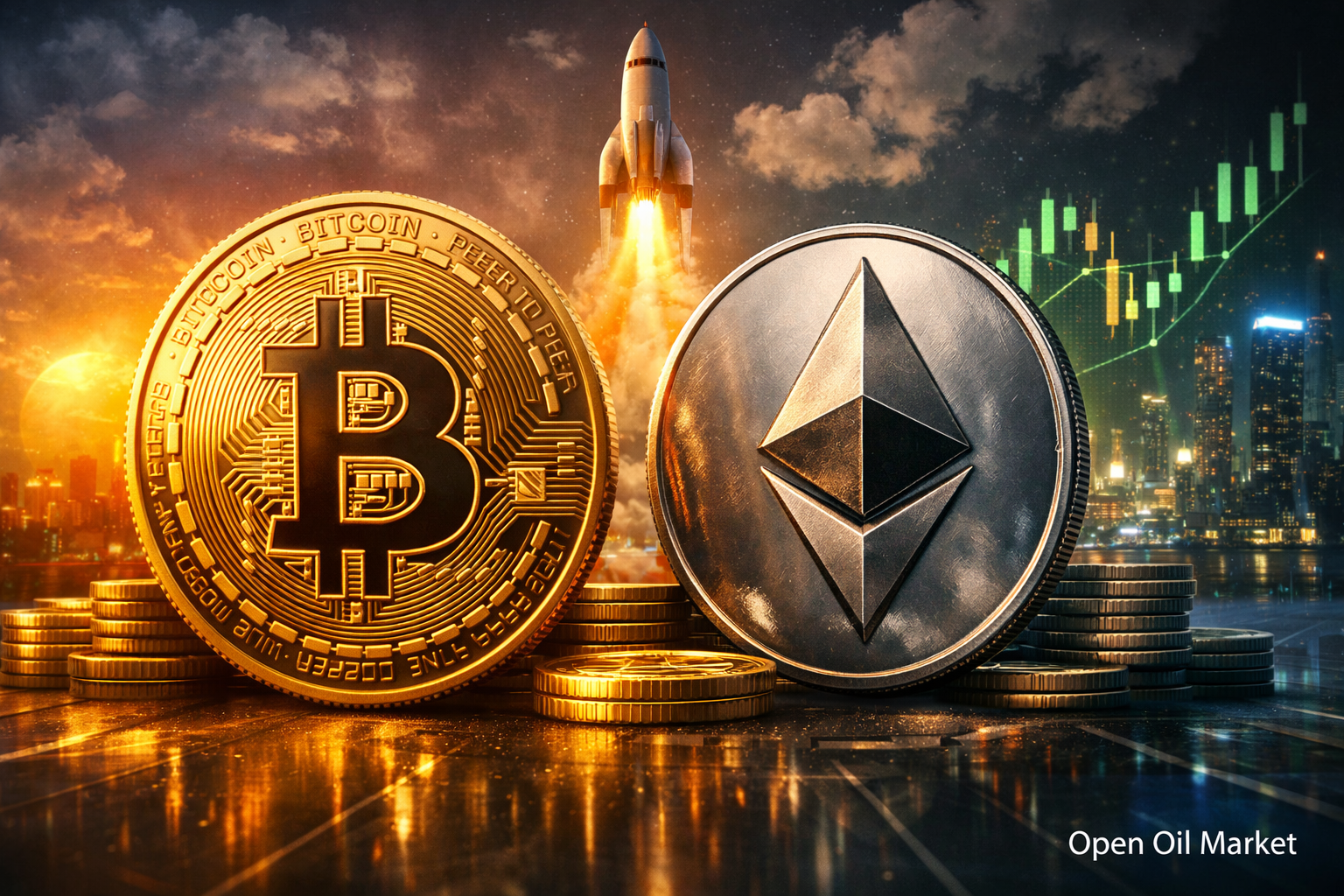
Cryptocurrency News for Tuesday, December 30, 2025. Bitcoin trades around $90,000, Ethereum strengthens above $3,000, and altcoins show growth. Market overview and top 10 cryptocurrencies for investors.
At the start of the last week of December, global cryptocurrencies are demonstrating divergent volatility. Bitcoin attempted to surpass the $90,000 mark, while Ethereum briefly exceeded $3,000. However, a full-fledged festive rally did not occur, as quotes quickly retreated amid market expectations for clarity on regulatory initiatives and external risks. Investors are acting cautiously against the backdrop of macroeconomic fluctuations, but institutional demand remains a positive factor.
Bitcoin Fluctuates Around Record Levels
On Monday, December 29, BTC exhibited unusual activity for the holiday period. During Asian trading hours, the price of bitcoin rose approximately 3%, exceeding $90,200, but by Tuesday morning, it fell back below $88,000 amid profit-taking. Thus, the "cryptocurrency gold" did not support the traditional Christmas rally: despite the overall recovery in the stock markets, bitcoin corrected. Bitcoin's volatility remains heightened, as investors are awaiting new signals from global regulators.
Ethereum and Altcoins Demonstrate Growth
The second-largest cryptocurrency by market capitalization, Ethereum, has shown the best performance among major coins. The price of ETH increased by more than 4%, surpassing the $3,000 mark. This success is partly due to positive expectations — developers have approved plans for grand network upgrades (the "Glamsterdam" and "Hegota" hard forks) aimed at enhancing its throughput and security (including the implementation of Verkle trees).
Additionally, there is a growing interest in altcoins within the cryptocurrency market. For instance, Solana and Binance Coin added over 3% in the last 24 hours, while Bitcoin's share of the total market capitalization fell below 60%. This data indicates an increasing demand for alternative projects: with high speeds and low fees, Solana and BNB have become attractive instruments in DeFi and payment sectors. Other projects, such as Cardano and Chainlink, also maintain popularity due to their appealing technologies.
Institutional Investors Increase Holdings
Major institutional players continue to build up their reserves of crypto assets. Analysts estimate that corporate "treasuries of digital assets" have raised their bitcoin reserves to approximately 5% of the total supply of the coin (over $95 billion), while the amount of ETH held by such funds is approaching 5% of the total supply (around $18 billion). Exchange-traded funds (ETFs) for bitcoin and ether are also attracting significant amounts: assets under management in these funds amount to about $113 billion in bitcoin and nearly $18 billion in ether.
However, some long-term holders are reducing their positions. Reports indicate that in 2025, "old" holders (those who held BTC for over five years) sold coins worth tens of billions of dollars, particularly after the record price in October. These sales have put pressure on the market, but institutional purchases have partially compensated for this effect. Ultimately, large investors continue to confidently buy "on the dip," while the market awaits new growth drivers.
Regulation and Global Landscape
Worldwide, regulators are clarifying rules for digital assets. In the U.S., the administration continues its support for the industry: in 2025, a law on stablecoins (GENIUS Act) was passed, and the formation of a government reserve of cryptocurrencies from confiscated funds is under discussion. The European Union will implement the DAC8 directive starting January 1, 2026, which requires exchanges and providers to provide detailed transaction information to tax authorities and allows accounts to be frozen in cases of tax evasion. Furthermore, in Russia, the Central Bank has completed preparation of a concept for regulating cryptocurrencies, expanding access for both qualified and regular investors.
Top 10 Popular Cryptocurrencies
- Bitcoin (BTC) — the first and largest cryptocurrency by market capitalization. Often referred to as "digital gold" for its role as a safe-haven asset and limited issuance. Amid overall volatility, Bitcoin retains its status as a base asset for investors and continues to attract substantial institutional investments.
- Ethereum (ETH) — the second-largest cryptocurrency and the leading platform for smart contracts. Ethereum supports an extensive ecosystem of DeFi and NFT applications. Upgrades aimed at increasing throughput and lowering fees are planned for the network in 2026, which enhances the long-term investment appeal of ETH.
- Tether (USDT) — the largest stablecoin pegged to the U.S. dollar. Tether ensures high liquidity in the market and serves as the primary "transfer" asset for traders between various cryptocurrencies. With a stable price and recognition on leading exchanges, USDT remains popular.
- Binance Coin (BNB) — the internal token of the Binance exchange ecosystem. BNB is used for fee payments on the platform, participation in token sales, and operates on the Binance Smart Chain. The expansion of Binance services and the growing popularity of projects on this platform make BNB a sought-after tool.
- XRP (Ripple) — a cryptocurrency of the Ripple payment network. XRP is aimed at fast international transfers and is supported by several financial institutions for optimizing settlements. Despite regulatory challenges, XRP maintains demand as a means for interbank transactions.
- USD Coin (USDC) — the second-largest stablecoin issued by Circle. USDC is stable due to the constant backing of dollars and transparency in audits. This token is widely used in trading and DeFi applications to store liquidity alongside Tether.
- Solana (SOL) — a high-performance blockchain for decentralized applications. Solana stands out for its high transaction processing speed and low fees, making it attractive for DeFi and NFT projects. SOL is among the leaders in yield among altcoins.
- TRON (TRX) — a blockchain platform originally focused on entertainment content and decentralized applications. TRX is the primary token of the Tron network, where it is used for service payments and staking. The platform attracts users with high throughput and partnerships with media projects.
- Dogecoin (DOGE) — a meme coin created for humorous purposes. Dogecoin has no issuance limit and is supported by an active community. Thanks to its popularity among the general public and support from influencers, DOGE remains one of the most recognized cryptocurrencies.
- Cardano (ADA) — a blockchain built on a scientifically-informed approach (Ouroboros consensus). Cardano provides smart contract functionality with a focus on security and scalability. ADA has a stable community and continues to evolve, strengthening its position as one of the significant projects in the crypto ecosystem.
Trends for 2026
Analysts expect the continuation of established trends into the next year. Venture funds are identifying key directions: integration of artificial intelligence into crypto services, growth of the stablecoin market, and development of new lending models on the blockchain. These factors indicate a move towards a more institutionalized market. Macro-economic instability and the pace of regulatory reforms remain the main risks, while technological innovations and support from major investors are the primary drivers. As a result, the crypto market is preparing to become more mature and diversified by 2026.