Cryptocurrency News for March 20, 2026: Market Overview of Bitcoin, Ethereum, Stablecoins, and Top 10 Cryptocurrencies — Key Trends and Analysis for Investors
The cryptocurrency market is entering Friday, March 20, 2026, in a state of heightened capital selectivity. Following a period of high volatility, investors are increasingly categorizing digital assets into several major segments: Bitcoin as a macro asset and a store of value, Ethereum as an infrastructure platform, stablecoins as the settlement layer, and top altcoins as higher-risk bets on ecosystem growth and network effects.
The main theme of the day is not only price dynamics but also the shifting architecture of the market. Today, cryptocurrencies are becoming increasingly dependent on institutional flows, regulatory decisions, ETF development, payment infrastructure, and the status of stablecoins within the global financial system. For global investors, this means the digital asset market is becoming less chaotic yet more sensitive to regulatory policies, monetary conditions, and liquidity quality.
Main Market Focus: Bitcoin Retains Its Status as a Key Asset
Bitcoin remains a central benchmark for the entire crypto market. Even amidst a mixed news backdrop, BTC sets the mood for institutional and retail investors, directs flows into ETFs, and influences the market's risk appetite. Current trading structures indicate that market participants are increasingly viewing Bitcoin not as a speculative coin, but as a distinct class of digital macro asset.
This is particularly important for investors for three reasons:
- Bitcoin remains the primary indicator of trust in the crypto market;
- The dynamics of BTC continue to dictate the behavior of large funds and ETF providers;
- Any weakness in Bitcoin is quickly reflected in the liquidity of altcoins.
Should the market continue to witness an influx of institutional capital into regulated products, Bitcoin will maintain its status as the primary asset through which global investors will increase their exposure to cryptocurrencies.
Ethereum Remains a Systematic Bet on Blockchain Infrastructure
Ethereum still occupies a unique position within the cryptocurrency market structure. Unlike Bitcoin, which largely acts as a store of value and macro indicator, Ethereum is evaluated based on network activity, development of tokenization, its role in DeFi, and prospects for blockchain use in financial infrastructure.
Currently, investor sentiment towards ETH is more discerning. The market expects not just an increase in interest towards Ethereum but confirmation of demand through practical network usage. This positions ETH as a second-tier asset in terms of maturity: it continues to be among the key cryptocurrencies for large portfolios, but its valuation increasingly hinges on real activity within the ecosystem.
Regulation Becomes One of the Major Drivers of Cryptocurrency
One of the most significant factors for the market this week is an increase in regulatory clarity. For cryptocurrencies, this is critical as large capital prefers to operate within well-defined rules. New signals from American regulators and ongoing discussions around token classification elevate the importance of the legal status of digital assets.
Investors should particularly monitor the following areas:
- Token classification rules and differentiation between digital goods, stablecoins, and digital securities;
- Conditions for launching and scaling new crypto ETFs;
- Regulation of stablecoin issuers and reserve requirements;
- Access of crypto companies to banking and payment infrastructure.
The greater the level of legal clarity, the easier it is for institutional investors to increase the share of cryptocurrencies in their capital allocation.
Stablecoins Move to the Center of Global Financial Discourse
Where stablecoins were once viewed merely as ancillary trading tools, they are increasingly becoming a standalone infrastructural story. The market is gaining an understanding that stablecoins may be the bridge between traditional finance, cross-border settlements, and the blockchain economy.
This is indicated by several trends:
- Major payment companies are increasing their interest in stablecoin settlement infrastructure;
- Regulators in Europe and the USA are scrutinizing the systemic risks associated with these assets;
- Capital is partially shifting from riskier tokens to digital dollar instruments;
- Stablecoins are becoming essential elements of tokenization and international payments.
For the global market, this means a simple truth: the future of cryptocurrencies is increasingly shaped not only by Bitcoin and altcoins, but also by competition for dominance in the realm of digital currencies.
Top 10 Most Popular Cryptocurrencies: What the Market is Watching
For a practical overview, investors should focus on the largest and most discussed cryptocurrencies. Below is our editorial top 10 of the most popular digital assets based on market capitalization, liquidity, and current global interest:
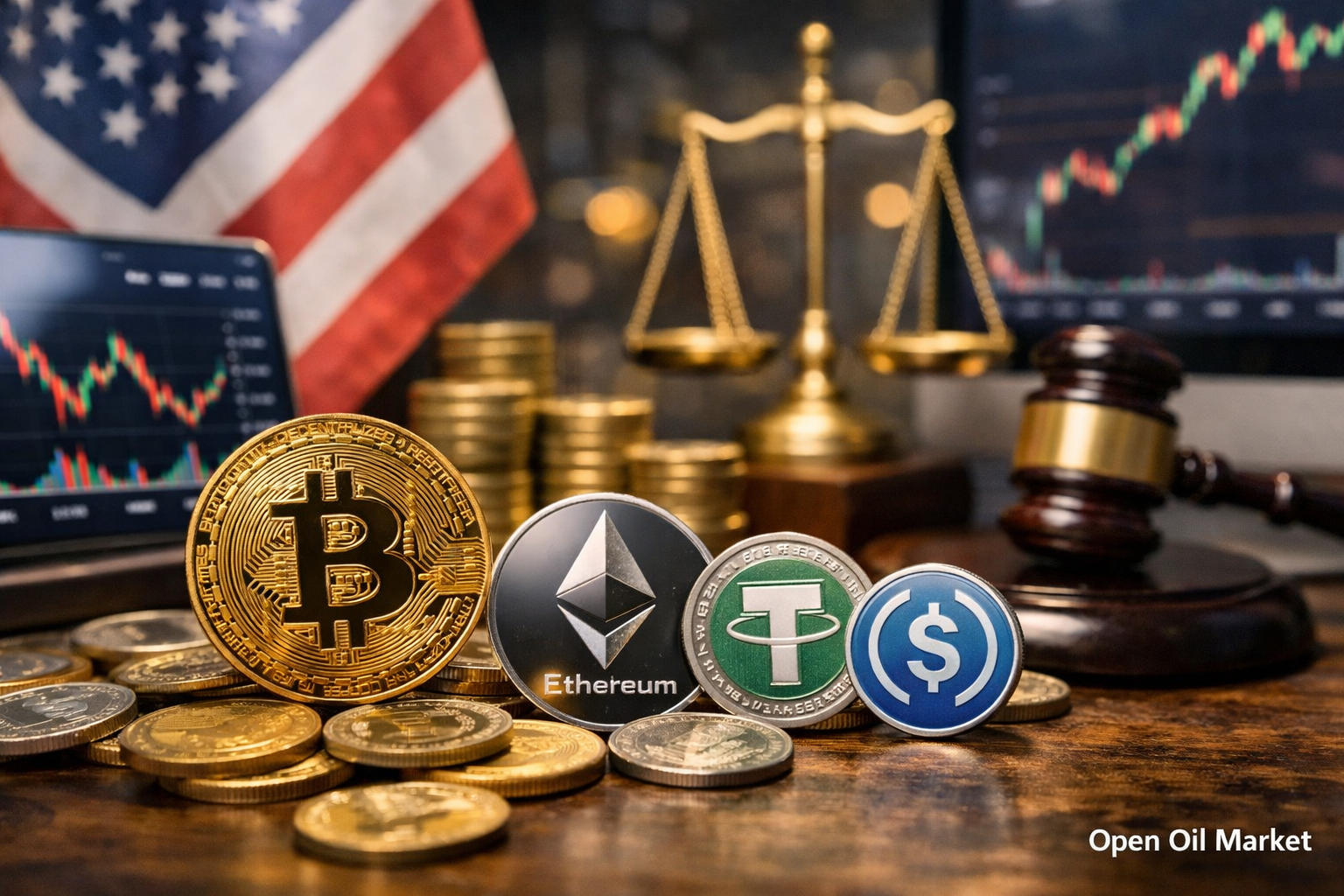
- Bitcoin (BTC) — the leading digital macro asset in the market.
- Ethereum (ETH) — the leading infrastructure blockchain platform.
- Tether (USDT) — the largest stablecoin in the global trading system.
- XRP — one of the most discussed payment tokens.
- BNB — a key asset within the largest exchange-based cryptocurrency ecosystem.
- USD Coin (USDC) — one of the most prominently regulated stablecoins.
- Solana (SOL) — a leading bet on high-performance blockchains.
- TRON (TRX) — a strong player in transactional activity and stablecoin circulation.
- Dogecoin (DOGE) — a highly liquid meme asset with sustained market attention.
- Cardano (ADA) — one of the most recognizable long-term infrastructure projects.
This list is important not only for retail market participants. For institutional and professional investors, the largest cryptocurrencies form the foundational map of liquidity, risk appetite, and sector priorities.
Altcoins: The Market No Longer Buys Everything
One of the key features of March 2026 is that altcoins are no longer rising uniformly. Investors have become notably selective. Capital is being directed either into the largest, most liquid projects or into niche segments with a clear investment narrative — for example, high-throughput blockchains, payment tokens, or infrastructure solutions for tokenization.
This alters the approach to portfolio strategy. In the current market phase, weak projects are losing attention quicker than before, while strong cryptocurrencies receive a premium for scale, liquidity, and ecosystem resilience.
What This Means for Global Investors
For the international audience of investors, the current cryptocurrency market can be described as a transition from a speculative phase to a phase of selecting quality assets. This is especially important for those who view digital assets as part of a long-term global portfolio.
In practical terms, four questions now take center stage:
- Will institutional interest in Bitcoin persist through ETFs and other regulated instruments?
- Can Ethereum confirm its investment attractiveness through increased network activity?
- How quickly will stablecoins integrate into global payment infrastructure?
- Which altcoins will genuinely retain their position in the upper echelon of the market?
These factors will determine capital allocation in the coming weeks.
Conclusion: The Cryptocurrency Market is Becoming More Mature, but Also More Demanding
As of March 20, 2026, cryptocurrencies are no longer merely a market of impulse movements and short-term excitements. This sector increasingly intersects with macroeconomics, regulation, institutional flows, blockchain infrastructure development, and global payment system competition.
For investors, the main takeaway is as follows: the market for digital assets retains high potential but requires much more precise selection of instruments. Bitcoin remains the foundational benchmark, Ethereum is the bet on infrastructure, stablecoins are the new financial highways, and the largest altcoins represent fields for selective growth. In this environment, those who succeed will not be the ones buying the entire market, but rather those who understand which cryptocurrencies are truly becoming part of the new global financial system.