Current Cryptocurrency News as of March 21, 2026: Bitcoin, Ethereum, Top 10 Cryptocurrencies, Institutional Investments, and Global Digital Asset Market Analysis
As the week comes to a close, the cryptocurrency market is exhibiting mixed dynamics. Following volatile sessions, investors are hesitant to aggressively build their positions, opting instead to assess a combination of two factors: regulatory changes and external macroeconomic pressures. For Bitcoin, this means a struggle for the status of the primary safe-haven asset within the crypto market, while for Ethereum and altcoins, there is a necessity to prove the resilience of their ecosystems amid more selective capital allocation.
The current cryptocurrency market increasingly resembles a mature risk-active segment: price movements are now influenced not only by news within the blockchain industry but also by expectations regarding interest rates, inflation, global risk appetite, and dollar dynamics. Thus, a short-term pause in growth does not appear to signify a trend reversal but rather a phase of reevaluation of the market drivers.
Bitcoin Remains the Leader and Strengthens Its Position as the Primary Asset of the Industry
Bitcoin remains the benchmark for the entire digital asset market. Its share of the total cryptocurrency market capitalization remains high, and BTC serves as the primary indicator of institutional trust in the sector. For global investors, Bitcoin today is no longer just a speculative instrument but also a digital macro asset, sensitive to capital flows, ETF demand, and changes in regulation.
Bitcoin's behavior at this stage highlights an important characteristic of 2026: the market is willing to support BTC's long-term investment narrative, yet it has become much more disciplined in the short term. Buyers are no longer ignoring risks; they are assessing entry levels, fiscal and monetary agendas, as well as the likelihood of new institutional catalysts.
- Bitcoin remains the primary benchmark for the cryptocurrency market.
- Investors view BTC as the core of a digital portfolio.
- Future dynamics largely depend on global risk appetite and the inflow of large capital.
Ethereum Strives to Regain Strategic Initiative through Infrastructure and Yield
As of March 21, Ethereum finds itself in a more complex yet potentially intriguing position. Unlike Bitcoin, which benefits from a straightforward investment thesis, Ethereum must simultaneously affirm its value as a technological platform, a base for DeFi, tokenization, stablecoins, and the smart contract economy. This is why news related to institutional products and the ability to generate yield through staking mechanisms is particularly crucial for ETH.
The market is increasingly viewing Ethereum as an infrastructure asset. While Bitcoin represents digital scarcity, Ethereum represents digital financial infrastructure. In this context, the development of exchange-traded products focused on ETH serves as an important signal for institutional investors: capital seeks not only price growth but also clearer forms of participation in the ecosystem.
Regulatory Landscape in the U.S. Becomes One of the Main Drivers of the Crypto Market
One of the most significant topics of the week has been regulatory clarity in the U.S. This is important for the global cryptocurrency market far beyond American jurisdiction, as the U.S. sets the rules for institutional capital access, ETF development, compliance, and the circulation of tokenized assets. The clearer the rules of the game, the easier it becomes for large financial institutions to increase their presence in digital assets.
The market perceives this agenda in two ways. The positive aspect is that cryptocurrencies receive clearer classifications and less legal uncertainty. However, the caution lies in the fact that the transition period may take time, meaning that some of the anticipated drivers will be realized gradually rather than all at once.
- Regulatory clarity increases the likelihood of new institutional products.
- Legal clarity lowers barriers for banks, funds, and infrastructure providers.
- However, the market remains dependent on the speed of practical implementation of new rules.
Asset Tokenization and ETFs Strengthen the Connection between the Crypto Industry and Traditional Finance
A key trend in March 2026 is the continued convergence of the cryptocurrency market with the traditional financial system. The topic of tokenization of securities, funds, and settlement infrastructure is gradually ceasing to be an experiment and is becoming a real vector for development. This is particularly significant for investors, as the value of many digital assets is increasingly determined not only by the crypto cycle but also by the depth of integration with traditional capital.
The ETF segment plays a special role in this context. The more regulated investment vehicles emerge around Bitcoin and Ethereum, the greater the likelihood of stable capital inflows from institutional investors, pension funds, wealth management, and high-net-worth individuals. While this does not guarantee continuous price growth, it does make the market more mature and less marginal.
Top 10 Most Popular Cryptocurrencies: What the Global Market is Watching
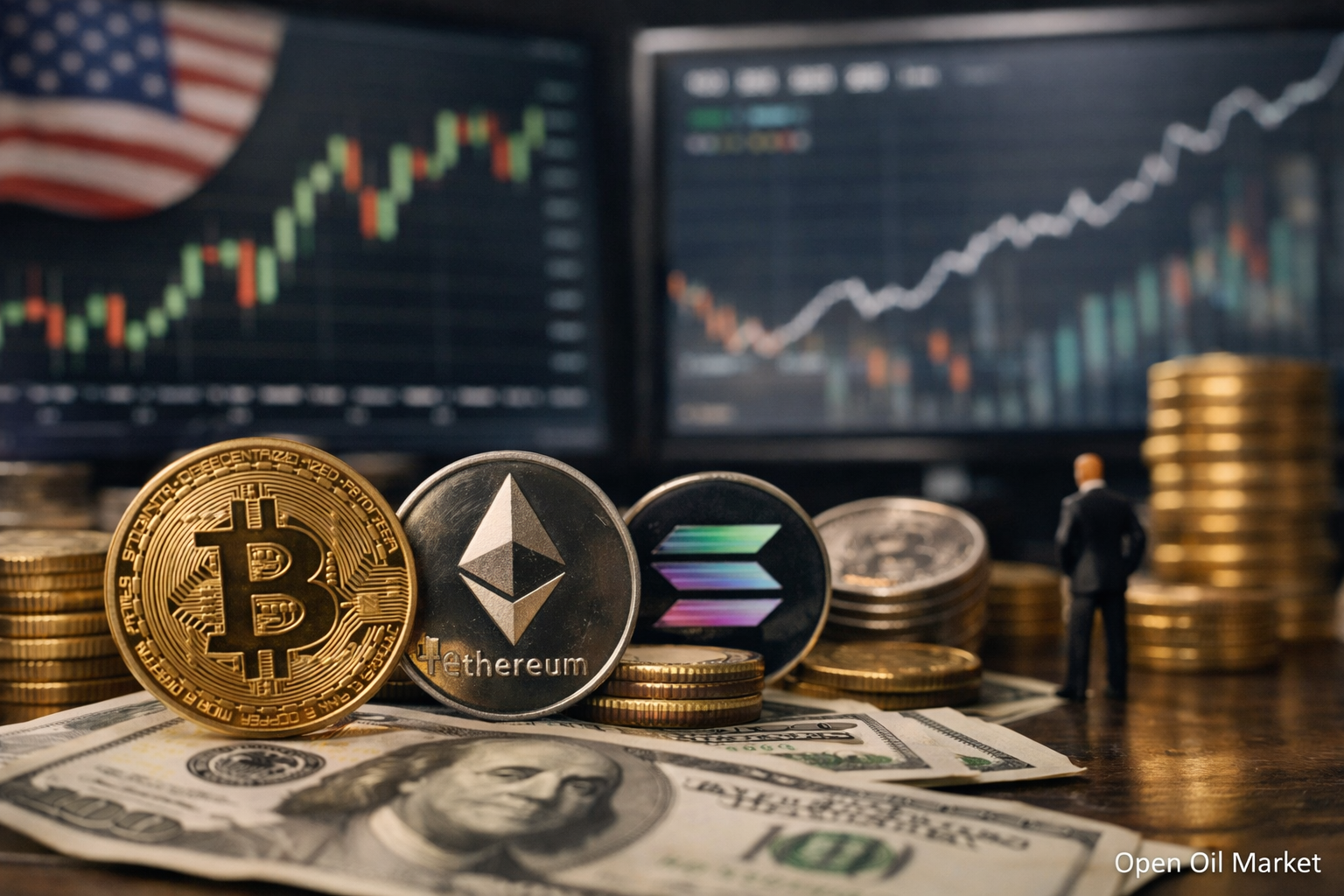
When evaluating the most popular cryptocurrencies by market capitalization and investor attention, by the end of the week, the global market is focusing on the following assets:
Top 10 Cryptocurrencies by Market Capitalization and Market Influence
- Bitcoin (BTC)
- Ethereum (ETH)
- Tether (USDT)
- XRP
- BNB
- USD Coin (USDC)
- Solana (SOL)
- TRON (TRX)
- Dogecoin (DOGE)
- Hyperliquid (HYPE)
This structure highlights an important feature of the cryptocurrency market in 2026. The top assets include:
- Core network assets — BTC and ETH;
- Stablecoins — USDT and USDC;
- Large infrastructure ecosystems — BNB, Solana, TRON;
- Assets with a strong market brand and high liquidity — XRP and Dogecoin;
- New rapidly growing platforms capable of attracting both speculative and institutional interest.
For investors, this means that the market has become significantly more segmented. It is no longer sufficient to simply "buy altcoins"—now it is crucial to understand to which category each project belongs: settlement, infrastructure, speculative, ecosystem, or yield-generating.
Altcoins Retain Potential, but the Market Becomes More Selective
The altcoin segment continues to operate on a principle of selective demand. Capital is increasingly concentrating on projects that possess at least one of three qualities: a scalable ecosystem, world-class liquidity, or a strong investment narrative. Solana, XRP, BNB, and TRON maintain investor attention precisely because investors see in them not only speculative narratives but also real user scenarios, infrastructure, and turnover.
Simultaneously, weaker projects face a market that is no longer financing promises without proven economic fundamentals. This represents a significant shift for the entire crypto industry: 2026 increasingly resembles a period of professionalization, where liquidity is accessible primarily to the strongest assets.
Stablecoins Become a Systemically Important Part of Digital Financial Architecture
Stablecoins deserve special attention. Their role in the cryptocurrency industry can no longer be seen as auxiliary. USDT and USDC have become not just a means of settlement between exchanges and traders but also an effective monetary layer of the digital economy. A significant portion of liquidity, trading volume, and capital movement operations between various blockchain networks flows through stablecoins.
For investors, this is important for two reasons. Firstly, the rising value of stablecoins supports the ecosystems in which they are actively utilized. Secondly, regulatory discussions today largely revolve around stablecoins, meaning their development may impact the entire cryptocurrency market—from Ethereum and Solana to payment services and tokenized assets.
What This Means for Investors This Weekend and Next Week
As of March 21, 2026, the cryptocurrency market maintains a strategically constructive backdrop but does not provide grounds for reckless optimism. Investors should consider that the industry is evolving along two trajectories: institutional recognition is strengthening, yet short-term fluctuations will remain high due to macroeconomic conditions and geopolitical contexts.
The key takeaway for the global investor audience is as follows:
- Bitcoin remains the primary barometer of trust in digital assets.
- Ethereum retains potential through its infrastructural role and development of investment products.
- The top 10 cryptocurrencies indicate that the market is increasingly dividing into quality segments.
- Regulatory clarity in the U.S. and the development of tokenization may serve as medium-term drivers of a new growth phase.
- In the short-term horizon, discipline, diversification, and attention to asset quality are crucial for investors.
This is why Saturday, March 21, 2026, welcomes the cryptocurrency market not in a phase of euphoria, but in a stage of maturation. For long-term investors, this is likely an even healthier signal: digital assets are gradually transitioning from emotional trading to systemic integration within the global financial architecture.