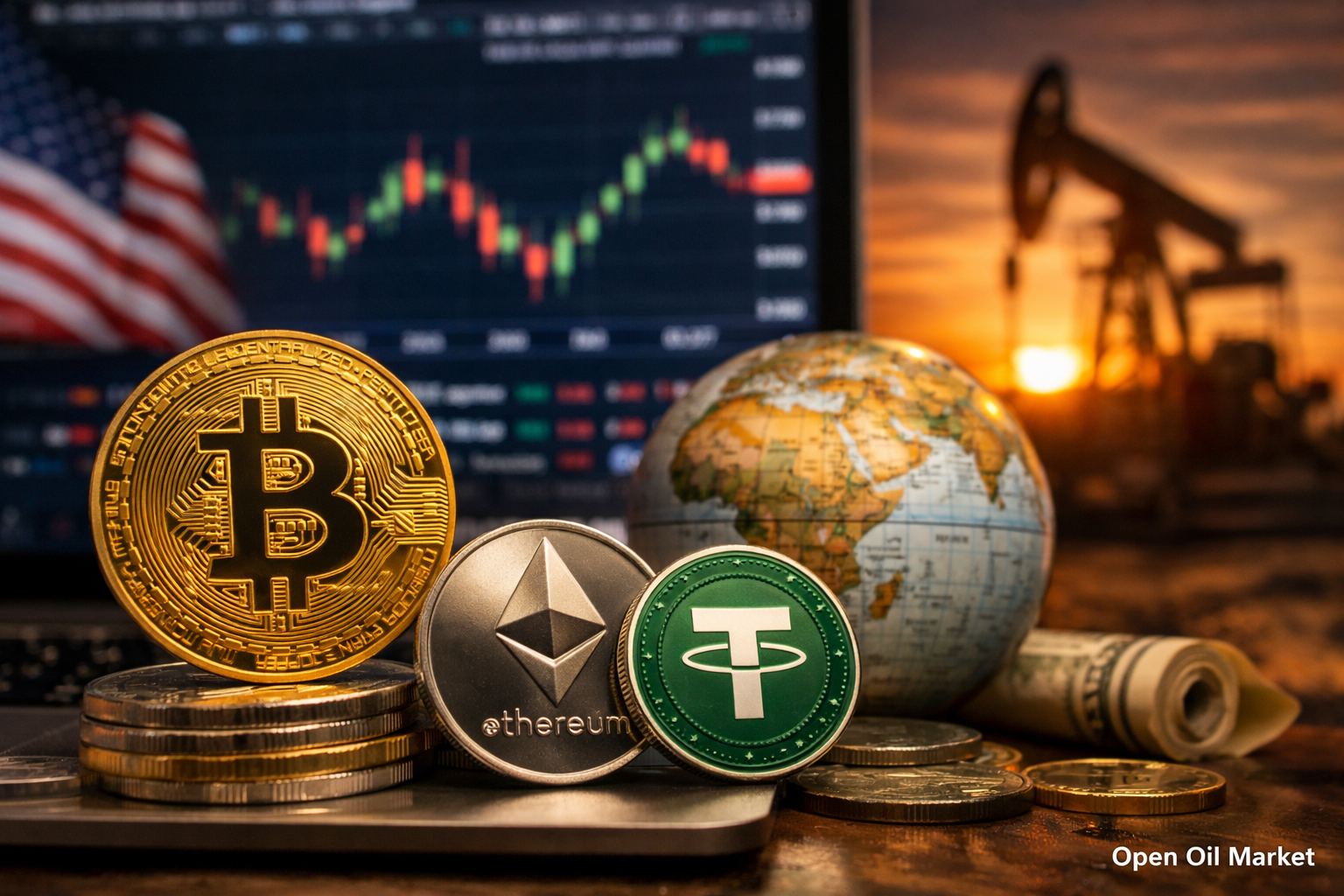
Current Cryptocurrency News as of March 3, 2026: Bitcoin and Ethereum Dynamics, Market Volatility, Regulation, and the Top 10 Most Popular Cryptocurrencies for Global Investors
The beginning of the week in the cryptocurrency market is characterized by heightened sensitivity to external shocks. Factors that typically influence risk appetite have taken center stage: geopolitical developments, commodity market dynamics, and expectations regarding monetary policy. For global investors, this signifies that cryptocurrencies are currently behaving more like high-liquid risk assets rather than a "safe haven." As a result, market responses often precede traditional markets, especially during times when stock exchanges are closed.
In this environment, market participants prefer to reduce leverage, convert a portion of their capital into stablecoins, and stay close to assets with maximum liquidity. Consequently, "whiplash" is intensified: local sell-offs are quickly followed by sharp rebounds, but a sustainable trend is only formed once the news backdrop stabilizes and systemic demand returns.
Bitcoin: Indicator of Sentiment and a Test for "Digital Gold"
Bitcoin remains the primary barometer for sentiment in the cryptocurrency market. In recent sessions, the key intrigue revolves around whether BTC confirms its status as a safe-haven asset or continues to trade as a proxy for global liquidity. Evidence shows that during periods of rising uncertainty, Bitcoin initially responds with a decline alongside risk assets but then seeks to recover faster than the market due to high liquidity, increased institutional attention, and a robust derivatives infrastructure.
For investors, three observations are crucial:
- Leverage compression usually reduces systemic risk but temporarily increases volatility "spikes."
- Liquidity demand keeps BTC relatively stable compared to most altcoins during stressful moments.
- The "safe haven" narrative remains debatable: the market increasingly evaluates Bitcoin through the lens of the macro regime (rates, dollar, risk premium).
Ethereum and the Smart Contract Economy: Betting on Infrastructure rather than Hype
Ethereum retains its status as the key platform for DeFi, stablecoins, and tokenization. Amidst market turbulence, investors more frequently assess ETH not as a speculative bet but as an infrastructure asset with a strong network economy: activity in Layer 2 solutions, stable transaction fees, ecosystem growth, and exchange supply dynamics are all under scrutiny.
The global audience remains focused on:
- competition between L1 and L2 and the migration of activity to cheaper networks;
- pragmatic demand from projects prioritizing security and liquidity;
- the impact of staking and supply structures on ETH's sensitivity to "risk-off" conditions.
Altcoins: Selectivity, Liquidity, and Real Catalysts
The altcoin segment enters March with heightened polarization. As global investors reduce risk, capital is distributed not broadly but selectively into the most liquid assets with a clear investment thesis. This intensifies the disparity between turnover leaders and the long tail of projects, where liquidity is thinner, and drawdowns are deeper.
A practical approach to reading the altcoin market includes:
- Liquidity and Listings: where to enter/exit quickly without significant slippage.
- Catalysts: protocol upgrades, revenue growth (fees), and user base expansion.
- Infrastructure Risk: bridges, oracles, and smart contract vulnerabilities.
Derivatives and Liquidations: The Market "Cleans" Excess Leverage
The derivatives market continues to dictate short-term dynamics. When external risk surges dramatically, a chain reaction is often triggered: price movement → liquidations → intensified movement → counter-trend rebound. For investors, this serves as an important signal that part of the movement is technical in nature and related not only to the "fundamentals" but also to the structure of positions.
What to Monitor First
- changes in open interest (OI) and the rate of decline during stress periods;
- misalignments in funding as indicators of overheating;
- stablecoin behavior on exchanges as a marker of market readiness to return risk.
Cryptocurrency Regulation: The USA, Europe, and International Coordination
The topic of cryptocurrency regulation remains a structural driver in 2026. Global investors are seeking greater clarity regarding the rules governing digital asset transactions, token statuses, exchange infrastructure requirements, and stablecoin compliance. For the cryptocurrency market, this presents a dual narrative: stringent rhetoric may pressure short-term valuations, but transparent frameworks enhance trust and expand institutional demand.
In the global context, the key questions revolve around unified standards for:
- reserves and reporting of stablecoins;
- market structure (trading, clearing, custody);
- risk identification (AML/KYC) while preserving innovation.
Stablecoins and Cash Management: The Foundation for Liquidity in the Crypto Economy
Stablecoins remain the infrastructural backbone of the market: a significant portion of transactions flows through them, serving as "operational dollars" for exchanges, DeFi, and cross-border settlements. In times of uncertainty, the practical role of stablecoins as liquidity management tools increases: investors reduce risk, lock in results, and await clearer signals regarding macroeconomic and geopolitical factors.
For investors, evaluating the quality of stablecoins is important:
- transparency of reserves and counterparty risk;
- liquidity on key trading platforms;
- regulatory compatibility across different jurisdictions.
DeFi and Cybersecurity: The Market Matures through Risk Control
DeFi continues to evolve, but market maturity is measured not only by TVL growth but by the quality of risk management: audits, bug bounty programs, insurance mechanisms, and incident response speed. Against a backdrop of overall volatility, investors are paying more attention to operational risk—especially with protocols that involve bridges, complex tokenomics, and high reliance on oracles.
A Practical Filter for Investors
- a verified security history and public audit reports;
- collateral diversification and transparent liquidation parameters;
- real economic activity (fees, users, revenue stability).
Top 10 Most Popular Cryptocurrencies for Global Investors
Below is a guide to the most popular and liquid cryptocurrencies (based on a combination of market capitalization, turnover, and recognition among the global audience). The order is practical for navigation and not an investment recommendation.
- Bitcoin (BTC) — the foundational asset of the market, a primary indicator of risk appetite.
- Ethereum (ETH) — the infrastructure for smart contracts, DeFi, and tokenization.
- Tether (USDT) — the largest stablecoin, the backbone of exchange liquidity.
- USD Coin (USDC) — a stablecoin frequently used within institutional infrastructure.
- BNB (BNB) — an ecosystem asset of a major exchange/network infrastructure.
- XRP (XRP) — a liquid asset with strong international recognition.
- Solana (SOL) — a high-performance network with an active ecosystem of applications.
- Cardano (ADA) — a significant L1 project focusing on an academic approach and upgrades.
- Dogecoin (DOGE) — a popular asset with high recognition and liquidity.
- TRON (TRX) — a notable infrastructure for transactions and stablecoins.
How to Read the Cryptocurrency Market in March 2026
In the upcoming weeks, the cryptocurrency market will move in tandem with global drivers: geopolitical news, dollar dynamics, and interest rate expectations. Bitcoin remains the first asset where changes in risk regimes manifest, Ethereum represents the key bet on infrastructure, while altcoins demand heightened selectivity and liquidity discipline.
A Short Checklist for the Global Investor:
- manage risk through position sizing and avoid excessive leverage;
- maintain the core portfolio in the most liquid assets and stablecoins if the "risk-off" mode persists;
- in altcoins, focus on catalysts and fundamental activity, rather than short-term noise;
- consider regulatory signals from the USA and Europe as a factor for structural demand in 2026.