Current cryptocurrency news as of March 30, 2026, analysis of Bitcoin, Ethereum, stablecoins and the top 10 largest digital assets
The key topic for Monday is not just price movements but a shift in demand dynamics. Previously, broad rallies in the cryptocurrency market were fuelled by momentum and expectations of rapid capital inflows, but the market is now becoming much more selective. Investors are increasingly betting on individual cryptocurrencies, infrastructure solutions, and projects with clear liquidity rather than the sector as a whole.
In these conditions, Bitcoin retains its status as the foundational benchmark for the entire cryptocurrency market, Ethereum remains the key indicator of interest in blockchain infrastructure and the smart contract economy, while stablecoins are emerging as a crucial layer of the new digital financial system. For the market, this signifies a transition from mere speculation to a more mature asset valuation model.
Bitcoin: The Main Defensive Position Within the Crypto Market
Bitcoin enters a new week as the most resilient asset within the digital segment. Even during periods of increased volatility, it continues to attract the primary interest of major market participants. This can be attributed to several factors:
- High liquidity compared to most altcoins;
- Strong institutional perception as the fundamental digital asset;
- Ability to restore confidence quickly following sell-offs;
- Ongoing role as the “core” of portfolios in the cryptocurrency sector.
For investors, this means that Bitcoin news remains a central part of the entire cryptocurrency agenda. When the market is nervous, capital often either shifts into stablecoins or flows back into Bitcoin. Therefore, the current dynamics of the first cryptocurrency are significant not only on their own but also as an indicator of the forthcoming movement of the entire market.
If at the start of the week Bitcoin maintains buyer interest and does not allow a negative external backdrop to escalate into a widespread sell-off, it could signal stabilization for major altcoins. Conversely, if the pressure continues, the market will revert to a defensive mode.
Ethereum: A Bet on Infrastructure, but No Room for Weakness
Ethereum remains the second most significant asset in the global crypto industry; however, the market is currently imposing particularly stringent demands on it. Investors are evaluating Ethereum not as an abstract technological idea but as a full-fledged infrastructure platform that must validate its value through network activity, ecosystem development, demand for smart contracts, and long-term utility.
This week, Ethereum is important for several reasons:
- It remains the primary infrastructure asset for DeFi, tokenization, and stablecoins.
- Its dynamics show whether the market is ready to take on more risk within the crypto sector.
- Weakness in Ethereum is typically seen as a caution signal across the altcoin segment.
For global investors, this is particularly critical: if Bitcoin is an indicator of trust in cryptocurrencies as an asset class, then Ethereum is an indicator of trust in the blockchain economy as a technological platform. This is why news regarding Ethereum, network development, and sentiment around the ecosystem will remain in the spotlight at the beginning of the new week.
Top 10 Most Popular Cryptocurrencies: Where Market Attention Is Focused
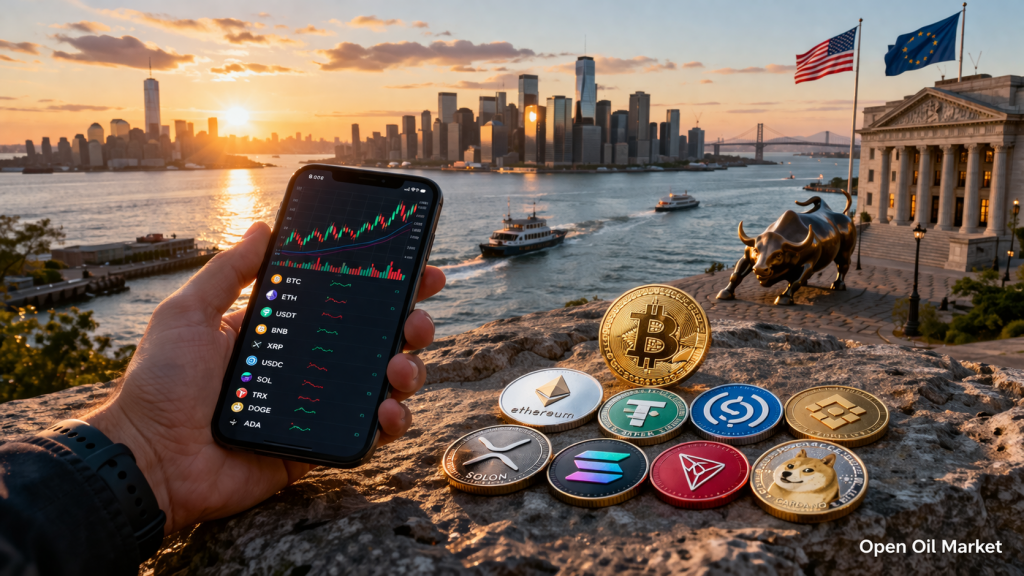
As of March 30, 2026, the core interest of investors continues to reside in the largest assets by capitalization and liquidity. The global cryptocurrency market is focused on the following cryptocurrencies:
- Bitcoin (BTC) — the main reserve asset of the crypto market and a primary barometer of global risk demand.
- Ethereum (ETH) — the central platform for infrastructure crypto projects and smart contracts.
- Tether (USDT) — the largest stablecoin and a key liquidity parking tool.
- BNB — a major exchange and ecosystem asset with a sustained interest from traders.
- XRP — one of the most notable liquid assets for global cross-border settlements and speculative capital.
- USDC — one of the leading institutionally recognized stablecoins.
- Solana (SOL) — a leader among high-performance blockchains and assets with increased volatility.
- TRON (TRX) — a notable player in the remittances and stablecoin circulation segment.
- Dogecoin (DOGE) — an indicator of speculative interest and retail appetite for risk.
- Cardano (ADA) — a major infrastructure asset that investors continue to view as a long-term bet on ecosystem development.
For investors, this group of assets forms the primary architecture of the cryptocurrency market. When capital returns to the sector, it initially flows through Bitcoin, Ethereum, and stablecoins, before being reallocated into Solana, XRP, Dogecoin, Cardano, and other liquid coins.
Stablecoins: The Most Important Hidden Narrative of the Crypto Market
One of the most significant themes of 2026 is the growing role of stablecoins. Previously, many investors viewed them only as a technical instrument for trading, but now stablecoins are becoming an independent strategic segment of digital finance. A significant portion of turnover, liquidity management, and cross-border payments flows through them.
For the market, this means several important consequences:
- The increasing significance of USDT and USDC as the infrastructural foundations of crypto trading;
- Heightened regulatory interest in reserves, reporting, and stablecoin architecture;
- Expansion of usage scenarios beyond speculative cryptocurrency markets;
- Strengthening the connection between cryptocurrencies and the traditional financial system.
On Monday, this segment may remain one of the key areas for assessing future trends. When the market enters a phase of uncertainty, the volume of funds in stablecoins and their role in turnover become an indicator of whether capital has completely exited the sector or has merely adopted a wait-and-see position.
Altcoins: The Market Demands Proven Utility
The situation with altcoins at the start of the week appears more complex than that of Bitcoin. The market is becoming less tolerant of assets that cannot offer a clear economic logic, sustainable liquidity, or strong network effects. This is particularly important for investors focusing not on short-term noise but on the capital structure within the cryptocurrency market.
Currently, altcoins can be roughly categorized into three groups:
- Systematically Significant Assets — Solana, XRP, Cardano, TRON, and other large coins with broad recognition and notable liquidity.
- Speculative Assets — coins whose movements are more influenced by crowd sentiment than fundamental factors.
- Infrastructure Niches — projects related to tokenization, payment infrastructure, DeFi, and specialized ecosystems.
For the cryptocurrency market, this implies that broad growth across the sector without distinction is becoming less likely. A more probable scenario is one where capital returns selectively — to liquid, recognizable, and functionally justified assets.
Macroeconomics and Geopolitics: Why Cryptocurrencies Are Once Again Trading as Risk Assets
One of the most critical factors for the cryptocurrency market remains the external backdrop. Investor behaviour in digital assets increasingly depends on overall market sentiment. When there is heightened nervousness in the stock market, energy prices rise, or rate expectations change, cryptocurrencies also come under pressure.
As of March 30, 2026, the following external drivers are particularly important for cryptocurrencies:
- The dynamics of global risk appetite;
- The markets' reaction to geopolitical signals;
- The price of oil and its influence on inflation expectations;
- The trajectory of monetary policy from the major central banks;
- The state of liquidity in global financial markets.
For investors, this means that cryptocurrency news this week should be assessed in close connection with global macroeconomics. The digital asset market is not isolated; on the contrary, it is becoming increasingly embedded in the behavior of global capital.
What This Means for Investors at the Start of the Week
For Monday, March 30, 2026, several practical conclusions can be drawn for market participants:
- Bitcoin remains the main benchmark. As long as it retains its status as the key asset within the cryptocurrency market, the likelihood of a full capitulation in the sector remains limited.
- Ethereum and major altcoins require confirmation of strength. The market will closely watch where real demand emerges and where only inertia persists.
- Stablecoins are becoming a strategic theme. Their role extends far beyond merely “parking” capital.
- The selectivity of the market is increasing. Investors are finding it increasingly important to differentiate between liquid and systemically significant assets versus peripheral stories.
- Macroeconomic factors cannot be ignored. Cryptocurrencies continue to react to global financial and geopolitical signals.
Therefore, global investors will focus this week not only on cryptocurrency prices but also on the quality of demand: who is buying, which segments capital is flowing into, and how sustainable this flow appears.
Conclusion: The Cryptocurrency Market Retains Potential but Requires Discipline
The cryptocurrency news on Monday, March 30, 2026, presents investors with an important picture: the market has not lost its strategic significance but has become more demanding regarding the quality of stories. Bitcoin maintains its leadership as the foundational asset of the sector, Ethereum remains a key infrastructure indicator, and stablecoins are increasingly emerging as a separate strategic layer of digital finance.
For those tracking cryptocurrencies globally, the main takeaway of the day appears to be: the market remains vibrant, liquid, and systemically important; however, the era of unconditional growth for all coins simultaneously is giving way to a phase of selection. In such an environment, it is not the loudest stories that win, but those assets with strong liquidity, clear functionality, and sustainable capital attention.
At the start of the new week, investors should carefully monitor the behaviour of Bitcoin, Ethereum, Solana, XRP, Dogecoin, Cardano, and the stablecoin segment. These will set the tone for the entire cryptocurrency market and indicate whether the sector is moving towards a new wave of growth or remaining in a cautious consolidation mode.