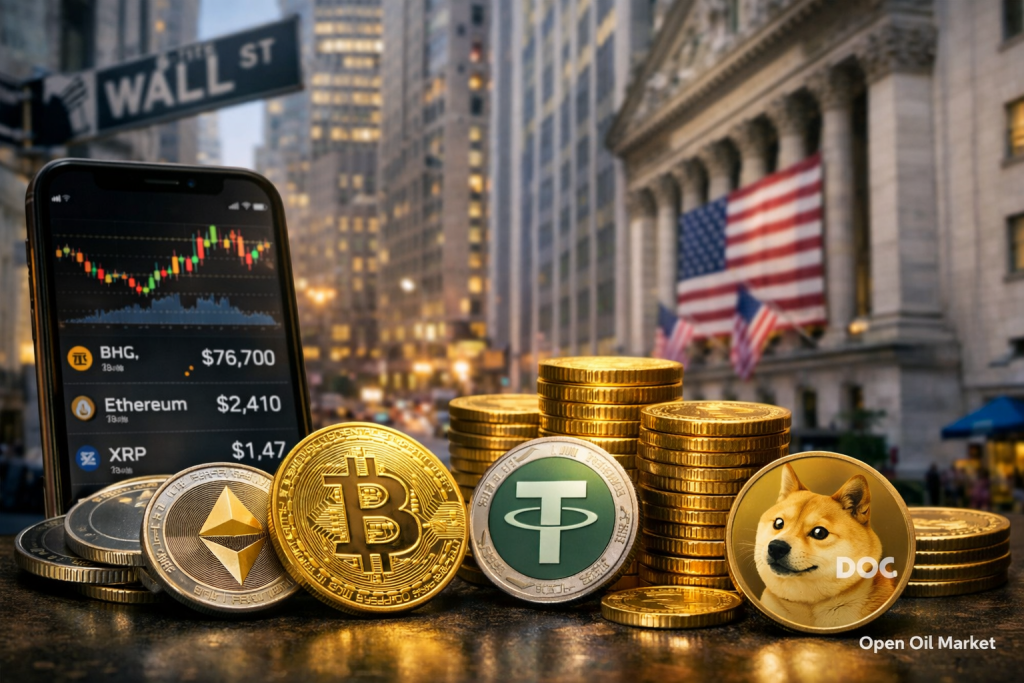
Cryptocurrency News Overview as of November 21, 2025: Bitcoin Consolidates After Correction, Ethereum Prepares for Upgrade, Altcoins Show Recovery, Institutional Investors Expand Presence, and Market Stabilizes.
As of the morning of November 21, 2025, the cryptocurrency market is attempting to stabilize following a sharp decline in the first half of the month. Bitcoin is trading around $90,000, having lost nearly 30% from its October all-time high of approximately $126,000. Over the past month, the total cryptocurrency market capitalization has shrunk by around $1.2 trillion; however, the decline has paused in recent days. Major altcoins are also holding key levels: Ethereum has stabilized near $3,000 in anticipation of a significant network update, while Bitcoin's dominance index has fallen below 60%, reflecting the relative resilience of several altcoins. Investors and analysts are currently assessing whether the current correction is a temporary setback before a renewed rise or whether the market is in for an extended consolidation phase.
Bitcoin After Major Correction
In early October, flagship Bitcoin (BTC) reached a new peak of around $126,000; however, it quickly transitioned into a correction phase. Last week, Bitcoin's price dipped to about $88,000—its lowest level in the past six months—marking a drop of more than a quarter from its all-time high. As of now, BTC has regained ground in the $90,000 to $92,000 range and is showing signs of stabilization. Bitcoin's market capitalization stands at around $1.8 trillion, maintaining approximately 58-60% of the total cryptocurrency market capitalization. Experts note that profit-taking by investors following a prolonged rally and the tightening rhetoric from the U.S. Federal Reserve, which hinted at maintaining high rates to curb inflation, were key drivers of the recent downturn. Nevertheless, fundamental factors for Bitcoin remain positive: institutional adoption of the asset continues, and the upcoming halving event in 2024 is heightening expectations for long-term growth. Currently, Bitcoin is consolidating around the psychologically significant level of $100,000 (acting as resistance); overcoming this level could return the market to a bullish trend, while failure to hold above $90,000 may signal protracted consolidation.
Ethereum Prepares for Major Upgrade
The second-largest cryptocurrency by market capitalization, Ethereum (ETH), has also experienced significant volatility. After climbing close to $5,000 in October, Ether has retraced approximately 35% and is now trading around $3,000. Despite the correction, Ethereum retains about a 12% market share and the status of a leading platform for decentralized applications and DeFi. Investors are optimistic about the upcoming network upgrade codenamed Fusaka, scheduled for early December 2025. This hard fork is set to enhance Ethereum's scalability and implement new technical solutions (particularly technology to speed up Layer 2 transactions), which should improve the network's efficiency and attract even more users. The discussions surrounding the upgrade have already led to increased activity within the developer community and bolstered confidence in ETH's long-term prospects. In recent weeks, Ethereum has demonstrated relative strength, thanks to anticipation surrounding the launch of new institutional products—U.S. regulators approved the first spot ETFs for Ether this fall, easing access for large investors to ETH. Analysts believe that the successful implementation of the December upgrade could provide Ether with additional momentum for restoring its positions, especially if general market sentiments improve.
Altcoins Seek Growth Opportunities
Following the October decline, the broader altcoin market is attempting to transition to recovery. During the correction, many popular altcoins lost 20-30% of their value; however, recent sessions have brought signs of revival. Bitcoin's dominance has decreased from over 60% to around 58%, indicating a relatively better performance among some alternative coins. Certain high-cap tokens are demonstrating resilience: for instance, Ripple (XRP), which soared to a multi-year high of around $3.00 after a summer legal victory against the SEC, has since corrected to $2.1-$2.2 but remains above $2, retaining a significant portion of its gains. Binance Coin (BNB) reached new all-time highs this fall (peaking at around $1,375 during the October rally); it is currently trading around $900 post-correction, still significantly higher than the beginning of the year. The strong interest in BNB is attributed to Binance's extensive ecosystem and regular token burning, which reduces supply. Other market leaders also maintain solid capitalizations: Solana (SOL) is holding around $140 after peaking at approximately $200, supported by news of potential ETF launches and increased activity in its blockchain ecosystem. Smart contract platform tokens like Cardano (ADA) and TRON (TRX) have dropped more than 40% from their yearly highs but continue to remain in the top 10. The meme cryptocurrency Dogecoin (DOGE) remains priced around $0.16-$0.17, confirming that even humorous coins with active communities can weather periods of volatility without losing appeal. Notably, several promising new projects are occupying positions just behind the market leaders. For example, the token of the decentralized exchange Hyperliquid (HYPE) has surged in 2025 to become one of the largest by market capitalization due to its unique technological offering and is maintaining a high price amidst rumors of a new ETF launch. Similarly, altcoins with their own growth catalysts—like Uniswap (UNI) amid the development of DeFi tools—are attracting heightened attention. Overall, while a widespread "alt season" is not currently evident, specific digital assets are showing relative strength even amid the overall market correction.
New Crypto ETFs and Institutional Interest
One of the key topics at the end of 2025 has been the expansion of tools for institutional investors in the cryptocurrency market. In the U.S., following the successful launch of spot Bitcoin-ETFs and Ether-ETFs in recent months, regulators have approved the listing of the first multi-asset cryptocurrency ETF. Bitwise's fund, which received preliminary approval from the SEC in November, tracks an index of the 10 largest digital assets, including Bitcoin, Ethereum, Ripple (XRP), Solana (SOL), and other top currencies. This decision has been perceived as a significant signal; the market views it as a step towards further integration of cryptocurrencies into the traditional financial system. Notably, in the wake of ETF news, capital flows are being redistributed: according to industry reports, November saw a net outflow of around $1.6 billion from Bitcoin funds—likely a result of profit-taking after the previous rally—while funds linked to Solana attracted approximately $26 million in new investments. This trend indicates interest from some investors in promising altcoins and asset diversification. Institutional players are still entering the cryptocurrency space overall: media reports indicate that several large university endowments and pension programs have increased their investments in crypto funds. Notably, it has been reported that Harvard's endowment invested about $440 million in BlackRock's Bitcoin trust—seen as a sign of long-term confidence in BTC from conservative institutions. The regulatory environment for the industry is also gradually clarifying: new laws aimed at ensuring more transparent cryptocurrency regulation have come into effect in the U.S. (including initiatives for digital asset classification and investor protection). Experts expect that the further emergence of exchange-traded products for various crypto assets (with ETFs for XRP, Ethereum Layer-2 tokens, etc. under development) will depend on regulators' willingness to acknowledge the utilitarian value of these projects. The expansion of the crypto ETF lineup and the influx of institutional funds strengthen the market's fundamentals, while also adding correlation with traditional finance.
Market Sentiment and Volatility
The period of rapid growth, followed by a sharp correction, has impacted trader sentiment. The "fear and greed" index for cryptocurrencies, which exceeded 70 points ("greed") at the height of the October rally, fell into the "fear" zone around 30-40 points in November. This indicated a dominance of cautious sentiment: many market participants reduced risks in light of falling prices. The scale of the volatility is also confirmed by liquidation statistics: according to exchanges, on the days of the sharpest declines (October 10-11), the total volume of forced liquidations exceeded $10-15 billion—many leveraged traders were knocked out of the market. Last week, when Bitcoin briefly fell below $100,000, the volume of daily liquidations also surpassed $1 billion, particularly affecting long positions, which exacerbated the downtrend. However, following the achievement of a local bottom, signs of panic began to fade. Volatility remains elevated but has somewhat decreased compared to the peak levels seen in October. Currently, the sentiment index has risen from the deep "fear zone" towards neutral values, reflecting a gradual return of confidence as prices stabilize. Analysts warn that sharp fluctuations may still be possible in the market— for instance, in response to unexpected macroeconomic news or regulatory developments. Nevertheless, the gradual cooling of euphoria and the passing of a "capitulation" phase among speculators could create a foundation for more balanced growth ahead. Experience from recent years shows that after periods of extreme volatility, the crypto market often enters a phase of relative calm, allowing investors to regroup and assess new entry points.
Forecasts and Expectations
Despite the recent correction, many experts maintain a moderately optimistic outlook for the future of the cryptocurrency market. Analysts at Standard Chartered Bank note that the current ~30% decline in Bitcoin fits within the framework of a typical correction in a bullish market and is likely nearing completion. They estimate that the current decline is the third comparable drop since the inception of the first spot ETFs, and each time following such pullbacks, the market found a new bottom and resumed growth. The bank still anticipates a year-end rally scenario: the base forecast envisions a return of Bitcoin to an upward trend in December, assuming macroeconomic conditions remain stable. Some market participants also point to on-chain indicators suggesting a "exhalation" of sellers: short-term holders have already realized losses, and trading volumes on exchanges have decreased, which is characteristic of local bottom phases. Optimists believe that in 2026, as monetary policy eases and interest in cryptocurrencies grows in emerging markets, Bitcoin may reach new peaks—with targets as high as $180-200 thousand mentioned. More conservative forecasts suggest a gradual recovery: for example, several analysts from Wall Street project that the $120,000 mark will again become achievable in the second half of 2026, provided no new crises arise. As for altcoins, their prospects largely depend on Bitcoin's behavior: a full-fledged "alt season" requires BTC to stabilize near its record values and attract new capital inflows to the market. For now, forecasts indicate that quality projects with real applications—such as smart contract platforms and key infrastructure tokens—will recover faster and attract more investors than speculative coins lacking fundamental value. In this environment of lingering uncertainty, market participants are advised to exercise caution; however, they note that each significant downturn has previously provided long-term investors with opportunities to enter the market at more attractive prices.
Top 10 Most Popular Cryptocurrencies
As of the morning of November 21, 2025, the top ten most popular cryptocurrencies by market capitalization are as follows:
- Bitcoin (BTC) – the first and largest cryptocurrency. BTC is trading around $91,000 after a recent correction, with a market capitalization of approximately $1.8 trillion (about 59% of the entire market). Bitcoin retains its status as "digital gold" and the foundation of the crypto market, embodying the trust of most institutional investors.
- Ethereum (ETH) – the leading altcoin and smart contract platform. ETH's price is around $3,000, below its recent local peaks, but Ethereum remains the second-largest crypto asset with a market value of about $360 billion (~12% of the market). With its vast ecosystem of decentralized applications, Ethereum continues to attract the interest of investors and developers.
- Tether (USDT) – the largest stablecoin, pegged to the U.S. dollar at a 1:1 ratio. USDT is actively used for trading operations and hedging on cryptocurrency exchanges, with a market capitalization estimated at approximately $150 billion. The coin consistently maintains its peg at $1.00 (≈₽80) per token due to its reserves, remaining a crucial element of market liquidity.
- Binance Coin (BNB) – the token of the largest cryptocurrency exchange, Binance, and the native coin of the BNB Chain blockchain. BNB's price has corrected to around $900 (capitalization of roughly $140 billion) after reaching record highs in October; however, it remains among the leaders. BNB is in high demand due to its wide application: payment of exchange fees, participation in token sales, and use in DeFi projects on the BNB Chain.
- Ripple (XRP) – the token of the Ripple payment network for cross-border transactions. XRP is trading around $2.13, with a market capitalization of about $110 billion. In the summer of 2025, XRP received legal confirmation of its status (not being a security in the U.S.), leading to a restoration of trust and a resurgence of XRP in the upper ranks of cryptocurrency rankings.
- Solana (SOL) – a high-performance blockchain platform for decentralized applications. SOL is valued at approximately $140 per token (capitalization around $65 billion), showing recovery following a downturn. Solana attracts investors with its high transaction speeds and recent news regarding the potential launch of ETFs based on it, highlighting growing institutional interest.
- USD Coin (USDC) – the second-largest stablecoin, issued by Circle and backed by dollar reserves. USDC trades steadily at $1.00, with a market capitalization of around $60 billion. Thanks to the transparency of its reserves and partnerships with traditional financial institutions, USDC is widely used in corporate transactions and on the DeFi market, remaining a reliable "safe haven" for traders.
- TRON (TRX) – a blockchain platform for smart contracts and entertainment dApps, popular in Asia. TRX is priced at about $0.28 (capitalization ~ $27 billion). Tron has secured its place in the top 10 largely due to the active use of its network for issuing stablecoins (a significant portion of USDT operates on the Tron blockchain), as well as maintaining high network throughput and low fees.
- Dogecoin (DOGE) – the most well-known "meme cryptocurrency," created as a joke and becoming cult-like. DOGE trades around $0.16 (capitalization ~ $24 billion). Despite its playful origins, Dogecoin retains an army of loyal supporters and periodically receives growth spurts, thanks to backing from high-profile entrepreneurs. DOGE's volatility remains high, but its presence in the top 10 underscores the unique effect of community on the value of crypto assets.
- Cardano (ADA) – a blockchain platform developed based on a scientific approach and phased upgrades. ADA is priced at approximately $0.47 following a correction (capitalization around $16 billion). Earlier in 2025, Cardano attracted attention with expectations of ETF launches and upgrades; however, the current decline has returned the price to mid-year levels. Nonetheless, the project has an active community and scaling plans that support its position among the largest cryptocurrencies.
Cryptocurrency Market Overview as of November 21, 2025
- Prices of Major Cryptocurrencies: Bitcoin (BTC) ~$91,300; Ethereum (ETH) ~$3,010; XRP ~$2.13; BNB ~$900; Solana (SOL) ~$141; Tether (USDT) $1.00.
- Market Indicators: total cryptocurrency market capitalization around $3.2 trillion; Bitcoin's share – ~58%; fear and greed index – 45 (neutral/moderate fear mode).
- Top Gain Leaders of the Day: Zcash (ZEC) +11% (increased interest in privacy coins amidst regulatory discussions); Polygon (MATIC) +4% (recovery following network upgrades).
- Top Loss Leaders of the Day: Filecoin (FIL) -6% (correction after a short-term price surge); Conflux (CFX) -5% (profit-taking amid the absence of new drivers).
- Analysis: The market exhibits mixed dynamics—leading coins are holding positions while smaller altcoins show directional fluctuations. A moderate increase in the sentiment index suggests a waning of panic, but selling activity persists in certain tokens absent strong news triggers. Investors are closely monitoring Bitcoin in the $90,000-$100,000 range as an indicator of further market direction: a confident upward trend could lift the entire crypto market, while prolonged Bitcoin consolidation may indicate continued selective movement in altcoins in accordance with their fundamental news.