Key News in the Global Oil and Gas Industry, Oil, Gas, Electricity, Renewables, Coal, Oil Products, and Refineries as of April 20, 2026
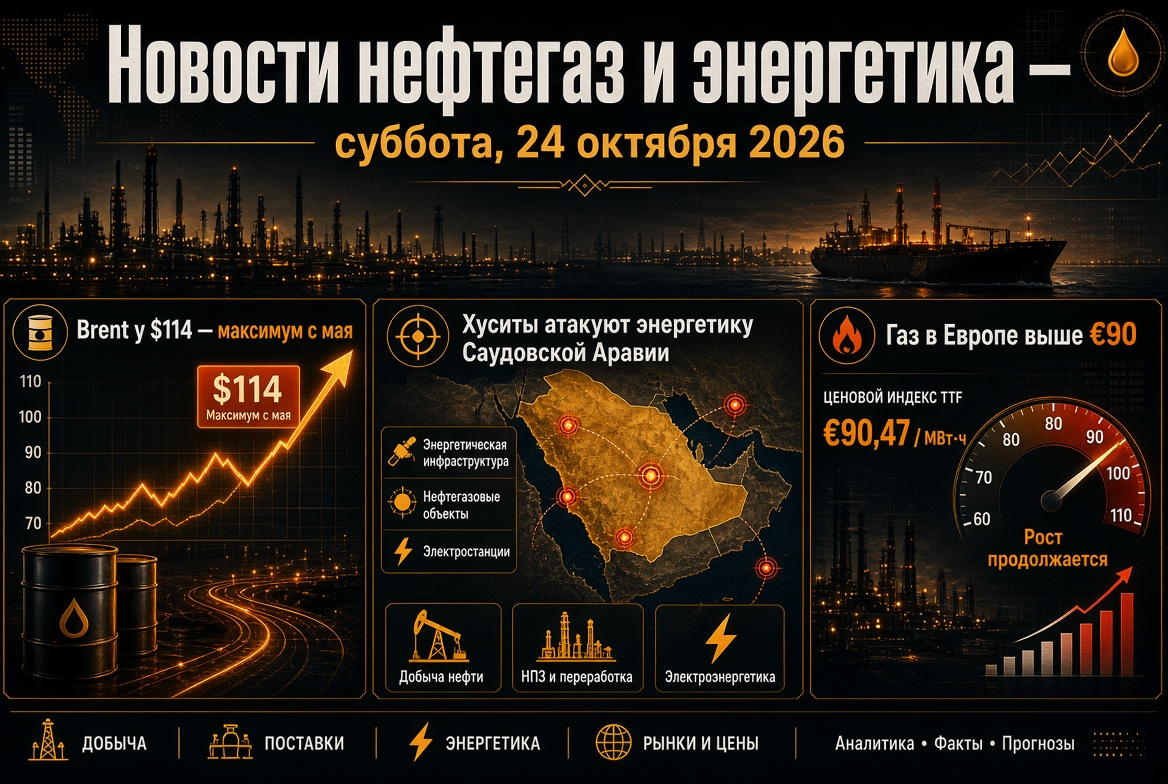
The news from the oil, gas, and energy sectors as of April 20, 2026, revolves around one key theme: the global oil and gas market is reassessing not only the balance of supply and demand but also the reliability of routes, transportation insurance, refinery flexibility, and energy system resilience. The Hormuz factor remains the main driver for oil, gas, LNG, oil products, and electricity, with volatility increasingly shifting from futures to the physical market.
For investors, oil companies, gas traders, fuel companies, refinery operators, and electricity market participants, this indicates a transition into a new phase: the crisis no longer appears as a one-time shock, but normalization is still a distant prospect. At the start of the week, the market will focus not only on Brent and spot gas but also on the actual viability of routes, the rate of gas injections in Europe, refining margins, and the state of product markets.
Key Highlights for Week Opening
- Oil remains in a state of heightened geopolitical sensitivity: Friday's relief in Brent prices does not signify the disappearance of risk premium.
- Gas and LNG sustain global nervousness: Europe enters the injection season with a low baseline, while Asia remains competitive for flexible molecules.
- Oil Products and Refineries are becoming more significant indicators than crude oil itself: diesel, jet fuel, and gasoline demonstrate stress more quickly than raw barrels.
- Electricity and Renewables are increasingly reliant on networks, storage systems, backup capacity, and government policy, rather than just the addition of new generation.
Oil: The Market has Breathed but Not Exhaled
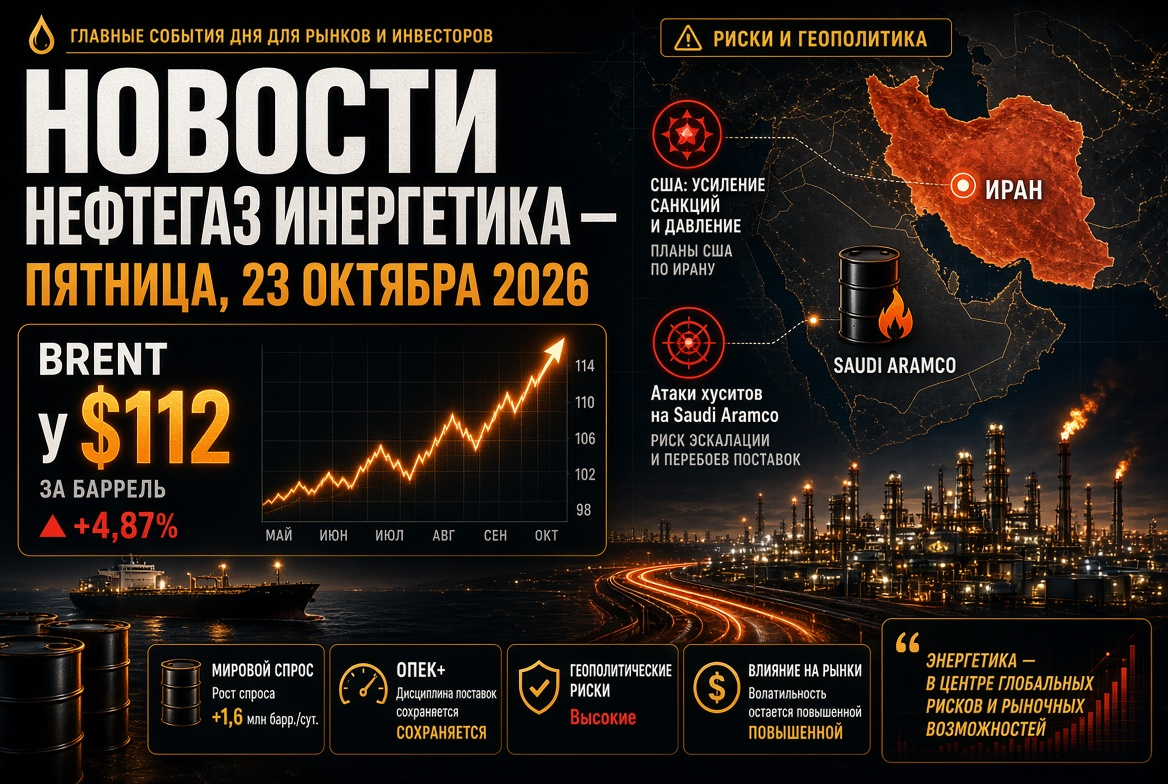
As the new week begins, the oil market enters after a sharp mid-week correction when traders attempted to capitalize on news of eased passage through the Hormuz Strait. However, this reaction appeared more like a technical relief following a surge in fear rather than a definitive trend reversal. For the oil and gas sector, what matters more is that logistics remain unstable, and the price per barrel is now more contingent on route availability, freight costs, and insurance premiums than on the traditional "inventory versus demand" model.
Even as the futures market temporarily alleviates some panic, physical oil continues to trade at a heightened premium. A partial recovery of Iraqi exports is a positive signal for supply, yet it does not alter the overall picture: the global oil market still operates in a state of incomplete normalization, where any new disruption in straits, ports, or export corridors swiftly restores the risk premium.
Supply Balance: OPEC+, IEA, and EIA Signal Diverging Directions
Particularly important for Monday is that the major oil market benchmarks are currently not aligned in tone, yet they converge on one point: 2026 is shaping up to be a year of a more stringent and less predictable balance. The International Energy Agency (IEA) has sharply downgraded its outlook on supply and demand, indicating a decline in global supply in March and reduced global refining utilization. This strengthens the thesis that the oil market remains physically strained, even if exchanges occasionally show relief.
OPEC+, meanwhile, maintains a course towards a managed return of some volumes, formally increasing production for May, while emphasizing flexibility and the right to alter trajectory swiftly. For investors, this means that the nominal increase in quotas is less significant than the actual availability of export flows. The American EIA, in turn, is forecasting higher average Brent prices for 2026, even if the conflict does not prolong. In other words, the base scenario has become costlier than the market anticipated at the start of the year.
Gas and LNG: Europe Enters Injection Season with Low Baseline, Asia Holds Demand for Molecules
The picture in the gas market is more complex than in oil. On one hand, the European Commission confirms that EU infrastructure can fill storage to at least 80% by winter if LNG availability is sufficient, and the system remains flexible due to new regasification capacities. On the other hand, the injection season begins with stock levels below the average of recent years, meaning Europe must again discipline its gas purchases over the summer and avoid a price race at the end of the season.
The LNG market poses additional risks. The arrival of Qatari tankers near Hormuz and signs of a partial restart of capacities in Ras Laffan offer hope for a gradual recovery of some flows. Yet, a portion of Qatar's export capacity is still offline for an extended period. For Europe and Asia, this translates to ongoing competition for flexible LNG cargoes, especially if weather or industrial demand in the second quarter proves stronger than anticipated.
An additional regional marker is Turkey. The long-term contract for importing Iranian gas expires in July, and negotiations for extension have yet to commence. This underscores that even outside the EU, the gas market operates on principles of diversification and precaution. Simultaneously, European buyers continue to seek new routes, including potential supplies of Canadian LNG, enhancing the global competition for gas flows.
Oil Products and Refineries: The Main Stress Transitions from Barrels to Molecules
Delving deeper into the global news on oil, gas, and energy, the primary concern now is not only crude oil but also oil products and refineries. European authorities are already discussing coordination on jet fuel stocks, while the market increasingly monitors diesel, gasoline, and jet fuel. This is logical: in the context of disrupted logistics and expensive raw materials, product balances begin to dictate real inflation for transportation, industry, and aviation.
European refining looks particularly vulnerable. The margins at several refineries have entered negative territory, as the rise in raw material and energy costs has outpaced the growth in final product prices. The simplest refining operations risk cutting back utilization if pressure persists. Concurrently, China has reduced its export of oil products, limiting additional supply in the global market. In the US, tensions are evident in California, where gasoline stocks have fallen to record lows. In Asia and Australia, authorities are ramping up measures to maintain domestic fuel supply, while in several developing countries, the increase in global prices is already translating into higher internal fuel tariffs.
Electricity and Energy Networks: Focus Now on Infrastructure, Not Just Price
The global energy sector enters the week with yet another crucial conclusion: cheap generation without a reliable grid no longer solves the problem. In Europe, the agenda includes reducing the tax burden on electricity, accelerating the adoption of low-carbon technologies, and developing smart grids. This is an attempt to reduce the dependence of the end price of electricity on expensive gas and enhance system resilience against new spikes in raw material quotations.
A Spanish investigation following the massive blackout of 2025 reminds the market that network resilience is now as crucial as the introduction of new capacities. In the US, energy consumption continues to rise at record rates amid data centers, artificial intelligence, and electrification, supporting high demand for gas generation, even as the share of renewables grows. India exhibits the same problem from the opposite side: generation is being built faster than the transmission infrastructure. Tens of gigawatts of solar projects in Rajasthan await connection to the grid, clearly illustrating a new bottleneck in the global energy transition.
Renewables and Coal: The Structural Shift Continues, But Without Immediate Profit Impact
The renewables market remains the structural winner of the long cycle, even as short-term volatility continues to be determined by oil and gas. By the end of 2025, global renewable energy capacity approached half of the world's installed electricity capacity, with solar generation once again emerging as the primary growth driver. This reinforces the significance of renewables not just as a climate solution but also as a tool for energy security.
However, for equipment manufacturers, the picture is notably less comfortable. The Chinese solar sector still suffers from a severe surplus of capacities, and even rising interest in energy independence does not guarantee a quick recovery of margins. Coal, by contrast, received a short-term reprieve due to expensive gas and energy security risks, but this remains a tactical story. In the strategic horizon, the market is betting not on the return of coal but on a combination of renewables, gas, energy storage, network modernization, and, in some countries, nuclear generation.
What This Means for Investors and Market Participants in the Energy Sector
- Focus on Market Fundamentals. For oil and gas, what matters now is not headlines about negotiations, but the actual viability of Hormuz, terminal utilization, insurance costs, and the ability to quickly redirect flows.
- LNG Becomes a Critical Flexible Asset. European gas injection, Asian demand, and the status of Qatari capacities will set the dynamics not only for gas but also for electricity, fertilizers, and part of industrial demand.
- Refineries and Oil Products Come to the Fore. Refining margins, the diesel and jet fuel markets, and China's export policy are now as important as the Brent price itself.
- Premium Shifts to Infrastructure. The winners appear to be companies with access to logistics, storage, trading, flexible refining, networks, backup capacities, and sustainable balances.
Conclusion for Monday
As of April 20, 2026, the main conclusion for the global oil, gas, and energy markets is this: the crisis has shifted from a shock phase to one of chronic volatility. This is no longer just a story about oil prices. This is a narrative about routes, LNG, electricity, refineries, oil products, renewables, coal, and the ability of companies to swiftly adapt to the new architecture of the global energy sector. If logistics in the Persian Gulf stabilizes, the market will gain breathing room. If not, pressures will first return to the physical market—thereby lifting prices once again in Brent, gas, jet fuel, and electricity.