Economic Events and Corporate Reports for Monday, 29 June 2026: US-Iran Negotiations in Bürgenstock, Eurozone Inflation Expectations, Dallas Fed Index, Christine Lagarde's Speech, and Reports from Prosus, Naspers, AeroVironment, and Concentrix
Monday, 29 June 2026, begins for investors with a combination of three key factors: a new round of negotiations between the US and Iran in Bürgenstock, Eurozone inflation agenda, and US regional industrial data. For the CIS markets, this day is significant not only as a standalone date on the economic calendar but also as the start of a week during which investors will assess interest rate trajectories, oil dynamics, dollar resilience, European asset prospects, and sentiment in the technology sector.
The economic events on 29 June 2026 appear moderately busy in terms of the number of releases but are significant regarding their potential impact on currencies, bonds, commodity markets, and equities. The focus will be on Eurozone inflation expectations, the Dallas Fed manufacturing sector index, the evening speech by ECB President Christine Lagarde, as well as corporate reports from AeroVironment, Concentrix, Prosus, and Naspers.
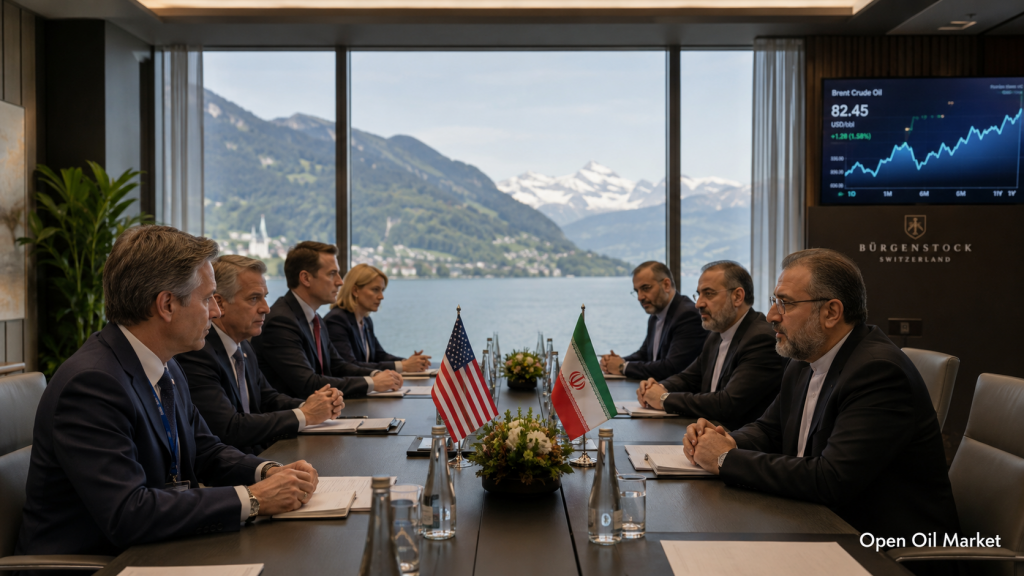
The Main Intrigue of the Day: US-Iran Negotiations in Bürgenstock
The new round of US-Iran negotiations in Bürgenstock becomes the central geopolitical event of Monday. For investors, this is not just a diplomatic detail but a factor directly related to oil, logistics, inflation, and the risk premium in emerging market assets.
The key question is whether the negotiation process can reduce tensions around the Middle East and shipping routes through the Strait of Hormuz. Should the market see signs of de-escalation, this may support risk appetite, reduce pressure on oil prices, and lessen the demand for safe-haven assets. Conversely, if negotiations hit a deadlock, investors may revert to scenarios of rising oil prices, a strengthening dollar, and pressure on energy importers.
- For the oil market, signals regarding the safety of maritime transport are crucial;
- For emerging market currencies, the dynamics of the dollar and global risk are significant;
- For oil and gas sector stocks, expectations concerning Brent, WTI, and export flows are key;
- For bonds, the impact of energy prices on inflation expectations is worth noting.
Eurozone: Inflation Expectations as a Test for the ECB
At 12:00 MSK, investors will be watching a block of data on consumer inflation expectations in the Eurozone. This indicator is essential for assessing how resilient the population perceives price pressures and how tight the European Central Bank's policy may remain.
For the ECB, inflation expectations are among the key indicators of confidence in monetary policy. If expectations remain high, the regulator will find it challenging to soften its rhetoric, even if individual components of inflation start to decline. For investors, this means that European bonds, the banking sector, real estate, and consumer companies will be sensitive to any signs of inflation settling above the target level.
For the CIS audience, European data has practical significance: through euro exchange rates, funding costs, import prices, and dynamics of commodity contracts, the Eurozone continues to influence financial conditions in neighboring markets.
US: Dallas Fed Manufacturing Index Will Show the Temperature of Industry
At 17:30 MSK, the Dallas Fed manufacturing sector activity index for June is expected to be released. The Dallas Fed Manufacturing Index is not among the largest macroeconomic releases in the US, but in the current market environment, it is crucial as an early indicator of the state of industry, orders, employment, and price pressures.
A strong reading may bolster expectations that the US economy remains resilient, and the Federal Reserve will be more cautious with any signals of policy easing. Conversely, a weak index could support demand for bonds and heighten discussions about a slowdown in business activity.
- If the index improves — the market may price in a more stable industrial cycle.
- If the index falls into negative territory — demand for safe-haven assets increases.
- If price components rise — inflation concerns intensify.
- If new orders deteriorate — investors reevaluate forecasts for industrial companies.
Christine Lagarde's Speech: The Key Evening Signal on Rates
In the evening, the focus of European and global markets will shift to the speech by ECB President Christine Lagarde. Investors will be searching for hints regarding the future trajectory of interest rates, assessments of inflation risks, and the regulator's response to geopolitical uncertainties in her remarks.
For Euro Stoxx 50, Eurozone banks, exporters, and highly leveraged companies, Lagarde's tone may become more critical than the statistical data released that day. A hawkish tone could support the euro and bond yields but exert pressure on growth stocks. A more balanced tone might help European stock indices recover from volatility in the technology sector.
Key phrases investors should pay attention to include:
- assessment of inflation and inflation expectations;
- comments on energy risks;
- ECB's stance on further rate hikes;
- evaluation of credit conditions in the Eurozone;
- signals regarding economic growth and consumer demand.
US Corporate Reports: AeroVironment and Concentrix
Among the American companies reporting on 29 June, AeroVironment and Concentrix stand out. Given that there are no major S&P 500 releases on this day, investors will likely view these disclosures more as industry signals rather than as drivers for the entire US market.
AeroVironment is of interest to investors as a representative of the defense technology segment, associated with drone systems, autonomous platforms, and government contracts. Amid geopolitical tensions, the company's report may draw heightened attention to margins, order backlog, and management's forecasts.
Concentrix is crucial as a demand indicator for technology services, customer support, business process outsourcing, and digital transformation. The market will closely monitor whether revenue growth continues, how resilient the margin is, and how the company assesses corporate budgets for the second half of 2026.
Europe and the Global Technology Sector: Prosus and Naspers
The main corporate block outside the US is associated with Prosus and Naspers, which are releasing annual results for the 2026 financial year. For global investors, this is an important pairing, as Prosus remains one of the largest technology investment holding companies in Europe and a significant shareholder of Tencent.
The Prosus report will be important for several reasons: growth in e-commerce and digital ecosystems, profitability of portfolio assets, free cash flow, the impact of Tencent, and stock buyback strategy. For Naspers, Prosus's results are also crucial, as the financial dynamics of the subsidiary largely dictate the investment narrative of the entire group.
Against the backdrop of a revaluation in the global technology sector, investors will pay particularly close attention not only to revenue but also to profit quality. The market is increasingly less willing to pay solely for growth and is demanding more operational efficiency, capital discipline, and a transparent path to sustainable cash flow.
Asia, Nikkei 225, and the Russian Market MOEX: The Reporting Calendar is Calm, but the Background is Important
No comparable scale corporate reports are set to be announced for major companies in the Nikkei 225 and MOEX on 29 June that could independently set market direction. However, this does not render the day neutral for Asia and Russia.
For the Japanese market, the sustainability of rallies in technology and AI-related stocks remains critical. The Nikkei 225 has been sensitive to any changes in sentiment in global semiconductors, data center equipment, and AI-related companies in recent months.
For the Russian MOEX market, key factors include oil, the ruble exchange rate, dividend expectations, sanctions agenda, and yield dynamics. The US-Iran negotiations may impact Russian assets through the oil channel: a decline in the Middle Eastern premium could limit support for oil and gas stocks, while renewed tensions may spike interest in commodity exporters.
What the Day Means for Currencies, Bonds, and Commodities
The economic events and corporate reports on 29 June 2026 create a mixed picture for assets. The currency market will evaluate the balance between the dollar as a safe-haven asset and the euro as a currency sensitive to ECB signals. The bond market will react to inflation expectations, Lagarde's comments, and US industrial data.
For the commodity market, geopolitics remains the chief factor. Oil may move not so much on statistics but on news coming from Bürgenstock and comments from negotiation participants. Gold, on the other hand, will depend on the interplay of the dollar, yields, and demand for safe-haven assets.
- The euro is sensitive to ECB rhetoric and inflation expectations;
- The dollar depends on demand for safe-haven assets and US data;
- Oil reacts to US-Iran negotiations;
- Gold gains support during increases in geopolitical risks;
- Growth stocks are sensitive to rates and bond yields.
What Investors Should Focus On
For investors on Monday, 29 June 2026, it is crucial not to underestimate the low density of the reporting calendar. The day may turn out to be significant precisely due to macroeconomic and geopolitical signals. The US-Iran negotiations have the potential to set direction for oil and risk assets, Eurozone inflation expectations may influence ECB rate expectations, and the Dallas Fed Manufacturing Index may clarify the state of the US industrial sector.
In the corporate segment, four names stand out: AeroVironment, Concentrix, Prosus, and Naspers. For the US, these are signals pertaining to defense technologies and the service economy. For Europe and the global technology market, they represent a check on the investment narrative surrounding Prosus, which is linked to digital ecosystems, Tencent, and capital efficiency.
Key practical focuses for investors on the day include:
- Monitor the outcomes of the US-Iran negotiations and Brent's reaction;
- Assess Eurozone inflation expectations through the lens of ECB policy;
- Compare the Dallas Fed Manufacturing Index with previous US industrial signals;
- Analyze the tone of Christine Lagarde's speech;
- Track the reports from AeroVironment, Concentrix, Prosus, and Naspers;
- Avoid increasing risk without confirmation from currencies, bonds, and commodities.
Thus, 29 June 2026 is a day when global markets will seek not just one main indicator but a combination of signals: diplomacy, inflation, rates, industry, and corporate reports. For investors in the CIS, this configuration is particularly vital as it directly impacts oil, currencies, Russian assets, European securities, and global portfolios.