Global Energy Market on 9 June 2026: Oil and Gas Infrastructure, Tankers, Refineries, Gas Storage, Power Generation, and Renewable Energy
On Tuesday, 9 June 2026, the global energy sector remains at the forefront of interest for investors, oil companies, market participants in petroleum products, refineries, gas traders, and power producers. The main theme of the day is the attempt by the global energy sector to find a new balance between geopolitical risks, logistical constraints, the rising demand for LNG, tensions in the European gas sector, and increased investments in renewable energy sources (RES).
For investors, the energy market currently appears not as a single narrative of growth or decline, but as a collection of mixed signals. Oil retains its geopolitical premium, natural gas becomes a tool for energy security, coal receives backing as a reserve fuel, and electricity increasingly depends on data centre demand, grid infrastructure, and weather factors.
Oil: Geopolitical Premium Remains a Key Driver of Prices
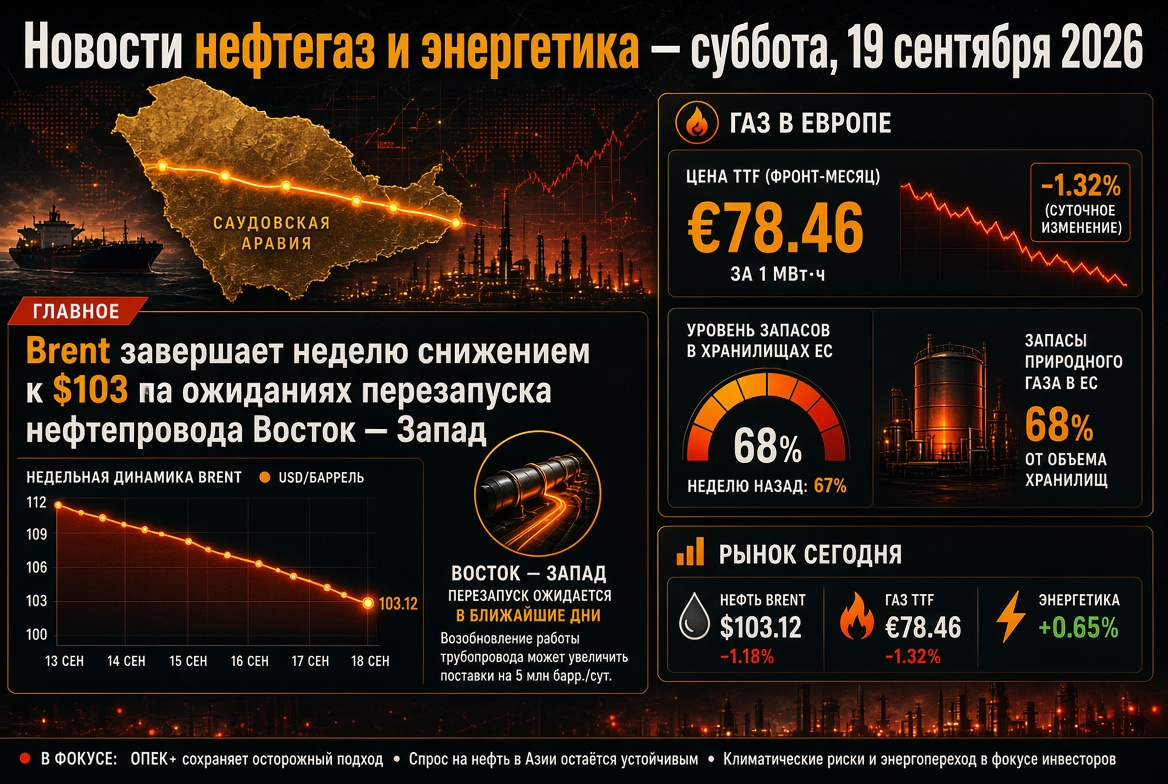
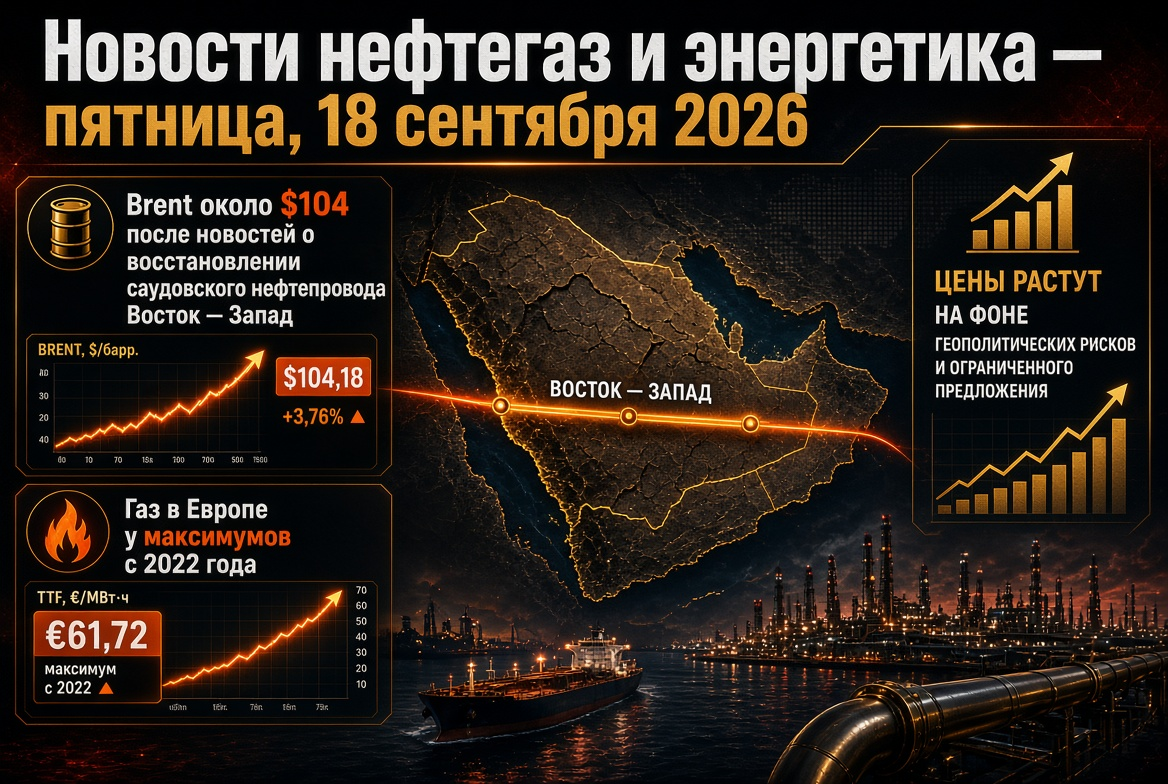
The main factor for the oil market remains the risk of supply disruptions due to tensions in the Middle East. Even with a decrease in the intensity of conflict, traders continue to factor in the likelihood of new restrictions on maritime logistics, tanker insurance, and supplies through strategically important routes.
For oil companies and investors, this means that the price of Brent and WTI crude oil is increasingly determined not just by the balance of supply and demand but also by the risk premium. Any news regarding the cessation of attacks, the resumption of negotiations, or, conversely, new strikes on energy infrastructure can rapidly affect prices. In this environment, it is particularly important to consider not only spot prices but also the structure of the futures curve, freight costs, tanker availability, and the level of commercial inventories.
OPEC+: Formal Increase in Quotas Does Not Alleviate Supply Issues
OPEC+ has agreed to another increase in target production levels for July. However, what matters more to the market is not the quota numbers themselves but the ability of alliance members to actually deliver additional barrels. Against the backdrop of logistical disruptions, sanction limitations, decreased production from some producers, and infrastructure issues, a formal increase in supply may prove limited in impact.
This creates a mixed picture for investors. On the one hand, OPEC+ demonstrates a willingness to gradually return some volumes to the market. On the other hand, the physical oil market remains tight, and actual deliveries may lag behind stated parameters. Therefore, the oil and gas sector remains highly sensitive to operational data regarding exports, tanker flows, and port load factors.
Russia, Oil Exports, and Refinery Utilization: Domestic Market Becomes a Priority
Market participants are paying special attention to the Russian oil sector. A decline in oil exports through Western ports is expected in June amid increased refinery utilization and lower production levels. For the petroleum products market, this serves as an important signal: some crude may be redirected for domestic processing to support the production of gasoline, diesel fuel, fuel oil, bitumen, and other petroleum products.
For fuel companies and traders, this means heightened attention to the balance between crude oil exports and petroleum product output. If refining increases but infrastructure constraints persist, the market could face local imbalances: in some regions, there may be pressure on export flows while in others, there may be a need to maintain stable fuel supplies for industry, transport, construction, and agriculture.
LNG: Asia Returns to the Market, Intensifying Competition with Europe
The liquefied natural gas (LNG) market remains one of the most sensitive segments of the global energy landscape. Asian LNG demand is rebounding, primarily driven by China and Japan. This heightens competition between Asia and Europe for flexible gas shipments, particularly in preparation for the summer consumption peak and the winter season.
For gas companies and investors, the key question is how sustainable the recovery of Asian demand will be. If China, Japan, India, and other major consumers continue to actively procure LNG, Europe will be forced to compete on price to replenish storage. This supports spot index volatility for LNG and creates a favorable environment for producers, traders, and infrastructure owners with long-term contracts.
European Gas Market: Storage, Hydropower, and the Risk of an Expensive Winter
Europe enters the summer season with increased attention to gas storage levels. The most vulnerable point remains the dependence of certain countries on gas generation amid low hydropower output. Italy is one illustrative example: low hydropower generation amplifies gas consumption in electricity generation and may complicate the stockpiling process before winter.
For the electricity market, this translates into an increased reliability premium. The lower the contribution from hydropower, the more critical the roles of gas-fired power plants, coal generation, electricity imports, and storage systems become. For investors in the utility sector, three indicators are of paramount importance: the level of gas storage availability, the dynamics of forward electricity prices, and the ability of grid infrastructure to withstand peak demand.
Power Generation: Data Centres, AI, and Increased Load on Networks
Global power generation is increasingly dependent on structural demand growth. The electrification of industry, the development of artificial intelligence, construction of data centres, and expansion of digital infrastructure create new pressure on energy systems. This is particularly evident in the US, Europe, and Asia, where major tech companies are entering long-term power supply agreements.
For energy companies, this opens up opportunities in generation, networks, battery systems, and flexible power sources. However, for consumers and regulators, the rise in demand presents risks of increasing tariffs, shortages in grid capacity, and the need for accelerated investments in infrastructure. Consequently, power generation is gradually becoming one of the primary investment focal points within the global energy sector.
RES and Geothermal Energy: Clean Generation Becomes a Security Issue
Renewable energy is no longer solely a climate-related topic in 2026. For many countries, RES serves as a tool to reduce dependence on imported gas, coal, and oil. Italy has received approval for a substantial support program for renewable generation, while in the US, court decisions surrounding tax incentives for wind and solar projects have renewed investor interest in clean energy.
An emerging trend is the increased interest in geothermal energy. Major technology firms are seeking stable low-carbon electricity sources for data centres, making geothermal projects a logical complement to solar and wind generation. For the oil and gas sector, this also presents an opportunity to leverage drilling, geology, reservoir management, and infrastructure construction expertise.
Coal: Reserve Fuel Receives Renewed Support
The coal market remains an essential component of the global energy system despite the long-term push towards decarbonisation. Under conditions of high LNG prices, unstable hydrogeneration, and rising electricity demand, thermal coal continues to serve as a reserve fuel for Asia and certain European markets.
For investors, coal appears to be a contentious asset. On one hand, ongoing long-term environmental restrictions and regulatory pressures are present. On the other hand, short-term energy security supports demand for quality thermal coal, especially where gas is either too expensive or physically restricted. This positions the coal sector as being dependent on weather conditions, LNG prices, policies in China and India, and the availability of maritime logistics.
Refineries and Petroleum Products: Gasoline, Diesel, and Residual Fuel Remain Central
The key factors for the petroleum products market include refinery utilization, seasonal demand, raw material costs, and logistical constraints. High oil prices directly impact the production costs of gasoline, diesel fuel, jet fuel, residual fuel, and bitumen. Any reduction in refining availability can swiftly exacerbate shortages of specific fuel types.
For fuel companies, the following factors are particularly important:
- wholesale price dynamics for gasoline and diesel;
- refinery margin dynamics;
- the level of petroleum product stocks in key regions;
- logistics costs, freight, and insurance;
- regulatory limits on fuel exports.
In the current market environment, companies with flexible logistics, access to multiple supply sources, and stable contracts with industrial consumers hold a competitive advantage.
What Matters for Investors and Energy Sector Participants
On Tuesday, 9 June 2026, the global energy market remains a landscape of heightened uncertainty. For investors, oil companies, gas traders, refineries, power producers, and RES market participants, the most crucial insights are not isolated news but the collective signals regarding supply, demand, and infrastructure.
Key Monitoring Factors
- the geopolitical premium in Brent and WTI oil prices;
- actual OPEC+ deliveries compared to stated quotas;
- Russian oil exports and refinery utilization;
- Asian demand for LNG and competition with Europe;
- the level of European gas storage;
- electricity prices and data centre loads;
- investments in RES, networks, batteries, and geothermal generation;
- coal dynamics as a reserve fuel;
- the balance of gasoline, diesel, fuel oil, and other petroleum products.
The main takeaway for investors is that the global energy sector is entering a phase where energy security is becoming as crucial as decarbonisation. Oil, gas, coal, electricity, RES, and petroleum products are increasingly intertwined through pricing, logistics, infrastructure, and policy. Companies capable of managing supply chains, adapting routes flexibly, investing in generation, and controlling risks gain strategic advantages in the global energy market.