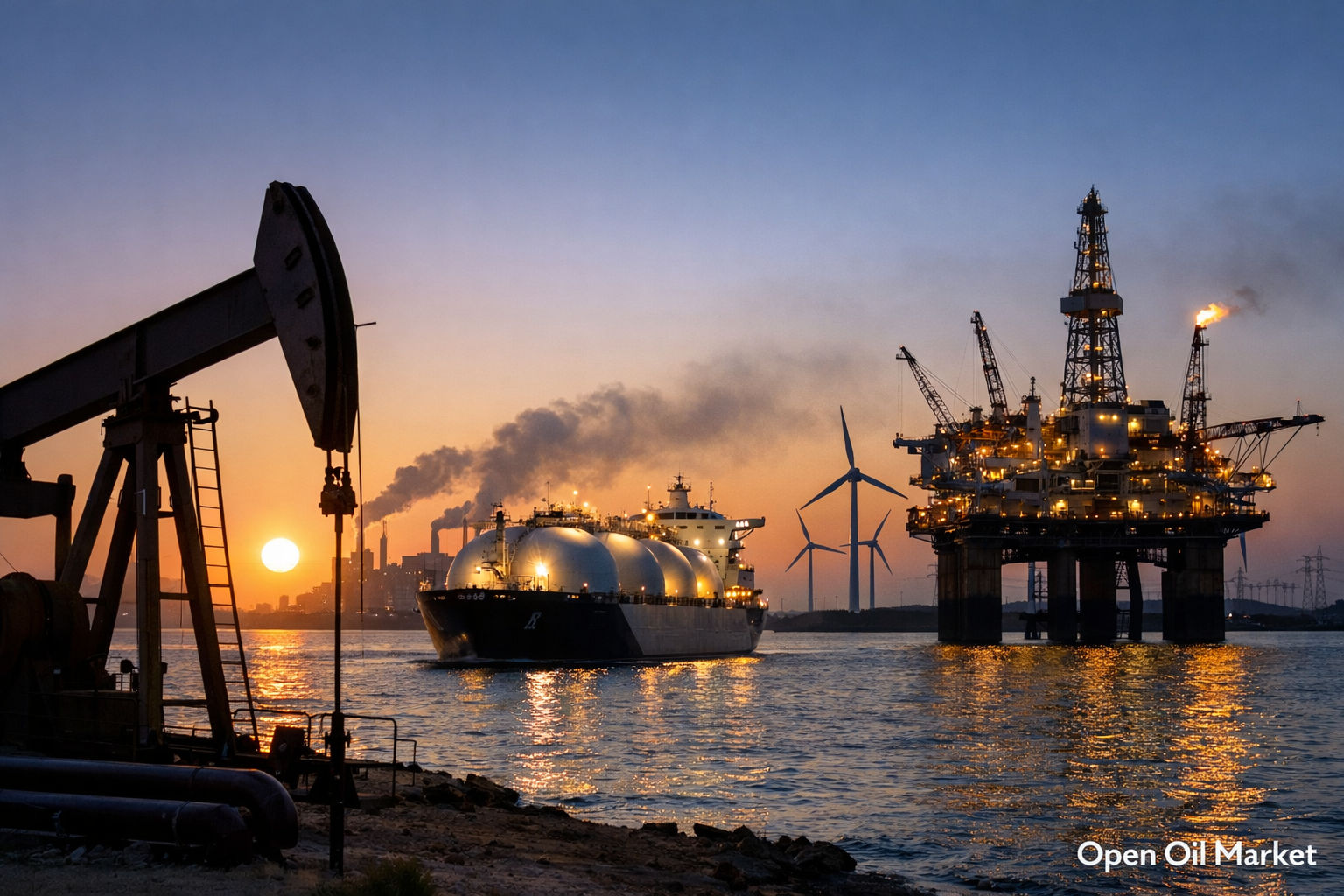
Current Trends in Oil and Gas Sector and Energy on 16 February 2026: Oil and Gas Prices, LNG Market, Electricity Sector Status, Renewable Energy, Coal, and Oil Products. An Analysis for Investors and Participants in the Global Energy Market.
Oil: US-Iran Negotiations and OPEC+ April Turnaround
As of 16.02.2026, Brent is approximately $67.72 per barrel, and WTI is around $62.86. Last week, Brent decreased by about 0.5%, while WTI fell by approximately 1%: the market reacted to potential US-Iran deal signals but could not completely eliminate the premium due to negotiation risks and supply factors. In the US, there is currently no settled WTI price due to a public holiday, which diminishes the informativeness of daily movements across the American curve.
The medium-term focus is shifting towards OPEC+: sources indicate a tendency among several members to consider increasing quotas starting in April; a key meeting of the eight participating countries is scheduled for March 1. Looking ahead to the "spring-summer" period, this increases the significance of spreads (front-month vs. longer contracts) and differentials among oil grades, especially during liquidity crunches. Fundamental assessments also vary: the International Energy Agency's February review incorporates more moderate demand growth and noticeable stock accumulation, which limits growth potential without new supply disruptions.Sanctions and Logistics: The Cost of Maritime Services as a Market Factor
The EU has proposed a broader ban on services supporting the maritime export of Russian oil. If the package is accepted, it could replace the price cap system and increase costs related to insurance, freight, and compliance across the supply chain. As a result, the role of the "shadow" fleet is amplified, and there is an increasing premium for transparent logistics—especially on routes from Russia to Asia and in the oil products segment, where raw material traceability has become a commercial condition for accessing the EU.
For gas, the sanctions framework has become "long-term": the EU has approved a mandatory schedule to cease imports of Russian LNG by the end of 2026 and pipeline gas by autumn 2027, with limited flexibility to push back the timeline in case of issues with underground storage refilling. This increases the value of long-term LNG contracts, regasification capacities, and portfolio flexibility for European buyers and suppliers.Gas: TTF for Europe, Henry Hub for the USA, LNG for Asia
European gas (TTF) is hovering near the low €30/MWh range (latest values around €32/MWh). The market is preemptively accounting for the challenges of the refilling season in underground storage as it structurally moves away from Russian volumes: news about the LNG fleet, routes, and regulations quickly translate into premiums to hubs and increased costs of "flexibility."
In the United States, Henry Hub has returned to a range of about $3–3.5/MMBtu for near-term futures after January's extremes, but the EIA forecast still suggests a higher average price in 2026 (around $4.3/MMBtu). In Asia, the LNG price benchmark (JKM) for spring contracts is around $10–11/MMBtu: the market anticipates a wave of new capacity additions in 2026 and a recovery in Chinese imports, although not necessarily back to 2024 levels.
Electricity and Networks: EU Industry Pressures Regulators
In the EU, leaders from Central European countries are calling for reductions in electricity prices as a condition for industrial competitiveness, highlighting the role of expensive gas and carbon regulation costs associated with the ETS. At the same time, options for adjusting the system of free allocation and the trajectory of ETS2 are being discussed, which is crucial for the electricity, metals, and chemical markets.
Network constraints are becoming a key "bottleneck" in the energy transition. France is advocating for a unified energy market and an integrated European network, while regulators in the UK and France have suspended the approval of a new interconnector, citing disputes over cost and revenue allocation. From an investment perspective, this means that the share of system costs (networks, balancing, connection) in electricity bills is increasing and may dominate over the pure wholesale price.
Renewables: Auctions Accelerate Capacity Additions, Supply Chain Costs Rise
The UK’s Contracts for Difference auction confirmed the scale of demand for renewables: projects totaling 6.2 GW were selected (of which 4.9 GW is solar generation), and the overall capacity of the round is estimated at approximately 14.7 GW. For the market, the strike price levels (based on 2024 prices) are significant: solar generation and onshore wind remain competitive compared to new gas plants on a contractual basis.
In Northern Europe, there is a sustained focus on offshore wind and shared infrastructure. For renewable energy investors, this shifts the focus from "clean generation" to grids, storage, fleet servicing, and equipment—i.e., segments where capacity shortages and supply delays are most frequently evident in the capital investment cycle.
Coal: Structural Shift in Trade Against the Backdrop of Rising Domestic Production
Despite record global demand in 2025, maritime coal imports into Asia have decreased: the market is increasingly defined by China and India, which are ramping up domestic production while simultaneously increasing their share of renewables in generation. China anticipates production growth to 4.86 billion tons in 2026 (the slowest pace in a decade) while forecasting a reduction in imports amid supply risks from Indonesia. The price corridor for thermal coal in mid-February is holding steady around $110–120/ton, supporting export offers and maintaining the competitiveness of coal against LNG in coastal Asia regions.
Oil Products and Refineries: Incidents in Russia and Diesel Stream Readjustments
The oil products market (diesel/gasoil, gasoline, fuel oil) remains vulnerable to refinery outages and sanction-related logistics issues. Processing was halted at the Volgograd refinery after a drone attack: damage to a key facility increases the risk of short-term premiums in regional supply chains. In Europe, sanctions are altering operational models: TotalEnergies has taken full operational control of the Zeeland refinery in the Netherlands, supplying raw materials and taking all output while maintaining the Russian stakeholder's equity share.
Following the EU ban on fuel imports derived from Russian oil, diesel flows are being redistributed: Indian supplies are moving to West Africa, while Europe is enhancing imports from the US and Middle Eastern countries. This makes oil products more sensitive to freight and compliance issues than to oil prices themselves, increasing the value of "flexible" refineries with access to various grades of raw materials.
Forecast for Tuesday, 17 February 2026
- Oil: key risks include news from Geneva (US-Iran) and expectations around OPEC+ ahead of 01.03.2026; base scenario—Brent in the high $60s range, maintaining risk premiums.
- Gas: for Europe—weather and the pace of transition to the refill season; for the USA—temperature forecasts and expectations on EIA reports; for Asia—spread between JKM/TFF and availability of the LNG fleet.
- Electricity: political signals regarding ETS and network investments in the EU, as well as regulations regarding interconnectors and tariffs in the UK.
Brief Analytical Block: Recommendations
- For Investors: prefer businesses with diversified cash flows (integrated majors, gas/LNG portfolios, networks), as volatility in 2026 will often arise from logistics and regulation.
- For Traders: focus on spreads and premiums (oil/oil products/freight), rather than solely on "direction"; this is where arbitrage formations occur amid sanctions.
- For Refineries: proactively hedge product premiums and secure alternative logistics for raw materials and shipments—incidents often "hit" gasoline and diesel more than crude oil.
- For Renewables and Electricity: assess projects considering network charges, connections, and balancing—system costs are the focus of political pressure in the EU.