Oil and Gas Sector and Energy News for Wednesday, June 17, 2026: Strait of Hormuz, Brent and WTI Oil Dynamics, LNG Market, Oil Products, Refineries, Electricity, Renewables, and Coal: Insights for Investors and Participants in the Global Energy Sector
The global energy sector enters Wednesday, June 17, 2026, in a phase of cautious risk reassessment. The day's main topic is the anticipated recovery of shipping through the Strait of Hormuz following preliminary agreements to de-escalate the Middle Eastern conflict. For investors, oil companies, fuel traders, refineries, electricity producers, and gas market participants, this means not a shift to a calm market, but a transition from acute shock to a more complex stage of supply chain recovery.
Oil prices have already responded with a decline: the market is pricing in the return of some supplies from the Persian Gulf, a weakening geopolitical premium, and a gradual recovery of crude and refined product exports. However, the physical market remains strained. Oil and refined product inventories have been depleted, logistics through key maritime routes have yet to normalize, and restoring refinery and LNG infrastructure capacities may take months.
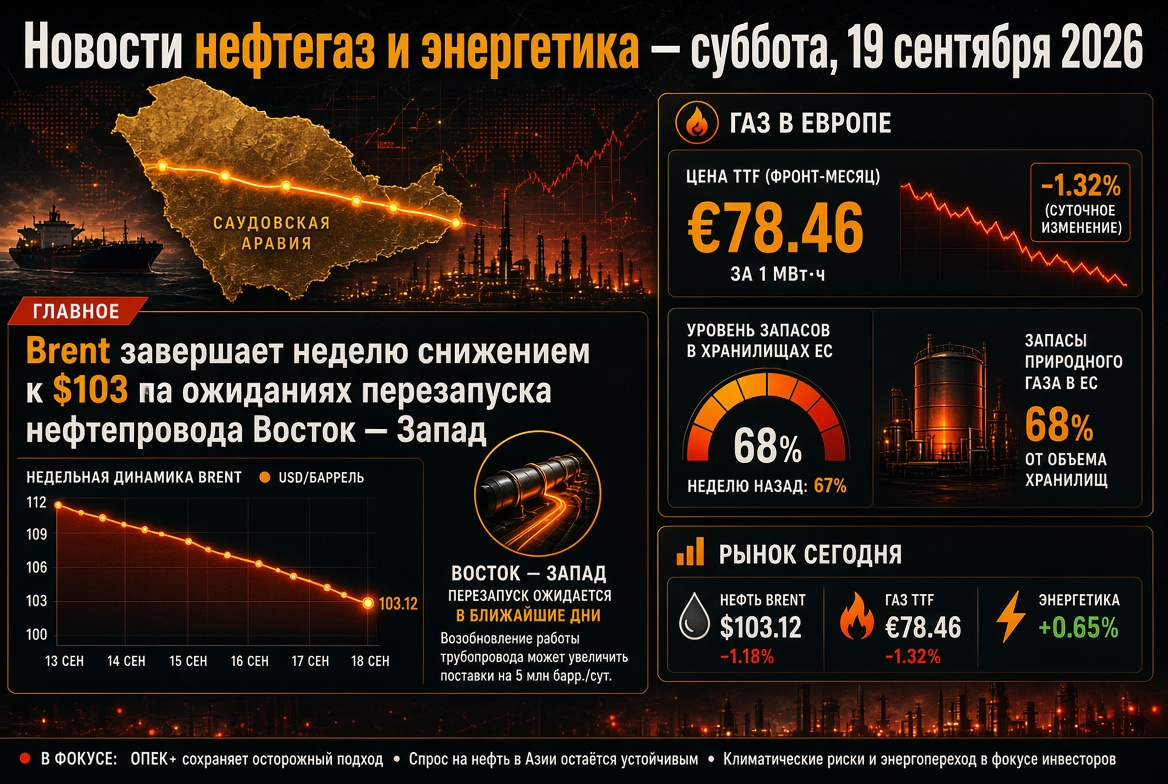
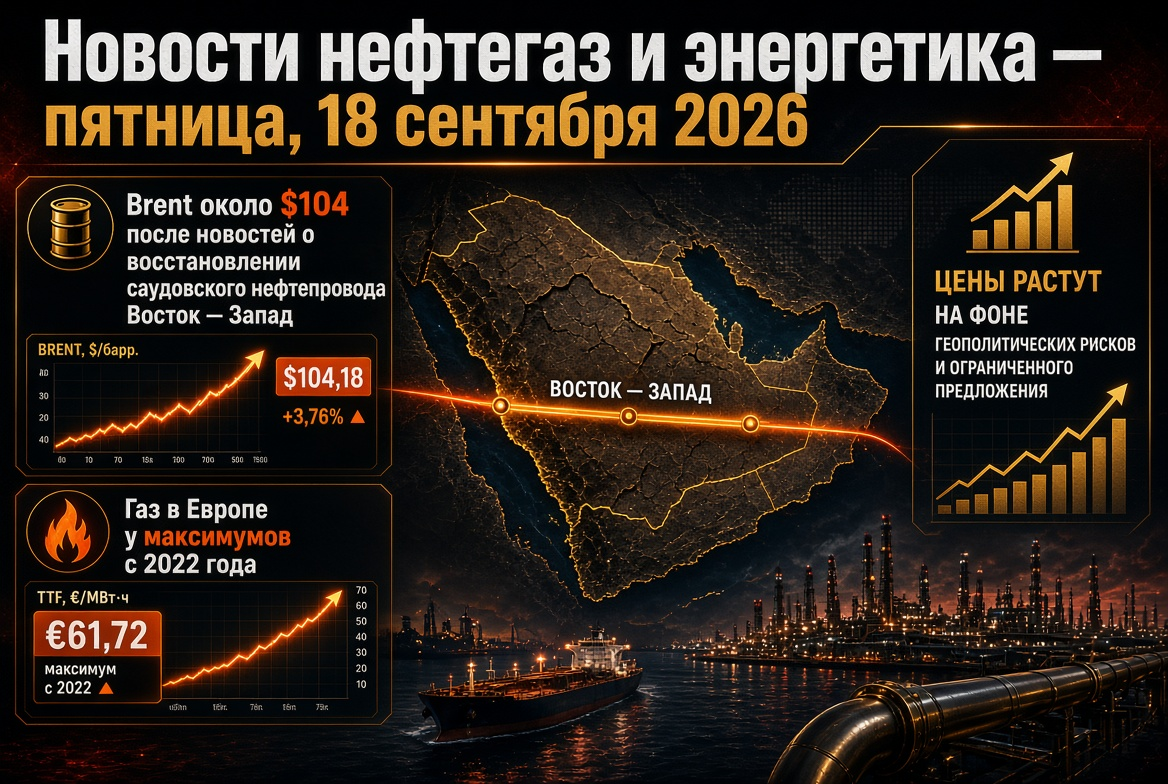
Oil: Brent Decline Does Not Signal End of Risk
In the oil market, the correction of Brent and WTI following news of a possible opening of the Strait of Hormuz has become the main indicator. For short-term traders, this signals a reduction in the military premium; however, for long-term investors, the situation appears more complex. Oil remains sensitive to three factors:
- the speed of the actual recovery of tanker traffic through the Strait of Hormuz;
- the readiness of Persian Gulf countries to quickly return production to previous levels;
- the state of commercial and strategic oil reserves in the largest economies.
Even if the formal opening of the route occurs quickly, the market will require time to ensure the safety of tanker passage, reduce insurance rates, and stabilize new agreements. Therefore, the base scenario for oil companies and investors is not an immediate return to previous prices, but a period of increased volatility, during which Brent may react sharply to news about logistics, negotiations, and inventories.
Strait of Hormuz: The Main Nodal Point of Global Energy
The Strait of Hormuz remains a central risk point for global energy. Under normal conditions, a significant share of global oil, refined products, and LNG supplies passes through this route. For the energy sector, it is not just a geographical object, but an infrastructural corridor that influences the cost of raw materials, freight, insurance, refining, and final oil products.
For market participants, it is essential to distinguish between political statements and the physical recovery of supplies. The former can quickly reduce prices, while the latter requires time. It is necessary to restore shipping schedules, check passage safety, return idle capacities, and stabilize export programs. This is why, even after a decline in prices, the oil and gas market remains vulnerable to new price spikes.
Gas and LNG: Recovery Slower Than Oil Market
The natural gas and LNG market is responding more cautiously to the Middle Eastern de-escalation than the oil market. Unlike crude oil, LNG requires complex infrastructure: gas extraction, liquefaction, storage, specialized tankers, regasification terminals, and long-term contracts. Any disruption in this chain quickly reflects on Asia, Europe, and developing markets.
For gas companies and LNG buyers, key questions for the coming weeks include:
- how quickly supplies from the Persian Gulf region will be restored;
- whether the high demand for U.S. LNG will persist;
- whether Asian consumers will replace expensive gas with coal;
- how Europe will balance between inventories, LNG imports, and industrial demand.
The U.S. gas sector remains one of the beneficiaries of the current situation. Increased production in the U.S., growing LNG exports, and high demand from the energy sector provide support for gas infrastructure, pipeline operators, and export terminals.
Refineries and Oil Products: Margins Decline but Fuel Market Remains Expensive
The oil products market presents a more complicated picture than the crude oil market. Premiums on some grades of oil and oil products in Asia are decreasing to pre-war levels; however, gasoline, diesel, aviation fuel, and marine fuel remain sensitive to low inventories and supply constraints.
For refineries, this indicates an uneven margin dynamic. On one hand, a drop in oil prices improves the purchasing base. On the other hand, restoring processing capabilities in the Persian Gulf, changing export flows, and logistics instability can sharply alter spreads between raw materials and finished oil products. Diesel, jet fuel, and gasoline remain the most crucial, as transport fuels most reflect the actual state of demand.
Fuel companies need to consider that a reduction in oil quotes does not always quickly translate to retail and wholesale prices. Between oil and end fuels are processing, logistics, taxes, insurance, freight, and inventory.
Electricity: Consumption Growth Becomes a Structural Trend
The electricity sector remains one of the strongest long-term themes in the global energy sector. The growth in consumption is linked not only to weather but also to deeper factors: data centers, artificial intelligence, electric vehicles, industrial automation, and the electrification of transport.
In the U.S., generation is expected to rise in the summer amid high temperatures, with additional demand increasingly covered by solar and wind energy. However, gas generation retains a key role in balancing the energy system, and grid modernization is becoming a separate investment emphasis. For investors, this creates demand for companies related to grid infrastructure, energy storage, gas turbines, digital energy management, and distributed generation.
Coal: Asia Returns Coal to the Center of Energy Security
The coal market is back in focus due to a combination of three factors: supply constraints, expensive LNG, and rising electricity demand in Asia. China, India, Japan, South Korea, Vietnam, and the Philippines remain key consumers, for whom coal often acts as a safety resource during gas interruptions or weak renewable output.
The situation is exacerbated by production disruptions in China, uncertainty in Indonesia's export policy, and weather risks. If heat in Asia intensifies demand for cooling, and hydro and wind underperform, coal generation may receive additional support. For investors, this means that coal, despite long-term pressure from climate agendas, retains its significance as a tool for energy security.
Renewables and Energy Transition: Growth Continues, But Oil and Gas Companies Become Cautious
Renewable energy continues to increase its share in global generation, particularly through solar and wind power. However, 2026 shows an important shift: major oil and gas companies are increasingly reassessing their previous renewable energy goals and refocusing on profitability, cash flow, and traditional assets.
For the market, this indicates a more pragmatic energy transition. Companies are not abandoning low-carbon projects but require financial discipline from them. Renewables, energy storage, gas generation, and grids are becoming part of a unified system, where the key questions are not only eco-friendliness but also supply reliability, capital costs, and profitability.
Market Geography: Global Focus Shifts to the Balance Between Security and Price
Today's global energy sector is divided into several regional logics. The Middle East remains the center of raw material and logistical risks. The U.S. strengthens its role as a supplier of oil, gas, and LNG. Europe balances between energy security, industrial competitiveness, and climate goals. Asia remains the main field of demand for oil, LNG, coal, and electricity.
For the global investment audience, the key takeaway is: the energy market can no longer be analyzed solely through Brent prices. It is essential to view the entire energy supply chain — extraction, transportation, processing, storage, generation, grids, renewables, and final demand for oil products.
What Matters to Investors and Energy Sector Companies on June 17, 2026
Investors, fuel companies, oil companies, refineries, and electricity market participants should pay attention to the following factors:
- dynamics of Brent and WTI following news regarding the Strait of Hormuz;
- speed of oil and LNG supply recovery from the Persian Gulf;
- refining margins for gasoline, diesel, aviation fuel, and marine fuel;
- oil and refined product inventories in the U.S., Europe, and Asia;
- demand for gas generation during the summer peak consumption period;
- rising coal prices in Asia and the possible replacement of expensive LNG;
- investments in power grids, renewables, storage, and gas infrastructure.
The main investment takeaway of the day: the decline in oil quotes does not negate the structural deficit of reliable energy infrastructure. The global energy sector is transitioning from the acute phase of geopolitical shock to a recovery phase, where companies with access to liquidity, flexible logistics, robust refining, stable contracts, and the ability to operate in multiple segments — oil, gas, electricity, renewables, coal, and oil products — will thrive.