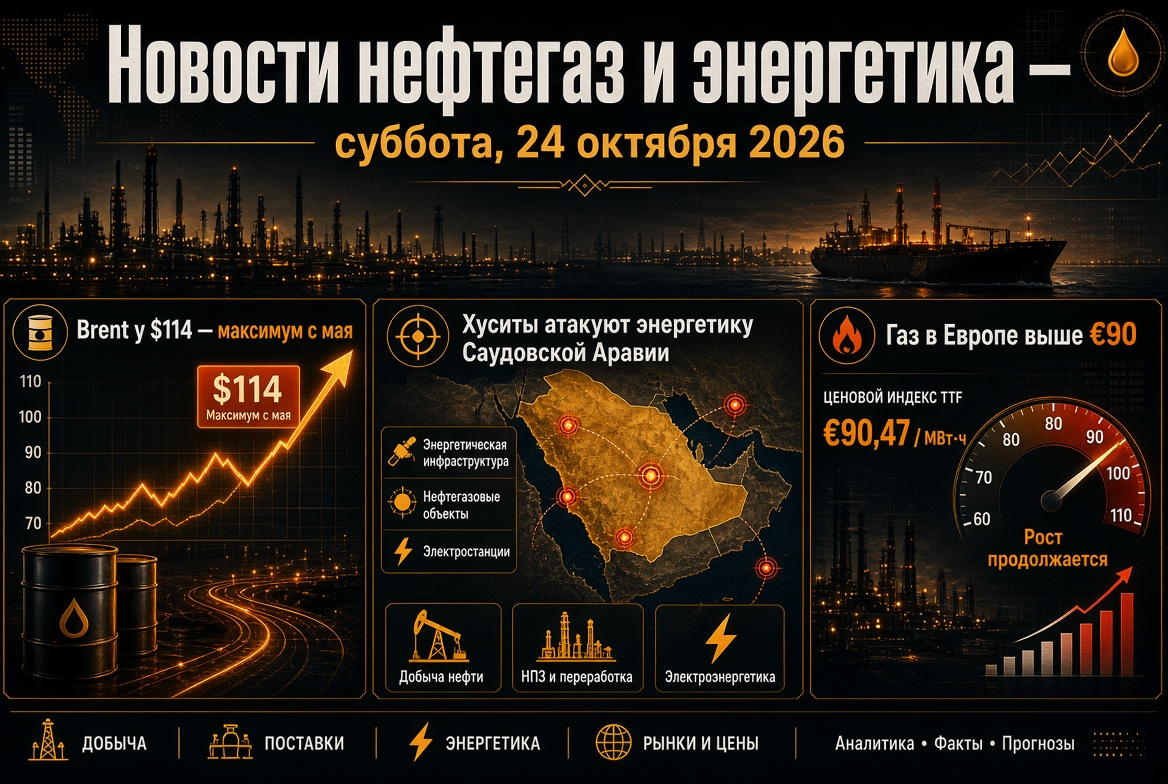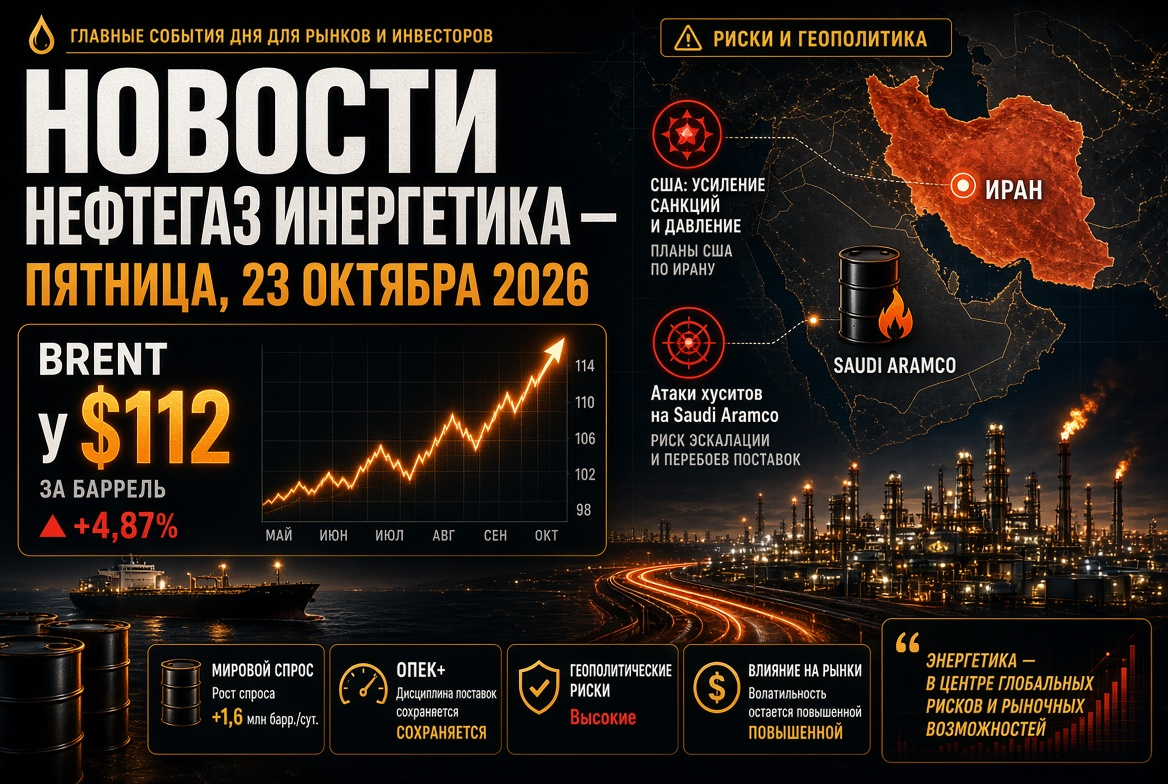
Key News in the Oil, Gas, and Energy Sector for Monday, February 9, 2026. Global Oil and Gas Market, OPEC+ Decisions, Energy, Renewable Energy Sources, Electricity, Coal, Petroleum Products, and Oil Refining.
At the beginning of February 2026, global oil prices remain relatively stable, holding within a high $60 per barrel range. The benchmark Brent is trading around $68–70, while the US WTI hovers between $64–66. After a decline in the second half of 2025, prices have partially recovered thanks to coordinated actions from OPEC+ and certain geopolitical factors. However, overall pressure on the market persists due to oversupply and uncertainty in the global economy. Western countries continue to escalate sanctions: as of February, the price cap on Russian oil has been lowered to approximately $45 per barrel, and the European Union this week announced its 20th sanctions package against Russia, which includes a complete ban on servicing maritime transport for Russian oil and the inclusion of dozens of 'shadow fleet' tankers in the sanctions list. These measures complicate Russia's export deliveries and increase the risk of logistical disruptions. Concurrently, India has seen a sharp decline in Russian oil purchases—January data indicates imports have fallen more than threefold compared to last year, signaling a possible shift in trading flows.
On the domestic market in Russia, the government continues to closely monitor fuel prices. The Federal Antimonopoly Service is conducting unscheduled inspections of oil companies in response to inflation risks in this sector. Winter cold has led to new records in energy consumption: peak loads on the energy system and historical maximums in gas demand have been recorded in several regions. Nevertheless, the energy system is coping with the increased load by utilizing reserves, and serious disruptions have been avoided. At the same time, the global energy transition is maintaining its pace—investments in renewable energy are reaching record levels, and by the end of 2025, the share of 'green' generation in the EU for the first time exceeded that of fossil fuel power generation. In this review, we analyze current trends in global oil and gas markets, assess the state of Russia's fuel and energy complex, and highlight key events in the coal, electricity, and renewable energy segments.
Oil Market: Supply Surplus and Sanction Pressure
At the start of February, oil prices stabilized at moderate levels after a moderate increase. North Sea Brent is holding around $68–70 per barrel, while US WTI is trading in the range of $64–66, bouncing back from the lows ($60) of late 2025. Support for the market comes from signals of OPEC+ readiness to limit supply amid fragile demand. Major oil exporters suspended planned production increases late last year and confirmed the extension of existing production restrictions at least until the end of the first quarter of 2026, aiming to prevent overproduction during the seasonally weak winter demand. The key factors and risks in the oil market include:
- OPEC+ Policy and Demand. Members of the alliance continue to adhere to significant voluntary production cuts (approximately 3.7 million barrels per day in total), having abandoned previously planned increases. OPEC forecasts a rise in global oil demand in 2026 of about +1.2 million barrels/day (to approximately 105 million barrels/day), although notes that a slowdown in the Chinese economy and high interest rates in the US and Europe could adjust these expectations. The oil alliance is closely monitoring the market and is ready to react quickly to prevent imbalances: short-term geopolitical incidents (for example, the recent escalation in the Middle East) have already demonstrated OPEC+'s preparedness to intervene for price stabilization if necessary.
- Sanctions and Redistribution of Flows. The sanction confrontation surrounding Russian oil is intensifying and continues to affect the global market. The new 20th sanctions package from the EU tightens restrictions: European companies are prohibited from insuring and financing tankers transporting oil from Russia, and the 'blacklist' of violator vessels has been expanded. Additionally, as of February, Western countries have lowered the price cap on Russian oil to $45, increasing pressure on Moscow's export revenues. Despite this, Russian hydrocarbons continue to find buyers in Asia, although competition for these markets is rising. In January, India—the largest importer of Russian oil in 2025—reduced purchases to about a third of last year's level, partially redirecting to other sources. This indicates the flexibility of Asian consumers and prompts Russian exporters to actively redirect supplies to China, Turkey, Southeast Asia, and other alternative destinations.
Thus, a combination of factors prevents oil prices from crashing, but also limits their growth. The market is accounting for both the risks of economic slowdown (reducing demand) and the likelihood of a deficit forming in the second half of the year if sanctions significantly reduce supply. For now, prices remain relatively stable, with volatility being low compared to recent years.
Natural Gas Market: Reduced Supplies in Europe and Record LNG Imports
As of February 2026, the European gas market remains relatively calm, despite heightened winter consumption. Underground gas storage (UGS) in the EU is rapidly depleting as the heating season progresses, but relatively mild weather in late January and record LNG supplies are helping to avoid shortages and price shocks. Futures at the TTF hub are holding around $10–12 per million BTUs, which is substantially lower than the peaks of 2022 and reflects market confidence in resource availability this winter. In Russia, early February saw a historic maximum daily gas consumption, with abnormal frosts setting records for withdrawals from the gas transport system.
The situation in the gas market is shaped by several key trends:
- Depletion of Supplies and New Injection Season. Winter withdrawals are quickly diminishing gas supplies in European storage. By the end of January, UGS in the EU had dropped to approximately 45% of total capacity—the lowest level for this time of year since 2022 and significantly below long-term averages (~58%). If current trends continue, supplies could decrease to around 30% by the end of March. To raise the level back to the comfortable 80–90% before next winter, European importers will need to inject about 60 billion cubic meters of gas in the off-season. Achieving this will require maximizing purchases during warmer months, especially since a significant portion of current imports is used immediately for consumption.
- Record LNG Supplies. A decrease in pipeline deliveries is being compensated by unprecedented LNG imports. In 2025, European countries purchased about 175 billion cubic meters of LNG (+30% compared to the previous year), and in 2026, imports are projected to reach 185 billion. The increase in purchases is being supported by expanding global supply: the commissioning of new LNG plants in the US, Canada, Qatar, and other countries is leading to a roughly 7% rise in global LNG production this year (the fastest rate since 2019). The European market is counting on high LNG purchases to successfully navigate the heating season, especially since the EU has decided to completely halt imports of Russian gas by 2027, which will require replacing about 33 billion cubic meters annually with additional LNG volumes.
- Pivot to the East. Russia, having lost the European gas market, is increasing supplies to the East. Flows through the Power of Siberia pipeline to China have reached record levels (near project capacity of ~22 billion cubic meters per year), whereas Moscow is accelerating negotiations for the construction of a second pipeline through Mongolia. Russian producers are also ramping up LNG exports to Asia from the Far East and Arctic regions. However, even with the eastern direction, overall gas exports from Russia have significantly decreased compared to pre-2022 levels. The long-term reconfiguration of gas flows continues, solidifying a new global gas supply map.
Overall, the gas market is entering the second half of winter without prior turbulence: prices remain moderate and volatility has decreased to a minimum in recent years.
Petroleum Products and Refineries: Stabilization of Supply and Regulatory Measures
The global market for petroleum products (gasoline, diesel fuel, aviation fuel, etc.) is relatively stable at the beginning of 2026 after a period of price shocks in previous years. Fuel demand remains high due to recovering transportation activity and industrial growth, but increased global refining capacities are easing the fulfillment of this demand. Following deficits and price peaks in 2022–2023, the situation with gasoline and diesel supply is gradually normalizing, although interruptions are still observed in certain regions. Key trends in the fuel market include:
- Increase in Refining Capacities. New refineries are coming online in Asia and the Middle East, which boosts global fuel output. For instance, the modernization of the Bapco refinery in Bahrain has expanded its capacity from 267 to 380 thousand barrels per day, and new plants have started operating in China and India. According to OPEC’s estimates, the global refining potential will be increasing by about 0.6 million barrels per day annually from 2025 to 2027. The growth in petroleum product supply has already led to a decline in refining margins compared to record levels in 2022–2023, alleviating price pressure for consumers.
- Price Stabilization and Local Disruptions. Gasoline and diesel prices have retreated from peak levels reflecting lower oil prices and increased fuel supply. However, local spikes are still possible: recent frosts in North America temporarily increased demand for heating fuel, while certain European countries still face a premium on diesel due to the restructuring of logistics chains following the embargo on Russian supplies. Governments are occasionally employing smoothing mechanisms—from reducing fuel excise taxes to releasing part of strategic reserves—to control prices amidst sudden spikes in demand.
- Government Regulation of the Market. In some countries, authorities are directly intervening in the fuel market to stabilize supply. In Russia, following the fuel crisis of 2025, restrictions on the export of petroleum products remain in place: the ban on the export of gasoline and diesel fuel for independent traders has been extended until summer 2026, with oil companies allowed only limited shipments abroad. Concurrently, a damping mechanism has been extended, under which the government compensates refiners for the difference between domestic and export prices, incentivizing supplies to the domestic market. These measures have alleviated fuel shortages at gas stations while emphasizing the significance of manual control. In other regions (for example, in some Asian countries), authorities are also resorting to temporary supporting measures—such as tax reductions, subsidizing transportation, or increasing import supplies—to mitigate the effects of sharp price fluctuations.
Electricity: Rising Demand and Network Modernization
The global electricity sector is facing accelerated demand growth accompanied by serious infrastructure challenges. According to the IEA, global electricity consumption is expected to grow by more than 3.5% per year over the next five years—significantly outpacing the overall growth of energy consumption. The drivers include the electrification of transport (increased electric vehicle fleets), digitalization of the economy (expansion of data centers, development of AI), and climatic factors (active use of air conditioning in hot climates). After a period of stagnation in the 2010s, electricity demand is once again rapidly increasing even in developed countries.
As of early 2026, extreme frosts led to record peak loads on energy systems in several countries. To avoid blackouts, operators had to deploy reserve coal and oil-fired power plants. Although at the end of 2025, coal’s share in the EU’s electricity generation has decreased to a record low of 9%, some European states have temporarily returned mothballed coal-fired power plants into operation for peak coverage this winter. Simultaneously, infrastructure bottlenecks have become evident: inadequate network capacity forced limitations on energy output from renewable sources on windy days to avoid overloads. These events underscore the urgent need for accelerated modernization of the grid and the development of energy storage systems.
Key priorities in electricity development include:
- Modernization and Expansion of Networks. Increasing loads necessitate large-scale upgrades and development of the electricity grid infrastructure. Many countries are launching accelerated programs for building high-voltage transmission lines and digitalizing energy system management. According to the IEA, over 2500 GW of new generation capacity and large consumers worldwide are awaiting connection to the networks—bureaucratic delays are measured in years. It is projected that annual investments in electricity grids must increase by approximately 50% by 2030; otherwise, generation development will outpace infrastructure capabilities.
- Reliability and Energy Storage. Energy companies are implementing new technologies to maintain stable electricity supply amid record loads. Energy storage systems are being developed universally—large industrial battery farms are being constructed in California and Texas (USA), in Germany, the UK, Australia, and other regions. These batteries help balance daily peaks and integrate intermittent renewable energy generation. Simultaneously, network protection is being enhanced: the industry is investing in cybersecurity and equipment upgrades, considering risks to reliability from extreme weather, infrastructure wear, and the threat of cyberattacks. Governments and energy companies are directing significant resources toward increasing flexibility and resilience in energy systems to prevent widespread blackouts as economies become increasingly reliant on electricity.
Renewable Energy: Record Growth and New Challenges
The transition to clean energy continues to accelerate. The year 2025 has been record-breaking for the commissioning of renewable energy sources (RES) capacity—primarily solar and wind power plants. According to preliminary data from the IEA, in 2025, the share of RES in the global electricity generation volume for the first time equaled that of coal (around 30%), while nuclear generation also reached a record level. In 2026, clean energy production will continue to increase at a faster pace. Global investments in the energy transition are reaching new highs: according to BNEF, over $2.3 trillion was invested in clean energy and electric transport projects in 2025 (+8% compared to 2024). Governments of leading economies are strengthening support for 'green' technologies, viewing them as drivers of sustainable growth.
Despite impressive progress, the rapid development of RES is accompanied by challenges. The experience of winter 2025/26 demonstrated that with a high share of intermittent generation, having backup capacity and storage systems is critically important: even advanced 'green' energy systems are vulnerable to weather anomalies. To enhance stability, some countries are adjusting their policies: for example, Germany is considering extending the operation of nuclear reactors, acknowledging that an abrupt transition away from nuclear energy may be premature, while the EU is temporarily easing some climate regulations to avoid price spikes. However, the long-term course towards decarbonization remains unchanged—its implementation requires a more flexible and balanced approach that combines accelerated deployment of RES with maintaining energy supply reliability.
Coal Sector: High Demand in Asia Amidst Phase-Out
The global coal market in 2026 remains on the rise: global coal consumption remains at historically high levels despite efforts to reduce reliance on this fuel. According to the IEA, global demand for coal reached over 8 billion tons in 2025—close to a record level. The primary reason is the consistently high demand in Asia. Economies such as China and India continue to burn huge volumes of coal for electricity generation and industrial needs, offsetting the decline in coal use in Western Europe and the US.
- Asian Appetite. China and India account for the lion's share of global coal consumption. China, responsible for nearly 50% of global demand, even while producing more than 4 billion tons of coal per year, is still compelled to increase imports during peak periods. India is also increasing its production, but with its booming economy, it needs to import significant volumes of fuel (mainly from Indonesia, Australia, and Russia). High demand from Asia supports coal prices at relatively high levels. Major exporters—Indonesia, Australia, South Africa, and Russia—have increased revenue due to stable orders from Asian countries.
- Gradual Phase-Out in the West. In Europe and North America, the coal sector continues to contract. After a temporary spike in coal use in the EU in 2022–2023, its share is again declining: by the end of 2025, coal accounted for less than 10% of electricity generation in the EU. Record investments in RES and the return of nuclear facilities to operation are pushing coal out of the energy balance of developed countries. Investment in new coal projects has virtually halted outside Asia. It is expected that in the second half of the decade, global demand for coal will begin to decline sustainably, although in the short term, this type of fuel will remain important for covering peak loads and industrial needs in developing economies.
Forecast and Outlook
Despite a series of winter upheavals, the global fuel and energy complex enters February 2026 without signs of panic, although in a state of heightened readiness. Short-term factors—extreme weather and geopolitical tensions—support price volatility in oil and gas; however, the systemic balance of supply and demand remains stable overall. OPEC+ continues to play the role of stabilizer, preventing the oil market from falling into deficit, while timely redirection of supplies and increased production from other countries (e.g., the US) offsets local disruptions.
If no new shocks occur, oil prices are likely to remain near current levels until the next OPEC+ meeting, when the alliance may reassess quotas depending on the situation. For the gas market, the coming weeks will be decisive: mild weather in the second half of winter may allow prices to drop and begin stock replenishment, while a new cold front threatens a price spike and challenges for Europe. In spring, EU countries will face a massive campaign to fill UGS in preparation for the next heating season—competition with Asia for LNG promises to be fierce.
Investors are closely watching political signals. Possible progress in resolving geopolitical conflicts (for example, peace negotiations regarding Ukraine) or, conversely, escalation of tensions (a worsening of the US-Iran standoff) could significantly impact market sentiment. However, long-term development vectors—technological changes, global energy transition, and climate agenda—will continue to shape the landscape of the global energy sector, setting investment and transformative directions for years to come.