Oil, Gas, and Energy Sector News for Friday, January 23, 2026: Global Oil and Gas Market, Power Generation, Renewables, Coal, Oil Products, Key Trends, and Events in the Global Energy Sector.
The global fuel and energy sector market is witnessing a revival as of January 23, 2026. Oil prices are on the rise supported by new data and events, while gas prices in Europe are soaring due to abnormally cold weather, prompting key changes in the energy sector. Focus areas include Venezuela’s return to the oil market, significant gas price hikes in the EU, and records and trends in power generation. Below is an overview of the key developments in the oil, gas, and energy sectors relevant to investors and participants in the global energy market.
Global Oil Market: Price Trends and Supply
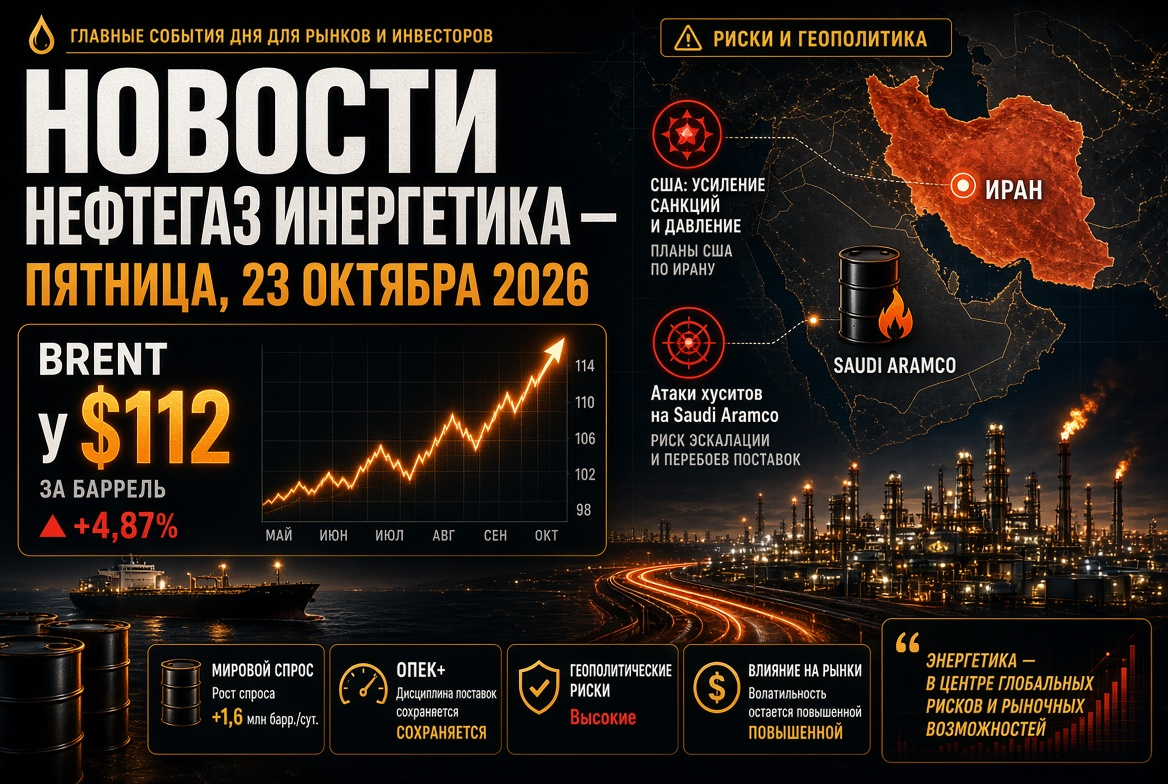
Global oil prices continued their moderate ascent. March futures for Brent are holding around $65 per barrel following the release of inventory data from the U.S. and amid constrained supply. Despite oil prices dropping approximately 18% in 2025 due to concerns over a market oversupply, stabilization has been observed in the new year. Key OPEC+ countries are adhering to agreements to maintain limited production: earlier, eight leading exporters of the alliance decided to freeze planned oil production increases for the first quarter of 2026. This move aims to support the balance of supply and demand after a period of declining prices.
The oil market is influenced by mixed factors. On one hand, there is an unexpected reduction in supply: production at Kazakhstan's largest field, **Tengiz**, has been temporarily halted due to a technological incident. The operator has declared force majeure, canceling shipments of approximately 700,000 tons of oil for January-February. This means a temporary reduction in Caspian oil exports via the CPC pipeline, slightly supporting prices. On the other hand, new sources of supply are emerging in the market: the U.S. is effectively easing oil sanctions against Venezuela. American company Valero Energy has purchased the first batch of Venezuelan oil – the first time in recent years – under agreements between Washington and Caracas. Venezuela’s return to the global oil market after a long hiatus increases crude oil availability and may intensify market competition in the long run.
Overall, the oil market currently balances between OPEC+'s efforts to maintain prices and the influx of additional oil volumes. Despite sanctions, global producers are maintaining high production levels. For example, oil production in Russia remained steady in 2025 at around 516 million tons, highlighting the flexibility of oil companies in redirecting export flows. While oil prices are held within a relatively narrow corridor, investors in oil companies assess risks: on one hand, limited supply and geopolitical factors support prices; on the other hand, potential demand slowdown and new supply sources (Venezuela, Guyana, increased production in Brazil, etc.) may limit price growth.
Gas Market: European Prices Surge During Cold Spells
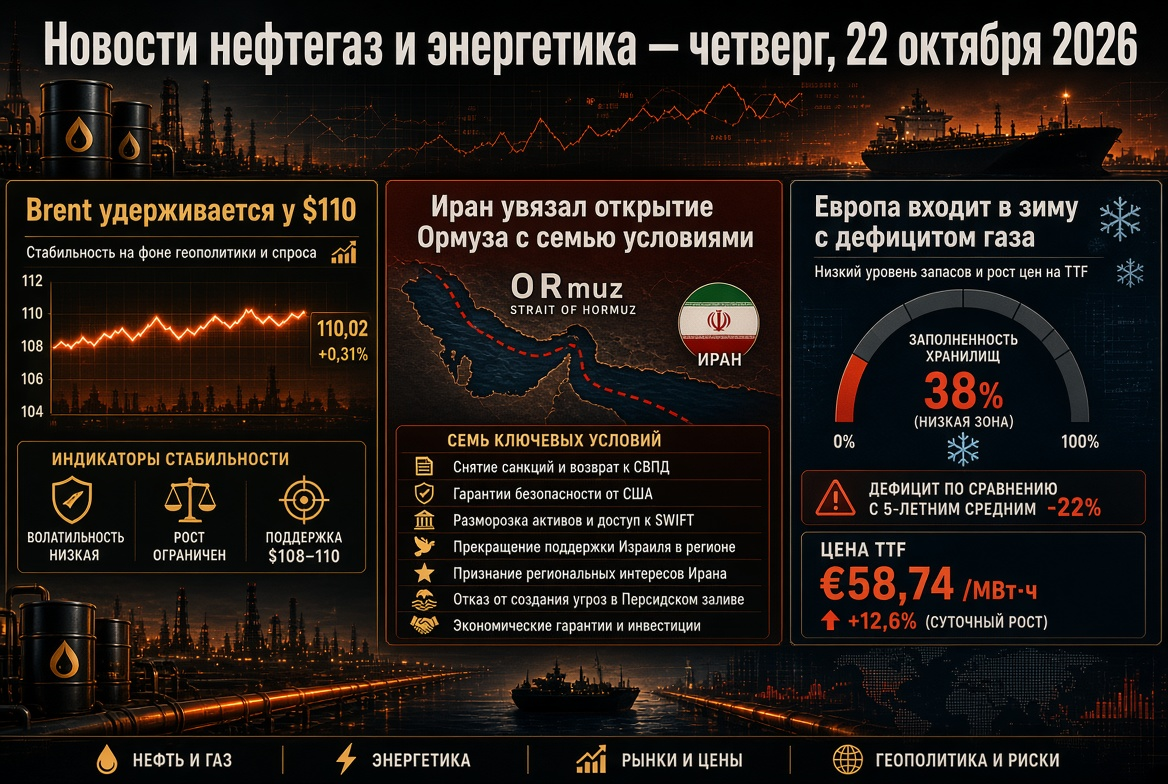
The European gas market is experiencing a sharp price surge this winter. Abnormal cold and energy factors have pushed spot gas prices in the EU close to the psychological threshold of $500 per thousand cubic meters. At the Dutch TTF hub, gas quotes jumped more than 10% in just one day, reaching their highest levels since mid-2025. The main reason is the intense cold: January this year has become one of the coldest in the last 15 years in Europe, several degrees colder than normal. The frosty weather and calm conditions decreased wind energy output, increasing the burden on gas power plants and the energy system.
Simultaneously, gas reserves in European storage facilities are rapidly declining. The average fill level of European gas storage sites has already dropped to approximately 48–49%, nearly 15 percentage points below the average multi-year level for this time of year. In other words, gas withdrawals from storage are occurring faster than usual – estimates suggest that the withdrawal schedule is ahead of previous years by about a month. If cold weather persists, there is a risk that by the end of winter gas storage levels will approach minimum levels, which heightens market volatility.
- Supply Restrictions: Since the beginning of 2025, Europe has lost transit of Russian gas through Ukraine, reducing pipeline supplies. The deficit has been attempted to be compensated by increasing imports of liquefied natural gas (LNG).
- Record LNG Imports: By the end of 2025, European countries purchased around 109 million tons of LNG (approximately 142 billion cubic meters after regasification) – an increase of 28% compared to the previous year. In January 2026, LNG imports could reach a record 10 million tons (+24% year-on-year), considering that terminal capacities are only half utilized. This indicates that infrastructure still has room for scaling up LNG imports.
- System Load: High gas withdrawal for heating and electricity generation, combined with decreased wind generation, has exposed the vulnerabilities of the energy system. European energy companies are forced to burn more gas to maintain power supply, relying on reserves in storage as the most flexible backup source. At the same time, gas prices have increased in the U.S. – one of the key LNG suppliers – somewhat limiting the ability to rapidly boost American fuel exports to Europe.
In the long term, the situation in the gas market will depend on the weather and global supply. If February and March are milder, price growth may pause and allow Europe to stabilize remaining reserves. Nevertheless, the current surge creates a "long tail" effect: the European Union will need to replenish depleted storage at an accelerated pace in summer 2026. This means sustained high demand for LNG in the global market for at least the coming months. Analysts also note that mid-term, significant new LNG projects will come online in North America and the Middle East, potentially easing the pricing situation by 2027. However, currently, European gas consumers are entering the end of the winter season with heightened deficit risks, and the market requires flexibility and additional fuel volumes for stabilization.
Power Generation and Renewables: Record Share and Decline of Coal
The global power sector continues to gain momentum in the transition towards cleaner sources. Renewable energy sources (RES) set a new record in the European energy balance: in 2025, the total share of wind and solar generation in the European Union surpassed the share of electricity generated from fossil fuels for the first time. Wind and solar power plants accounted for about 30% of electricity production in the EU, while coal and gas stations contributed approximately 29%. This symbolic shift indicates that green energy has risen to a leading position in Europe, surpassing fossil fuel sources in generation.
Positive shifts are occurring not only in Europe. For the first time in half a century, a simultaneous decrease in coal power generation was noted in the two largest developing economies – China and India. According to industry analysis, in 2025, coal power plants in China and India generated less energy than the previous year, enabled by a record input of RES capacities. The growth of solar and wind installations in these countries was sufficient to cover the increased demand for electricity, thus reducing reliance on coal. This moment is regarded as historic: the synchronous decline of coal generation in the two largest coal-importing countries indicates the onset of structural changes in the Asian energy sector.
- Record Investments: Global energy companies and investors are directing significant resources towards the development of RES. Worldwide, power capacity is being increased in solar and wind energy, supported by government initiatives and private capital. Many oil and gas corporations have announced diversification plans, investing in solar and wind projects, energy storage, and hydrogen production.
- Reduction in the Coal Sector: Although in certain regions (e.g., Southeast Asia) demand for coal remains temporarily high, there is a global trend towards its reduction. G7 countries and many developing economies are aiming for a phased exit from coal generation over the coming decades. The diminishing role of coal is contributing to reduced emissions and stimulating demand for gas and RES as less carbon-intensive sources.
- Challenges for the Power Sector: The increase in the share of renewable generation necessitates modernization of energy systems. For instance, the recent cold spell revealed that in the absence of wind, the load shifts to traditional generation, particularly gas-fired. To ensure stable electricity supply, countries are investing in energy storage systems, developing “smart” grids, and standby capacities. This thereby enhances energy supply reliability amid the variability of renewable sources.
Overall, the energy transition continues to deepen. The year 2025 was one of the warmest on record and simultaneously marked a year of record growth in clean energy. This confirms the inextricable link between climate goals and the restructuring of the energy sector. For the electricity market, the global trend is clear: the share of RES will continue to increase, while traditional generation forms (coal, and in the future gas) will gradually decline. Energy investors are accounting for these changes, placing bets on sustainable and environmentally friendly projects, impacting corporate capitalization in the sector.
Energy Geopolitics and Sanctions: New Strikes and Adaptations
Geopolitical factors continue to exert a powerful influence on oil and gas markets. In 2026, there is an expansion of sanction pressure on traditional energy exporters, while local relaxations are emerging for some countries. In the U.S., a new sanctions package targeting the Russian fuel and energy sector is under discussion: the so-called “Russia Sanctions Act – 2025” includes the introduction of 500% tariffs on trade of oil, gas, coal, oil products, and uranium of Russian origin for any countries continuing such transactions. The Donald Trump administration had suspended this bill last year, but in January 2026 signals emerged regarding readiness to revisit its consideration – with the provision that such stringent measures would only be applied when necessary. Nevertheless, even the threat of such tariffs is already influencing buyers' behavior regarding Russian raw materials.
India, which had previously become the largest importer of Russian oil, has noticeably reduced its purchases. Market data indicates that supplies of Russian oil to Indian refineries at the beginning of 2026 have decreased almost by half compared to peak volumes in mid-2025. This occurred after Washington ramped up pressure: in August 2025, the U.S. raised tariffs on Indian goods by 25%, and in October imposed sanctions on several major Russian energy companies. As a result, Indian refineries diversified their raw material sources, reducing Russia’s share. Similar actions can be observed in several other countries: fearing secondary sanctions, they are decreasing cooperation with Moscow in the oil and gas sector. Many Western fuel companies and traders have previously exited the Russian market, prompting Russia to redirect exports to friendly jurisdictions (China, Turkey, the Middle East, Africa) and offer discounts on its oil.
European Union countries continue to maintain a sanctions policy in the energy sector. As part of the implementation of the oil embargo and price cap, the EU has intensified monitoring compliance with restrictions. On January 22, France detained a tanker with Russian oil in the Mediterranean Sea, suspecting it of violating sanction requirements. According to President Emmanuel Macron, the operation was conducted jointly with allies and demonstrates Europe’s determination to combat circumvention of imposed measures. The detained vessel has been redirected to port for investigations; this precedent serves as a signal to the market that European regulators will strictly clamp down on unauthorized exports of oil and oil products from Russia.
Meanwhile, the global sanction confrontation is taking on a selective nature. Alongside a tough stance on Russian energy resources, Washington is taking steps toward other players: it has been noted that the U.S. has eased restrictions regarding Venezuela, partially allowing the export of Venezuelan oil to the global market in exchange for political concessions. Additionally, in January 2026, the U.S. administration announced the introduction of additional 25% tariffs for countries that continue cooperation with Iran in the oil and gas sector – as part of a strategy to pressure Tehran. Thus, the geopolitical landscape appears colorful: some supply channels are blocked while others are opened. The energy resource market is adapting to new realities: alternative logistics chains are emerging, "shadow" fleets of tankers are developing to circumvent restrictions, and new trading partnerships are forming. In the short term, sanctions create uncertainty and regional supply imbalances – for example, Europe and the U.S. are tightening control over Russian exports, while Asia benefits from discounts. However, in the long term, participants in the energy sector are seeking stability: even under sanctions, Russian oil exports are remaining close to pre-crisis levels, as global oil and gas flows gradually rearrange, reducing the system’s vulnerability to political factors.
Market Prospects: Demand, Investments, and Energy Transition
Forecasts for 2026 in the oil and gas sector reflect cautious optimism. According to the International Energy Agency (IEA), global oil demand in 2026 is expected to reach approximately 104.8 million barrels per day – a mere 0.8% increase from 2025. The slowdown in growth rates is attributable to modest economic growth and energy-saving measures. In developed countries, oil demand is stagnating or structurally declining: for instance, refined product consumption in Europe and Japan remains at multi-year lows, while in the U.S. – the largest consumer – overall oil consumption is expected to remain close to 2025 levels. The main growth in demand is shifting to the developing economies of Asia, the Middle East, and Africa, with China remaining the leader. However, even in China and India, demand growth is expected to be less dynamic than previously projected, partly due to accelerated electrification and the penetration of RES.
On the supply side, however, an increase is more likely. Non-OPEC+ producers plan to ramp up production: by 2026, non-OPEC supply is anticipated to grow by over 1 million barrels/day. Most of the new volume will come from projects in the Western Hemisphere. In Brazil, major pre-salt oilfields will continue to ramp up capacity, with EIA forecasting an addition of about 0.2 million barrels/day to the country’s production (up to 4 million barrels/day). New players are also emerging: Guyana is increasing exports from its newly developed offshore blocks, oil production from tar sands is expanding in Canada, and the U.S. shale sector remains resilient even at moderate oil prices due to improved efficiency and cost-cutting. These factors will lead to the global oil market experiencing pressure from excessive supply. Major investment banks have already adjusted their price forecasts: for example, Goldman Sachs predicts that the annual average price of Brent in 2026 will be around $56 per barrel, while JPMorgan analysts project a range of $57–58 per barrel for Brent in 2026–2027. This is significantly lower than early-year levels, indicating a likely shift in balance favoring buyers unless new force majeure events occur.
The gas market is also heading towards a state of supply abundance in the medium term. According to industry reports, significant liquefaction capacities in the U.S., Qatar, and East Africa are expected to come online in 2026–2027. A wave of new LNG could create a situation in the gas market where buyers dictate terms – especially in Asia and Europe, where demand growth for gas is expected to slow due to high bases from previous years and climate policy. Experts believe that after the current winter price surge, gas prices may experience relative easing by the end of 2026: additional LNG volumes and the recovery of stocks will reduce the risk of shortages. However, the gas market will remain volatile: factors such as weather anomalies, resource competition between Europe and Asia, and geopolitics (e.g., situations around gas exports from the Eastern Mediterranean or Central Asia) will create occasional price fluctuations.
Investment in the energy sector remains at high levels despite all transformations. Major oil and gas powers are declaring substantial investments in the industry. For instance, Russia plans to invest about 4 trillion rubles in the development of oil refining and gas chemistry by the end of the decade (an estimate provided by Deputy Prime Minister Alexander Novak). Similarly, Middle Eastern countries (Saudi Arabia, UAE, Qatar) are realizing megaprojects to expand refining facilities and LNG production, aiming to monetize resources before peak global demand. Concurrently, increasing funds are also being directed towards clean energy: global investments in renewable projects, energy efficiency, and electric transport are setting records. Traditional oil and gas companies face a choice – to maximize returns from existing fields and refineries or to pivot towards new energy markets. In practice, most energy holdings balance these tasks, investing both in oil and gas production and in low-carbon initiatives.
Thus, the beginning of 2026 presents a mixed picture for investors and participants in the energy sector. On one hand, the oil and gas complex continues to generate significant profits and remains the foundation of global energy supply – demand for oil and gas, although growing slowly, is in absolute terms close to record levels. On the other hand, a structural shift towards cleaner energy sources is accelerating, gradually transforming the industry. Oil and gas markets will be closely monitoring the balance in the coming months: whether OPEC+ will have the determination to prevent oversupply, how quickly global LNG can meet new needs, and what steps major economies will take in energy policy. In 2026, industry uncertainty remains high, but it also creates new opportunities – from advantageous raw material purchases during price dips to investments in innovative energy projects. Market participants, whether fuel companies or financial investors, are adapting to the new reality where business resilience is defined by the ability to respond to geopolitical challenges and simultaneously be prepared for the energy transition. As a result, the global fuel and energy sector enters 2026 in a state of fragile equilibrium, signaling the need for well-considered strategic decisions to sustain stability and growth.