Main News in Oil, Gas, and Energy as of July 20, 2026: Risks in the Strait of Hormuz and the Red Sea, Brent and WTI Dynamics, the Situation with CPC, LNG Market, Record Refining Margins, Oil Products, Electricity, and Renewables
The global fuel and energy complex enters a new week under heightened volatility. The primary factor for the markets of oil, gas, petroleum products, and electricity remains the security of key export routes. Restricted movement through the Strait of Hormuz, threats of disruptions in the Red Sea, and the suspension of oil loading at the Caspian Pipeline Consortium terminal amplify concerns regarding the physical availability of raw materials.
Meanwhile, global energy development is uneven. Oil prices are rising, refining margins are reaching record levels, the U.S. is ramping up drilling activity, and Europe and Asia are competing for LNG, while investments in electricity, renewables, storage, and distributed generation accelerate due to rising demand from data centers.
Oil Begins the Week with High Geopolitical Premium
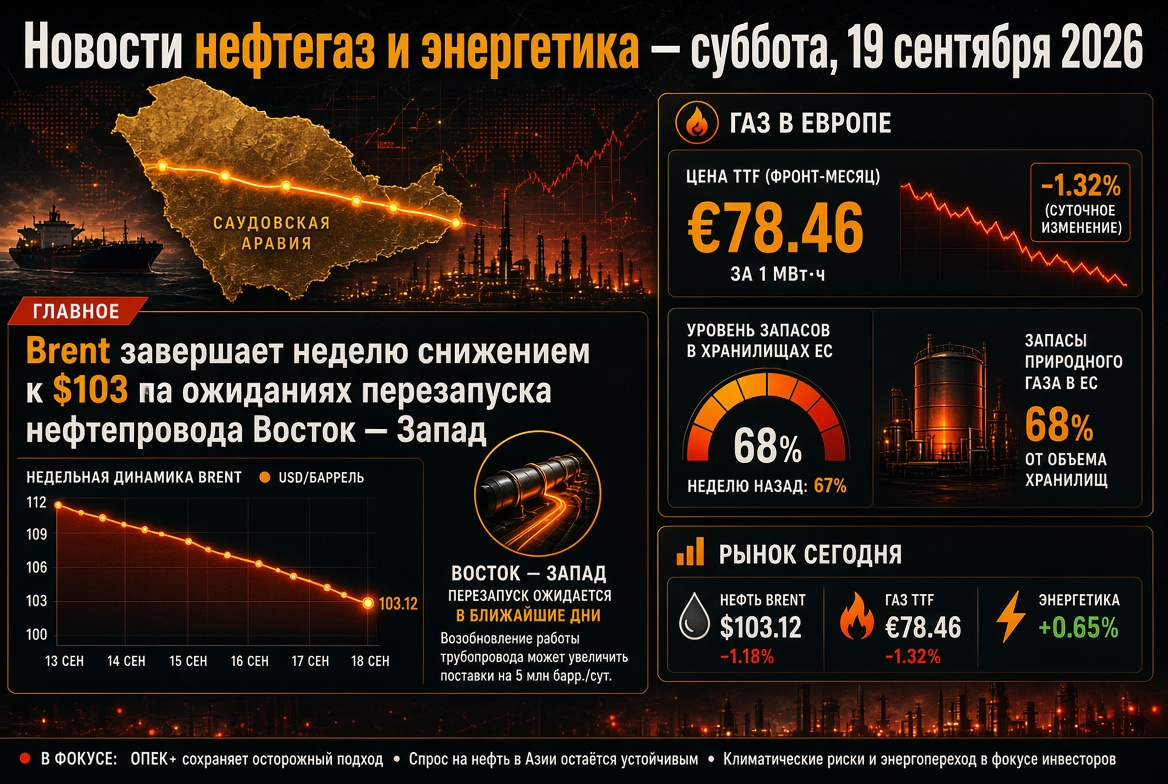
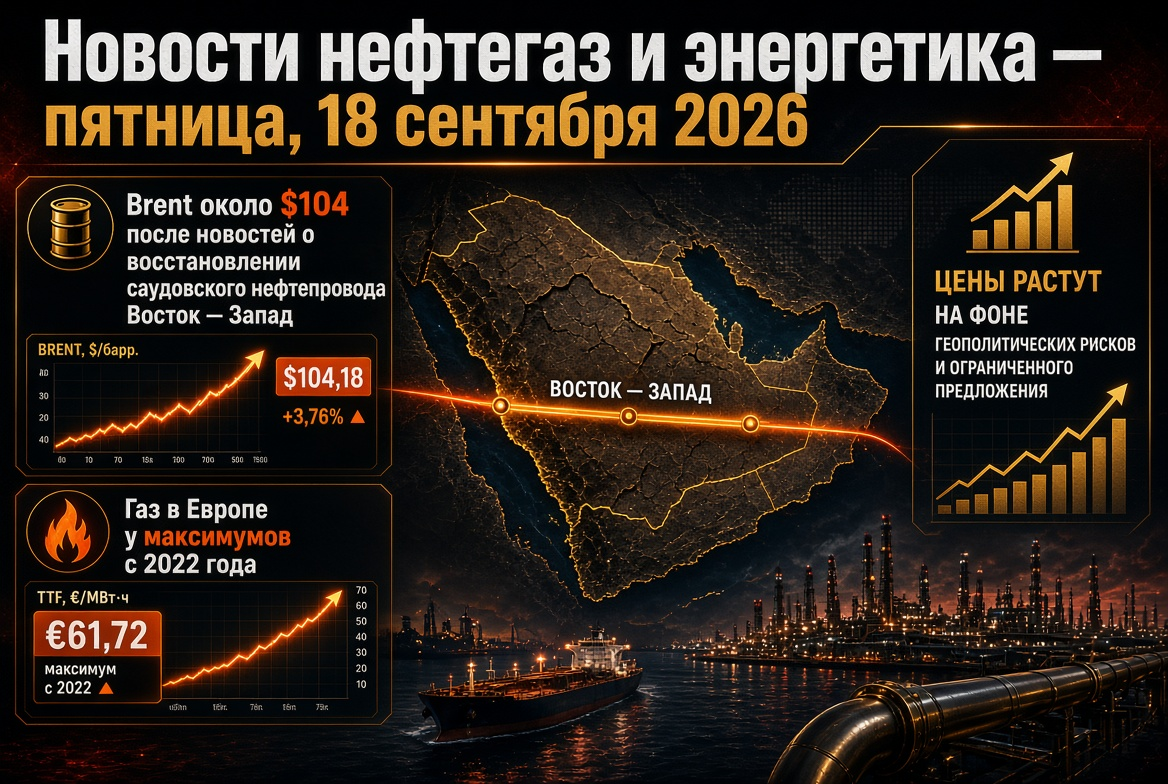
As of Friday's trading, Brent settled around $88 per barrel, while WTI was above $82. Over the week, both benchmark grades gained approximately 16%, as the market started to reassess not only global supply volumes but also the likelihood of actual supply disruptions.
For the oil market, the shift from ordinary price risk to logistical risk is crucial. Even with available production capacities, barrels must be delivered to buyers. Rising insurance rates, shipowners' refusal to enter dangerous waters, and longer shipping routes could support Brent and the prices of petroleum products regardless of formal supply-demand balances.
The Strait of Hormuz and the Red Sea Become the Primary Risk for the Energy Sector
In the first half of July, oil and condensate exports from Saudi Arabia, UAE, Iraq, Kuwait, and Iran rebounded to approximately 12 million barrels per day, a 16% increase compared to the average level in June. However, this volume is still significantly below the pre-war peak, and the number of tankers passing through the Strait of Hormuz has begun to decline again.
Saudi Arabia has redirected a large part of its export flow to the Yanbu port on the Red Sea. This diversification reduces dependence on the Strait of Hormuz but creates a new risk: potential attacks on shipping in the Red Sea could simultaneously affect this alternative route for Middle Eastern oil supplies.
- The key short-term indicator is the number of oil and LNG tanker transits through the Strait of Hormuz;
- The second factor is the security of the route through the Red Sea and the Suez Canal;
- The third factor is the willingness of producers to temporarily cut production in the absence of available export capacities.
The Black Sea: CPC Suspension Increases Risks for Kazakh Oil
Additional pressure on the global oil market arose after attacks on two tankers near the Caspian Pipeline Consortium terminal on the Russian shores of the Black Sea. Loading operations were suspended to assess the fallout. Preliminary reports indicated that the offshore terminal infrastructure was undamaged and no oil spill occurred.
The significance of the CPC for the global commodity market cannot be overstated: about 80% of Kazakhstan's oil exports flow through this system. Even a brief halt could reduce the availability of light crude for European and Mediterranean refineries, raise premiums on alternative supplies, and increase transportation costs.
OPEC+ Increases Supply, but the Market is Focused on Actual Exports
Starting in August, seven OPEC+ countries plan to raise target production levels by a total of 188,000 barrels per day. However, the impact of this decision on prices will depend not on announced quotas but on the ability of participants to physically bring additional volumes to the global market.
Amidst restrictions in the Strait of Hormuz, risks for the Red Sea, and instability in the Black Sea, formal supply expansions may prove less significant than anticipated. Investors need to assess not only OPEC+ production but also export terminals, pipeline utilization, tanker movement, and commercial inventory levels.
Refineries and Oil Products: Fuel Shortages Support Record Margins
The refining segment remains one of the main beneficiaries of energy tensions. The U.S. 3-2-1 refining margin indicator reached nearly $70 per barrel. The diesel margin exceeded $90, as disruptions in the Middle East, restrictions on Russian supplies, and the shutdown of some refining capacities exacerbated the global shortage of middle distillates.
Gasoline inventories in the U.S. have fallen to their lowest seasonal levels since 2012. Refineries are striving to maximize output of diesel and aviation fuel, which further limits gasoline production. For fuel companies, this translates into maintaining high purchasing prices and increased wholesale market volatility.
Gas and LNG: Asia Returns to the Market, Europe Lags on Inventories
The global gas market is increasingly driven by competition between Europe and Asia. July LNG imports into Asia are expected to reach a six-month high of around 23 million tonnes. China is ramping up purchases, while Japan and South Korea are actively replacing Qatari volumes with American LNG.
Conversely, European LNG imports may drop to about 6.9 million tonnes, marking the lowest level in nearly two years. This occurs as gas storage filling lags behind seasonal norms. If supplies from Qatar through the Strait of Hormuz remain constrained, European companies will need to raise price offers to recapture American LNG shipments from the Asian direction.
An additional factor remains accelerated imports of Russian LNG before new European restrictions take effect. In the first half of the year, shipments from the Yamal LNG project to EU countries reached record levels, underscoring the region's ongoing dependence on flexible maritime gas supplies.
Production and Investments: The U.S. and Iraq Prepare to Expand Supply
The number of active oil and gas drilling rigs in the U.S. has risen to 588, the highest since April 2025. The number of oil rigs reached 452, while the gas rig count remained at 126. The increase in activity suggests that higher oil prices are once again improving the economics of shale projects.
Simultaneously, Iraq is accelerating the attraction of Western capital. Agreements and memorandums signed with energy companies exceed $60 billion. The focus is on field development, pipeline modernization, and creating export routes to the Mediterranean, potentially reducing the country’s dependence on the Strait of Hormuz.
Electricity, Renewables, and Coal: Rising Demand Requires All Types of Generation
The demand for electricity continues to grow faster than the overall economy due to developments in artificial intelligence, data centers, electric vehicles, and industrial electrification. Oil service companies are increasingly venturing into the distributed energy market: modular data centers are being combined with autonomous gas generation, allowing for quicker integration of new capacities.
At the same time, renewables remain the fastest-growing segment in global energy. Solar generation and battery storage are increasing their share in the energy balance; however, they necessitate network upgrades and reserve capacities. Coal continues to play a role as a backup fuel in regions where gas is expensive and the energy system lacks sufficient flexibility.
What Investors Should Look Out for on July 20
- Brent and WTI: the market's reaction to shipping news in the Strait of Hormuz and the Red Sea.
- CPC and the Black Sea: timelines for the resumption of Kazakh oil loading.
- Oil Products: dynamics of diesel and gasoline margins, fuel inventories, and refinery utilization.
- Gas and LNG: competition between Europe and Asia for American cargoes and storage filling rates.
- Electricity: investments in gas generation, grids, renewables, and storage to meet growing demand.
The main takeaway for participants in the global energy sector is that the market is reassessing not nominal production volumes, but the resilience of the entire supply chain. Oil, gas, coal, electricity, and petroleum products are entering a period where logistics costs, infrastructure security, and processing availability may influence prices more significantly than traditional demand forecasts.