Current News in Oil & Gas and Energy for Wednesday, February 25, 2026: Brent Oil Nearing Max Levels, OPEC+ Decisions, Gas and LNG Market in Europe, Oil Products and Refineries, Electricity and Renewables. Global Overview for Investors and Market Participants in the Energy Sector.
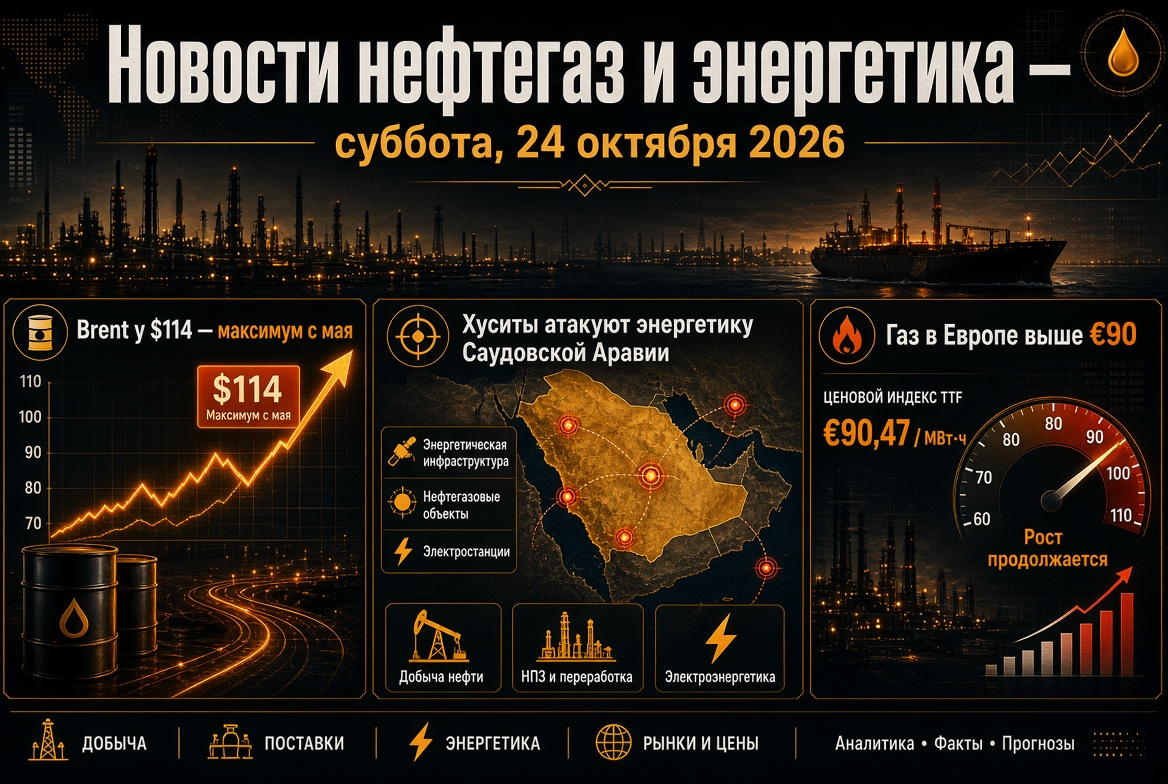
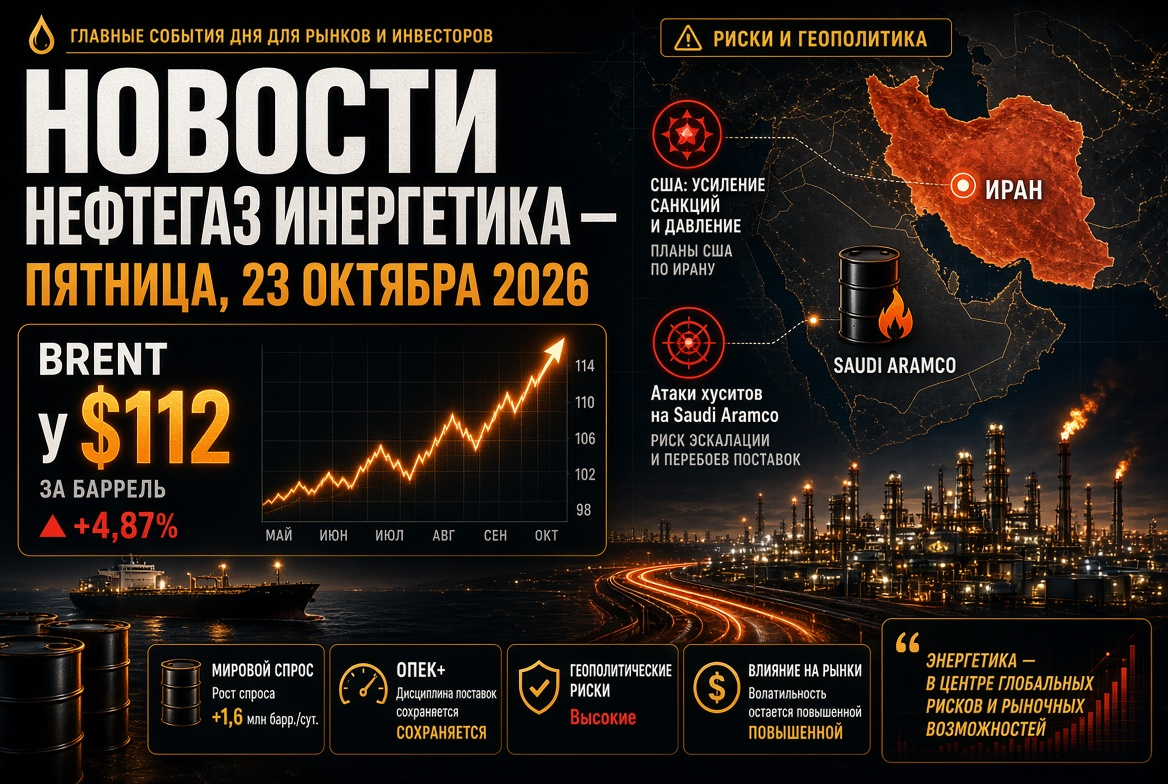
The oil market remains highly sensitive to news: Brent is hovering around $72 per barrel (WTI is approximately $67), aligning with recent highs. A key driver is the anticipation of another round of US-Iran negotiations in Geneva, coupled with risks concerning maritime security in the Strait of Hormuz. The geopolitical premium is once again evident in oil prices, manifesting not only in futures but also in delivery costs.
At the same time, the fundamental picture for 2026 remains moderately oversupplied: forecasts indicate that global supply is expected to grow faster than demand. In 2025, a significant accumulation of stocks was observed, including an increase in "floating oil" and sanctioned flows. While the geopolitical rally remains unchanged, the likelihood of the market "trading headlines" without transitioning into a sustained deficit, absent real disruptions in production and exports, has increased.
- OPEC+: In March, production increases remain on hold; the focus is on the March 1 meeting and the likelihood of a cautious resumption of quota increases starting in April.
- Demand: Uncertainty is heightened by new US trade barriers and their impact on the pace of global industry and transportation.
- Short-term Risks: Winter weather, emergency repairs, and export restrictions in certain supplier countries.
Freight and Logistics: Tanker Rates Emerge as a Standalone Risk Factor
The market for maritime logistics has effectively become a "second front" for oil. Freight rates for transporting Middle Eastern oil to Asia have surged to multi-year highs due to a combination of rising exports from the Persian Gulf and geopolitical risks tied to the US-Iran situation. The shortage of available "clean" tonnage is exacerbated by sanctions and the expansion of the aging fleet segment servicing sanctioned flows, reducing the availability of vessels in a transparent market.
A practical consequence for oil and gas companies and traders is the need to reassess the economics of arbitrage: high freight and insurance costs can negate raw material and oil product supply even where exchange spreads appear attractive. Consequently, some volatility is shifting from the "paper" curve to physical differentials and basis premiums on key routes from the Middle East to Asia.
Oil Products and Refineries: Strong Winter Demand Amid Seasonal Maintenance Start
The oil products segment typically shows heightened sensitivity to weather and technical risks as winter comes to a close. Recent weekly figures in the US indicate significant reductions in stocks of oil, gasoline, and distillates against a backdrop of high refinery utilization (around 91%) and rising consumption—supporting oil products and reducing the likelihood of steep price declines under normal circumstances. Simultaneously, the seasonal maintenance season compels the market to monitor any unplanned outages at major refineries closely.
For Europe, additional stress tests stem from the uncertainty surrounding certain refining assets and raw material logistics: financing, insurance, and long-term contract restrictions can quickly lead to local imbalances concerning gasoline, diesel, and jet fuel. For global traders, this translates to an increased role of regional premiums and product quality, while fuel companies must maintain more flexible supply chains.
- Diesel and Distillates: This segment frequently dictates the "nerve" of the oil products market in winter.
- Refineries and Maintenance: Maintenance schedules are a pricing factor just as significant as oil quotes.
- Fuel Logistics: Financial and insurance restrictions increasingly impact supply accessibility alongside physical capacities.
Gas and LNG: Europe Receiving Record Volumes, but Storage Levels at One-Third
The European natural gas market is concluding winter with a high share of LNG in its balance. February is poised to set a record for LNG arrivals in Europe, primarily supplied by the US, while Russian LNG remains a notable source. The main challenge shifts to the injection season: underground storage is projected at roughly one-third full by the end of February—below seasonal norms, increasing the sensitivity of European prices to weather and Asian spot prices.
Structurally, the market benefits from rising global LNG supply: an acceleration of new capacity coming online and increased worldwide production/export is anticipated, primarily driven by North America, with further growth expected in the Middle East in the longer term. However, Asia remains a "switch": China's and other major buyers' return to the spot market can quickly attract marginal shipments and elevate European volatility. In the US, winter profiling is confirmed by substantial weekly gas withdrawals from storage, maintaining focus on Henry Hub and the LNG export balance.
Pipelines and Sanctions: Druzhba, Central Europe, and EU's Decision to Phase Out Russian Oil
Transit risks remain one of the most underestimated drivers of volatility. The Druzhba pipeline, amidst damages and delays in restoring transit, has become a source of political pressure: Hungary and Slovakia are publicly linking their support for Ukraine to the resumption of supplies, activating strategic reserves and reevaluating their roles in ensuring Ukraine's energy system.
Simultaneously, the European Union is preparing a legal mechanism that aims to solidify a complete ban on Russian oil imports by the end of 2027 and make it resilient to potential changes in the sanctions regime. For global oil trading, this signifies tougher competition for "non-Russian" barrels on the horizon of 2026-2027, the increasing significance of alternative routes (Middle East, North Sea, Africa, US, Latin America), and the continuation of discounts/premiums depending on the sanctions status of supplies.
The UK has announced the largest sanctions package since 2022, targeting infrastructure and elements of "shadow" logistics. Such decisions most often act through secondary effects—insurance, financing, vessel availability, and services—meaning they can simultaneously influence oil, oil products, and delivery costs.
Electricity, Renewables, and Grids: Increasing Share of Wind and Solar Amid "Weather Gaps"
European electricity continues its energy transition: in 2025, wind and solar for the first time surpassed fossil generation in terms of output share, with low-carbon sources (renewables and nuclear) forming the core of the balance. However, the effectiveness of this structure increasingly depends on grids, storage, and demand flexibility: a lack of transmission capacity leads to forced curtailments of renewable generation, while periods of low wind raise the need for gas and coal generation—and subsequently, fuel and carbon quotas.
An additional layer of risk is weather. Germany, the largest producer of wind energy in Europe, is facing a prolonged period of low winds; forecasts indicate below-normal generation is likely in the first quarter of 2026. In practice, this means increased intraday volatility in the electricity market and more sensitive demand for gas, coal, and balancing powers. The European Commission is discussing measures intended to accelerate investments in grids and energy efficiency, including mobilizing private capital for infrastructure projects.
What Matters to Investors and Participants in the Energy Sector on February 25
Tomorrow, the market will be recalibrating risk premiums in real time. For oil and gas companies, refineries, energy providers, and traders, it is a day when "minor" signals (statements, maintenance timelines, weather forecasts) can significantly alter supplies in spreads and logistics.
- US–Iran: Any hint of de-escalation/escalation will affect Brent, freight, and insurance premiums in the Persian Gulf.
- Druzhba and EU: The status of transit and decisions from Central Europe will determine regional premiums for raw materials and fuels.
- Gas and LNG: The pace of deliveries to Europe and Asia's willingness to pay spot premiums are key to TTF volatility.
- Oil Products and Refineries: During the maintenance season, any disruption quickly reflects on diesel, gasoline, and jet fuel.
- Electricity: Wind and temperature forecasts remain the best quick indicators for gas and coal demand in generation.