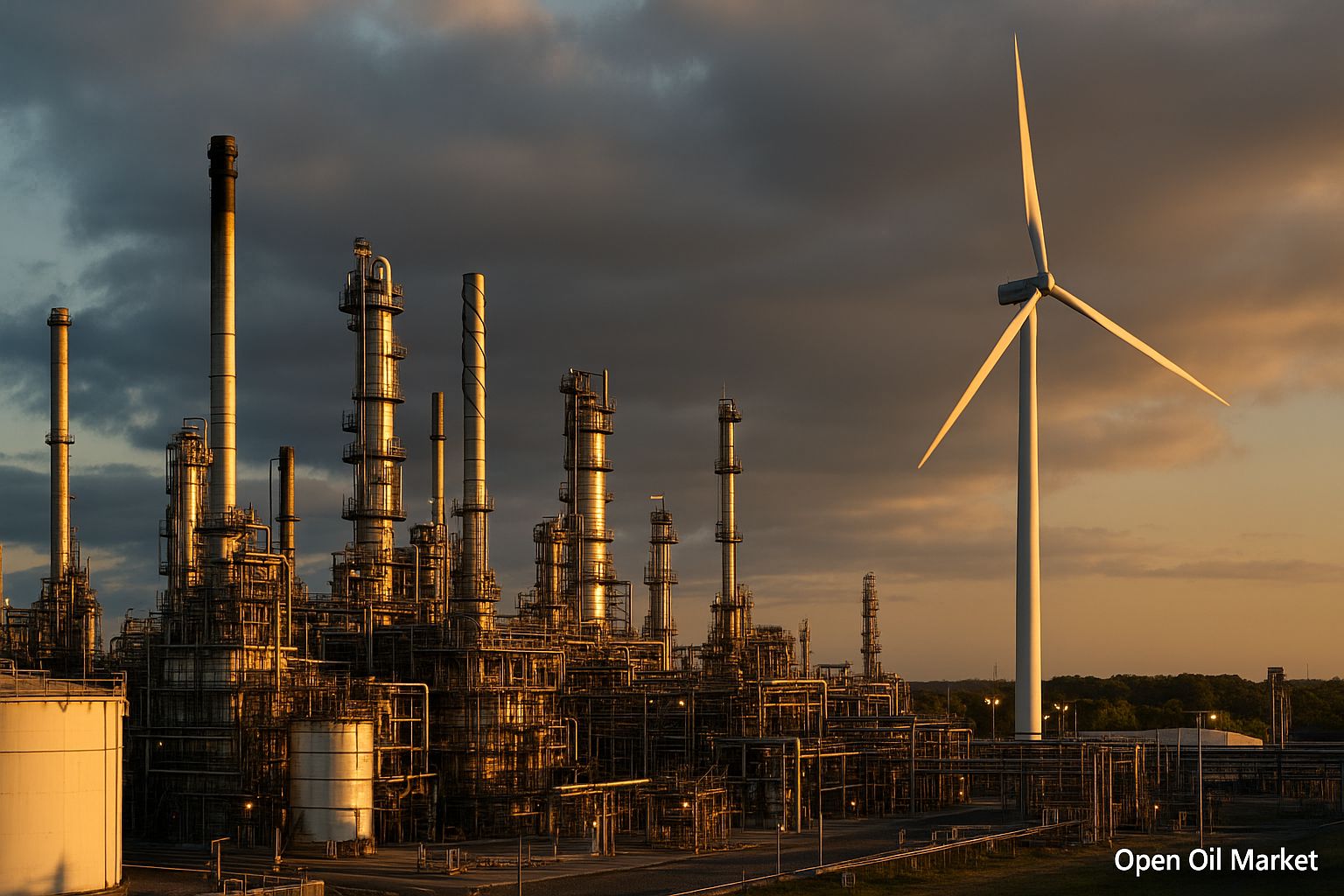
Analytical Review of Key Events in the Oil, Gas, and Energy Sector as of November 30, 2025: Oil, Gas, Coal, Energy, Renewable Energy Sources, Production, Sanctions, OPEC+, Energy Security.
As of November 30, 2025, current events in the global fuel and energy complex are unfolding against a backdrop of conflicting signals, drawing the attention of investors and market participants. Diplomatic efforts to resolve international conflicts are fostering cautious optimism about a potential easing of geopolitical tensions, with discussions underway regarding possible peace initiatives that could, in the long run, weaken sanctions. At the same time, Western nations maintain a stringent sanctions approach, continuing to create a challenging environment for traditional energy resource export flows.
Global oil prices are at relatively low levels due to an oversupply and weakened demand. The Brent crude benchmark hovers around $61–62 per barrel, while American WTI is approximately $58, both close to the minimum values seen in the last two years and significantly lower than levels a year ago. The European gas market enters winter in a balanced state: gas storage facilities (UGS) in EU countries are filled to about 75–80% of total capacity by the end of November, providing a solid reserve of resilience. Gas prices on exchanges remain at relatively low marks. However, weather-related uncertainties persist: a sharp drop in temperature could lead to a surge in price volatility as the season progresses.
Simultaneously, the global energy transition is accelerating—many countries are setting records for electricity generation from renewable energy sources (RES), although traditional resources are still necessary for the reliability of energy systems. Investors and companies are pouring unprecedented funds into green energy, despite the fact that oil, gas, and coal remain the backbone of global energy supply. In Russia, after a recent autumn fuel crisis, emergency measures by the authorities have stabilized the domestic oil products market ahead of winter: wholesale prices for gasoline and diesel fuel have declined, alleviating the shortage at gas stations. Below is a detailed overview of key news and trends in the oil, gas, energy, and raw materials segments of the fuel and energy sector as of the current date.
Oil Market: Oversupply and Weak Demand Keep Prices Near Minimum Levels
The global oil market is demonstrating weak price dynamics under the influence of fundamental factors of oversupply and demand slowdown. A barrel of Brent trades in a narrow range around $61–62, while WTI hovers around $58, representing about a 15% drop from last year's levels and approaching multi-year lows. The market is not receiving strong momentum for either growth or decline, remaining in a state of relative equilibrium with a slight surplus of supply.
- OPEC+ Production Increase. The oil alliance continues to gradually increase market supply. In December 2025, the total production quota for participants in the deal will increase by another 137,000 barrels per day. Monthly increments have averaged around 0.5–0.6 million barrels per day since summer, returning global oil and oil product stocks to levels close to pre-pandemic figures. Although further increases in quotas have been postponed until at least spring 2026 due to concerns about market oversaturation, the current increase in supply is already exerting downward pressure on prices.
- Demand Slowdown. The growth rate of global oil consumption has sharply declined. The International Energy Agency (IEA) estimates demand growth in 2025 at less than 0.8 million barrels per day (compared to approximately 2.5 million barrels per day in 2023). Even OPEC's forecasts have become more restrained, now estimating demand growth at around 1.2 million barrels per day. Weakening global economic conditions and the effects of previous price peaks are limiting consumption, compounded by slowing industrial growth in China, which dampens the appetite of the world's second-largest oil consumer.
- Geopolitical Signals. Reports of a potential peace plan for Ukraine from the U.S. temporarily reduced some of the geopolitical premium in prices, inspiring hope for the easing of certain sanctions. However, the lack of real agreements and ongoing sanctions pressures prevent the market from settling down completely. Traders react reflexively to any news: until peace initiatives are implemented in practice, their influence on prices remains short-term.
- Shale Production Under Price Pressure. In the U.S., falling oil prices are already affecting the activity of shale producers. The number of drilling rigs in American oil basins is declining as quotes drop to around $60 per barrel. Companies are exercising greater caution, and the prolonged existence of low prices threatens to slow the growth of supply from the U.S. in the coming months.
The combined impact of these factors results in global supply exceeding demand, keeping oil prices confidently below last year's levels. Some analysts believe that if current trends persist, the average price of Brent could drop to around $50 per barrel by early 2026. For now, the market is balancing in a narrow corridor without drivers for exiting the existing price range.
Gas Market: Europe Faces Winter with Comfortable Stocks and Moderate Prices
The gas market is primarily focused on Europe’s approach to the upcoming heating season. EU countries are entering winter's cold with underground gas storage facilities filled to comfortable levels of 75–80% by the end of November. This is only slightly below last autumn's record stock levels and provides a strong buffer in case of prolonged cold spells. As a result, European gas prices remain low: December TTF futures are trading around €27 per MWh (approximately $330 per 1,000 m³), marking a year-low level.
High stock levels have been made possible through record imports of liquefied natural gas (LNG). In the autumn, European companies actively procured LNG from the U.S., Qatar, and other countries, compensating for the decline in pipeline supplies from Russia. More than 10 billion cubic meters of LNG arrived at European ports monthly, allowing timely filling of storage facilities. An additional positive factor was the mild weather: warm autumn and a delayed onset of cold weather have curtailed gas consumption, allowing for economical use of stored reserves.
As a result, the European gas market currently appears stable: reserves are ample, and prices are moderate by historical standards. This situation is favorable for Europe's industry and power generation at the start of the winter season, reducing costs and risks of disruptions. However, market participants continue to monitor weather forecasts closely; anomalously cold temperatures could quickly shift the balance of supply and demand, leading to accelerated withdrawals of gas from storage facilities and triggering price spikes toward the end of the season.
Geopolitics: Peace Initiatives Offer Hope, Sanction Standoff Remains
Encouraging signals have emerged on the geopolitical front in the second half of November. Reports suggest that the U.S. informally presented a peace plan aimed at resolving the conflict around Ukraine, involving a step-by-step easing of certain sanctions against Russia contingent upon fulfilling specific agreements. According to media reports, Ukrainian President Volodymyr Zelensky received a signal from Washington to seriously consider the proposed agreement developed with Moscow's involvement. The prospect of compromise inspires cautious optimism: de-escalation could eventually lift restrictions on Russian energy exports and improve the business climate in raw material markets.
However, no real breakthrough has been achieved; instead, the West continues to tighten sanctions pressure. On November 21, a new package of U.S. sanctions targeting the Russian oil and gas sector came into effect. The largest companies “Rosneft” and “LUKOIL” are among those impacted; foreign counterparties have been instructed to cease cooperation with them by this date. In mid-November, the UK and EU announced additional measures against Russian energy assets. London provided companies with a deadline of November 28 to conclude any deals with the aforementioned oil giants, after which interaction must cease. The U.S. administration has also threatened further stringent actions (including special tariffs against countries continuing to purchase Russian oil) should diplomatic progress stall.
Thus, no concrete shifts are yet visible on the diplomatic front, and the sanctions standoff remains in full effect. Nevertheless, the mere existence of ongoing dialogue between major global players gives hope that the most restrictive measures imposed by the West may be curtailed pending the outcomes of negotiations. In the coming weeks, markets will be closely watching contacts between leaders of major powers. The success of peace initiatives will improve investor sentiment and soften the sanctions rhetoric, while the failure of negotiations threatens new escalation. The results of these efforts will significantly determine the long-term conditions for cooperation in energy and the rules of the game in the global oil and gas market.
Asia: India and China Adapt to Sanction Pressures
The two largest Asian energy resource consumers—India and China—are being forced to adapt to new restrictions on oil trade.
- India: Under pressure from Western sanctions, Indian oil refineries are significantly reducing imports of Russian oil. Specifically, Reliance Industries ceased imports of Urals grade by November 20, in return achieving additional price discounts. Heightened banking scrutiny and the risk of secondary sanctions are prompting Indian refineries to seek alternative suppliers, despite the fact that Russia accounted for up to a third of total oil imports to India earlier in the first half of 2025.
- China: In China, state-owned oil companies have temporarily suspended new deals to import Russian oil, fearing secondary sanctions. However, independent processors (so-called "teapots") have seized the opportunity, increasing purchases to record levels, acquiring raw materials at significant discounts. Although China is also ramping up its own oil and gas production, it still relies approximately 70% on oil imports and around 40% on gas imports, remaining critically dependent on external supplies.
Energy Transition: Records in RES and Challenges for Energy Systems
The global transition to clean energy continues to gain momentum. Many countries are setting new records for "green" electricity generation. In the European Union, total production from solar and wind power plants exceeded output from coal and gas power plants for the first time in 2024. This trend has continued into 2025: the commissioning of new capacities has allowed for further growth in the share of renewable electricity in the EU, while the share of coal in the energy balance has begun to decline after a temporary increase during the 2022–2023 energy crisis. In the U.S., renewable sources have also achieved historical levels—by early 2025, over 30% of all generation came from RES, and the collective output of wind and solar exceeded electricity generation from coal-fired plants. China, the global leader in installed RES capacity, annually installs record volumes of solar panels and wind turbines, continually breaking its own generation records.
Overall, companies and governments worldwide are directing colossal investments into the development of clean energy. The IEA estimates that total investments in the global energy sector in 2025 will exceed $3 trillion, with more than half of this funding aimed at RES projects, modernization of electricity grids, and energy storage systems. However, energy systems still require traditional generation to ensure stability. The rise of solar and wind energy creates new balancing challenges, as renewable sources do not generate electricity continuously. Gas and, in some places, coal-fired power plants are still needed to cover peak loads and provide reserve capacity. For example, last winter, some European countries had to temporarily increase electricity generation at coal-fired plants during periods of low wind. Governments in various countries are rapidly investing in large-scale energy storage systems and smart grids to enhance supply reliability as the share of RES grows.
Experts predict that by 2026–2027 renewable sources will become the largest source of electricity generation globally, finally surpassing coal. Nevertheless, in the next few years, traditional power plants will remain essential as a reserve and as a safeguard against disruptions. Thus, the energy transition is reaching new heights but requires a delicate balance between "green" technologies and proven resources to ensure uninterrupted energy supply.
Coal: Sustained Demand Supports Market Stability
Despite the global push for decarbonization, coal continues to play a key role in the global energy balance. This autumn, electricity production at coal-fired plants in China surged to record levels, although domestic coal production has slightly decreased. As a result, coal imports into China have risen to multi-year highs, helping to lift global prices from a summer slump. Other major consumers, including India, still derive a significant portion of their electricity from coal, and many developing countries continue to construct new coal-fired plants. Major coal exporters have ramped up shipments, taking advantage of high demand.
Following the upheavals of 2022, the global coal market has returned to relative stability: demand remains high, and prices are moderate. Even with the implementation of climate strategies, coal will retain its status as an indispensable component of energy supply in the coming years. Analysts expect that in the upcoming decade, coal generation, particularly in Asia, will maintain a significant role despite efforts to reduce emissions. Thus, the coal sector currently exhibits a state of balance: sustained demand supports market stability, and the industry remains one of the fundamental pillars of global energy.
Russian Fuel Market: Stabilization of Prices After the Autumn Crisis
In the domestic fuel market, Russia has achieved stabilization following the acute crisis of early autumn. At the end of summer, wholesale prices for gasoline and diesel fuel skyrocketed to record highs, causing a local fuel shortage at some gas stations. The government had to intervene: temporary export restrictions on oil products were implemented at the end of September, while refineries ramped up fuel output after completing scheduled repairs. By mid-October, these measures had successfully reversed the price surge.
The trend of declining wholesale prices has continued into late autumn. By the last week of November, exchange prices for AI-92 gasoline dropped by about 4%, AI-95 by 3%, and diesel mirrored this roughly 3% decrease. Stabilization in the wholesale market has started to reflect in retail as well: retail prices for gasoline have been slowly declining for the third consecutive week (albeit by just a few pennies). On November 20, the State Duma passed a law aimed at ensuring priority supply of oil products to the domestic market.
Overall, the measures taken have already yielded results: the autumn price spike has been followed by a gradual decline, and the situation in the fuel market is normalizing. Authorities aim to maintain price control and prevent any new spikes in fuel prices in the upcoming months.
Outlook for Investors and Fuel and Energy Sector Participants
On one hand, the oversupply in raw material markets and hopes for a peaceful resolution of conflicts are contributing to price and risk reductions. On the other hand, ongoing sanctions standoffs and prevailing geopolitical tensions create significant uncertainty. In such conditions, fuel and energy sector companies must carefully manage risks and maintain flexibility in their strategies.
Oil, gas, and energy companies are currently focusing on enhancing operational efficiency and diversifying sales channels amidst the restructuring of trade flows. Concurrently, they are seeking new growth opportunities—ranging from accelerated exploration of fields to investments in renewable energy and energy storage infrastructure. In the near future, key uncertainty factors will be the OPEC+ meeting (November 30) and potential progress in peace talks regarding Ukraine: their outcomes will largely determine market sentiment on the eve of 2026.