Current News in the Oil, Gas, and Energy Market as of April 23, 2026: Oil Surpasses $100, Pressure on Refineries, Gas and LNG, Electricity, and Renewables
As of April 23, 2026, the global fuel and energy complex is experiencing heightened volatility. For energy sector market participants, the primary driver remains not only the price of oil but also a broader set of factors: supply stability, availability of oil products, refinery utilization, gas injection rates in Europe, rising electricity demand, and accelerated investments in renewables and network infrastructure. Against this backdrop, the oil and gas, electricity, coal, and renewable energy sectors are increasingly intertwining into a unified investment narrative.
For global investors and companies in the oil and gas sector, the current moment is significant as the market is becoming less reactive to merely nominal production volumes and more attuned to the ability of raw materials and fuels to physically reach the end consumer. As such, the focus extends not only to oil and gas but also to oil products, LNG logistics, refinery margins, energy system conditions, and the pace of new capacity addition in electricity.
Oil: Geopolitical Premium Remains High, and the Market Operates in a Nervous Balance
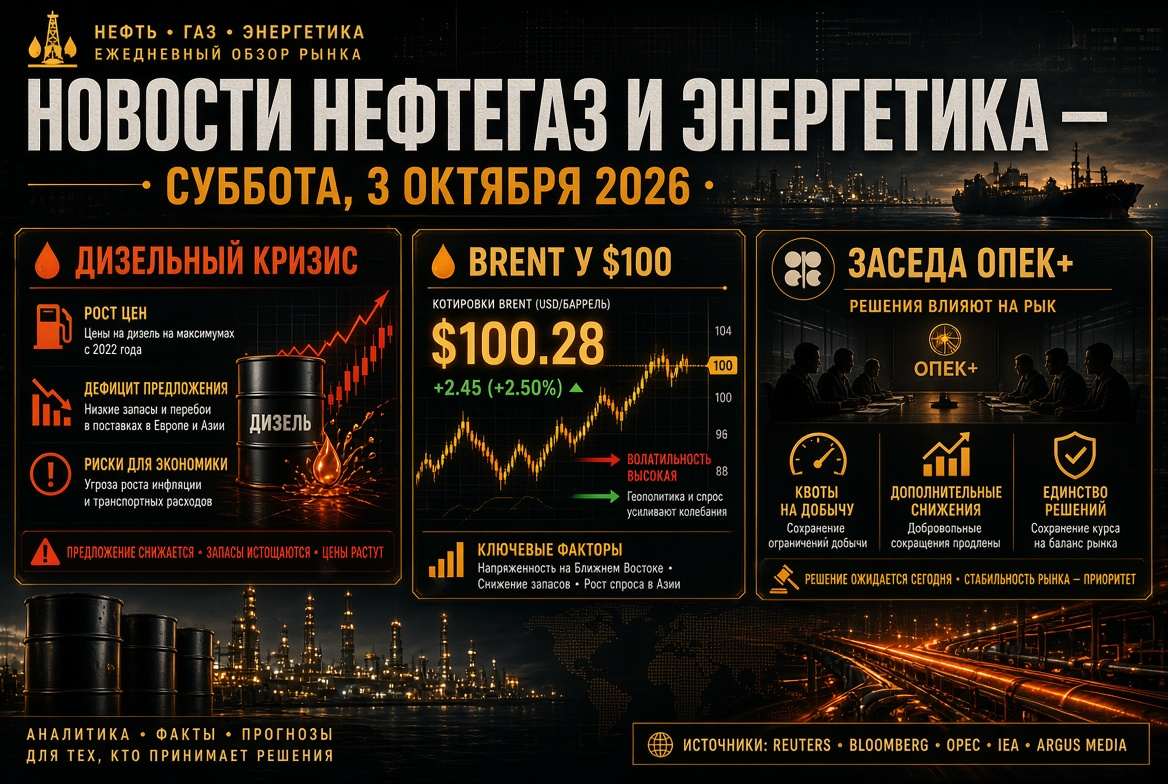
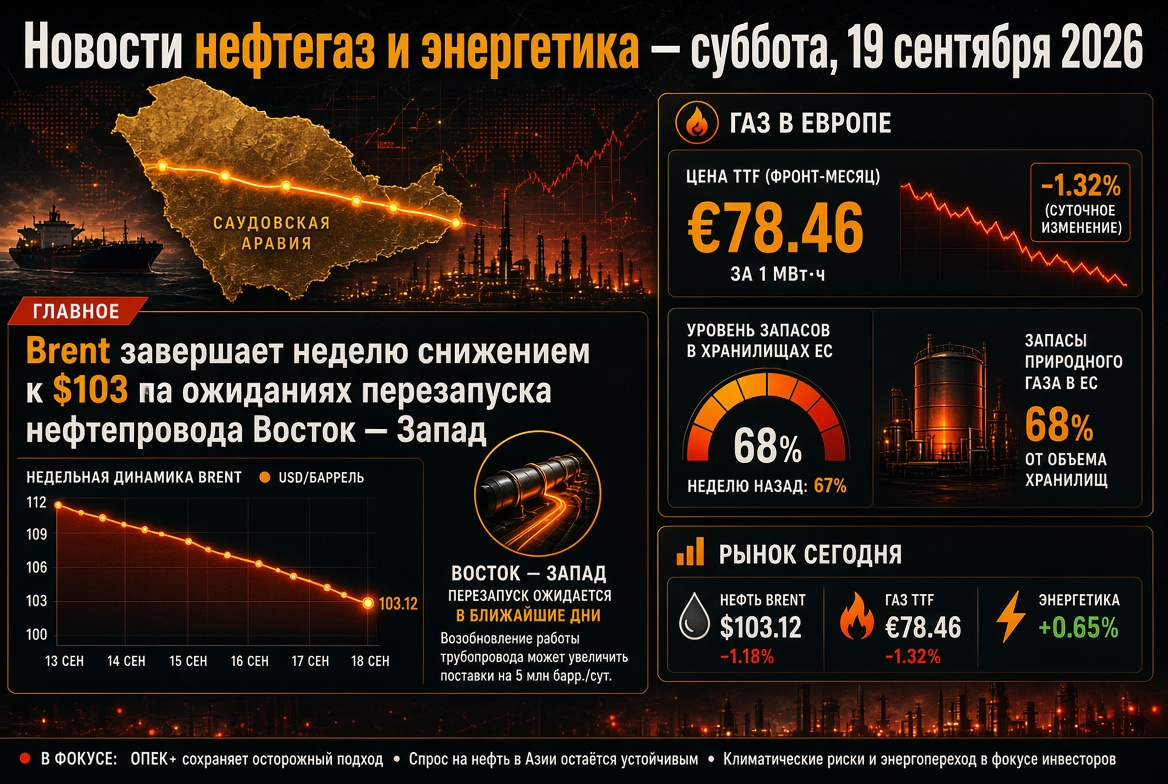
The global oil market continues to exhibit a high risk premium. Brent crude prices remain above psychologically significant thresholds, with the oil market remaining sensitive to any signals regarding supply, shipping insurance, and the availability of feedstock for refining. The situation appears ambiguous: the physical market is strained, yet assessments of global demand are divergent, intensifying uncertainty for investors.
Key Highlights in the Oil Market
- The primary tension in the market revolves around the stability of raw material and oil product flows;
- Oil prices are bolstered not only by a reduction in available supply but also by risks associated with marine logistics;
- The wide range of demand forecasts makes the trajectory for oil particularly volatile in the upcoming weeks.
For the oil and oil product sector, this indicates that the short-term outlook appears strong, but mid-term remains vulnerable to demand destruction. High oil prices boost revenues for the upstream segment, yet simultaneously exert pressure on refining, end fuel consumption, and macroeconomic activity in import-dependent countries.
OPEC+ and Supply: Formal Quota Increases Do Not Equate to Rapid Growth in Actual Barrels
OPEC+ continues to maintain a cautious approach. Formally, the group confirms its readiness to gradually return some voluntarily reduced volumes, yet the actual increase in supplies is constrained by market conditions and logistical risks. This sends an important signal to the global oil and gas complex: even with available capacity, not every announced barrel swiftly translates into physical supply.
From an investment perspective, this amplifies the stratification within the oil sector. Companies with robust export logistics and access to premium markets are faring significantly better than those reliant on vulnerable transport corridors. Thus, the evaluation of oil companies and exporters increasingly hinges not only on production but also operational reliability.
What Investors Should Monitor
- Actual compliance with OPEC+ quotas;
- The speed of supply recovery from key exporting regions;
- The market's ability to compensate for missing volumes without triggering a new price spike.
Oil Products and Refineries: Refining Becomes the Principal Bottleneck
A few months ago, market participants primarily discussed production, but there is now a noticeable shift toward refineries and oil products. The weakness in refining is evolving into a standalone pricing factor. For the global energy market, this is fundamentally significant: there may be sufficient raw materials on paper, yet a shortage of diesel, aviation fuel, and gasoline can rapidly increase inflationary pressures and worsen economic expectations.
European refineries are encountering a particularly challenging configuration: raw material costs are rising while refining efficiency is declining. This makes the oil products market increasingly sensitive to any downtimes, accidents, and maintenance. For fuel companies and traders, this means that margin viability is increasingly determined not by the aggregate level of oil but by the structure of product demand and availability of middle distillates.
Currently Crucial Factors for the Oil Products Market
- Diesel and aviation fuel as the most sensitive segments;
- Refinery utilization rates in Europe, Asia, and the Middle East;
- Trends in gasoline and distillate inventories in the U.S. as indicators of global tension.
Gas and LNG: Europe Navigates Spring Without Panic, But Summer Promises to be Tough
In the gas market, Europe maintains a controlled situation; however, the start of the injection season is occurring with a weaker base compared to previous years. This indicates that the gas and LNG markets will be particularly sensitive to prices, competition for cargoes, and weather conditions. For the global oil and gas sector, gas remains a critical element of energy security, and for European electricity, a key balancing resource.
The scenario for the coming months appears as follows: there is no immediate supply crisis, yet the room for error is limited. Early filling of storage becomes a strategic priority, and any disruptions in LNG supplies could swiftly reinstate the risk premium. This is particularly important for industry, electricity, and companies reliant on high gas consumption.
Main Signals from the Gas Market
- The necessity for accelerated injections into European underground storage facilities;
- Increased dependency of Europe on the global LNG market;
- Heightened significance of competition with Asia for summer volumes.
Asia: China and Regional Importers Become Key to a New Energy Balance
Asia remains the primary battleground for physical volumes of oil, gas, and fuels. China enters this phase in a better position than many, thanks to its substantial stockpiles of raw materials, providing it greater flexibility in refinery operations and maintaining its domestic market. However, for neighboring economies, the situation is less comfortable: should Chinese oil product exports decrease, regional tensions regarding diesel and aviation fuel could escalate.
This positions Asia as the main indicator for the global energy market. If the largest importers begin to compete more aggressively for barrels and LNG, price pressures will persist even amidst moderate global demand. For investors, this means that the Asian dynamics in the coming weeks may significantly influence oil, gas, and energy company stocks.
Electricity and Renewables: Net Generation Growth Accelerates, but Demand Grows Even Faster
The electricity sector is undergoing a structural shift: renewable energy sources continue to increase their share in the global balance, and solar generation has emerged as a central driver of change. However, overall electricity consumption is also rising, primarily due to digital infrastructure, data centers, transportation electrification, and increasing burdens on networks.
For the global energy market, this indicates that gas, renewables, and electricity can no longer be viewed separately. Even with the swift addition of solar and wind capacities, energy systems still require flexible generation, network investments, storage, and infrastructure upgrades. Consequently, benefits may accrue not only to clean generators but also to companies operating at the intersection of networks, gas, energy storage, and equipment.
Current Developments in the Renewables and Electricity Segments
- Solar energy remains the most dynamic growth sector;
- Electricity demand supports investments in gas generation and networks;
- Energy security increasingly favors accelerated implementation of renewables.
Coal: The Market Does Not Disappear, but Growth No Longer Appears Unconditional
Coal retains a significant role in the global energy landscape, especially in Asia, yet the sector's growth rate is decelerating. For the global energy sector, this serves as an important structural signal: coal remains part of the energy balance, but its capacity to expand seemingly indefinitely has become constrained by the growth of renewables, increases in efficiency, and changes in the electricity generation structure within the largest consumer countries.
Practically, this results in a more mixed picture for coal companies and traders. Domestic demand in certain countries may remain steady, yet international maritime coal trade appears increasingly ambiguous compared to previous times. For investors, this represents a market where a straightforward bet on overall consumption growth is becoming less effective.
New Investments in Upstream: Countries Return to Competing for Resource Bases
Amid energy turbulence, governments and national companies are reigniting interest in exploration and new projects within the oil and gas sector. This is evident from actions taken by countries striving to bolster their resource bases and attract international capital into upstream ventures. For the industry, this signifies that the topic of energy security is once again directly converting into licensing rounds, investments, and competition for long-term supply agreements.
Consequently, the global energy market is entering a phase where investments in both traditional hydrocarbons and new energy sources are simultaneously rising. This dual investment cycle is currently shaping the real architecture of the global energy market.
Conclusion: What the Global Energy Market Should Focus on as of April 23, 2026
For the imminent date, investors, oil companies, gas suppliers, refineries, electricity providers, and commodity market participants should draw the key conclusion: the world’s energy system is not at a point of shortage for a single resource; it is at a point of stability deficit. Oil remains expensive, gas requires careful inventory management, oil products are contingent on refinery output, and renewables and electricity are becoming indispensable parts of the new energy model.
Thus, the main focal points for tomorrow are not just Brent and TTF prices but also refinery conditions, gas injection rates, demand dynamics in Asia, marine logistics stability, investments in electricity, and actions of major energy exporters. For the global markets of oil, gas, oil products, coal, and renewables, this is a day when tactical volatility increasingly intertwines with the strategic restructuring of the entire energy sector.