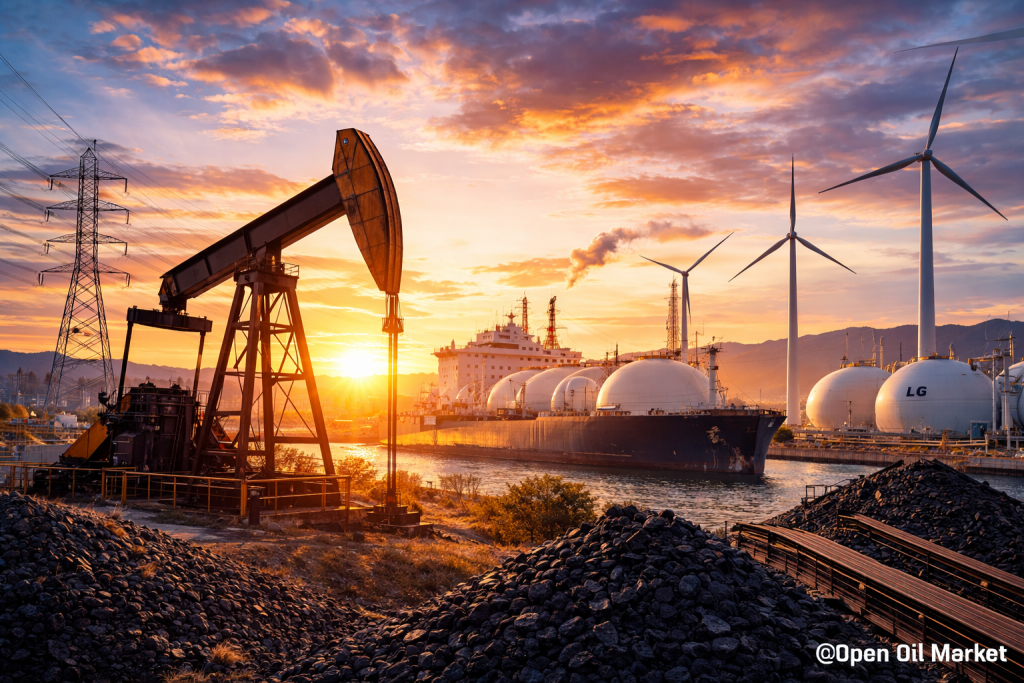
Current News in Oil, Gas, and Energy as of April 4, 2026: Oil with High Risk Premium, Restructuring of the Gas Market, and Transformation of Global Energy
The global energy market is entering the weekend in a state of heightened volatility. For oil, gas, petroleum products, electricity, and renewable energy sources (RES), a key factor remains the geopolitical risk premium, which has dramatically altered the behavior of participants in the commodity and energy sectors. Investors, oil companies, refineries, fuel companies, and electricity market participants are currently assessing not only the existing balance of supply and demand but also the stability of logistics, access to raw materials, and the speed of adaptation of global energy to new conditions.
The main theme of the day is not just the rise in oil prices but rather the transition of the entire energy complex into a mode of operational realignment. For this reason, the news related to oil and gas and energy on Saturday, April 4, 2026, is crucial not only for traders but also for strategic players across the global energy market.
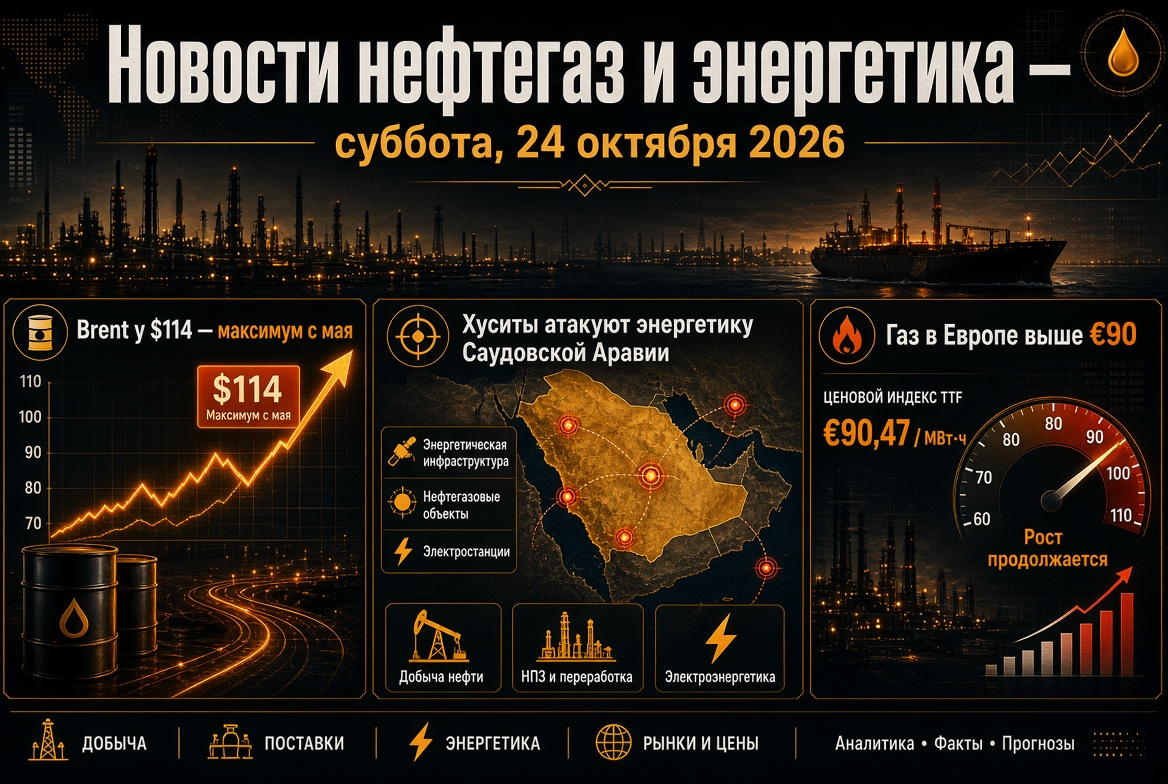
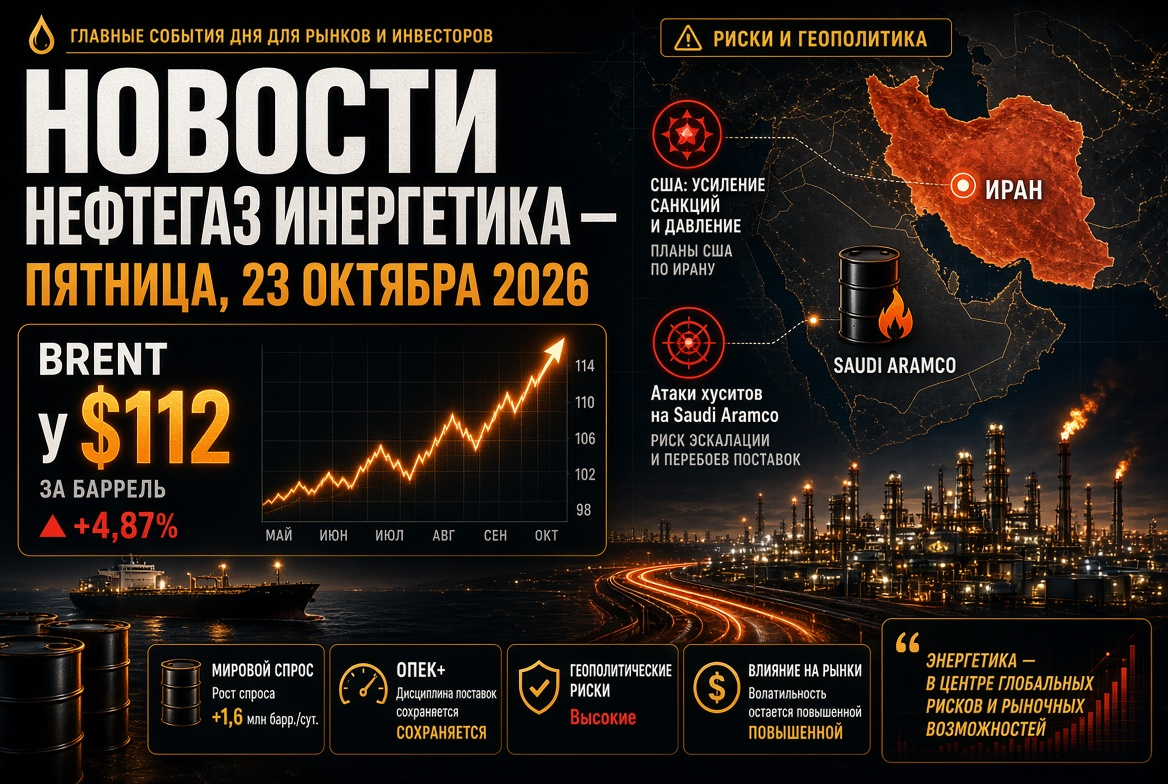
Oil: Market Pricing in Short-Term Supply Deficit
The oil market is sending one of the strongest signals in recent years: the premium of near-term contracts over longer months has sharply increased. This indicates that the market is concerned about a short-term supply deficit, rather than a future scenario. For the oil and petroleum products sector, this price structure is particularly significant as it transforms the behavior of traders, refiners, and exporters.
- Buyers are eager to secure physical volumes more quickly.
- Refineries are facing higher input costs for crude oil and tighter refining margins.
- Fuel companies are confronted with the risk of further increases in the cost of gasoline, diesel, and jet fuel.
For investors, this means that the oil market is now driven not only by fundamental demand expectations but also by fears of supply disruptions. If geopolitical tensions do not de-escalate rapidly, the high risk premium in oil may persist longer than the market previously anticipated.
OPEC+ Becomes the Central Stabilizer of the Oil Market
The next crucial aspect for the global energy market is the position of OPEC+. At the beginning of April, market participants are focused on the monitoring committee and signals from key producers. In practice, this means that any decision regarding production is now viewed not in isolation from demand but through the lens of energy security and supply risks.
If the alliance maintains a cautious approach, oil may remain within a range of elevated prices. However, if producers signal greater readiness to increase supply, the market may experience temporary psychological relief. Even in this case, rapidly removing the entire geopolitical premium will be challenging.
- For oil companies, this means sustained strong revenue.
- For refineries, there is pressure on procurement prices for raw materials.
- For consumers of petroleum products, heightened sensitivity to any logistical disruptions.
Gas and LNG: Global Market Restructuring in Favor of Flexible Suppliers
On the gas market, the main event continues to be the restructuring of LNG flows. The European and Asian markets are once again competing for flexible resources, with suppliers capable of quickly redirecting shipments gaining an advantage. This underscores the importance of the U.S. as a key liquidity supplier for the global gas market.
The commissioning of new export capacities in U.S. LNG is becoming especially critical right now. The more liquefied gas available on the market, the higher the chances to soften price spikes in Europe and Asia. However, in the near term, gas remains expensive and sensitive to any news on supply routes and shipping risk.
For the gas market, this forms several conclusions:
- Europe will continue to battle for stable inventory replenishment.
- Asia will maintain high demand for spot cargoes during heat waves and spikes in electricity consumption.
- Companies with access to cheap American gas gain a notable competitive edge.
Russia and Global Gas Balance: LNG Exports Remain a Significant Factor
Despite sanctions and contractual restrictions, Russian LNG continues to play a notable role in the global gas balance. For the energy market, this is an important signal: even under political pressure, physical gas flows remain significant, especially when the global supply system operates under stress.
The increase in Russian LNG exports in the first quarter indicates that the gas market remains pragmatic. When Europe, Asia, and other importers require resources, the market seeks available volumes regardless of how comfortable the political environment may be. For investors, this means that gas will continue to be not just a political issue but also fundamentally commercial in 2026.
Electricity: Demand Growing Faster Than System Expansion
The electricity sector is entering a new phase. Consumption growth is supported by several factors: digital infrastructure, data centers, electrification of industry, transport, and climate-driven peaks in load. Against this backdrop, the global energy system increasingly requires not only cheap generation but also reliable generation that can be rapidly deployed when necessary.
For this reason, three areas are now coming into focus:
- Gas generation as a tool for rapid maneuverability;
- Nuclear energy as a source of stable, low-carbon power;
- Networks, energy storage, and flexible balancing for integrating RES.
For energy companies, this indicates a new investment logic: not only fuel owners are winning but also those owning capacities capable of ensuring system reliability during peak demand hours.
Coal Is Not Going Away: It Re-emerges as an Insurance for Energy Systems
Although the long-term trend remains in favor of decarbonization, the electricity market reveals a more complex reality. During periods of gas shortages and seasonal demand spikes, coal continues to serve as an insurance resource. This is particularly evident in countries with rapidly growing electricity consumption and high sensitivity to LNG prices.
This implies that coal will remain an important part of the global energy balance in 2026. For coal companies and related logistics participants, this supports operational activity. For the market as a whole, it confirms that the energy transition does not follow a straight line; in crisis periods, the system reverts to those fuel types that can be mobilized quickly.
Renewables Strengthen Their Position, But Reliability Issues Come to the Fore
The RES segment continues to expand and strengthen its position in global energy. Solar and wind generation are adding capacity at record rates, becoming the foundation for new energy architecture in many regions. However, the current volatility in commodity markets highlights an essential detail: investors are increasingly scrutinizing not only installed capacity but also the system's ability to ensure uninterrupted supply.
Therefore, the next phase of RES growth will involve not just the construction of new stations but also the development of:
- Grid infrastructure;
- Energy storage systems;
- Backup generation;
- Digital load management.
For the global energy market, this means a straightforward conclusion: RES is growing rapidly, but jurisdictions and companies that can integrate green generation with the resilience of energy systems will ultimately succeed.
What This Means for Investors, Refineries, and Participants in the Energy Sector
On Saturday, April 4, 2026, news in oil, gas, and energy establishes several key benchmarks for the market:
- Oil remains expensive due to risk premiums and fears of a short-term supply deficit.
- Gas and LNG become the main field of global competition for flexible resources.
- Electricity is increasingly dependent on the reliability of capacities, not just fuel prices.
- Coal maintains its role as a temporary but essential stabilizer.
- RES reinforces the long-term trend; however, the market demands greater integration with storage systems and networks.
For oil companies, fuel companies, refineries, and participants in the oil, gas, electricity, and RES markets, this signifies that 2026 is increasingly shaping up to be a year not just defined by price cycles, but by the struggle for supply resilience, flexible logistics, and control over energy infrastructure. These factors will determine the competitiveness of players in the global energy market in the coming months.