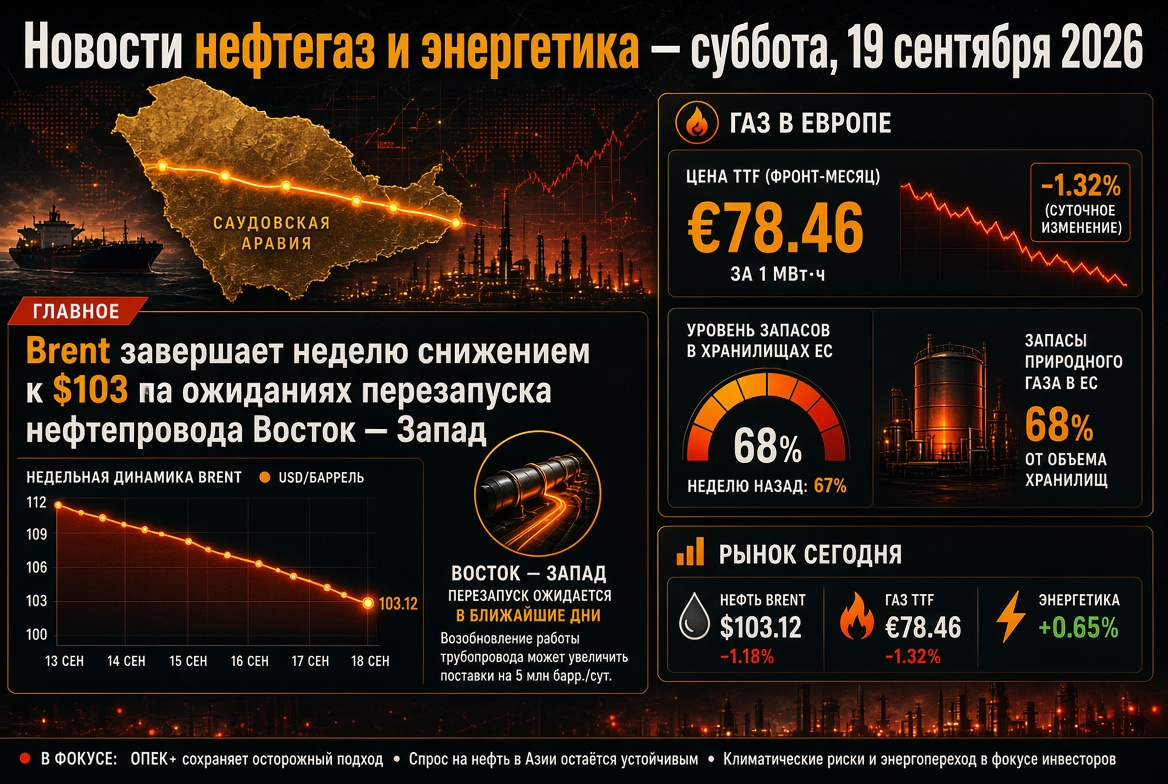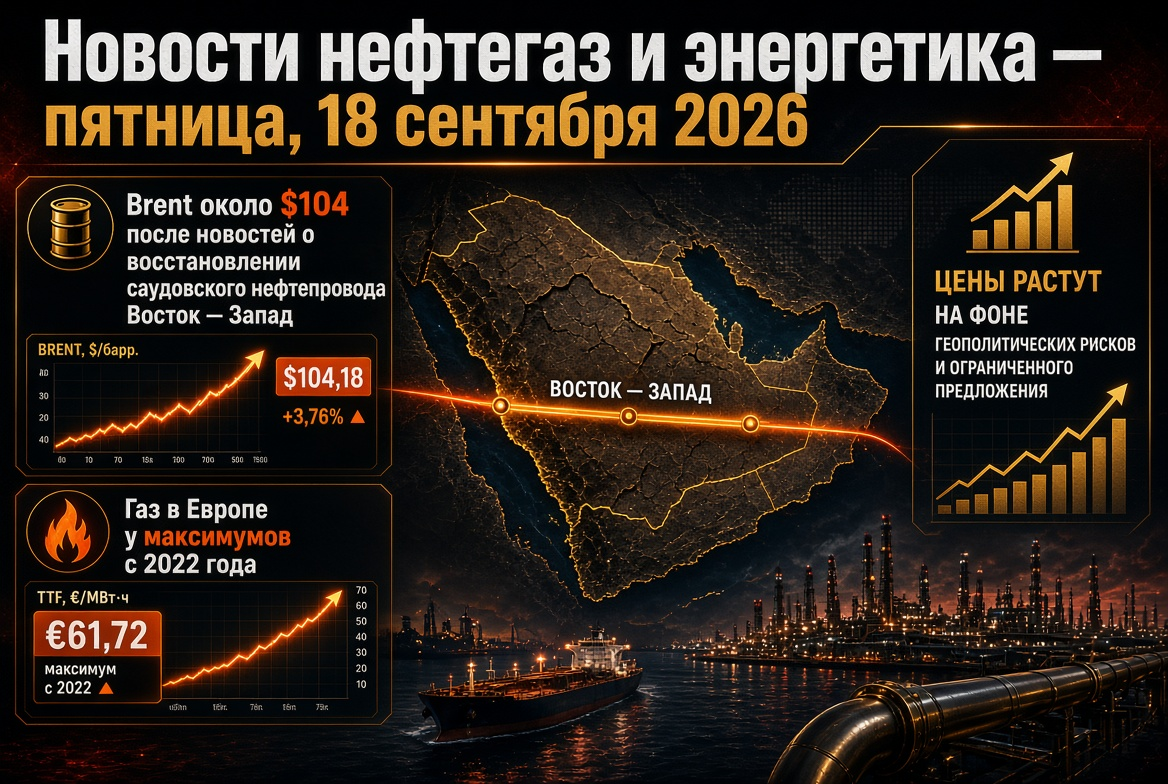
Current News in Oil, Gas, and Energy for Saturday, July 4, 2026: Brent Around $72, Expectations for OPEC+, LNG Redistribution to Asia, Tensions in the Oil Product Market, Rising Electricity Demand, Renewables and Coal in the Global Energy Balance
The global fuel and energy sector enters Saturday, July 4, 2026, amid a sharp reassessment of risks. After several months of geopolitical premiums, the oil market is now looking not only at the Middle East but also at the physical balance: supplies through the Strait of Hormuz are gradually recovering, Brent is trading around $72 per barrel, and the futures curve structure indicates a short-term oversupply. For investors, oil companies, refineries, oil product traders, and energy market participants, this signifies a shift from a "shortage at all costs" scenario to a more complex model: oil prices are declining, diesel remains tight, LNG is being redirected toward Asia, and electricity is becoming the main bottleneck of global energy.
The main topic of the day is not simply falling prices but the shift in market regime. Oil and gas remain subject to policy influences, yet logistics, inventories, processing capacities, electricity, renewables, coal, and the ability of energy systems to cope with heat, data centers, and supply instability are playing an increasingly prominent role.
Oil: Brent Stabilizes Around $72, Yet Market Sees Oversupply
The oil market concludes the week without major movement, but with significant structural signals. Brent remains in the $71–72 per barrel range, while WTI hovers around $69. For investors, this is not merely a price range, but an indicator that the fear of shortages post-Middle Eastern escalation is fading faster than demand is recovering.
The Brent futures curve has shown elements of contango for the first time in a long while: near-term deliveries have become cheaper than longer-dated contracts. Typically, this suggests that the physical oil market is facing an oversupply of current barrels, prompting traders to consider the possibility of storing crude until prices rebound.
- For oil companies, this reduces immediate production margins;
- For traders, it opens cautious interest in oil storage;
- For refineries, it creates an opportunity to improve procurement conditions;
- For importing countries, it alleviates inflationary pressures from fuel costs.
OPEC+: Market Prepares for New Production Increase
The focus of the oil market is shifting toward the upcoming OPEC+ meeting. Alliance members are expected to agree upon an additional increase in target production levels starting in August by approximately 188,000 barrels per day. This would continue the phased return of a portion of voluntary cuts implemented earlier to support prices.
For the global energy sector, this represents a crucial turning point: not long ago, the market was concerned about potential disruptions in the Strait of Hormuz, while now discussions are veering toward the risk of oversupply. Internal tensions within OPEC+ remain around quota distribution, especially among nations seeking to reflect actual production capacities in future baseline levels.
Key factors for oil prices in the coming days include:
- The pace of supply recovery from the Persian Gulf;
- Actual demand from China and India for imported oil;
- OPEC+'s position on August production;
- The dynamics of oil and oil product inventories in the US and Europe;
- Risks of new attacks on energy infrastructure.
Gas and LNG: Asia Diverts Supplies From Europe
The key intrigue in the gas market is the redistribution of LNG. In June, less than half of US LNG exports went to Europe for the first time in nearly two years. The reason lies in more attractive prices in Asia and increased purchases by Egypt. The Asian benchmark JKM traded at a notable premium to the European TTF, making deliveries to eastern markets more profitable for exporters.
For Europe, this is a troubling signal as the gas storage injection season approaches. The European gas market is no longer in panic mode, but its reliance on LNG remains high, as competition with Asia is intensifying. If hot weather in Asia maintains high electricity demand, Europe may face higher costs for replenishing its storage.
Globally, gas is becoming not only a transitional fuel but also a tool for energy security. LNG remains critically important for Europe, Japan, South Korea, India, China, and developing markets where rising electricity consumption necessitates flexible generation.
Refineries and Oil Products: High Processing Rates, But Diesel Remains Vulnerable
The oil products segment appears more strained than the crude oil market. In the US, refinery utilization has approached 97%, processing levels remain above 17 million barrels per day, and gasoline production hovers around 10 million barrels per day. This indicates that US refineries are operating actively during the summer season, supporting gasoline and jet fuel markets.
However, diesel and distillates remain a weak point. Inventories are below average levels, and the global logistics of oil products depend on Russia, the Middle East, China, and Asian refineries. Potential restrictions on diesel exports from Russia could intensify pressure on the global fuel market, particularly ahead of the autumn and winter seasons, when demand from transportation, industry, agriculture, and heating rises.
For investors in oil refining, this suggests a continued high volatility in crack spreads. Refinery margins may remain attractive, but operational risks—from raw material supplies to export regulations—have notably increased.
Russia and the Fuel Market: Local Shortages Become a Global Factor
The Russian oil products market remains under pressure due to damage to refining infrastructure and fuel supply constraints in certain regions. Queues at gas stations, sales limits, and temporary easing of quality standards for gasoline and diesel indicate that the domestic fuel balance is becoming increasingly sensitive.
For the global market, not only is the internal shortage in Russia significant, but also the potential reduction in diesel exports. Russia remains a key supplier of oil products to Turkey, Brazil, Africa, and several developing markets. If export flows are curtailed, it could maintain diesel prices even amid relatively stable Brent dynamics.
Thus, while oil may seem oversupplied, oil products appear in short supply. This gap is emerging as one of the main themes in the energy sector at the beginning of July 2026.
Electricity: Heat, Data Centers, and Networks Become the New Center of Energy Markets
The electricity sector is taking center stage in the US, Europe, and Asia. In the largest US energy system, PJM, electricity demand has approached historical highs amid heat, high air-conditioning loads, and rising consumption from data centers. In some areas, wholesale prices have surged dramatically, while network operators have engaged additional capacities.
This situation reveals a structural shift: energy security is now determined not only by the availability of oil and gas but also by the capacity of networks. Even with the rise of renewables, energy systems require:
- Gas stations for balancing;
- Coal capacities during peak hours;
- Energy storage solutions;
- Upgraded network infrastructure;
- Flexible demand management from industry and data centers.
Coal: Asia Returns Thermal Generation to the Center of the Balance
Despite the growth of renewables, coal remains a cornerstone of Asia's energy balance. In India, coal generation in June surged to a nearly three-year high due to heat, weak monsoon conditions, and increased demand for cooling. While the share of renewable energy also reached record levels, the lack of storage solutions limits solar generation's ability to meet evening peaks.
This trend is significant for investors: the energy transition does not instantaneously eliminate coal. During periods of heat, weak hydro generation, and insufficient network flexibility, countries revert to thermal generation. This is particularly evident in India, China, and Southeast Asia, where electricity demand continues to grow faster than storage and transmission infrastructure.
Renewables and Energy Transition: Record Generation Faces Network Limitations
Renewable energy continues to gain a share in the global energy balance. In the first half of the year, Germany achieved a record share of electricity from renewables, Europe is experiencing rapid growth in solar generation, and global investments in clean energy remain above those in fossil fuel extraction.
However, the market increasingly witnesses the flip side of the energy transition: oversupply of solar generation during the day, negative prices, enforced curtailment of production, battery shortages, and delays in network projects. For investors, this means that the most interesting segments include not only solar and wind stations but also infrastructure: networks, storage, demand management, software for energy systems, and flexible gas generation.
What Investors and Energy Market Participants Must Know on July 4, 2026
Saturday, July 4, presents several practical conclusions for the energy market. Oil has ceased trading solely on fears of shortages, but oil products remain tight. The gas market is stabilizing; however, LNG is increasingly flowing to regions where prices are higher—Asia and developing markets. Electricity is becoming the main asset of a new cycle, while renewables demand accelerated development of networks and storage solutions.
Investors, oil companies, fuel traders, and energy market participants should pay close attention to the following indicators:
- OPEC+'s decision on August production;
- The structure of the Brent curve and the depth of contango;
- The premium of Asian LNG over European gas;
- Diesel and gasoline inventories in the US, Europe, and Asia;
- Operational resilience of Russian and Middle Eastern refineries;
- Peak electricity demand in the US, Europe, India, and China;
- The speed of renewable energy, battery, and network infrastructure deployment.
The main takeaway of the day: the global energy market is transitioning into a phase where oil prices are no longer the sole indicator of the state of the energy sector. The true value of energy is increasingly determined by refining, LNG logistics, network constraints, refinery reliability, coal availability, and the ability of electricity systems to endure a new wave of demand.