Current News in the Oil, Gas, and Energy Sector as of April 18, 2026, Covering Oil, Gas, Electricity, VRE, and Refining
As of the beginning of Saturday, April 18, 2026, the global energy market enters the weekend characterized by increased, yet more directed volatility. For players in the oil, gas, electricity, VRE, coal, petroleum products, and refining sectors, the key question currently is: Is the energy crisis transitioning from a shock phase into a phase of new equilibrium? Oil is responding to every change in geopolitical signals, gas and LNG remain critical for Europe and Asia, while electricity is increasingly dependent not only on fuel but also on the pace of energy system restructuring.
Oil: The Market Exists Between the Fear of Shortages and Hopes for a Partial De-escalation
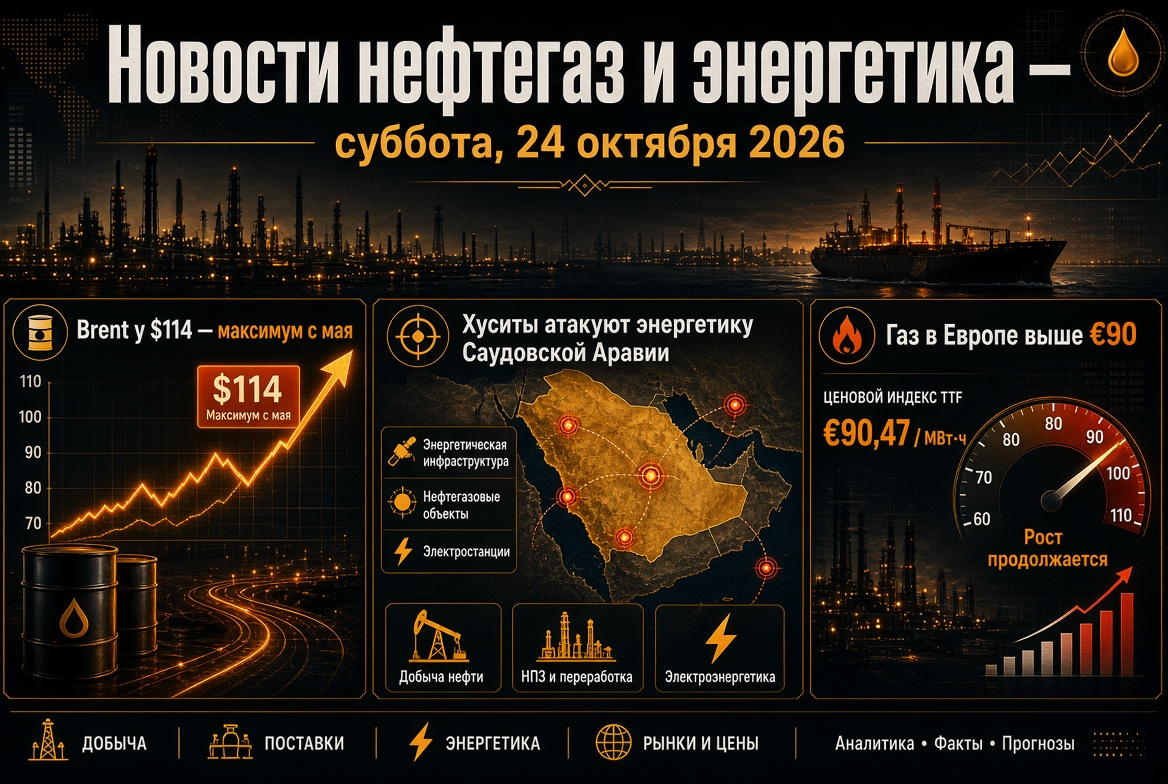
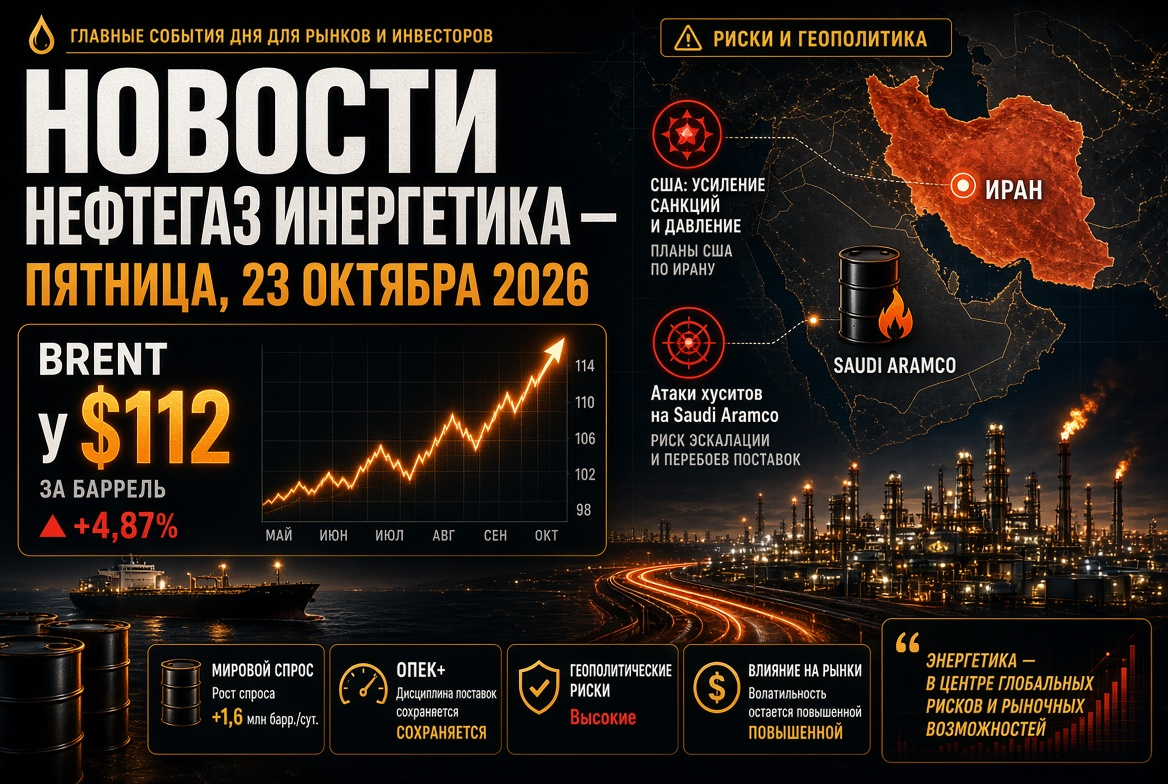
The main driver for the oil and gas sector remains the Middle East. Throughout the week, the oil market embedded a higher risk premium in prices; however, by the end of Friday, there was a noticeable retreat in quotations. This does not signify the disappearance of risks; rather, the market is trying to reassess the likelihood of prolonged supply disruptions and understand how sustainable the new energy flow routes will prove to be.
For investors and companies in the energy sector, three conclusions are especially important at this moment:
- Brent and WTI remain sensitive primarily to logistics and transit, rather than just classical supply and demand balance;
- the physical oil market continues to appear more strained than the paper futures market;
- the demand for alternative oil grades outside the Middle East sustains the redistribution of premiums among regions.
This is why the oil market is important not only for oil companies but also for refining, petroleum products, aviation, shipping, and industrial energy sectors.
IEA vs OPEC: The Market Receives Two Divergent Scenarios for 2026
April has brought one of the most illustrative discrepancies in assessments of the global oil balance. One scenario suggests a significant cooling of demand due to expensive energy and partial destruction of supply chains. The other, on the contrary, assumes that the global oil market will maintain steady growth in consumption even amidst the shock.
For the global energy market, this means:
- in the short term, oil prices are determined less by annual forecasts and more by the availability of barrels "here and now";
- in the medium term, the value of supply diversification and the hedging of price risks increases;
- for importing countries, the critical factor becomes not just the price level but its volatility.
Practically, this boosts the interest in U.S. production, transatlantic supplies, reserves, and flexible refining. For oil companies and funds, this also indicates that 2026 is increasingly splitting into two parallel markets: a market of physical scarcity and a market of expectations for further de-escalation.
Gas and LNG: Europe Remains Vulnerable, Asia Maintains a High Appetite for Molecules
The gas market once again confirms that after the oil shock, gas is rapidly becoming the primary channel for transmitting the crisis to the industry and energy sector. For Europe, the issue lies not only in the current price but also in the ability to fill storage ahead of the next heating season. For Asia, the key question is the availability of LNG and competition for spot cargoes.
Against this backdrop, several structural trends are strengthening:
- the European gas market is increasingly dependent on storage injection discipline;
- Norwegian gas, American LNG, and flexible suppliers gain additional strategic importance;
- any volatility in the LNG market is almost instantly reflected in the electricity and fertilizer markets.
For industrial consumers, this translates into a higher premium for reliable supply. For energy companies, it increases the value of a portfolio that encompasses production, trading, transportation, and gas sales.
Refineries and Petroleum Products: Refining in Europe Contracts Under Pressure from Expensive Feedstock
The refining sector remains one of the most intriguing for analysis. The paradox of this stage is that high oil prices do not automatically guarantee improved refining economics. For some European refineries, expensive oil has become a margin pressure factor, especially where plants are less flexible in configuration.
For the petroleum market, the following points are currently crucial:
- diesel and middle distillates maintain strategic importance for freight, industry, and agriculture;
- refining margins in Europe appear weaker than in the U.S. and Asia;
- complex refineries with access to various oil grades and strong logistics find themselves in a better position.
If the pressure on European refining persists, the petroleum market may encounter an even higher premium for diesel, aviation fuel, and certain petrochemical feedstock. For investors, this elevates the significance of companies with strong trading, refining, and international logistics capabilities.
Electricity: Expensive Energy Again Becomes a Competitiveness Issue
The electricity market in 2026 has once again become the focus of macroeconomic discussion. The high cost of fuel and gas brings the issue of industry competitiveness, particularly in Europe, back into the limelight. Increasingly, targeted support measures, tax solutions, and accelerated transnational energy system integration are being discussed.
The key takeaway for the electricity market is that cheap generation without a reliable grid is no longer sufficient. Countries need:
- strong interconnections;
- flexible capacities for balancing;
- reduced tax and regulatory burdens where it aids the end consumer.
This is why the electricity sector increasingly appears less as a local market and more as part of a global competitive struggle between Europe, the U.S., and Asia.
VRE: Energy Crisis Accelerates the Transition but Doesn't Eliminate Sector Issues
The VRE sector gains a new argument in its favor: the higher the geopolitical premium on oil and gas, the stronger the interest from governments and corporations in local energy sources. However, the renewable energy market has a second side—the increase in capacity does not automatically lead to higher profitability for equipment manufacturers.
Currently, two parallel processes are critical for VRE:
- globally, there continues to be a very rapid introduction of new solar and wind capacities;
- within the supply chain, pressure persists due to excess production capacities, primarily in the solar segment.
For the electricity market, this means that VRE is increasingly operating not merely as an ideological narrative but as an instrument of energy security. For investors, the focus shifts from just the "green energy" topic to the quality of projects: network access, capital costs, balancing, energy storage, and the sales contract model.
Coal: Short-term Support Exists, but Structural Turnaround Is Not Yet Visible
The coal segment has temporarily received support due to expensive gas and tensions in the global energy market. This is especially noticeable in regions where electricity generation still retains a significant share from coal. However, strategically, coal does not currently appear to be the main winner of the ongoing crisis.
The reasons are quite obvious:
- the rise in coal prices is still largely reactive;
- in the long cycle, coal is losing out to a combination of VRE, gas, storage, and nuclear generation;
- for many countries, the primary task remains not a return to coal, but enhancing the resilience of their energy systems.
Therefore, while coal may gain tactically, the strategic agenda of the global energy sector continues to shift towards more flexible, diversified, and technology-driven energy sources.
Corporate Sector: Trading Once Again Becomes the Center of Profit
For the largest players in oil, gas, and energy, the current quarter reveals an important insight: during high volatility, not only upstream producers gain advantages but also companies with strong trading platforms. Large international groups with a global presence exploit price gaps between regions, redistribute flows of crude oil, petroleum products, and LNG, thereby safeguarding profits even amid localized production losses.
This shifts the investment outlook for the energy sector:
- not only is oil and gas production important, but also the quality of commercial infrastructure;
- diversified energy companies gain an edge over specialized ones;
- the market reassesses the value of trading, logistics, and risk portfolio management.
For oil companies, refineries, gas operators, and electricity suppliers, this indicates that 2026 rewards flexibility, scale, and the ability to swiftly redirect flows.
What This Means for Players in the Global Energy Market
As of April 18, 2026, the global energy sector is entering a new phase. It no longer appears as a singular shock, yet normalization is still far off. Oil, gas, electricity, VRE, coal, petroleum products, and refining are now more interconnected through logistics, policy, and capital costs.
For the market in the near term, four benchmarks are important:
- the condition of transit and supplies from the Middle East;
- the speed of filling gas storage in Europe;
- the resilience of refining margins and diesel prices;
- the readiness of states to accelerate network infrastructure and VRE projects.
It is at the intersection of these factors that the new risk price in the global oil and energy sector will be formed. For investors and stakeholders in the energy market, this signifies that the focus remains not only on Brent quotations and gas hubs but also on companies' ability to adapt to the new architecture of global energy security.