Global Energy Sector Enters High Volatility on May 15, 2026: Oil Remains Expensive, Gas Flows Restructure, and Power Generation Becomes Prime Investment Field
Friday, May 15, 2026, marks a period of stringent balance within the global fuel and energy sector, characterized by energy security, price pressures, and accelerated restructuring of trade routes. For investors, market participants in the energy sector, fuel companies, oil firms, refineries, and petroleum product suppliers, the key focus shifts not only to oil prices but also to the ability of the global energy system to adapt to raw material shortages, logistical disruptions, increased electricity demand, and structural changes in generation.
The primary market focus shifts to three areas: oil and petroleum product supply resilience, the availability of gas and LNG for Europe and Asia, and investments in power generation, renewables, networks, and reserve capacity. Against this backdrop, the commodity and energy sector once again becomes a central driver of inflation expectations, corporate profits, and global investment strategy.
Oil: Market Operates Under Structural Deficit
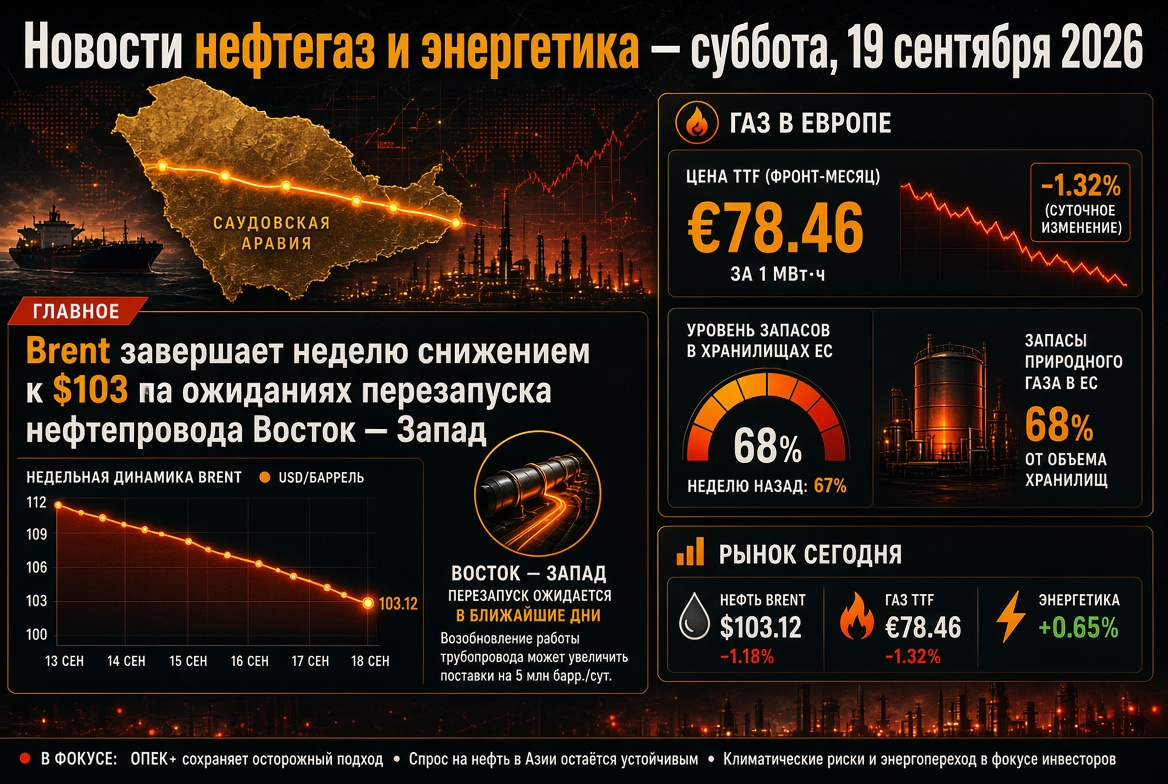
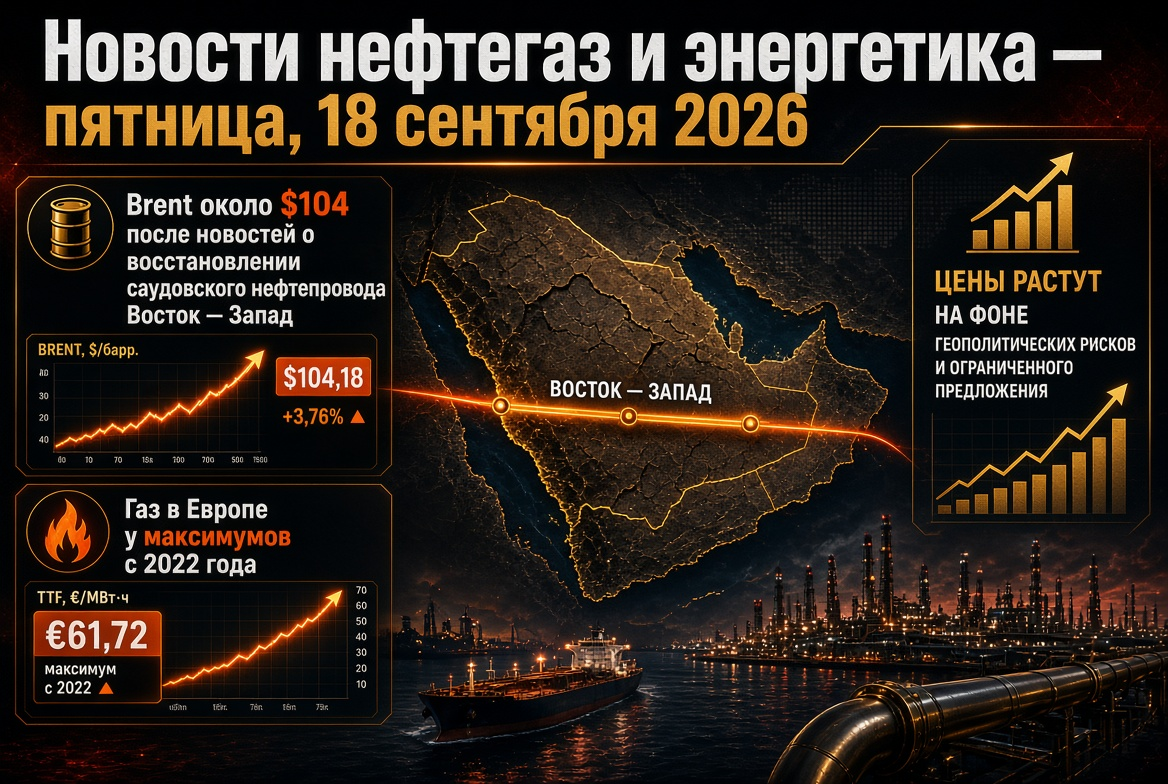
The oil market remains under pressure. After supply disruptions from key Middle Eastern regions, the global oil balance has tightened considerably. International forecasts indicate that global oil supply in 2026 may fall below previous expectations, with stock levels continuing to decline. For the market, this means that even a short-term drop in prices does not negate the fundamental deficit.
For oil companies, the current situation creates dual effects. On one hand, high oil prices support upstream revenue, particularly for producers outside the most unstable areas. On the other hand, expensive logistics, limited availability of certain crude grades, and rising geopolitical risk premiums increase operational risks.
- Brent continues to serve as the benchmark for assessing global raw material deficits.
- US, Brazilian, Canadian, and other supplies from the Atlantic Basin are becoming increasingly important for Asian buyers.
- For refineries, the importance of flexibility in crude grades and access to alternative supply routes is growing.
Oil Demand: Demand Destruction Becomes a Real Factor
High oil and petroleum product prices are gradually starting to limit consumption. The sectors under the most pressure include petrochemicals, aviation fuel, transportation, and industrial consumers. For investors, this is a crucial signal: the oil market is no longer solely driven by supply scarcity. The response of end-demand is playing an increasingly significant role.
The scenario for the coming weeks appears ambiguous. If supplies begin to gradually recover, prices may stabilize. However, even in this case, the global oil market will remain sensitive to any new attacks on infrastructure, tanker delays, sanction resolutions, or political statements. For oil companies and traders, this indicates the persistence of high volatility in quotes, freights, insurance, and differentials between grades.
Refineries and Petroleum Products: Margins Supported by Middle Distillate Shortages
The refining sector remains one of the most sensitive elements in the global energy sector. Reduced availability of raw materials, infrastructure damage, export restrictions, and changing trade flows support high refinery margins, particularly in the middle distillate segment. Diesel fuel, aviation kerosene, and certain industrial petroleum products are becoming more critical for assessing the actual state of the market than the oil price itself.
For fuel companies, three key tasks emerge:
- Ensuring stable petroleum product supplies for the domestic market;
- Monitoring stocks of gasoline, diesel, fuel oil, and aviation fuel;
- Adapting procurement to new routes and available crude grades.
In this environment, refineries with a high degree of processing technology gain an advantage. They can more quickly adjust their raw material basket and produce more profitable products. Conversely, simple refining capacities tend to be more vulnerable to shortages of specific crude grades and rising logistics costs.
Gas and LNG: Europe Increases Dependence on American Supplies
On the gas market, the main event remains the restructuring of LNG flows. Europe continues to reduce its dependence on Russian gas while simultaneously increasing reliance on liquefied natural gas supplies from the United States. For energy security, this not only addresses an old issue but also creates a new dependence on a single major supplier.
For European gas consumers, risks concentrate on three points: LNG prices, the availability of the tanker fleet, and the pace of filling gas storage facilities before the heating season. If Asia actively engages in the LNG spot market, competition for gas shipments may intensify again, supporting prices for gas, electricity, and industrial goods.
For investors, the gas sector remains contentious. American LNG projects gain a strategic advantage due to demand from Europe and Asia. However, the internal US gas market may face local oversupply in certain basins, particularly where export infrastructure lags behind production.
Asia: Expensive LNG Brings Coal Back into the Energy Mix
In Asia, there is a significant shift in part of the generation from gas to coal. Japan, South Korea, and several Southeast Asian countries are utilizing coal generation as a tool for energy security amidst high LNG prices. This does not nullify the long-term trend towards renewables and decarbonization, but it shows that, in times of crisis, governments and energy companies prioritize the reliability of energy supply.
For the coal market, this creates additional demand support. Coal is regaining its status as a backup fuel, especially in countries where gas generation relies on LNG imports. For investors, this means that coal assets, despite long-term ESG pressures, may demonstrate stable short-term returns during periods of energy shocks.
- Asian energy systems are increasing the load of coal-fired power plants.
- The demand for thermal coal is supported by disruptions in the LNG market.
- The price of electricity in the region depends on the balance between gas, coal, nuclear energy, and renewables.
Power Generation: Demand Increases Due to AI, Data Centers, and Electrification
Power generation is becoming a central investment direction in the global energy sector. The rising energy consumption by data centers, artificial intelligence, industrial electrification, crypto infrastructure, and transport is changing the structure of demand. Electricity is increasingly becoming not a secondary element of the energy market but a standalone strategic resource.
The US expects further growth in electricity consumption in 2026 and 2027. This heightens investment interest in generation, grids, energy storage, and gas stations that can balance the system. For energy companies, the key question is not only to build new capacities but also to ensure reliable connection, transmission, and management of peak loads.
Canada is also focusing on large-scale grid infrastructure development. The plan to double the capacity of power grids by 2050 indicates that developed economies increasingly view grids as foundational to industrial competitiveness and energy security.
Renewables and Grids: Solar Energy Grows But Requires Storage
Renewable energy continues to strengthen its position, particularly in solar generation. In Texas, solar energy in 2026 is expected to surpass coal generation for the first time in terms of output within the ERCOT energy system. This is an important symbolic milestone: one of the largest energy regions in the US is transitioning to a model where gas remains the basic balancing fuel, yet solar generation is rapidly displacing coal.
In Europe, solar energy is also growing rapidly, but the market faces a new problem: an oversupply of generation at certain hours is reducing prices and necessitating investments in storage, flexible loads, and network upgrades. For investors, this means that simply betting on building new renewable energy capacities is no longer sufficient. More promising are projects that integrate generation, energy storage, digital management, and access to grid infrastructure.
Regional Flows: Russia, the US, and Atlantic Basin Countries Strengthen Supplier Roles
The restructuring of global energy flows emphasizes the significance of suppliers outside the Middle East. The US, Brazil, Canada, and other Atlantic Basin producers are gaining importance for Asian and European buyers. Russian supplies of oil, LNG, and coal also remain a significant element of the global balance, despite sanctions pressure and political restrictions.
For energy market participants, this creates a new trade map. Buyers are seeking not only the lowest price but also route reliability, insurance availability, political acceptability of the supplier, and logistics resilience. As a result, oil, gas, coal, and petroleum products are increasingly traded with a high regional premium for supply security.
What Matters to Investors and Energy Companies on May 15, 2026
The key takeaway for investors: the global energy market remains in a phase of risk reassessment. Oil is supported by supply deficits, gas by competition for LNG, power generation by rising demand, and renewables by the need for long-term system modernization. Meanwhile, coal retains its role as a safety fuel, especially in Asia.
In the coming weeks, market participants should monitor the following indicators:
- The dynamics of oil and petroleum product supplies through key maritime routes;
- The prices of Brent, WTI, LNG in Asia, and gas quotes in Europe;
- The level of refinery utilization and stocks of gasoline, diesel, and aviation fuel;
- The pace of filling European gas storage facilities;
- The growth of coal generation in Asia;
- Investments in power grids, energy storage, and solar generation;
- Corporate forecasts from oil and gas, power, and coal companies.
For oil companies, the current environment is favorable regarding price but complicated by risks. For refineries, flexibility in raw materials and margins on petroleum products are paramount. For gas companies, access to LNG infrastructure is the primary asset. In power generation and renewables, a new investment cycle is emerging, favoring companies capable of integrating generation, grids, storage, and supply reliability.
Thus, the news from the oil and gas sector and energy sector for Friday, May 15, 2026, indicates a global energy sector entering a period where energy security once again becomes as crucial as decarbonization. For investors, this is a market of high volatility but also a market of significant opportunities—from oil and gas to electricity, renewables, coal, refineries, and global energy transition infrastructure.