Latest Energy Sector News on March 6, 2026: Rise in Brent and WTI Oil Prices, Tensions in the European Gas Market, LNG Market Conditions, Trends in Refined Products and Refineries, Impact of Geopolitics on Global Energy
Oil: Brent and WTI Maintain 'Risk Premium' Amid Supply Disruptions
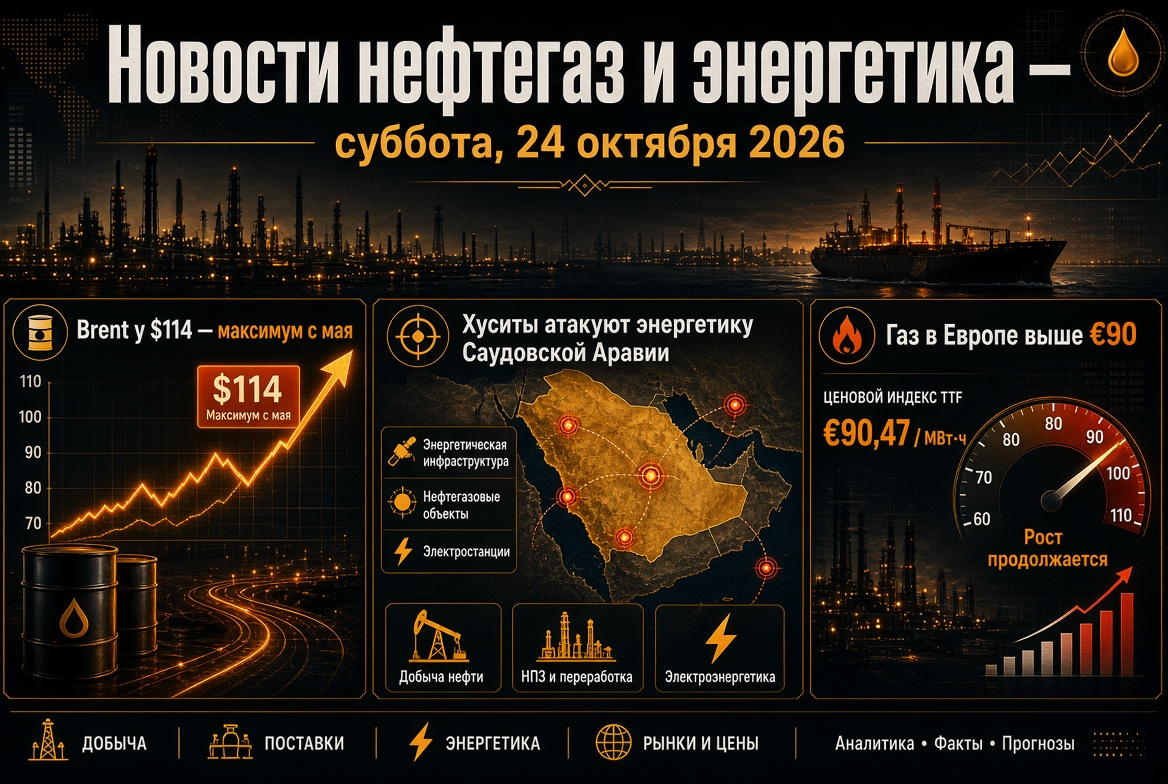
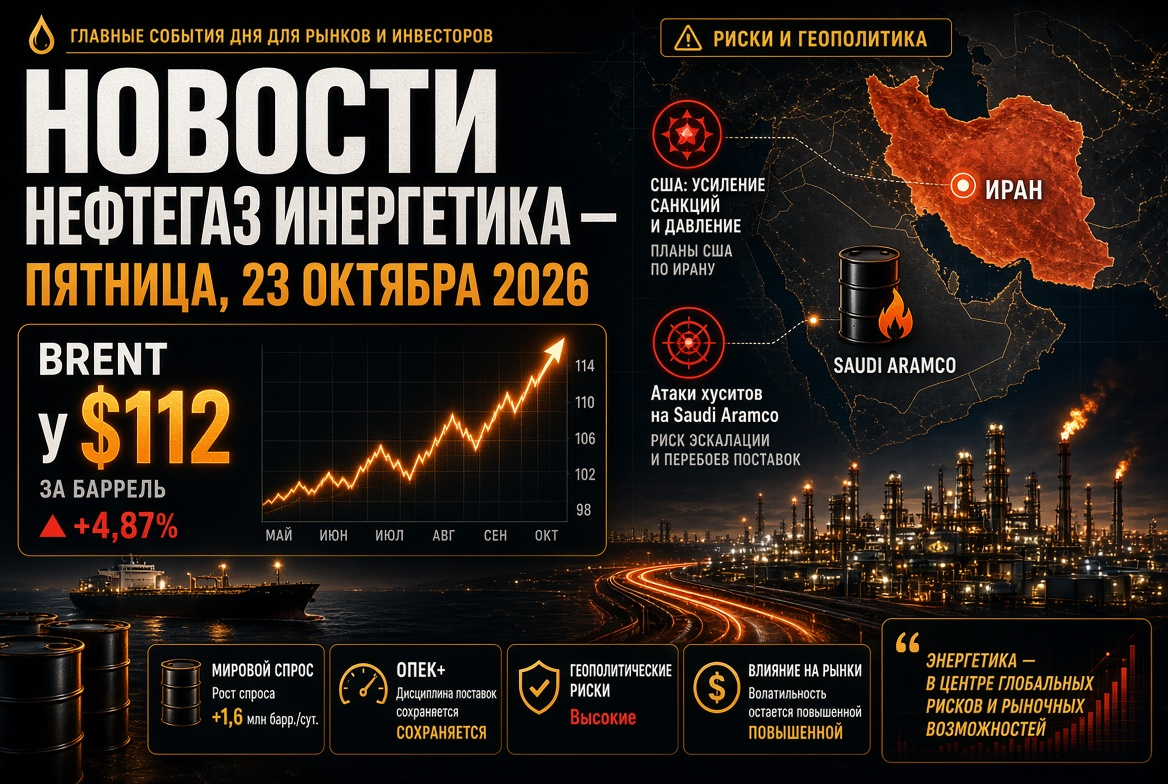
World oil prices end the week in a zone where fundamental factors (supply-demand balance) are temporarily overshadowed by geopolitics and logistics. Brent remains above $80 per barrel, while WTI hovers in the mid-$70s; the dynamics resemble a classic "supply shock": the price rise is accompanied by sharp intraday fluctuations and increased volatility across the entire futures curve.
For investors and traders in oil and gas, the critical question is not so much the production volume as the availability of routes, insurance coverage, and the speed of flow recovery. The market is pricing in the risk of forced production cuts in certain countries due to export restrictions and insufficient storage capacity, as well as the risk of "secondary effects" — from refinery shutdowns to rising prices for petroleum products and jet fuel.
- Support Factor: disruptions in marine logistics, tanker delays, rising military risks, and freight rates.
- Constraining Factor: expectations that part of the shortfall will be offset by the redistribution of flows and increased supplies from alternative regions.
- Uncertainty Factor: the duration of restrictions and the scale of potential infrastructure damage.
OPEC+ and Supply: April Production Increase Faces 'Real' Logistics Challenges
On the supply side, a significant macro signal remains: several OPEC+ members have confirmed a course toward a gradual adjustment of voluntary restrictions, with an eye towards increasing production from April. In a normal market environment, such a move would reduce the risk of shortages and cool the upward drive in oil prices.
However, this week shows that even with a formally "comfortable" global balance, the actual availability of barrels is defined by logistics. As long as logistics and insurance remain a bottleneck, any decisions regarding quotas and "paper" supply will be overshadowed by the impact of supply disruptions and expectations regarding their normalization timelines.
- Short-Term Horizon: oil reacts to transportation risks and loss of export volumes "here and now".
- Medium-Term Horizon: the market will assess how realistically the April increase from OPEC+ will translate into physical market supply.
- Long-Term Horizon: investors are scrutinizing OPEC+'s discipline and readiness to "pause" increases if necessary.
Gas and LNG: Europe Enters Injection Season with Low Storage Levels and Expensive LNG
The gas market is amplifying the sense of "energy stress": Europe is approaching the period of replenishing underground gas storage with levels significantly lower than last year's. Against this backdrop, the surge in gas prices becomes critical for the injection economy — high resource costs reduce the motivation for storage and increase the risk that target filling levels will be reached under considerable strain.
LNG remains the primary balancing tool. However, competition is intensifying: Asia is actively securing supplies, and any limitations on shipments from key export zones are immediately reflected in prices. If the LNG shortage persists, Europe will be forced to pay a premium for shipments and compete for spot volumes, which directly translates into electricity prices and costs for energy-intensive industries.
- Europe: heightened sensitivity to gas prices due to the need for storage replenishment and the share of gas-fired generation.
- Asia: increasing competition for LNG amidst rising logistics and freight risks.
- Globally: the LNG market is becoming a "transmission mechanism" for geopolitics into fuel inflation.
Logistics and Insurance: Freight, War-Risk, and Delivery Costs Become the New ‘Barrel Price’
The key "hidden variable" of recent days is delivery costs. Freight rates for large tankers on the routes from the Middle East to Asia are hitting extreme levels, while military risks are driving up insurance premiums. For the oil and gas market, this means that the cost of a barrel and a million British thermal units is increasingly determined not by the price quote, but by delivery to the consumer.
For energy sector participants, this rapidly changes the commercial logic: traditional arbitrages are closing, contracts are being renegotiated, and there is increasing demand for alternative routes and for "non-problematic" oil grades. The effect is even stronger in refined products — delays in diesel and jet fuel deliveries lead to soaring premiums and widening spreads between regions.
- Physical Risk: vessel delays and congestion at key ports.
- Financial Risk: rising insurance payments and collateral requirements.
- Operational Risk: complicating supply planning for refineries, traders, and airlines.
Refined Products and Refineries: Refinery Margins Rise While Export Restrictions Intensify Shortages
The refined products market is dominated by the topic of middle distillates shortages. Diesel, gas oil, and jet fuel are increasing in price faster than crude: market participants are pricing in the risk of refinery shutdowns due to raw material shortages and supply disruptions, as well as export fuel restrictions in several countries. For investors, this implies that the "profit center" is temporarily shifting downstream: refinery margins and trading in refined products are becoming key drivers of financial results.
Large Asian markets are already showing signs of "protecting internal balance": recommendations and administrative measures restricting new export contracts for diesel and gasoline are exacerbating regional shortages and pushing prices higher. For the global market, this creates a chain reaction: less export from Asia means higher premiums in other regions, increased delivery costs, and redistribution of flows.
- Diesel: the main beneficiary of the logistical shock, premiums and spreads are expanding.
- Jet fuel: rising demand for reliable supplies and a shrinking arbitrage between East and West.
- Refineries: those who secure oil outside risk zones and have flexibility in their product basket stand to gain.
Asia and India: Redistribution of Oil and Gas Flows, Emphasis on 'Availability' Over Price
Asia, as the largest demand center for oil and gas, feels the impact first. Regional countries rely on imports, and any supply disruption — not only leads to rising oil and gas prices but also poses a risk to the operation of refineries, chemical plants, and energy systems. The focus is on accelerated diversification: increasing purchases from low-risk zones, enhancing the role of long-term contracts, and seeking "barrels on water" that can be quickly redirected.
India is acting on multiple fronts: discussions are underway about expanding insurance coverage and safety measures for maritime transportation, and there’s a rapid pace in stockpiling and sourcing oil from alternative sources. A separate topic is Russian oil and batches already at sea: for refineries, this is a way to mitigate shutdown risks and maintain the internal refined products market from shortages.
- Oil: priority is given to physical delivery and reliable routes, rather than minimum pricing.
- Gas: diversification of imports and possible "reprioritization" of supplies for industry and energy sectors.
- Refined Products: reducing exports in favor of the domestic market raises regional premiums.
Electricity and Renewables: Natural Gas Price per Megawatt-hour and the Role of Renewable Generation
The electricity sector in Europe once again demonstrates vulnerability: as gas prices rise, they pull electricity prices up, especially in systems where gas-fired plants are often the marginal generation resource. For businesses, this means increased costs and the risk of reduced load in energy-intensive sectors. For investors, it heightens the importance of hedging, risk management, and evaluating "willingness to pay" in industry.
Against this backdrop, renewables remain a key tool for shock absorption, but they do not eliminate the role of balancing capacity, grid infrastructure, and storage. During periods of instability, portfolios that include diversified generation (wind, solar, hydro) and access to flexibility (storage, demand management, peaking gas generation) tend to win out.
- Europe: rising gas prices elevate electricity costs, increasing pressure on industry.
- Globally: new investments in renewables and networks are accelerating, but the effects take time to materialize.
- Derivatives Markets: increased volatility raises margin requirements and the cost of hedging.
Coal and Carbon: Fuel Switching Revives Interest in Coal and Intensifies ETS Discussions
Rising gas and LNG prices increase the likelihood of fuel switching where possible — refocusing attention on coal and raising the price sensitivity of electricity generation to emissions. In practice, the effect is uneven: in some countries, coal remains a reserve to address price extremes, while in other regions, environmental and political constraints prevent rapid increases in coal generation.
At the same time, there is continued high volatility in the carbon quota market: for energy, this adds an additional layer of uncertainty impacting "clean spreads" and the competitiveness of various generation types. The higher the gas and carbon prices, the greater the pressure on industry and the higher the likelihood of political discussions about temporary mitigation measures.
- Coal: increasing role as a "insurance fuel" during periods of gas price shocks.
- ETS: carbon price enhances volatility and influences fuel choice.
- Electricity: the market balances between fuel costs, emissions, and system reliability.
Nuclear Energy: Regulators Accelerate Decisions as Technologies Find Opportunities
Amid the instability in oil and gas markets, interest in baseload low-carbon generation is growing. In the United States, a significant signal has been the acceleration of regulatory processes related to new nuclear projects and advanced reactor technologies. For investors, this means an expansion of the "investment narrative" around nuclear: from SMR projects and supply chains to fuel and infrastructure.
A critical focal point is high-assay low-enriched uranium (HALEU) and the ability to ensure its production outside external risks. This is creating a new investment niche at the intersection of energy, technology, and industrial policy. Combined with rising demand for electricity (including data centers and industry), nuclear generation is once again becoming a part of strategic energy portfolios.
- Reliability: nuclear provides stable baseload and reduces dependence on gas in the electricity sector.
- Supply Chains: increasing focus on fuel, components, and licensing.
- CapEx: the market continues to debate the costs, timelines, and scalability of SMR.
What Matters to Investors and Market Participants in the Energy Sector: Indicators, Scenarios, and Practical Guidelines
For the global audience of investors and oil and gas companies, the key task going forward is risk management. The oil, gas, electricity, and refined products markets are responding not to "annual forecasts" but to the speed of logistics recovery, availability of insurance coverage, resilience of refineries, and buyers' ability to secure supplies.
Key indicators to keep an eye on March 6 include:
- Oil: dynamics of Brent and WTI, slope of the curve (backwardation/contango), and spreads between grades.
- Gas and LNG: European prices and rates of gas storage injection, premiums for spot LNG cargoes, Europe-Asia competition.
- Refined Products: cracks for diesel and jet fuel, export restrictions, refinery margins in Asia and Europe.
- Logistics: freight, war-risk insurance, turnaround speed of vessels, and tanker availability.
- Electricity: gas component in the price per megawatt-hour, stress in derivatives, risks for industrial demand.
The main conclusion for the energy sector moving forward is that the market is operating in states of "physical shortage" and "financial stress" simultaneously. In such conditions, strategies with diversified feedstocks, flexible logistics, stable refinery supplies, and disciplined risk management — from hedging to inventory management — will prevail.