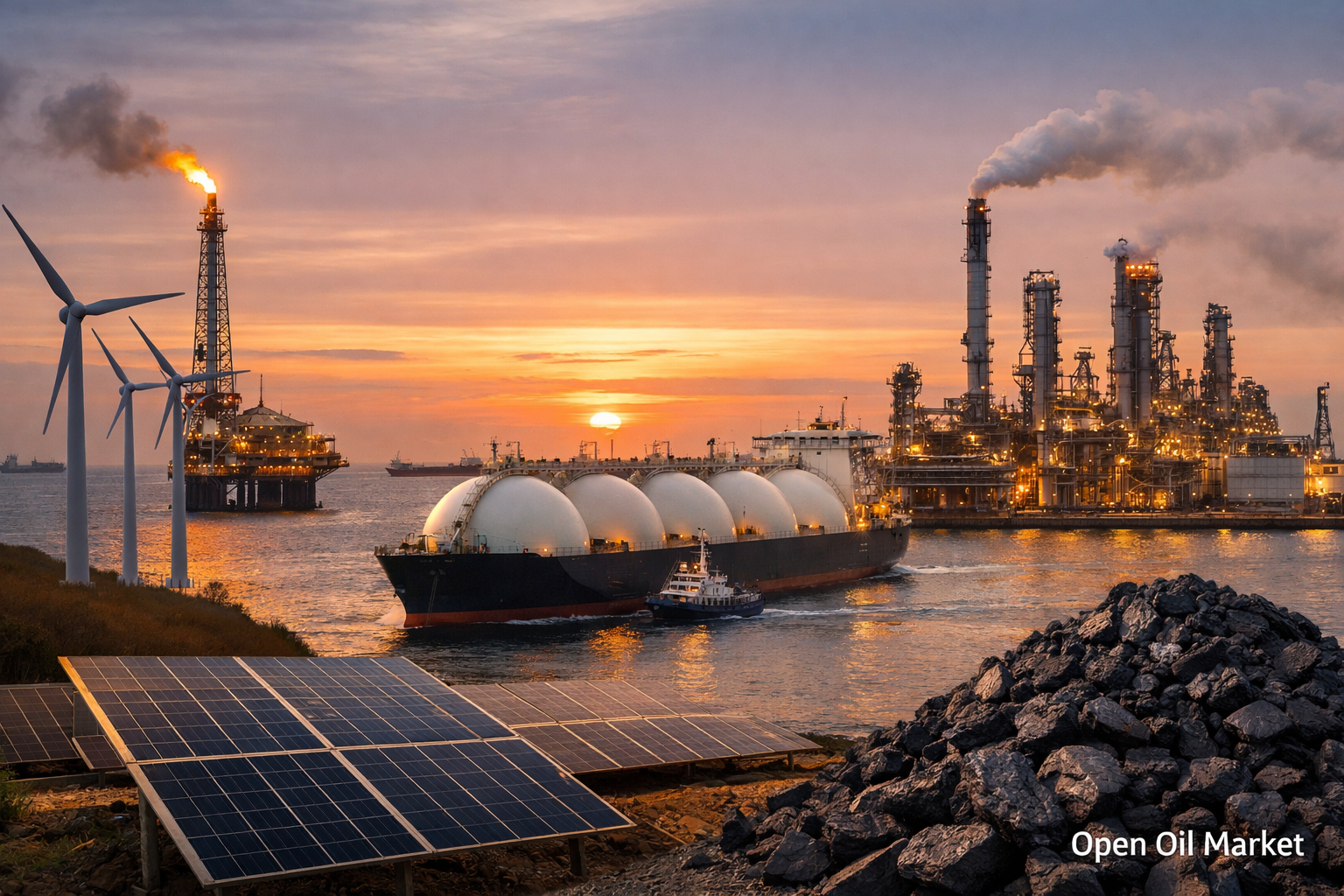
Global Oil, Gas, and Energy News as of March 8, 2026: Market Analysis for Oil, Gas, LNG, Refining, Power Generation, and Renewables for Investors and Participants in the Global Energy Sector
Oil Market: Brent Receives Strong Geopolitical Support
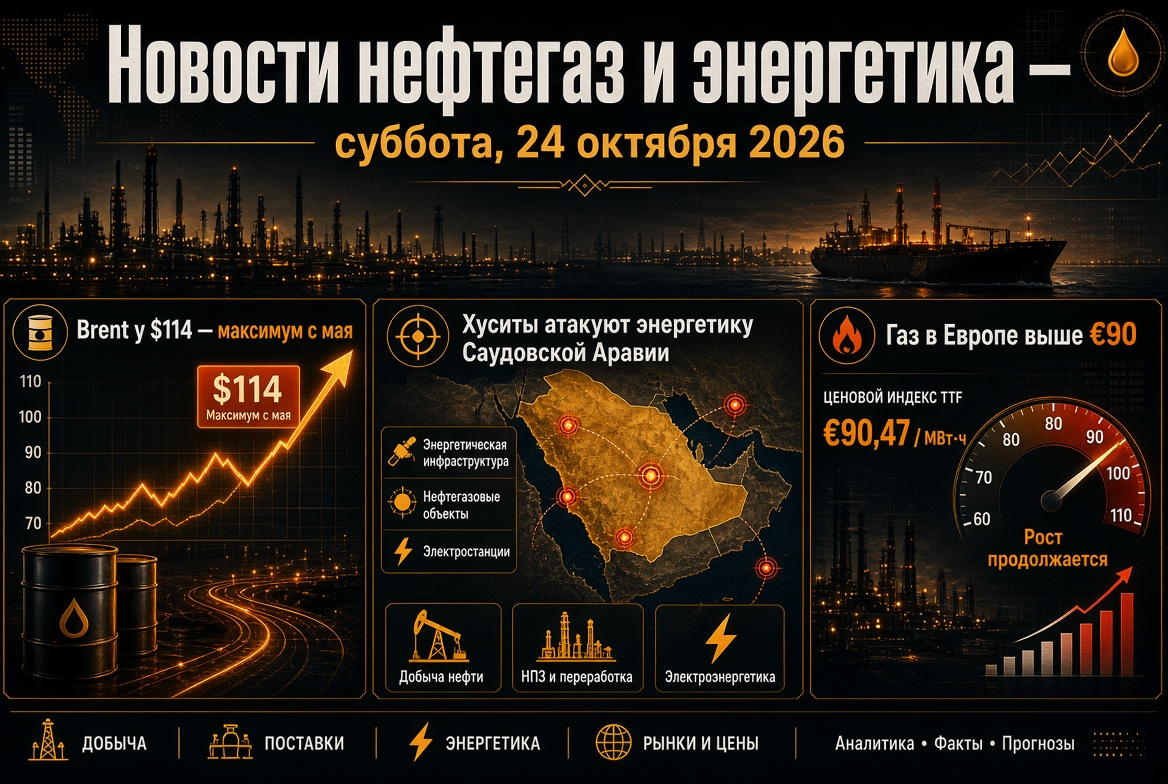
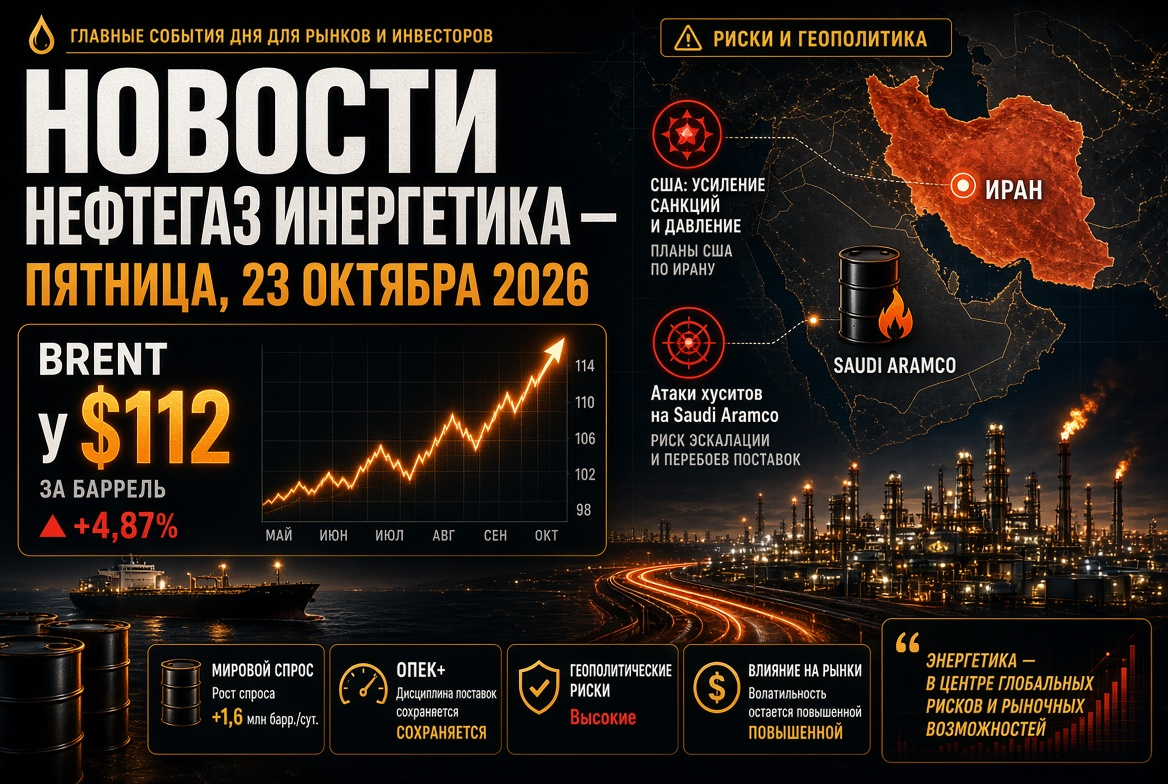
The oil market enters Sunday under heightened nervousness. For the global oil market, it is currently less about classical cyclical factors of supply and demand, and more about the risk of actual supply disruptions from the region through which a significant portion of the world's crude and refined product exports pass.
The rise in oil prices at the beginning of March indicates that traders are ready to factor in scenarios of prolonged logistical constraints. Even a moderate deterioration in transport accessibility along Middle Eastern routes instantly heightens the risk premium because spare capacities in the global system are distributed unevenly, and rapidly replacing large export volumes is challenging.
- The oil market is responding less to formal signals from OPEC+ and increasingly to the security of physical exports;
- Suppliers and buyers are factoring in rising insurance, freight, and operational costs;
- For oil companies and traders, the significance of flexible routes, reserves, and diversified contract bases is increasing.
For investors in the energy sector, this means that in the short term, oil gains support, and volatility may remain high even in the absence of new formal sanctioning decisions. For producers of refined products and owners of refineries, this is also a signal to reassess price expectations for crude and finished products.
OPEC+ and Production: Formal Supply Increase Doesn’t Solve Market Issues
The additional production volume agreed upon by OPEC+ is currently perceived by the market more as a symbolic stabilizer rather than a full-fledged balancing tool. The reason is clear: if geopolitical risks affect routes, export terminals, refining, and shipping, then even an increase in quotas on paper does not guarantee physical market saturation.
Therefore, participants in the commodity sector are currently evaluating not just the level of production, but three practical questions:
- Can the extracted crude be quickly moved to the external market;
- How stable is the operation of the export infrastructure;
- Are importers able to swiftly restructure their procurement routes.
Against this backdrop, oil and gas, along with energy, are returning to the classic logic of a crisis cycle: real value lies not just in production volume, but in the reliability of supply. This emphasizes the importance of large integrated companies that have their own logistics, terminals, refining, and export channels.
Gas and LNG: Global Market Shifts to a Cautiously Scarce Mode
The gas and LNG markets at the beginning of March appear even more sensitive than oil. While oil remains a relatively interchangeable commodity, the infrastructural constraints for gas, and particularly for LNG, are much stricter. Supply disruptions from Qatar and increased risks in key routes immediately impact Europe and Asia, where importers are forced to compete for limited cargoes.
For Europe, the situation is particularly sensitive as the injection season into storage is just beginning, and the initial stock levels appear weaker than usual. This raises the likelihood that gas prices will remain elevated longer than the market anticipated earlier this year.
- European buyers are facing higher costs to replenish storage;
- Asian countries are being forced to more actively seek alternative LNG supplies;
- The freight costs for gas carriers and logistics rates sharply increase pressure on the final fuel price.
For oil and gas companies and investors, this signifies that gas and LNG are becoming the primary channels for transmitting the Middle Eastern crisis into power generation, industry, and the utility sector. The longer the tension persists, the higher the likelihood of demand revisions, a shift of some generation to coal and refined products, and additional inflationary pressure.
Refineries and Petroleum Products: Diesel, Jet Fuel, and Refining Margins Back in Focus
A separate focus for the global energy sector is refining. The petroleum products market is responding to the crisis faster than many upstream segments. It is already evident that refining margins for middle distillates are growing faster than oil prices. This is especially critical for diesel, gasoil, and jet fuel, as these products are more sensitive to logistical disruptions and regional shortages than others.
For refineries, the current situation may represent both an opportunity and a risk. The opportunity lies in the growing refining margin, while the risk involves rising raw material costs, supply instability, and potential export restrictions on finished products.
- Asian and Middle Eastern refineries are under maximum logistical pressure;
- The European petroleum products market remains vulnerable concerning diesel;
- The aviation segment is receiving additional inflationary impulses due to rising kerosene prices.
For participants in the petroleum products market and traders, this means that the coming weeks may be characterized by increased profitability for efficient refineries while simultaneously experiencing high price volatility in the fuel supply chain.
Power Generation: Expensive Gas Enhances the Value of Flexible Generation and Networks
Rising gas prices quickly transition into power generation. For power plants in Europe and part of Asia, this means increased production costs and new questions regarding the sustainability of energy systems. In such an environment, countries and companies with a diversified energy balance—combining gas, coal, nuclear generation, hydropower, and renewables—stand to gain.
At the same time, the role of the power grid complex is strengthening. Even with the rapid inclusion of solar and wind capacities, without modernizing networks and storage systems, reliable energy supply cannot be ensured. Therefore, the current crisis paradoxically supports not only the traditional energy sector but also accelerates investments in a new type of power generation.
- Gas generation remains critically important for balancing;
- Grid investments are becoming one of the key areas of capital expenditure;
- Energy security is becoming a priority alongside decarbonization.
Renewables: Energy Transition Continues, Shifting the Argument
The renewables sector in 2026 is evolving not just under the banner of climate policy but also as an element of energy security. Solar and wind generation continue to expand in Europe, the UK, and China, while substantial infrastructural solutions in grids confirm that the world is not abandoning the long-term energy transition, even when oil and gas are once again dominating the news cycle.
Importantly, for energy investors, the structure of arguments has changed. Previously, renewables were often viewed as a bet on ESG and emission reductions; now, they are also a means to reduce dependency on imported gas, expensive fuels, and external shocks. In this context, not individual projects but integrated models are winning: generation, grids, storage, and digital demand management.
Coal: Reserve Resource Regains Importance
Despite a long-term trend toward decarbonization, coal maintains its role as a backup fuel during periods of gas shortages. For some Asian markets, coal remains the most accessible alternative to expensive LNG. However, on the global coal market, there is no longer an unequivocal perception of growth: demand is becoming more volatile, and maritime trade is gradually approaching a plateau.
Nevertheless, in a stress scenario, coal will continue to serve as a buffer for power systems, especially where gas generation cannot be quickly ramped up or LNG imported. This indicates that investors should not entirely exclude the coal segment from assessments of short-term energy system resilience.
What This Means for Investors and Companies in the Energy Sector
As of March 8, 2026, the global energy sector is moving along two tracks simultaneously. The first is crisis-driven: oil, gas, LNG, refining, and petroleum products receive a powerful boost from geopolitics, logistics, and the threat of scarcity. The second is strategic: power generation, renewables, and grid projects are becoming equally important, as they shape the long-term resilience of energy systems.
For the global market, the following conclusions are critically important:
- Oil and gas remain primary indicators of geopolitical risk;
- LNG has become the most vulnerable segment of global energy in the short term;
- Refineries and the petroleum products market are experiencing a new wave of volatility and margin growth;
- Power generation and grid assets are increasing in strategic value;
- Renewables are strengthening their positions not in spite of the crisis, but largely because of it.
This is why the energy and oil news for March 8, 2026, should be viewed not as a collection of disparate episodes but as a signal of a new cycle in the global energy balance reconfiguration. For companies, investors, and participants in the commodity sector, this is a period where supply resilience, infrastructure quality, and the ability to adapt quickly are more important than merely betting on price direction.