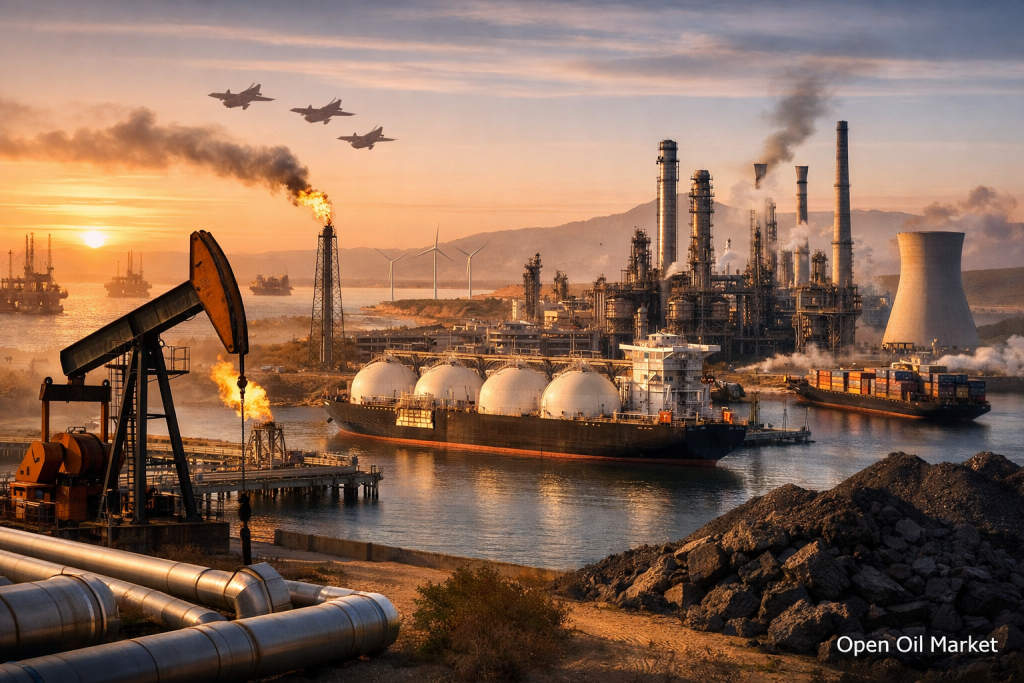
Global Oil, Gas, and Energy Sector News for November 20, 2025: Price Dynamics, Sanctions, Production, Renewables, Coal, and Key Trends in Global Energy Markets
World Oil Prices: Decline Amid Prospects for Peace
Global oil prices are experiencing a decline following reports of potential progress in peace negotiations related to the armed conflict in Ukraine. On November 19, Brent crude prices fell by approximately 2.8% (to around $63 per barrel), while American WTI dropped by 2.9% (to around $59 per barrel) by midday. Investors reacted to news of a U.S. peace initiative, which revived hopes for an end to hostilities. The prospect of an agreement reduces the geopolitical premium on oil prices and shifts market focus back to fundamental demand and supply factors, which currently favor an oversupply situation.
Even prior to this news, oil prices were under pressure due to concerns over overproduction. Last week, Brent and WTI lost about 4% amid signals of expected future surplus in the market. A brief price uptick on Tuesday was followed by a new decline on Wednesday, further entrenching the downward trend. Analysts note that if military risks to oil supplies decrease, the market will focus on the current balance of supply and demand, which indicates an oversupply.
Risks of Oil Oversupply and OPEC+ Actions
Fundamental indicators of the oil market suggest a likely surplus supply in the coming months. Several industry organizations have revised their forecasts, signaling a potential oil market oversupply by 2025–2026:
- OPEC and IEA Estimates: OPEC's November report indicates that by 2026, the global oil market could face an oversupply (previously a deficit was expected). The International Energy Agency also pointed to an accelerated production growth that could lead to surplus oil stocks.
- U.S. Production: The U.S. Energy Information Administration (EIA) forecasts that by the end of 2025, U.S. oil production will reach a historical high, further enhancing global supply.
Against this backdrop, the OPEC+ alliance is gradually increasing production after a prolonged period of constraints. Since April 2025, the cartel has shifted its strategy from cutting production to phased increases, seeking to regain lost market positions and prevent price spikes. This autumn, OPEC+ countries raised their collective quota by approximately 137,000 barrels per day in October and another similar amount in November, lifting previously voluntarily held volumes. However, many participants in the agreement are already operating at capacity limits, causing actual supply increases to lag behind announcements.
Nevertheless, OPEC+'s current policy aims to ease the market, largely influenced by pressures from the administration of Donald Trump, which is calling for lower energy prices.
Sanctions and the Restructuring of the Oil Market
Geopolitical factors continue to impact the oil industry. New U.S. sanctions imposed in October against major Russian oil companies "Rosneft" and "Lukoil" will come into effect on November 21, which is expected to gradually reduce Russian oil export volumes. Several buyers in China and India have already begun to reject oil from these companies, transitioning to alternative suppliers.
Russian authorities claim that the sanctions have not yet significantly affected production levels. According to Deputy Prime Minister Alexander Novak, oil production in Russia remains stable, and the new restrictions have not reduced output volumes. He emphasized that Russia has compensated for previous quota excesses as part of the OPEC+ agreement and does not plan to voluntarily cut production beyond established agreements.
Experts note that the upcoming peace negotiations might eventually pave the way for a reduction in sanction pressure. The U.S. has already signaled its willingness to reconsider restrictions if progress is made in resolving the conflict. A gradual de-escalation of geopolitical tensions could eventually allow for a return to freer oil trade.
It is worth noting that the sanctions regime and military risks have already impacted the global oil products market. In particular, recent restrictions and drone strikes on Russian refineries have sparked a surge in gasoline prices in the U.S., reaching the highest levels since 2022. Thus, conflicts and sanctions affect the entire chain—from oil production to fuel costs for end consumers.
Russian Oil Production and Domestic Market
Despite external pressures, Russia is gradually increasing oil production. According to Alexander Novak, by the end of 2025, the country expects to fully meet its quota under OPEC+ (approximately 9.5 million barrels per day). By November, production approached this level (in October, the shortfall from the quota was about 70,000 b/d), and Moscow maintains an annual production forecast of around 510 million tons.
Russian oil companies have fully compensated for excess production in previous months under the OPEC+ agreement and do not plan to voluntarily cut output beyond the established quota. In other words, no additional production restraints from Russia are anticipated at this time.
The domestic fuel market stabilized by November. Government-imposed restrictions on petroleum product exports, seasonal demand declines, and the return of refineries after maintenance have saturated the market. Wholesale and retail prices for gasoline and diesel, which soared in September, have returned to normal levels. Fuel companies have restored regular supply to gas stations, and authorities continue to monitor prices to prevent a new deficit.
Natural Gas Market: Europe and the U.S.
- Europe: Gas prices in Europe have dropped to their lowest levels in nearly a year and a half. In mid-November, futures at the TTF hub fell to around $364 per 1,000 m3 amid low demand and ample liquefied natural gas (LNG) arrivals. Mild weather and high storage levels have allowed the EU to enter the winter season without price shocks. Despite Europe's aim to phase out Russian gas, some volumes under long-term contracts are still being received, although their share continues to decline. Experts expect that by the second half of 2026, a surplus in the global LNG market will emerge, further reducing prices.
- U.S.: In the United States, conversely, the period of cheap gas has ended—prices have reached a three-year high. The Henry Hub index surged to around $162 per 1,000 m3, marking a record since 2022, amid a sharp increase in LNG exports (exceeding 0.5 billion cubic meters per day) and rising domestic demand with the onset of cold weather. The high gas prices are already prompting some utility companies to switch to coal generation to control costs and meet electricity demands.
Coal Sector and Power Generation
The global coal market is relatively stable as we near the end of 2025 after periods of sharp fluctuations. In Europe, energy coal prices fell to a four-year low this fall, but with the onset of the heating season, they have recovered somewhat. Early cold weather temporarily increased coal usage for electricity generation in October, although the overall trend toward decarbonization remains.
In the U.S., rising natural gas prices have had the opposite effect: Energy companies have increased reliance on coal-fired power plants, interrupting a multi-year decline in coal’s market share. While this is a temporary phenomenon driven by fuel price dynamics, it underscores the importance of diversifying energy sources for reliable power systems.
In China, a sharp increase in coal consumption was also noted this fall. A combination of cold weather in the north and abnormal heat in the south of the country led to a surge in electricity demand, which had to be met by increased generation from coal-fired power plants (amid a temporary drop in renewable energy generation). This has raised domestic coal prices and highlighted the significant impact of weather conditions on the energy sector.
Despite these short-term spikes, long-term prospects for the coal industry remain cautious. An expected natural gas surplus by 2026 and the widespread construction of renewable energy facilities will limit growth in coal usage. Investors are increasingly cautious regarding coal projects, focusing on low-carbon development goals.
Renewable Energy and Climate Goals
Renewable energy sources continue to strengthen their position in the global energy balance. The UK recently announced a major offshore wind project: The consortium EDP Renewables (Portugal) and Engie (France) has secured rights to build a 1.5 GW floating offshore wind farm in the Celtic Sea off the coast of Wales. This project aims to accelerate the decarbonization of the UK’s power sector: London plans to increase the installed capacity of offshore wind farms to 50 GW by 2030 and nearly completely phase out fossil fuels from generation.
Other nations are also increasing investments in renewable energy as a means to enhance energy security and reduce dependence on fuel imports amid volatile oil and gas prices.
Industry organizations, however, are urging against shortages of traditional resources during the transition period and are insisting on sufficient investments in oil and gas to avoid new price spikes. At the same time, scientists warn that CO2 emissions from fuel combustion in 2025 are set to reach a record high, complicating the achievement of climate goals. Ahead of the UN climate summit COP30, governments and energy companies are under pressure to strengthen environmental regulations. Balancing the growing demand for energy with environmental commitments becomes a key challenge for the entire fuel and energy complex.