Current News on the Oil, Gas, and Energy Sector for Thursday, May 21, 2026: Oil, Gas, LNG, Electricity, Renewables, Coal, Oil Products, and Refineries in Focus for Global Energy Market Investors
The global fuel and energy complex enters Thursday, May 21, 2026, in a state of heightened volatility. For investors, market participants in the energy sector, fuel companies, oil companies, refinery operators, and electricity suppliers, the key theme remains the balance between geopolitical risks, limited logistics, dwindling reserves, and the accelerated restructuring of energy infrastructure.
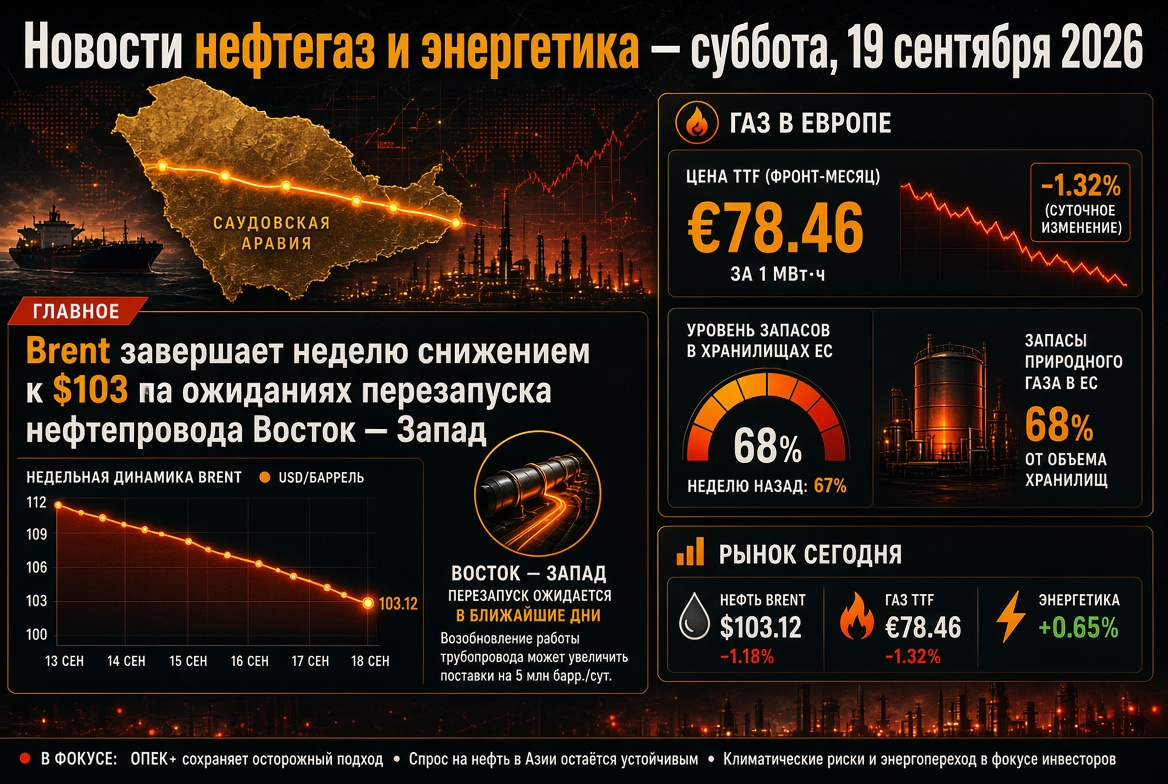
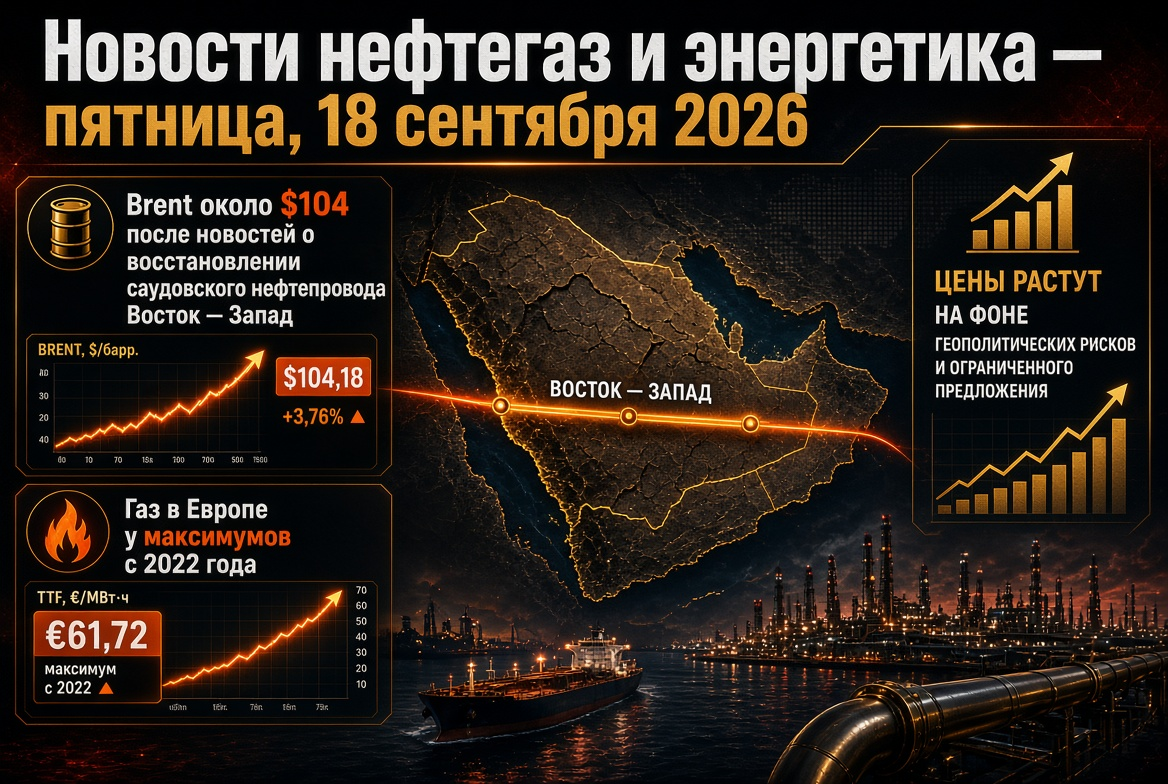
Tension persists in the oil market surrounding supplies from the Middle East. Brent and WTI prices remain elevated despite some signals indicating a potential decrease in geopolitical premiums. The fundamental picture remains complex: oil and oil product inventories in the United States are declining, some export routes are experiencing disruptions, and refineries are preparing for a period of high summer demand.
For a global audience of investors, today’s energy market appears not as a single cycle of ups and downs, but rather as a collection of parallel processes: expensive oil is pressuring demand, LNG is becoming a tool for energy security, coal maintains its role as a backup fuel, the power sector faces rising loads from data centers, and renewables are increasingly influencing price formation in energy systems.
Oil: Brent Remains the Indicator for Geopolitical Premiums
The main intrigue in the oil market for May 21 is whether Brent can hold its ground in the high-price zone after the sharp fluctuations of recent weeks. Comments regarding possible de-escalation in the Middle East temporarily eased pressure on quotations; however, the physical oil market still incorporates the risk of supply deficits.
For oil companies and traders, three factors are crucial:
- the state of maritime logistics and the availability of key supply routes;
- the reduction of commercial oil inventories in the U.S.;
- consumer response to high oil and oil product prices.
Even if political rhetoric softens, the oil market cannot quickly return to a state of calm. Physical flows are recovering more slowly than news headlines change. For investors, this means that the risk premium may stay embedded in Brent, WTI, and oil product quotations longer than some market participants expect.
U.S.: Declining Inventories Heighten Attention to Oil Products
The American market remains one of the key indicators of the global balance of oil and oil products. Preliminary industry data indicates another decline in crude oil, gasoline, and distillate inventories. This is particularly important on the eve of summer, when gasoline demand traditionally increases.
For refineries, the situation is a double-edged sword. On one hand, high processing loads support raw material demand and might improve margins in certain segments. On the other hand, declining gasoline and diesel inventories make the market more sensitive to any disruptions: refinery accidents, shipment delays, weather factors, or logistical constraints.
Fuel companies should recognize that the oil products market may become more volatile in the coming weeks than the crude oil market. Especially concerning are gasoline, diesel, jet fuel, and petrochemical feedstocks.
OPEC, the Middle East, and Export Flows: Supply Remains Vulnerable
The supply situation from Middle Eastern countries continues to be a central theme for the energy market. Reduced export flows from the region, risks for maritime logistics, and the need for redirection of supplies create a complex picture for oil companies, shipowners, insurers, and raw material buyers.
For the market, it is important not only how much oil is produced, but also how steadily it reaches the end buyer. If export routes experience restrictions, even formally available volumes of oil do not ease market tension.
Investors should monitor the following parameters:
- the dynamics of supplies from Gulf countries;
- the cost of shipping and insuring tankers;
- the discount or premium of various oil grades to Brent;
- refinery utilization rates in Asia, Europe, and the U.S.;
- changes in strategic and commercial inventories.
Gas and LNG: Energy Security Rises to the Forefront Again
The global gas market in May 2026 remains divided. In the U.S., domestic gas prices are significantly lower than in Europe and Asia, while the global LNG market is trading at a premium due to supply constraints, buyer competition, and the growing significance of long-term contracts.
For Europe, LNG remains an essential tool for substituting pipeline gas and reducing dependence on individual suppliers. However, new environmental requirements regarding methane emissions introduce additional uncertainty for exporters and buyers. Gas companies must factor in not only prices but also regulatory risks, reporting requirements, and fuel provenance.
For Asia, a key factor is competition for flexible LNG cargoes. China, India, Japan, and South Korea create demand that directly influences European prices. If Asian demand strengthens, part of the supplies may shift from European routes, raising gas and electricity costs in the region.
Electricity: Rising Loads Shift Investment Focus
The electricity sector is becoming one of the most investment-significant parts of the global energy complex. Rising consumption from industry, the electrification of transport, data centers, and artificial intelligence intensifies the load on energy systems.
For investors, this signifies that the electricity market increasingly depends on more than just fuel prices. The following factors come to the forefront:
- the availability of grid infrastructure;
- the speed of connecting new generating capacity;
- the cost of balancing energy systems;
- the reliability of base generation;
- investments in energy storage and digital management of networks.
Companies controlling generation, networks, energy storage, and infrastructure for large consumers may gain a strategic advantage. For the energy market, this means a gradual capital shift from simple fuel extraction to comprehensive energy solutions.
Renewables: Solar and Wind Generation Enhance Price Influence
Renewable energy continues to alter the structure of the global energy market. In Europe, solar generation already exerts a noticeable influence on daytime electricity prices, displacing part of gas and coal generation. However, the rapid growth of renewables presents new challenges: grid overloads, negative prices during high generation hours, delays in connections, and the need for storage solutions.
For investors in renewables, 2026 is shaping up to be a year of project selection. Simple growth in installed capacity is no longer sufficient. The market increasingly evaluates project quality: network access, electricity sale contracts, storage capabilities, predictability of generation, and resilience to regulatory changes.
Renewables remain a key direction in the energy transition, but their investment attractiveness now depends not only on subsidies and climate agendas but also on the ability to operate within a real energy system with a high share of variable generation.
Coal: Backup Fuel Retains Importance for Asia
The coal market remains contentious. On one hand, the long-term climate policies of many countries aim to reduce the role of coal generation. On the other hand, in a context of expensive gas, LNG restrictions, and rising electricity demand, coal retains its role as a backup and base fuel.
The situation in China is especially crucial. The decline in coal production in certain months amid rising coal generation indicates a tense balance persists. For India, coal remains an important element of energy security, particularly during peak electricity demand periods.
For the global energy market, this means coal is not disappearing from the energy balance quickly. Its share may decrease in the long term, but in the short term, it continues to serve as insurance against expensive gas and unstable generation.
Refineries and Oil Products: Margins Dependent on Logistics and Seasonal Demand
Refining enters a period of increased scrutiny. For refineries, not only raw material prices are important, but also the availability of specific oil grades, shipping costs, and the dynamics of demand for gasoline, diesel, jet fuel, and petrochemical feedstocks.
If oil product inventories continue to decrease, processing margins may remain supported. However, high fuel prices can limit demand, especially in developing countries and sensitive industrial segments. This creates a risk: oil companies may benefit from high prices but face gradual demand destruction.
What is Important for Fuel Companies
- control over gasoline and diesel inventories;
- diversification of crude oil suppliers;
- logistical and storage flexibility;
- analysis of regional price spreads;
- preparedness for sharp changes in summer demand.
Investment Conclusion: The Energy Market Remains a Market of Risk, Infrastructure, and Flexibility
As of May 21, 2026, the global energy complex cannot be viewed solely through the lens of oil prices. Oil, gas, electricity, renewables, coal, oil products, and refineries become part of a unified investment picture where companies with access to infrastructure, flexible supply chains, strong balance sheets, and the ability to manage regulatory risks come out ahead.
For investors, the key strategy is not to bet on a single energy resource but to analyze the entire value chain: extraction, transportation, processing, storage, generation, grids, and final demand. In the coming weeks, the market will pay especially close attention to oil and oil product inventories in the U.S., Brent dynamics, LNG supplies, coal generation in Asia, and the pace of renewable energy development in Europe.
The main takeaway for energy market participants is that the energy sector remains highly lucrative but is becoming increasingly complex. Geopolitical factors support oil and gas prices, the energy transition alters demand structures, and infrastructure constraints increasingly define winners and losers. For oil companies, fuel operators, refineries, electricity producers, and investors, Thursday, May 21, 2026, is marked by caution, flexibility, and a reconsideration of global energy risks.