Current News on the Oil, Gas, and Energy Sector as of December 2, 2025: Market Situation, Renewable Energy Updates, Geopolitics, Investments, and Key Events in the Global Energy Sector.
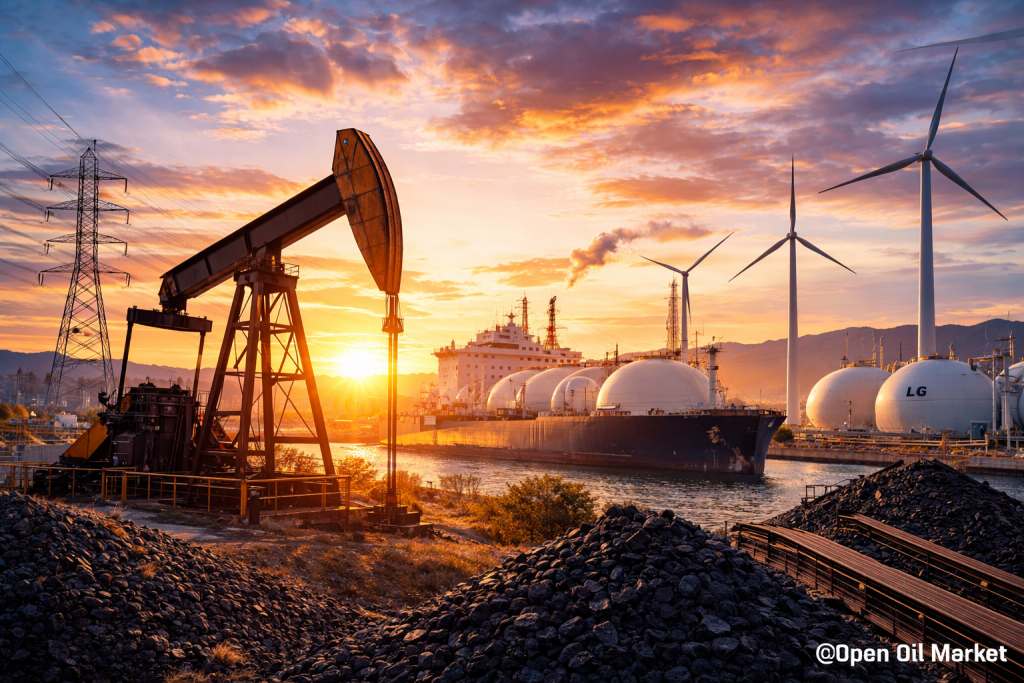
The global energy market continues to face an oversupply amid subdued demand and geopolitical uncertainties. Oil prices remain around two-year lows (Brent ~ $63) due to increasing inventories and high production levels. European gas reserves are close to record highs, providing comfort for winter demand. Growing attention to green technologies is stimulating network modernization and the implementation of energy storage solutions.
Oil Market
- OPEC+ maintained its production levels during its November meeting for Q4 2025 and Q1 2026 without changes. This decision signifies the continuation of the existing reduction scheme (approximately 3.2 million barrels/day) against the backdrop of forecasted demand slowdown.
- The United States is producing a record volume of oil (~13.8 million b/d), with commercial oil inventories growing. The increase in domestic stocks in the U.S. and other countries is dampening further growth in global fuel prices.
- Incident in Novorossiysk: Ukrainian drones damaged one of the Caspian Pipeline Consortium (CPC) berths, reducing oil shipments to the port. This incident temporarily lowered CPC exports (~1% of global), resulting in short-term price fluctuations.
- Geopolitics: Negotiations regarding Ukraine remain a key factor. The prospect of a peaceful resolution may, in the long term, ease sanctions against Russia and increase oil and gas supplies. Concurrently, the risk of new restrictions and asset reconfigurations maintains industry uncertainty.
Gas Market
- European reserves: At the commencement of the 2025/26 heating season, EU gas storage facilities are filled to about 75–80% of capacity, significantly above average levels. This reduces gas shortage risks and keeps prices low (TTF ~ €30/MWh).
- LNG imports: Europe is actively increasing its imports of liquefied natural gas. The commissioning of new terminals in the U.S. and Australia, along with reduced demand from Asia, has provided additional LNG volumes for the EU. In 2025, LNG flows to Europe have increased significantly, aiding in supply diversification.
- Russian supplies: Russia is shifting focus to Asian markets. Exports via the "Power of Siberia" to China are on the rise, with the "Power of Siberia-2" project anticipated in 2026. Gazprom is negotiating to extend contracts with Turkey, maintaining exports through the "Turkish Stream." Traditional routes to Europe are currently operating at reduced capacities.
- Domestic demand: In Germany, gas consumption has significantly increased due to reduced wind and hydroelectric production. This is slowing storage filling rates and creating local price pressures in the region, although the overall European system continues to receive necessary imports.
Electricity and Renewable Energy Sources
- Record growth in renewable energy: Renewable sources are adding capacity at unprecedented rates. Solar and wind generation in many countries have exceeded the growth rate of electricity demand, which for the first time has stabilized global CO₂ emission levels. China and the U.S. remain leaders in the expansion of "clean" energy, while Europe is gradually adjusting its support programs.
- Infrastructure investment: Following COP30, global energy companies and governments announced plans for extensive funding of network modernization and energy storage. Major energy giants have pledged around $148 billion annually for new transmission lines and energy storage systems, facilitating better integration of variable energy sources.
- EU policy: Brussels continues its course towards energy independence. New measures have been adopted under REPowerEU, including a phased phase-out of imports of Russian gas and oil by 2027, extended requirements for filling gas storage facilities until the end of 2027, and increased funding for energy efficiency and clean energy projects. The accelerated construction of new renewable energy projects and networks is under discussion.
- Nuclear program: Despite the focus on "green" energy, countries are not abandoning nuclear directions. A recently published EU report indicates that investments in nuclear power plants (extending operational life and building new ones) will require around €241 billion through 2050. Concurrently, plans for small modular reactors (SMRs) and hydrogen technologies are being developed as "bridges" to a decarbonized economy.
Coal Sector
- Long-term contracts in Asia: Many countries in the Asia-Pacific region are still compelled to maintain high coal consumption. Agreements signed years ago ensure the operation of coal-fired power plants for decades, regardless of wind or sunlight availability. Experts estimate that in Southeast Asia, coal still provides a significant share of generation, although the global share of coal is gradually declining.
- Global trends: Nevertheless, several major economies have announced a phased transition away from coal. The Chinese market is demonstrating the first signs of reduced emissions due to record renewable energy inputs: in 2025, its coal emissions fell for the first time. South Korea, India, and several European countries have announced new targets for reducing the share of coal generation and increasing the role of "clean" energy.
- Climate commitments: The final document of COP30 did not directly mention "coal" (under the pressure of exporting countries), but individual countries announced their own measures. For instance, South Korea will cease new coal-fired power plant constructions and gradually close existing ones. Additionally, an international methane reduction fund was launched at the summit (with a £25 million contribution), indirectly signaling a transition to cleaner energy sources.
Oil Products and Refineries
- Changing demand: Demand for oil products is shifting unevenly. Diesel and jet fuel are recovering faster due to increased freight transport and the resumption of air travel, while gasoline demand is recovering more slowly. This shift in demand is prompting refineries to adapt production (increasing the share of diesel and aviation fuel).
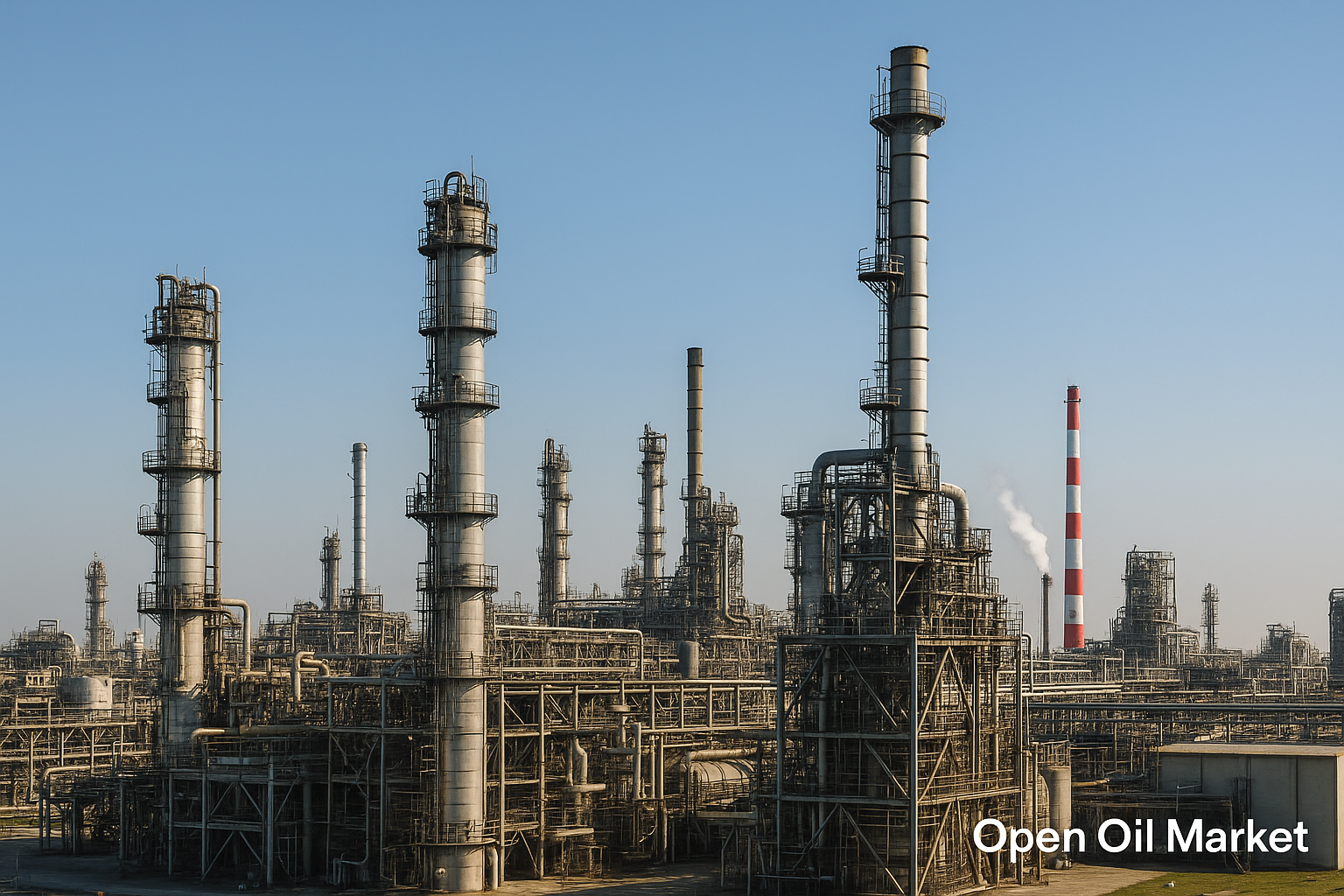
- Refining: Refineries in Asia and the Middle East are operating at near full capacity due to high raw material availability. This bolsters confidence in oil product exports but restrains margins due to raw material oversupply. In Europe, some refineries are being repurposed to process oil types that are not subject to sanctions; however, overall plant utilization remains high.
- Sanctions: Restrictions on Russian oil products continue to impact the balance. The EU and U.S. have imposed bans on the import of diesel and kerosene from Russia, forcing some refineries to seek alternative supplies. These measures keep prices steady against a backdrop of raw material oversupply, while also encouraging companies to accelerate the development of alternative fuels and comprehensive recycling of byproducts.
Companies and Investments
- Exploration and projects: Europe is gradually easing drilling restrictions. In Greece, a license was granted for an offshore gas field to Exxon/Energean for the first time in 40 years, while Shell and Chevron in Italy and the UK have received or are awaiting permits to expand existing fields. These steps reflect a new approach to domestic resource exploration.
- M&A activity: Activity in this segment is high. For instance, Targa Resources acquired gas pipeline assets in the Permian Basin for $1.25 billion, strengthening its pipeline network in the U.S. Oil traders (such as Gunvor and Vitol) are considering participation in U.S. shale projects, seeking to diversify their portfolios and ensure long-term fuel supplies.
- LNG projects: Investors are reassessing long-term commitments. The UK government has withdrawn funding of $1.15 billion for an LNG project in Mozambique due to security risks and shifting global agendas. TotalEnergies is preparing to resume work on this project, but timelines and funding volumes remain subject to review.
Geopolitics and Regulation
- Sanctions and agreements: Negotiations regarding Ukraine continue to set the market tone. While a concrete agreement has yet to be reached, discussions have included plans for further tightening sanctions against Russia after 2025. The European Union has already extended mandatory gas storage filling requirements until the end of 2027 and announced new incentives for green projects in an effort to ensure energy independence.
- International cooperation: G20 countries and COP30 participants have agreed to increase funding for climate programs. The estimated needs for assistance to developing countries to meet climate goals by 2030 reach $2.4 trillion annually. China and India have affirmed their readiness to play a key role in the expansion of renewable energy, while developed countries have promised additional investments in clean technologies.
- Regional initiatives: New organizations are forming at the union level. The EU has established a Platform for Energy and Raw Materials for the joint purchase of critical resources (hydrogen, natural gas, etc.). In Asia, cooperation is increasing for creating regional gas markets and developing green funds. Many countries are developing national decarbonization roadmaps, introducing tax and subsidy incentives for the transition to clean energy.
- Technological standards: Concurrently, emission rules are being improved. The U.S. is tightening methane emissions standards at oil and gas sites, while the EU is advancing clean energy support mechanisms through carbon pricing and quotas. These measures are aimed at accelerating the transition to a "green" course and influencing investment strategies for companies worldwide.