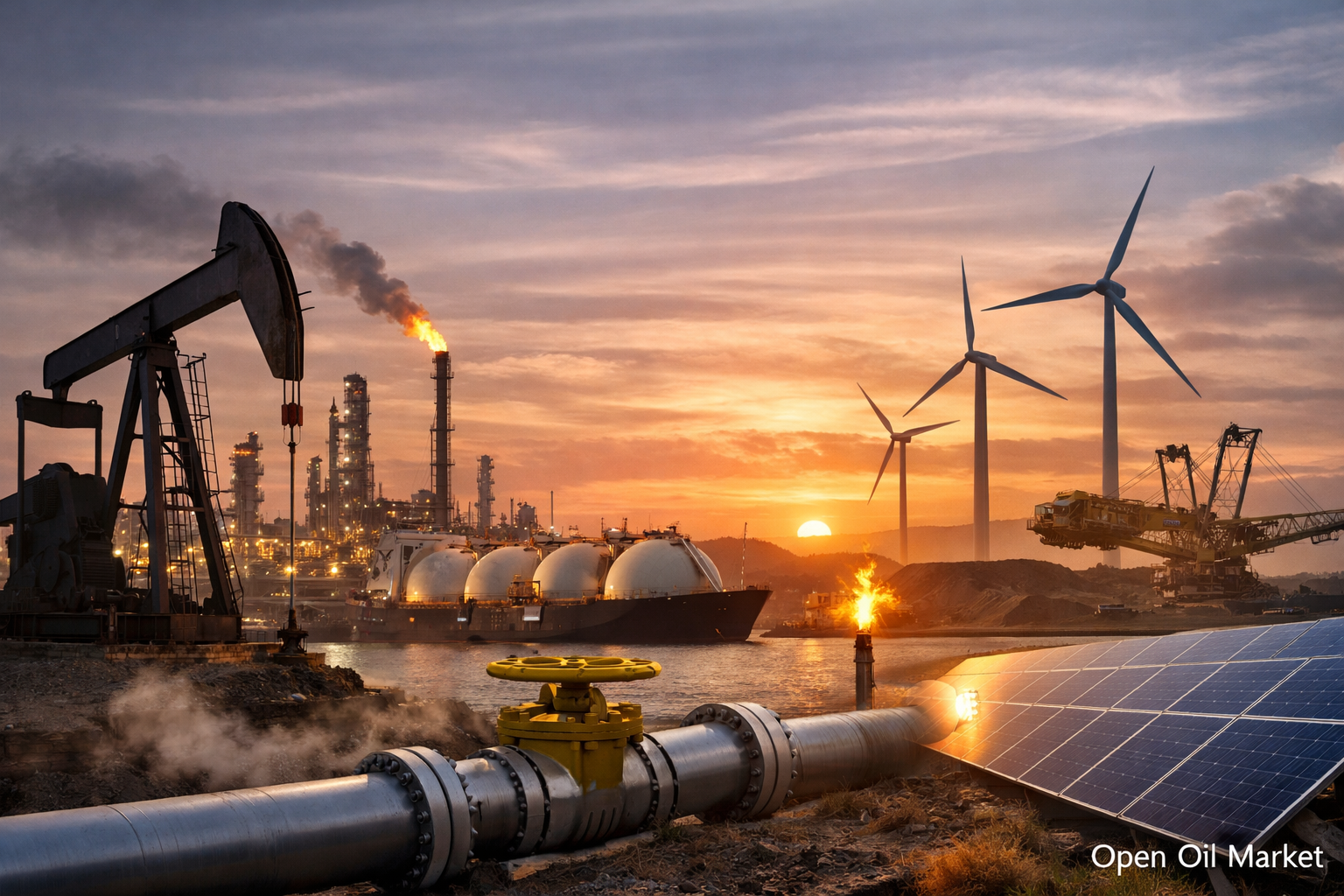
Global News of the Oil, Gas, and Energy Sector for Friday, 6 February 2026: Oil and Gas, Electricity, Renewable Energy, Coal, Oil Products, and Key Trends in the Energy Market.
The global fuel and energy sector continues to exhibit dynamic shifts as the weekend approaches. Oil prices have responded with declines to diplomatic signals, the gas market is adapting to new supply realities, and the energy transition is gaining momentum worldwide. These processes are influencing investors and fuel and energy companies, shaping the development strategy of the industry. Below are key news and trends in the oil, gas, and energy sectors as of 6 February 2026.
Decline in Oil Prices Ahead of US-Iran Talks
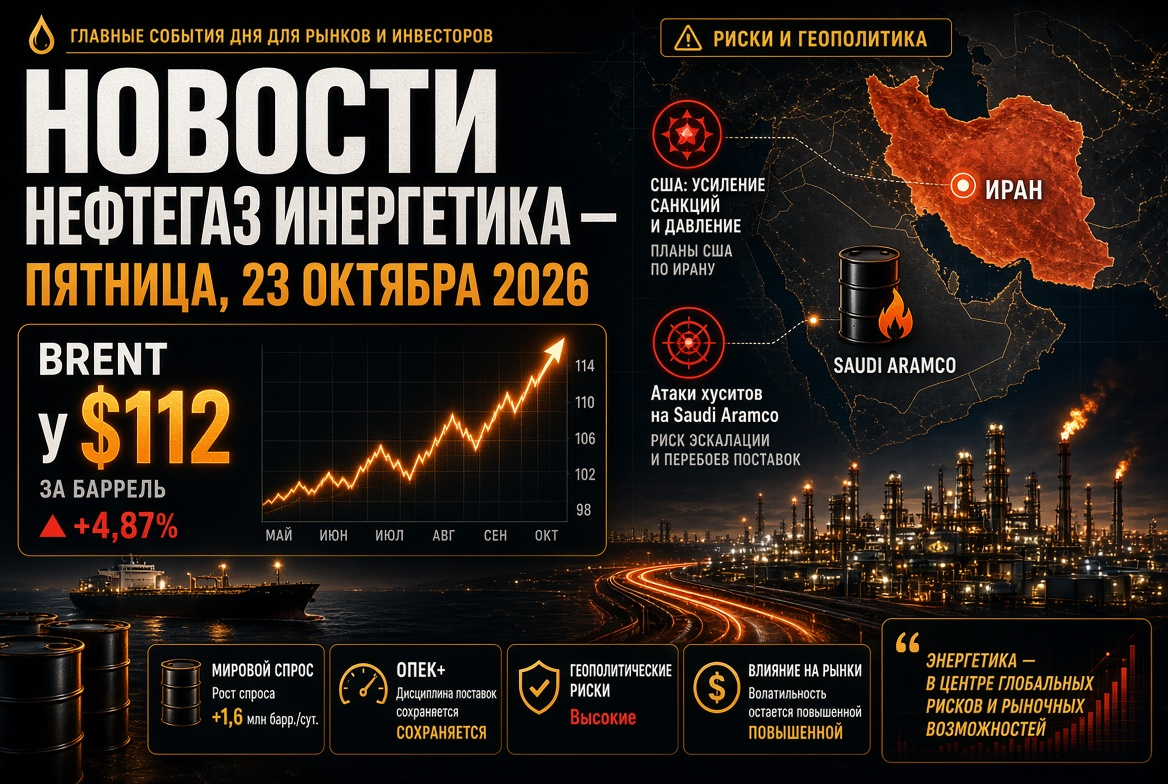
Oil prices have fallen amid expectations of dialogue between Washington and Tehran. After two days of rising prices, the price of a barrel of WTI crude has corrected to approximately $64, while North Sea Brent is trading around $69 per barrel. Investors note that the willingness of the US and Iran to hold negotiations in Oman on 6 February has partially removed the geopolitical premium from oil prices. Previously, the market priced in risks of escalation, as concerns over potential strikes on Iranian oil infrastructure kept prices elevated. Now, diplomatic signals from the administration of President Donald Trump and Iran's agreement to discuss its nuclear program have alleviated trader anxieties.
However, volatility remains in the oil market, as the outcome of the negotiations is uncertain. The US insists on a broad agenda, including security issues, while Iran wants to limit discussions to sanctions and nuclear aspects. Uncertainty regarding the potential for real agreements at the initial meetings prevents market participants from excessive optimism. Additionally, recent data from the US has affected oil prices: commercial crude oil inventories decreased by less than expected (approximately 3.5 million barrels according to EIA), which restrained the potential for a new price rally. Overall, oil companies and investors are closely monitoring the developments in the Washington-Tehran dialogue, recognizing its significance for the balance of supply in the oil market.
Sanctions, Conflicts, and Redirection of Oil Supplies
Geopolitical factors continue to impact global oil and gas markets. The war in Ukraine remains a focal point: ongoing attacks on energy infrastructure increase nervousness in the energy markets. President Volodymyr Zelensky recently emphasized that the escalation of the conflict directly affects oil prices and has called on the US to enhance support for Ukraine. Any intensification or, on the contrary, easing of the sanctions standoff between Russia and the West immediately impacts global oil and gas prices.
Meanwhile, sanctions pressure is leading to the redistribution of oil flows in the global market. The White House is seeking ways to displace Russian oil from key markets. President Donald Trump announced that he secured a promise from India to eventually cease imports of Russian energy resources. As an incentive, the US is prepared to reduce trade tariffs for New Delhi — this step is aimed at increasing the supply of American and Venezuelan oil to India. Although the Indian side has not yet formally confirmed the cessation of Russian crude, the pressure is palpable: Indian oil refineries (refineries) have reported difficulties with payments and fears of secondary sanctions, leading them to reduce purchases of premium grades from Russia. Previously, Indian refineries enjoyed huge profits due to significant discounts on Russian oil supplied at prices well below global levels.
According to analysts' assessments, Russia's budget is facing significant challenges due to falling oil and gas revenues. The key reasons for the decline in Russia's export earnings include:
- Reduction of Russian oil purchases by the largest importers (primarily India).
- Increase in discounts for Russian crude (over 20% below global market prices).
- High domestic interest rates that hinder industry growth.
- Labor shortages in the oil and gas sector.
In just January, revenue from Russian oil and oil product exports dropped nearly by half, reaching the lowest level since summer 2020. Western sanctions against Russian oil and oil products (including price caps and restrictions on tanker fleets) are increasingly affecting sales volumes. Russian oil exports at the beginning of 2026 decreased to approximately 1.2-1.3 million barrels per day (down from record levels of approximately 1.7 million bpd in 2024-2025), and experts believe that Moscow will be compelled to sell smaller volumes in Asia and continue to offer discounts. Consequently, global oil flows are being redirected: an increasing share of imports for India and other Asian countries is being filled by Middle Eastern and African crude. Energy sector participants are preparing for a prolonged period of changes driven by the sanctions standoff.
Oil Production and Supply: Risks and Forecasts
Fundamental indicators of the oil market are attracting close attention. Global oil demand in 2026 continues to grow and is projected to reach a record 106.5 million barrels per day (an increase of 1.4 million bpd year-on-year). However, limitations are emerging on the supply side. In Europe, the largest oil field, Johan Sverdrup (Norway), has reached its production peak and is beginning to decrease output. According to Equinor management, production at Sverdrup will decline by 10-20% this year. As Norway has become the main supplier of oil to the EU after the exit of Russia (accounting for up to 15% of the European market), the decline at this key North Sea field raises concern among buyers. Experts note that the period of oversupply observed in recent years may shift to a deficit if the decline in production at old fields is not compensated by new projects. The International Energy Agency (IEA) had previously indicated that approximately $540 billion needs to be invested annually in exploring and developing new oil and gas fields to offset natural declines in production and meet rising demand.
Currently, OPEC+ countries are maintaining a cautious approach to keep the market balanced. Additional barrels could come onto the market if sanctions on Iran are successfully lifted — the negotiations on the nuclear deal are aimed precisely at this. At the same time, the potential for rapid increases in supplies from other regions is limited. US oil production, having reached record export levels after sanctions against Russia were imposed, may soon stabilize. Industry data suggests that American producers have already produced significant growth over the last three years, and further increases in exports face infrastructural and geological limitations. Therefore, the issue of investment activity by oil companies is coming to the forefront — without investments in new projects in the coming years, the global market risks facing supply shortages.
Gas Market: European Winter and Global Trends
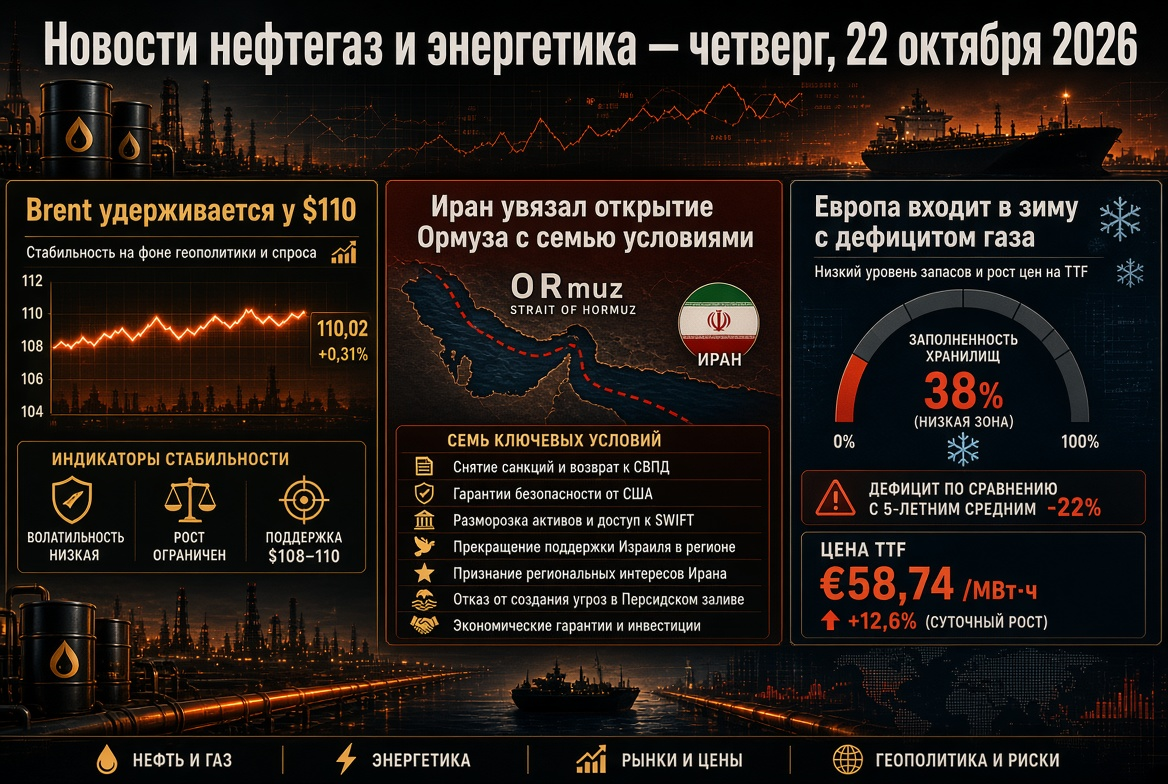
The natural gas market is also experiencing structural changes that reflect the new energy security reality. European countries are ending the winter season with noticeably depleted storage: gas reserves in the EU dropped to approximately 44% of total capacity by the end of January — one of the lowest figures in recent years. Nevertheless, gas prices in Europe remain relatively stable, without panic surges. Contributory factors include mild weather, energy conservation measures, and significantly — record volumes of liquefied natural gas (LNG) imports. In 2025, Europe increased LNG purchases by approximately 30%, reaching a historical maximum of over 175 billion cubic meters, compensating for the cessation of pipeline supplies from Russia.
At the beginning of February, the EU formally committed to completely ending the purchase of Russian gas. New regulations require EU countries to prepare national plans for phasing out Russian gas and diversifying sources by March. In practice, by 2027, Europe plans to completely eliminate dependence on Russian pipeline gas and even LNG, effectively closing the door to the return of Russian fuels to its market. The resulting shortfall (estimated by the IEA at about 33 billion cubic meters from 2025 to 2028) will be compensated by alternatives, primarily through increased LNG imports from North America, the Middle East, and Africa.
The global gas market is preparing to support Europe and meet demand in Asia. It is projected that global LNG production will grow by approximately 7% in 2026 — the highest rate since 2019. New export terminals are being launched in the US, Canada, and Mexico, significantly increasing supply. Major Asian importers, such as China, are also ramping up purchases to support their economic recovery. As a result, despite dwindling European reserves during winter, traders do not anticipate acute fuel shortages: additional shipments of LNG on the market are sufficient to replenish storage by summer. Nevertheless, experts caution that Europe must remain vigilant. For a reliable passage through the next winter, the EU will need to actively inject gas, and price signals (such as the current "contango" price structure or spot quotes) will influence the pace of replenishing supplies. However, energy companies in the region currently express confidence in their ability to ensure energy system stability through global gas supply and diversification measures.
Coal and Energy Transition: Regional Disparities
Oil and gas are not the only strategic resources undergoing changes. The coal industry is experiencing a stark contrast between regions regarding the global energy transition. Europe is rapidly moving away from coal: Czechia has completely ceased coal mining since 1 February 2026, closing the last mine after 250 years of operation. Now Poland remains the only country in Europe where industrial coal extraction still takes place. European energy companies are converting power plants to gas and renewable energy sources, while coal mines are deemed unprofitable and depleted. The Czech decision was motivated by the fact that the national energy sector no longer relies on coal, and the costs of coal mining exceed market prices by more than twice. Meanwhile, outside Europe, many countries continue to actively use coal to secure their energy and electricity stability:
- China: Coal production in 2025 reached a record 4.83 billion tons. Coal still covers more than half of China's electricity needs. To avoid capacity shortages, Beijing is constructing new coal-fired power plants through 2027 while simultaneously developing renewable energy sources.
- India: The government is simultaneously ramping up coal production and investing in renewable energy. State support measures have allowed for the reopening of 32 previously closed mines, and production is rising. The goal is to reach approximately 1.5 billion tons of coal per year and transition to exporting surplus fuel. Coal also helps reduce the import of energy resources and ensures the operation of power plants for network stability.
- Japan: Approximately 30% of total electricity production in 2026 will come from coal. Authorities officially state that coal-fired power plants are necessary for the reliability of the energy system — as reserves in case of disruptions in solar and wind energy supply and to reduce dependence on expensive imported gas. Despite plans for gradual emission reductions, coal remains a strategic reserve for the Japanese economy.
- USA: After a long decline in the role of coal, demand for it unexpectedly increased by ~8% in 2025. The reason was high natural gas prices and rising energy consumption (for instance, from data centers and other energy-intensive sectors). US authorities even temporarily suspended the decommissioning of old coal-fired power plants, and coal production gained momentum as part of a strategy to strengthen energy independence.
Thus, the global energy balance in coal significantly varies. While European fuel companies are speeding up the move away from coal to meet climate commitments, Asian economies and other countries continue to rely on this fuel type for energy security challenges. The transition to clean energy is uneven: regions rich in renewable resources actively implement green technologies, while others must retain coal in their energy mix to ensure stable electricity supply and acceptable electricity prices.
Growth of Renewable Energy and Technological Trends
Renewable energy sources (RES) continue gaining importance in the global energy sector, as evidenced by investment indicators. In particular, China is demonstrating unprecedented growth in the green sector: new data shows that over 90% of economic investment growth in China last year came from clean energy development and electric transport. The production and export of solar panels, wind installations, batteries, and electric vehicles brought China approximately 15.4 trillion yuan in revenue in 2025 — over a third of the country’s GDP growth. In fact, renewable energy and related high-tech sectors have become a driver for economic development, compensating for slowdowns in the traditional industrial sector.
Similar trends are observed in other regions. Governments worldwide are entering into new cooperation agreements in the field of renewable energy, creating supply chains for hydrogen energy and striving to secure access to critically important minerals (lithium, copper, rare earth elements) for battery and electronics production. Thus, energy companies are actively seeking opportunities for mining these resources and investing in raw material processing. The development of technologies is also opening new opportunities: efficient sodium batteries are emerging as an alternative to lithium-ion batteries, which could reduce dependence on scarce lithium in the future. Interest in geothermal installations is growing in the power generation sector — modern methods allow geothermal heat extraction even in unconventional areas, while the application of artificial intelligence reduces risks in exploratory drilling. Several innovative geothermal projects are already close to commercial stages, indicating diversification in clean energy pursuits.
Against the backdrop of accelerated RES development, the task of integrating these energy sources into the energy system is becoming increasingly urgent. Countries are investing in energy storage systems and "smart" grids to balance the uneven production of solar and wind plants. For example, excess solar and wind generation in China is planned to be directed towards the production of "green" hydrogen, which can subsequently serve as an energy carrier or feedstock in industry. Such projects, along with advancements in battery and hydrogen technologies, are attracting the attention of investors worldwide. Energy and oil companies globally are becoming increasingly involved in green initiatives, striving to adapt to the changing structure of energy demand. As a result, renewable energy is ceasing to be niche: it is evolving into a full-fledged sector of the economy, creating jobs, stimulating innovation, and helping to reduce the carbon footprint of energy generation.
International Deals and Corporate Initiatives in Energy
Major energy and fuel companies continue to forge partnerships to strengthen their positions in the global market. This week, a landmark agreement was made in the oil and gas sector: Turkey's national oil company TPAO signed a memorandum of understanding with American oil giant Chevron. The parties intend to jointly explore oil and natural gas opportunities both in Turkey and abroad. According to Energy Minister Alparslan Bayraktar, this collaboration aims to support the development of new projects — from the Gaber field in Turkey to initiatives in the Black Sea — and transform TPAO into a global entity. Earlier in January, TPAO entered a similar agreement with ExxonMobil for oil and gas exploration on the Black and Mediterranean Seas' continental shelf. These deals reflect a general warming of relations between Ankara and Washington, as well as Turkey's strategy to reduce its near-total dependence on energy imports. By expanding TPAO's operations abroad and attracting international expertise, Turkey is systematically moving towards enhancing its energy security.
Other countries are also betting on partnerships. In the context of the energy transition and geopolitical instability, joint projects allow for risk-sharing and investment attraction. Thus, Middle Eastern countries continue to collaborate with Asian consumers on LNG and oil projects, long-term contracts for energy supply are being signed. Simultaneously, companies across various segments — from oil and gas to power generation — are joining forces to develop electric vehicle charging infrastructure, carbon capture projects, and other prospective areas. For instance, in nuclear energy, Rosatom actively participates in international forums and signs new agreements for reactor construction (including nuclear power plant projects in Egypt and other countries), ensuring the export of Russian technologies and loading its enterprises. Wind and solar companies are forming consortiums to develop offshore RES parks, while multinational energy corporations are investing in energy storage startups.
The global energy market is expansive, and close cooperation among companies from different countries is becoming the norm. For investors, this signals that the industry is moving towards sustainability through diversification and technology exchange. International deals, whether in oil, gas, electricity, or RES, help strengthen supply chains and prepare for future challenges. Ultimately, global energy security increasingly relies on collaborative efforts rather than isolated actions by individual states or companies.