Current News on Startups and Venture Investments as of April 21, 2026: AI Growth, IPO Revival, and Increasing M&A Activity in the Global Market
The global startup and venture investment market is entering April 21, 2026, with a notable acceleration. Following a cautious period from 2022 to 2024, capital is once again flowing actively into technology companies; however, the structure of this growth has changed. Funds are becoming concentrated in a limited number of large deals, particularly in artificial intelligence, computing infrastructure, enterprise software, defense tech, fintech, and deeptech. For venture investors and funds, this presents a dual picture: on one hand, the market is once again offering scale, liquidity, and significant valuation benchmarks; on the other, entry into quality deals is becoming more competitive, and the overvaluation in certain segments is heightening selection discipline.
Main Takeaway of the Day: The Venture Market is Growing Again, but Unevenly
As the new week begins, the venture market appears stronger than it did a year ago; however, this growth cannot be described as broad. The main influx of capital is being driven by large rounds in AI, computing infrastructure, and companies developing foundational technology platforms. For funds, this is an important signal: the market is no longer in a phase of general contraction, but it has not yet returned to the era when capital was distributed almost across all verticals without stringent quality filters.
- Late-stage investments are again attracting large checks.
- Early-stage investments remain active, but the demands for team and product quality have increased.
- The number of deals in certain segments is decreasing, while the average size of the best rounds is growing.
This is why startups operating in a strong market niche can today raise significantly larger rounds than a year ago, while companies lacking a clear technological advantage remain off investors' radar.
AI has Become the Core of the Global Venture Cycle
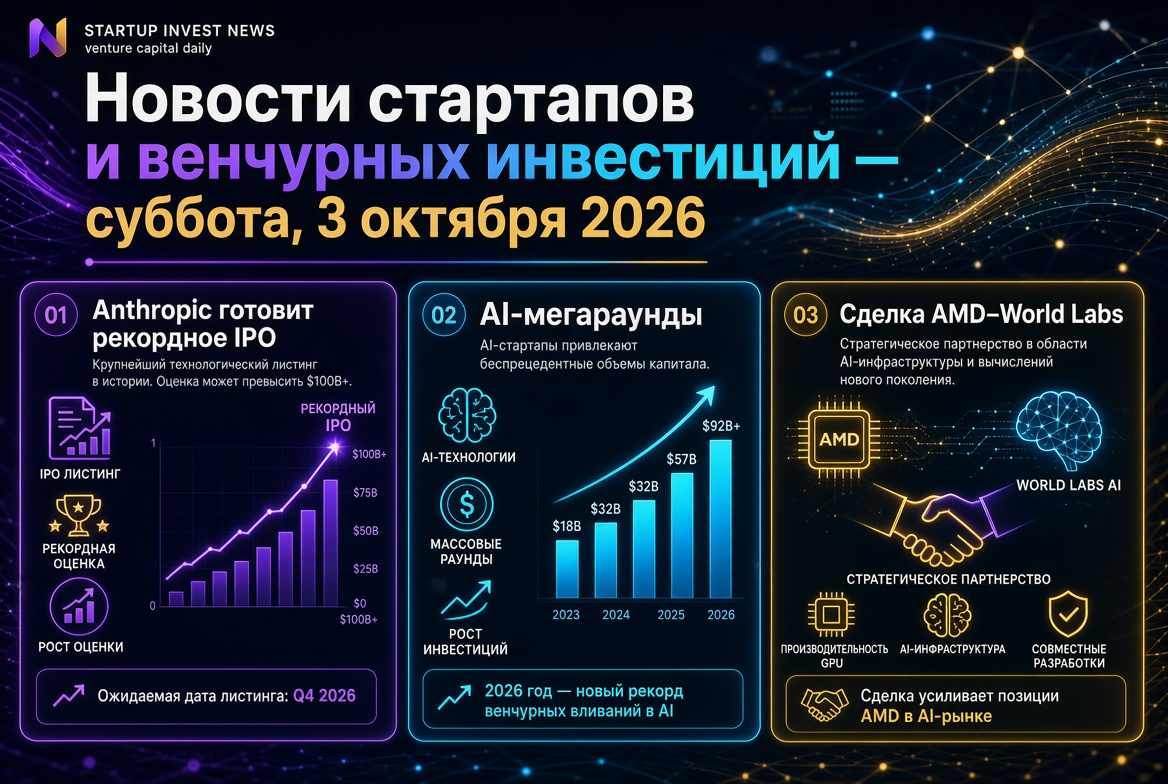
The most pressing topic for headlines as of April 21, 2026, is the further concentration of capital around artificial intelligence. AI is no longer just one of the fast-growing segments; it has become the fundamental logic behind the distribution of global venture capital. The largest rounds of the quarter, the highest valuations, the most significant infrastructure contracts, and the most notable IPO expectations are all associated with this theme.
For venture funds, this changes the mechanics of analysis. It is no longer sufficient to evaluate a startup solely based on its TAM, unit economics, and growth rate. Additional factors to consider now include:
- Access to computing infrastructure;
- Cost of inference and training;
- Dependency on models, chips, and cloud partners;
- Revenue sustainability beyond the hype surrounding AI.
Consequently, a new hierarchy is forming in the market. At the top level are frontier labs, AI infrastructure, chips, clouds, and agent systems. The next tier comprises vertical AI products for enterprise clients. Below are applied services without a pronounced technological advantage, where investors are already noticeably more cautious.
Mega-Rounds Lift the Market but Increase Risk Concentration
A defining feature of the startup market in 2026 is the dominance of mega-rounds. This bolsters high quarterly investment volumes, yet it simultaneously makes the market more concentrated. For LPs and GPs, this means that the headline growth of the venture market does not always reflect the state of the entire ecosystem. Growth exists, but it is concentrated in a limited number of companies.
For professional investors, three key takeaways are important here:
- Valuations at the upper segment may diverge from the dynamics of the overall market;
- Competition for top deals is intensifying, shifting the focus of returns towards access rather than just analysis;
- The secondary market and future liquidity windows are becoming critically important elements of strategy.
Practically, this means that funds are increasingly finding it difficult to achieve results solely through classic diversification. Specialization, industry access, reputation, and the ability to enter deals before they become overheated are becoming increasingly significant.
The IPO Window is Gradually Opening, Changing Market Sentiment
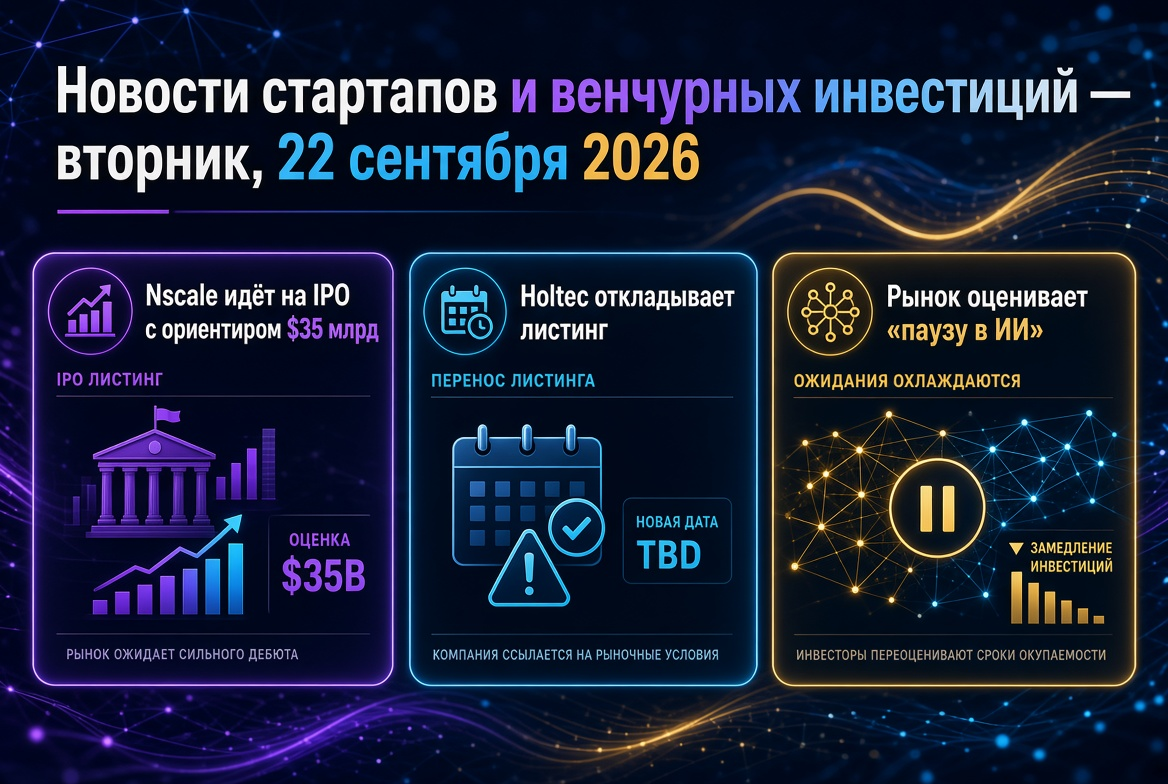
The second major theme as of April 21, 2026, is the gradual revival of the IPO market. For startups and venture investors, it is important not only to consider the number of actual IPOs but also the very fact that the public window is reopening. While many private companies were forced to postpone listings in 2023-2024, the market is now starting to factor in exits into its valuation models.
The revival of IPOs is important for several reasons:
- It increases the predictability of exits for late-stage investors;
- It improves benchmarks for multiples in private markets;
- It raises interest in companies that could become the next candidates for listing.
The market is particularly attentive to AI and infrastructure stories. If several strong tech listings are positively received by the market, this will enhance appetite for new private deals already in the second half of the year. For venture funds, this serves as an argument for being more active with late-stage and growth assets.
M&A is Again a Viable Exit for Tech Companies
Another important trend is the increased strategic acquisition of startups by large corporations. In a climate where corporations are reluctant to develop products internally for long periods, and the speed of AI implementation becomes a competitive differentiator, acquiring mature technology assets is again seen as a rational alternative to in-house development.
This is particularly evident in segments such as:
- Corporate AI and back-office automation;
- Fintech and payment infrastructure;
- Cloud services and computing power;
- Cybersecurity and data stack.
For startups, the growth of M&A means that the strategic value of their product once again plays a significant role, as important as the hypothetical possibility of an IPO. For investors, this makes companies that could become “must-acquire” targets for a major player within the next 12-24 months particularly attractive.
Capital Geography is Changing: The US Leads, Europe Strengthens, Asia Restructures
The global venture market is becoming increasingly asymmetric. The US retains absolute leadership in terms of capital raised and the quality of the largest deals. It is the American market that sets the pace for AI, cloud infrastructure, robotics, and platform stories. For global funds, this means that the overvaluation of the American market remains a risk, but it can no longer be ignored.
Europe, on the other hand, looks better than it did a year ago. The region is showing an increase in investment volume, although the number of deals is decreasing. This indicates a more rigorous selection process and a shift of money towards a limited number of strong teams, primarily in AI, semiconductors, energy tech, and healthtech. This is a positive signal for the European market: capital is returning, but it has become significantly more disciplined.
Asia is developing in contrasting ways. China is more actively ramping up internal funding for technology companies and relying on state capital, while Southeast Asia is attracting interest in fintech and digital platforms. For global investors, this indicates that regional analysis is becoming essential again: a single “Asian bet” no longer applies.
What is Happening at the Early Stages: Less Money Broadly, but More for the Best
The seed and Series A segment has not vanished in 2026 but has changed in quality. The early-stage market is becoming less crowded and more polarized. The best teams are raising large rounds even before achieving sustainable revenue if they are operating in AI, robotics, defense, enterprise software, or deep infrastructure. Others must prove not just growth potential but also a concrete economic logic behind their product.
The most sought-after traits for an early-stage startup currently include:
- A strong technical team with recognizable backgrounds;
- A clear market and applicable use case;
- Demonstratable technological advantage;
- Potential for strategic integration or a significant follow-on round.
This means that the startup and venture capital market at the early stage has not died; it has become more professional. There is enough money in the market, but it is primarily available to those who can articulate not only a growth story but also the architecture of future leadership.
Main Signals for Funds and Investors as of April 21, 2026
For the audience of venture investors and funds, the agenda for tomorrow boils down to several key signals:
- The venture market is back in a growth phase, but this growth is primarily driven by the largest AI deals;
- The IPO market is reviving, meaning that private company valuations are receiving new support;
- Strategic acquisitions are intensifying and are once again a viable exit strategy;
- Europe and parts of Asia offer interesting entry points, but capital is being distributed more selectively everywhere;
- Early stages remain investable only with very high asset quality.
The outcome for investors is clear: 2026 opens new opportunities in technology investments; however, the winners will not be those merely following the AI trend, but rather those who can distinguish infrastructure-significant companies from short-term overheating. This distinction will define fund performance, portfolio quality, and the ability to spot future leaders before they reach the later stages in the upcoming quarters.