Startup and Venture Capital News for November 22, 2025: Key Deals, Major Funding Rounds, Market Trends, and Global Developments.
By the end of November 2025, the global venture capital market is showing steady growth following a period of decline. Investors around the world are once again actively financing technology startups, leading to record deals, renewed IPO plans, and major funds triumphantly returning to the market with substantial investments. Governments in various countries are enhancing support for innovation and private capital attraction, which, along with a revival in stock markets, is stimulating venture activity. As a result, significant funds are flowing into the startup ecosystem, although investors remain selective, favoring high-quality business models.
Growth dynamics are observed in almost every region. Recent data indicate that, in the third quarter of 2025, global venture capital investment reached approximately $97 billion—38% higher than the previous year and slightly above the results of the prior quarter. This marks the best quarterly performance since 2021 and the fourth consecutive quarter of growth following the "venture winter" of 2022–2023. The primary contributions to this growth are mega-rounds in artificial intelligence (AI), although funding increases are noted across all stages. Venture activity is on the rise in most corners of the globe: the USA continues to lead (particularly in the booming AI segment), while investment volumes in the Middle East have increased dramatically over the year; for the first time in a decade, Germany has outpaced the UK in total venture capital in Europe. In Asia, there is a mix: India, Southeast Asia, and Gulf states are attracting record flows of capital, while there is a relative slowdown in activity in China. The startup ecosystems in Russia and the CIS are also striving to keep pace, launching new funds and projects to develop the local market. A new global venture upswing is forming, although market participants remain cautious and selective.
Below are key events and trends shaping the venture capital landscape as of November 22, 2025:
- The Return of Mega Funds and Major Investors. Leading venture players are forming record funds and ramping up investments, replenishing the market with capital and enhancing risk appetite.
- Record Rounds in AI and New "Unicorns." Unprecedented investments in AI startups are driving company valuations to unprecedented heights, leading to the emergence of numerous new unicorns.
- Revival of the IPO Market. Successful tech company IPOs and new filing announcements show that the long-awaited "window" for public offerings has reopened.
- Diversification of Sector Focus. Venture capital is being directed not only to AI but also to fintech, biotech, climate technologies, space and defense projects, as well as crypto startups.
- A Wave of Consolidation and M&A Deals. Major mergers, acquisitions, and strategic partnerships are reshaping the industry landscape, creating new opportunities for exits and business scaling.
- Global Expansion of Venture Capital. The investment boom is spreading to new regions—from the Middle East and South Asia to Africa and Latin America—forming new tech hubs.
- Local Focus: Russia and the CIS. New funds and initiatives are emerging in the region to develop local startup ecosystems, attracting investor attention despite geopolitical constraints.
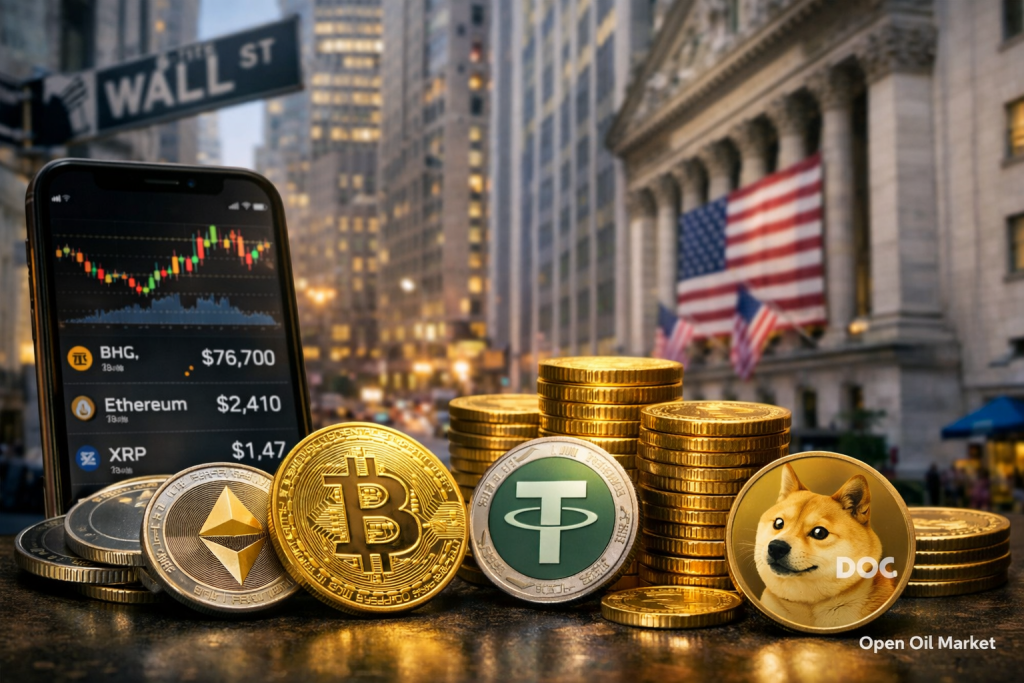
- Renaissance of Interest in Crypto Startups. After a prolonged "crypto winter," the blockchain sector is reviving, once again attracting significant venture investments.
The Return of Mega Funds: Big Money Back in the Market
The largest investment players are triumphantly returning to the venture arena, signaling a new surge in risk appetite. The Japanese conglomerate SoftBank, having undergone a challenging few years, is now experiencing a "renaissance" through its focus on artificial intelligence. The company has reported a sharp increase in profits and is reorganizing its portfolio to favor future technologies. The new Vision Fund III, with a volume of around $40 billion, is focused on AI and robotics, providing SoftBank with substantial capital for new projects (notably, the company sold its entire stake in Nvidia for $5.8 billion to free up funds for investments in its AI ecosystem).
Simultaneously, sovereign funds from Gulf states are significantly increasing their presence in the tech sector. Middle Eastern investors are pouring billions of dollars into promising startups worldwide while developing massive tech projects in their own regions. These mega funds are injecting liquidity into the market and are prepared to support innovations with substantial checks, setting the tone for a new wave of technological growth. The return of big investments from SoftBank, Gulf funds, and other market "sharks" signifies a capital influx into the startup ecosystem and increased competition for the most promising deals.
Record Investments in AI and a New Wave of Unicorns
The artificial intelligence sector remains the main driver of the current venture boom, demonstrating unprecedented funding volumes. Since the beginning of 2025, AI startups have collectively raised over $160 billion just in the USA (around two-thirds of all venture investments in the country), and analysts estimate that global investment in AI companies will exceed $200 billion by the year's end—an unprecedented level for the industry. The combined valuation of the top ten AI startups (including OpenAI, Anthropic, xAI, and others) has approached an astronomical $1 trillion. The influx of capital into AI is accompanied by the emergence of numerous new unicorns. Valuations for startups are soaring to new heights, particularly in the generative AI and AI infrastructure segments.
Unprecedented funding rounds are setting new records. For instance, the AI tool developer Cursor closed a $2.3 billion round, elevating its valuation to approximately $29 billion—one of the largest venture rounds in history. This case underscores the high interest of investors in the prospects of AI. Almost weekly, there are news reports of new unicorns whose valuations exceed $1 billion due to the buzz surrounding AI developments, autonomous systems, fintech with AI elements, and other advanced fields. While such rapid growth instills optimism about the potential of the technologies, some experts note early signs of overheating in certain niches, which prompts investors to be more discerning in their evaluations.
IPO Market Revived: New Wave of Public Offerings
The global IPO market is emerging from a lengthy lull and gaining momentum. After a two-year pause, the revival of IPOs is highlighting a long-awaited exit route for venture investors. Earlier in 2025, several large unicorn startups successfully went public: for example, the stablecoin issuer Circle executed an IPO with a valuation of around $7 billion, while the cryptocurrency exchange Bullish raised approximately $1.1 billion through its offering, achieving a valuation of about $5–6 billion. These debuts demonstrated that the market has regained appetite for new public offerings, especially in fintech and digital asset segments.
Now, leading players are eager to seize the newly opened "window" of opportunity. Insider information suggests that ChatGPT creator OpenAI is contemplating an IPO as early as 2026, with a potential valuation reaching up to $1 trillion. In the blockchain industry, crypto wallet developer MetaMask, under the company ConsenSys, has hired banks JPMorgan and Goldman Sachs to prepare for an IPO slated for 2026. If it proceeds, it will be the first public offering of such a large company from the Ethereum ecosystem—a landmark event for the entire crypto industry. Improved market conditions and clarification of regulatory requirements are instilling confidence in startups planning listings. Experts predict that the number of prominent tech IPOs will increase in the coming years as the "window" for exits remains open and market multiples favor high valuations.
Diversification of Investments: Not Just AI
In 2025, venture investments are covering a broader range of industries and are no longer limited to artificial intelligence alone. Despite AI's dominance, significant capital is also being directed toward other high-tech segments. Healthcare and biotechnology, for instance, drew around $15 billion in venture capital in the third quarter of 2025, ranking third in investment volumes (after AI and IT infrastructure). Synergy between technology and medicine is evident in large rounds, like the genomic medicine project Fireworks AI, which received $250 million to develop a platform at the intersection of AI and healthcare. Investors are also showing heightened interest in climate and "green" innovations—from biodegradable materials made from algae to components for electric vehicles, although the scale of such deals still lags behind the massive rounds in AI.
Attention is increasingly being directed towards space, defense, and other hard tech sectors. In Europe, for example, the satellite startup EnduroSat raised over $100 million (with participation from funds like Google Ventures, Lux Capital, etc.) to expand the production of small satellites—demand for affordable satellite communication is driving the development of new players. Overall, deep tech sectors are experiencing a resurgence: in 2025, manufacturers of robotics, semiconductors, and quantum computing systems collectively secured funding in the tens of billions of dollars. While these volumes may not match the phenomenon of AI, venture capital is becoming increasingly diversified. Expanding the sector focus mitigates the risks of overheating in specific niches and promotes balanced technological progress.
A Wave of Consolidation and M&A: Consolidating Players
High startup valuations and fierce competition for markets are driving a new wave of consolidation. Major mergers and acquisitions (M&A) are again taking center stage, reshaping the power dynamics in the industry. Strategic M&A helps corporations and investors accelerate growth, gain access to new technologies, or enter adjacent markets, while large acquisitions provide much-needed exits for venture funds.
For example, in October, investment bank Goldman Sachs announced its acquisition of the venture firm Industry Ventures for nearly $1 billion. This deal became one of the largest acquisitions in the venture sector itself, reflecting a growing interest among banking capital in technology and startup assets. Major technology corporations are also ramping up acquisitions, taking advantage of the stabilization of valuations: over the past year, several industry leaders have acquired promising startups to strengthen their positions in key sectors (AI, cybersecurity, etc.). The wave of consolidation also impacts the crypto industry: traditional financial companies are showing heightened interest in acquiring blockchain startups. According to media reports, Mastercard is in talks to acquire several crypto projects (including the infrastructure startup ZeroHash) for nearly $2 billion, aiming to solidify its presence in the realm of digital assets. The surge in M&A—from bank investments in venture platforms to major technological deals—indicates the "maturation" of the market and provides startups with more options for successful exits and integration into larger businesses.
Global Expansion of Venture Capital: New Technology Hubs
The investment boom is spreading to new regions, forming their own technology hubs worldwide. The Middle East stands out in particular: sovereign funds from Gulf countries are directing unprecedented amounts of capital into tech companies and simultaneously developing ambitious mega-projects (such as the future city of NEOM in Saudi Arabia). The volume of startup financing in the Middle East has increased severalfold in recent years, reflecting the region's strategic shift towards economic diversification through innovation.
In Asia, India and Southeast Asia remain magnets for investments, where new unicorns are being formed and the number of deals is increasing, while a relative lull is observed in China due to regulatory and economic factors. Europe maintains high activity, marked by a notable shift: for the first time in a decade, Germany has surpassed the UK in total venture capital, indicating a redistribution of leadership in the European startup scene. Latin America is also gaining momentum—for example, by the end of the year, Mexico surpassed Brazil in attracting venture investments, solidifying its role as a new regional leader. Even in Africa, promising ecosystems are emerging: the number of investment funds and successful technology projects in Nigeria, Kenya, Egypt, and other countries is increasing, attracting the interest of international venture investors.
Thus, the geography of venture capital is rapidly expanding. Innovations are no longer concentrated only in Silicon Valley or traditional centers—new growth points are emerging from the Middle East to Africa. The global expansion of venture investments opens up access to capital and partners for startups worldwide and allows investors to diversify their portfolios and discover opportunities in previously unexplored markets.
Local Focus: Russia and CIS Countries
Despite external constraints, a revival of startup activity is observable in Russia and neighboring countries. In 2025, the Russian venture market emerged from stagnation: investment volume in the first half of the year nearly doubled compared to the previous year, although in absolute terms it still lags behind global leaders. The country announced the creation of new venture funds with a total volume of over 10 billion rubles, aimed at supporting early-stage technology projects. Local startups have also begun attracting significant capital: for instance, the regional food tech project Qummy secured about 440 million rubles in investments at a valuation of around 2.4 billion rubles, indicating a readiness to invest in domestic companies.
Signals are also emerging regarding the readiness of several major companies in the region to go public. Some corporations are considering the possibility of IPOs for their technology divisions, anticipating an improvement in market conditions—recently, holding VK indicated the potential for listing its IT business in the future. Additionally, authorities are taking steps to stimulate the sector: grant and accelerator programs are expanding, and in some cases, requirements for foreign investors are being relaxed. Gradually, interest in local projects from foreign capital is returning, aided by the overall revival of the global market. These initiatives aim to integrate the local startup ecosystem into global trends and attract more venture investments to the region.
Renaissance of Interest in Crypto Startups
After a prolonged "crypto winter," the blockchain startup market is reviving, and investors are once again turning their attention to crypto projects. In October 2025, funding for crypto startups reached a peak not seen in recent years: just that month, projects raised several billion dollars (accumulating over $20 billion since the start of the year). Leading venture funds (Sequoia Capital, Andreessen Horowitz, etc.) participated in the largest rounds, signaling a restoration of confidence in this sector.
The rising prices of digital assets are also fueling venture investors' interest in the blockchain space. Bitcoin surpassed the historic $100,000 milestone for the first time in early November, although it later corrected below that mark. Moreover, the gradual clarification of regulations (e.g., the anticipation of the first approval of spot ETFs on Ethereum in the USA) is reducing uncertainty around the crypto industry. As a result, blockchain projects are again starting to attract significant funds from both niche funds and large corporations. In effect, there is a sort of "renaissance" of crypto investments following a downturn. However, market participants remain cautious: selectivity and caution in project selection persist to avoid repeating past overheating issues.
Moderate Optimism and Quality Growth
By the end of November 2025, moderately optimistic sentiments have strengthened in the venture market. Successful IPOs and multi-billion dollar rounds indicate that the prolonged downturn is behind us. However, investors remain cautious: funding is concentrated on startups with a sustainable business model, proven economics, and profit potential. Significant capital inflows into AI and other sectors instill confidence in the continued growth of the market, but players are striving not to repeat the mistakes of past "bubbles," diversifying portfolios and raising quality standards for projects.
Thus, the startup ecosystem is entering a new cycle of development, more mature and balanced. The return of major investors and successful exits create the foundation for a new wave of innovations, but discipline and calculation from investors will define the nature of this growth. Despite the increased appetite for risky investments, the main focus remains on the quality growth of startups and the long-term sustainability of the market.