Current Startup and Venture Investment News as of February 21, 2026: Mega-Rounds in AI, Capital Concentration, Venture Market Trends, and Key Signals for Funds and Investors
The Venture Capital Market: Capital Concentration and Growing Competition for Deals
By mid-February 2026, the venture market increasingly operates under the "winner takes most" model: the largest checks and highest valuations are once again funneling into a limited circle of AI companies and infrastructure players, while the broader array of early-stage ventures faces considerably tighter selection criteria. Investors are willing to pay a premium for confirmed revenue, access to data and computing power, as well as the ability to rapidly scale products in the corporate sector. For funds, this means heightened competition for a limited number of “obvious” deals and the necessity to gain deeper insights into unit economics, training/inference costs, and demand sustainability.
The Main Topic of the Day: OpenAI's Round as a Marker of a New "Supercycle" of Private Capital
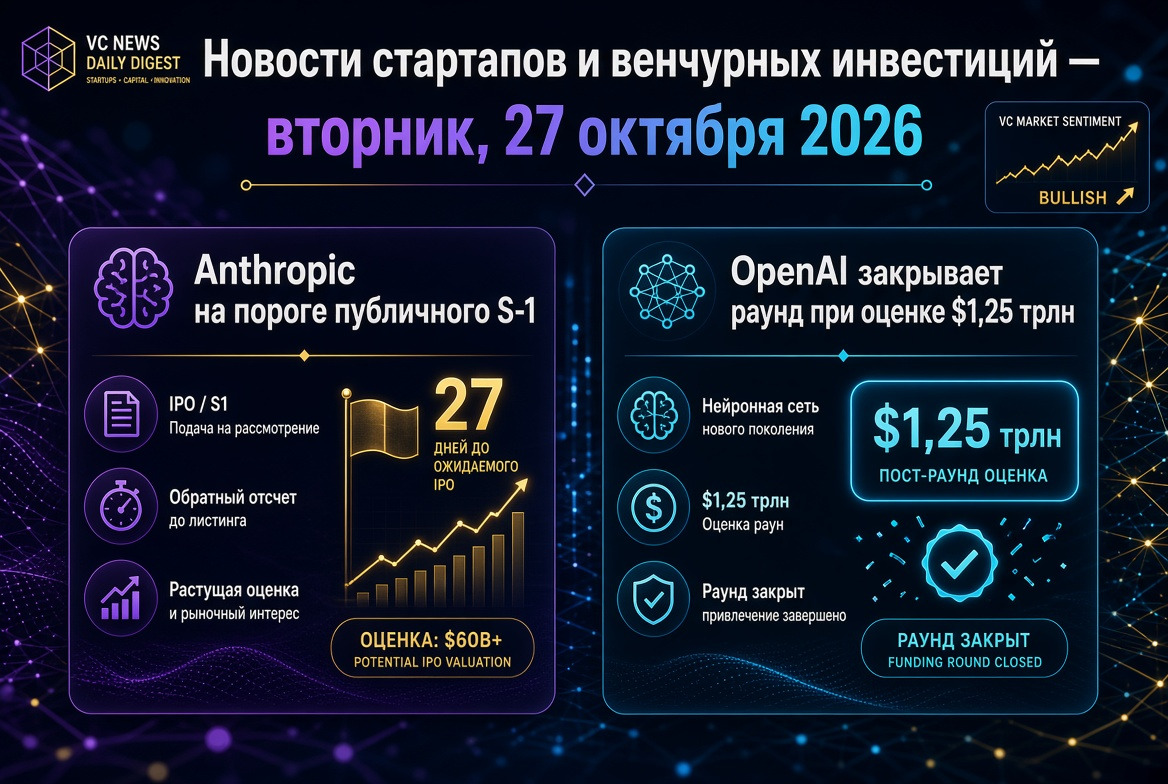
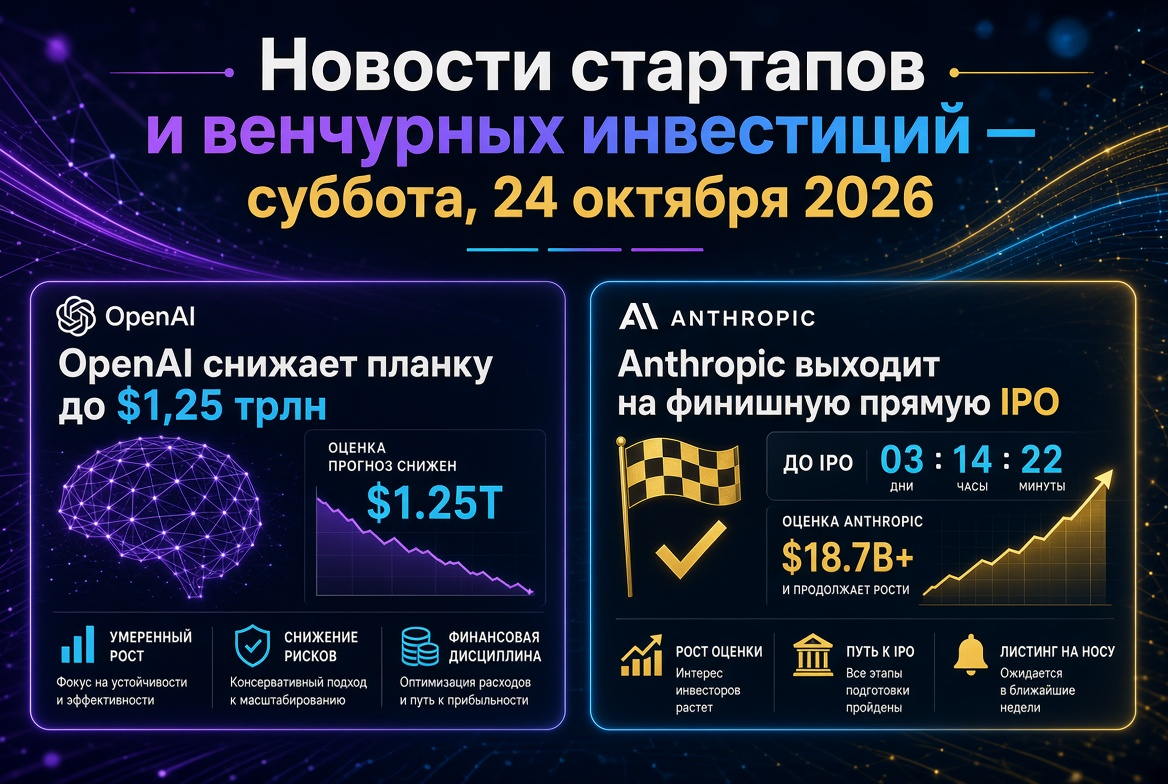
A key marker of the week is the preparation for the largest funding round in recent years surrounding OpenAI: discussions are on the table to raise amounts around $100 billion or more, with several strategic investors and major tech groups reportedly considering participation. The importance lies not just in the size but in the rationale for such financing: the money is effectively converting into an acceleration of access to computing, chips, cloud infrastructure, and engineering talent. This solidifies the trend in which "capital costs for intelligence" become the new norm, and the boundary between venture, private equity, and strategic investments blurs.
For the startup market, this creates a dual effect. On one hand, there is a displacement effect: some capital that could have gone towards a wide range of B2B/SaaS, biotech, or fintech ventures is instead funneled into a select few oversized stories. On the other hand, a powerful wave of secondary benefits arises: demand grows for applied models, observability and security tools, optimization of inference, specialized data, and vertical solutions tailored to specific industries.
Major Deals and Signals of the Week: AI Sets New Valuation Standards Again
The focus is on mega-rounds in generative AI and everything related to the “delivery of intelligence” on an industrial scale. The market discusses record-high deals that elevate reference valuations for late-stage investments, exacerbating the gap between leaders and the rest.
- Generative AI: Super-large rounds for segment leaders are forming a new benchmark for valuations and the volume of capital required to compete at the frontier.
- AI Infrastructure: Demand for alternatives and supply chain diversification increases interest in developers of accelerators, specialized computing platforms, and "AI-cloud" solutions.
- Vertical AI Products: Companies proving ROI through time/risk savings (compliance, financial control, cybersecurity, software development) with a clear go-to-market strategy receive the best funding.
Infrastructure and Hardware: Betting on Computing as a Strategic Asset
The market phase shift is evident in how investors evaluate infrastructure startups: "GPU access," efficiency of the stack, optimization of computing costs, and the ability to deliver predictable performance have risen to the same level of importance as product differentiation. In late-stage deals, this leads to transactions where the economic logic is akin to infrastructure projects: long payback horizons, large capital investments, but potentially high entry barriers.
For venture funds, this means that due diligence increasingly incorporates technical metrics (model training costs, latency, request costs, load profiles), as well as contractual details with clouds and chip suppliers. The winning teams are those who can turn computing into a predictable business process and protect margins at scale.
What’s Happening at Early Stages: The Market Has Become More Pragmatic
At the seed and Series A stages, there is a noticeable shift towards "applied efficiency." Founders are less forgiven for unclear monetization, but those demonstrating concrete ROI for customers, a short implementation cycle, and clear sales economics are more readily supported. In the AI segment, there has been an intensified filtering of "wrappers" lacking unique data, integrations, or industry advantages: investors are looking for either proprietary data, deep process integration, or infrastructural expertise that is difficult to replicate.
A practical checklist that is more frequently raised in negotiations includes:
- Unit Economics: gross margin accounting for inference, support, and training costs.
- Proven Impact: measurable KPIs for the customer (speed, accuracy, loss reduction, compliance risks).
- Defensibility: data, distribution channels, partnerships, regulatory/process barriers.
- Scalability Speed: sales repeatability and the ability to accommodate growth without disproportionately increasing COGS.
M&A and Exits: Strategics Are Returning, but Selectively
Against the backdrop of capital concentration in AI, the role of strategic buyers is increasing—especially in industries where AI has a direct impact on R&D, risk management, or operational efficiency. In biotech and pharma, there is a noticeable readiness to acquire technologies that accelerate drug development and clinical processes; in enterprise, interest is focused on development, security, and compliance tools. However, the overall exit market remains selective: either “must-have” assets or teams/technologies that can be rapidly integrated into existing products are being purchased.
Geography of Venture: The US and Major Hubs Reinforce Dominance, but Niche Ecosystems Persist
Most of the largest deals are still concentrated in the US and a few global technology centers that provide access to talent, capital, and corporate buyers. However, funds are also interested in "second markets"—those where regional AI platforms, infrastructure for local languages and industries, as well as fintech and industrial solutions tied to specific regulatory regimes are being developed. In 2026, regional differentiation will increasingly be determined not by the “presence of startups” but by access to data, infrastructure, and corporate demand.
Risks: Talk of an "AI Bubble" Resurfaces—A Useful Stress Test
Super-large valuations and rounds inevitably raise the issue of overheating. For investors, this is less a reason to "exit AI" than to more precisely delineate:
- Frontier Models (expensive, capital-intensive, reliant on scale and infrastructure);
- Infrastructure (high entry barriers, risk of customer capex cyclicality);
- Vertical Applications (dependence on data quality and sales, but with clearer economics).
The primary practical risk of 2026 is the mismatch between revenue growth and computing cost growth rates. Therefore, the market needs a new transparency standard: model efficiency metrics, maintenance costs, retention, and actual value added for customers.
What to Watch for Investors in the Coming Weeks
By the end of the quarter, the market will focus on three sets of signals: (1) completion and terms of the largest AI rounds, (2) dynamics of corporate budgets for AI infrastructure and implementations, (3) activity of strategics in M&A, particularly in biotech, cybersecurity, and development tools. At a tactical level, venture funds should maintain focus on companies that deliver measurable efficiency and can scale without proportional increases in computing costs.