Global Startup and Venture Investment Market Outlook for March 8, 2026, Including AI Mega Rounds, Defence Tech Developments, and Key Global Venture Market Trends
By early March 2026, the global startup and venture investment market is entering a new phase of growth, characterized by increasing concentration of capital. The primary attraction for investors is artificial intelligence, not only in terms of models and applied services but also in infrastructure: chips, photonics, computational platforms, automation, and enterprise software. For venture investors and funds, this reveals two concurrent trends: a rise in the number of large deals and intensified competition for a limited pool of companies vying for global leadership status.
Today's venture market is anything but uniform. Capital is flowing to the largest success stories, while the requirements for product quality, unit economics, scaling speed, and proven revenue are becoming noticeably stricter for other startups. Amidst this backdrop, the logic of investing is evolving: funds are increasingly compelled to choose between betting on a few super-successful winners and a more prudent diversification across niches where reasonable valuations still exist.
Below are the key events defining the global venture market agenda for Sunday, March 8, 2026:
- AI has firmly established itself as the primary driver of global venture funding.
- The largest rounds are directed towards infrastructure, defence tech, autonomous systems, and enterprise AI.
- Late-stage investments are gaining strength again, allowing companies to remain private for longer.
- Europe and the UK are signaling growth through chips and autonomous logistics.
- Funds and investors are increasingly searching for a balance between high growth and genuine operational stability.
AI Captures Global Venture Flow
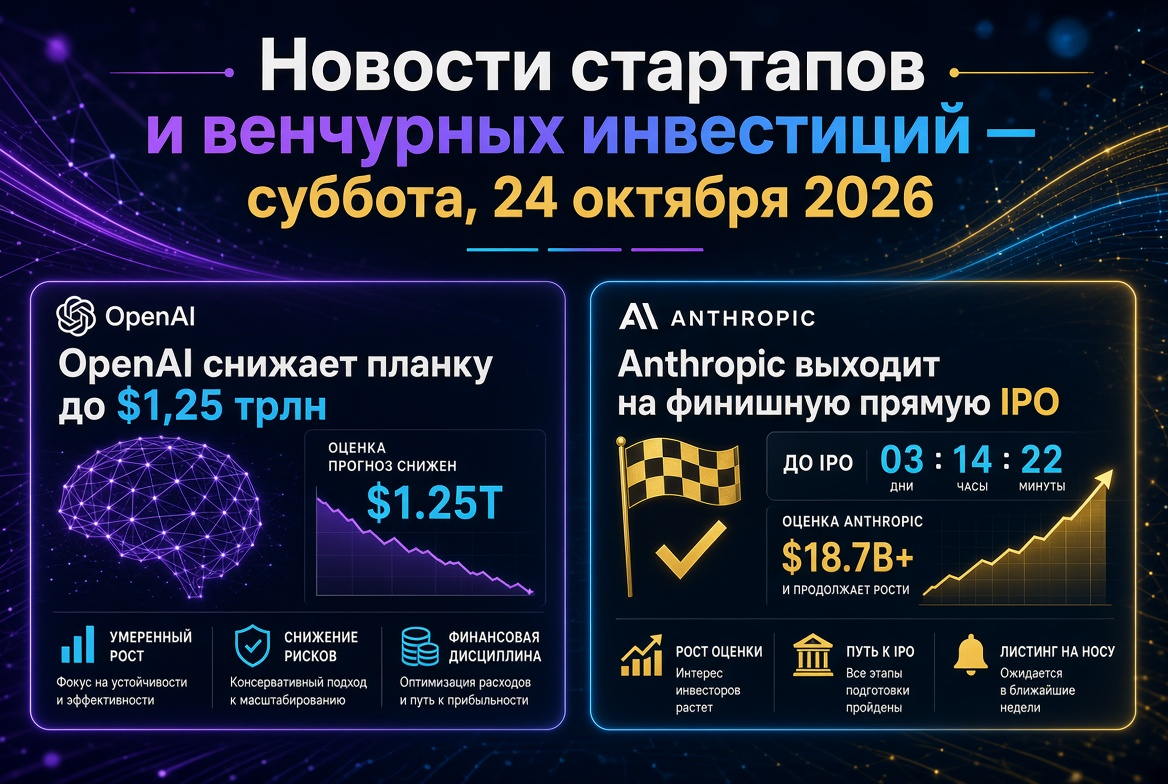
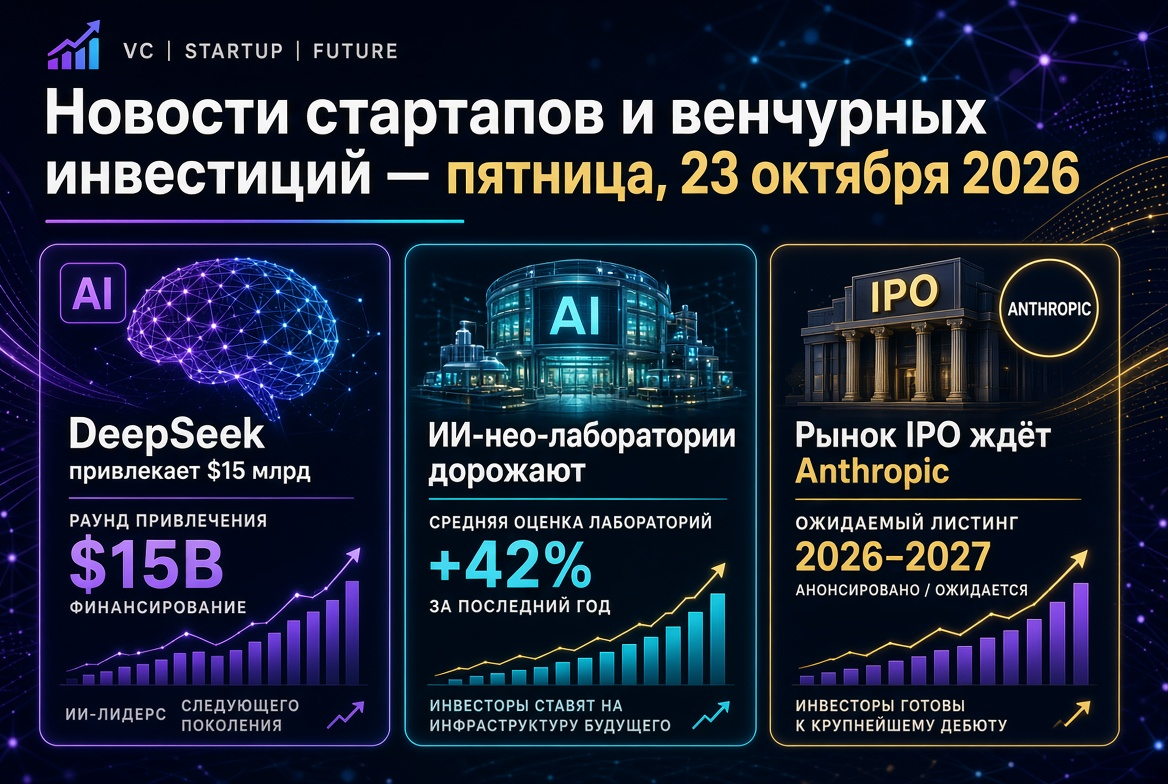
The standout news for the startup market is the unprecedented concentration of capital in artificial intelligence. AI remains the key theme for venture investments worldwide. Investors continue to actively fund not just generative models but the entire ecosystem around them: computational infrastructure, data stacks, tools for corporate automation, and new hardware solutions.
This shift is significant for venture funds for two reasons:
- The valuations of top AI companies continue to rise faster than in most other sectors;
- Access to promising rounds is becoming challenging due to heightened competition among investors.
This results in a funnel effect for the market: an increasing amount of capital is concentrated in a limited number of leaders, and the startup industry begins to operate in a model where large winners capture an disproportionately large share of funding.
Mega Rounds Set the Market Tone Again
By March 2026, the venture investment market is effectively returning to the mega round era. Major deals are once again the primary indicator of market sentiment. This is especially evident in the USA, where late-stage and growth rounds are attracting hundreds of millions and even billions of dollars.
Notably, capital is being invested not only in "classic" software but also in technologically complex sectors. This indicates that investors are willing to accept a longer payback horizon if they see a chance for a burgeoning infrastructure leader. For startups, this is a positive signal: the market remains willing to pay for scale if the company can demonstrate technological advantages and address significant markets.
Defence Technologies Emerge as a Fully-Fledged Venture Asset Class
One of the most notable trends this week has been in defence technologies. Defence tech can no longer be considered a narrow niche. This sector is becoming central to the global venture capital landscape. Investor interest can be attributed to several factors: increased government contracts, accelerated adoption of autonomous systems, heightened demand for unmanned solutions, and the strengthening link between software, sensors, and hardware platforms.
Importantly, defence startups are now funded not as experimental categories but as strategic layers of a new industrial and technological architecture. For funds, this presents a new investment thesis: defence tech could establish itself as a sustainable and significant class, akin to fintech or enterprise software.
AI Infrastructure Takes Centre Stage
While recent attention has primarily focused on chatbots, content generation, and applied AI services, the venture focus is clearly shifting towards infrastructure. Investors are increasingly turning their attention to chips, photonic solutions, data transmission systems, computational optimization, energy efficiency, and specialized hardware platforms.
This represents a key shift for the venture market. Infrastructure companies typically develop over a longer timeline, require larger rounds of funding, and impose higher demands on their teams. However, they have the potential to serve as the foundation for the next investment cycle. As such, funds focusing on deep tech have an opportunity to enter segments where competition is lower than in applied AI, yet potential capitalisation remains substantial.
Enterprise AI Strengthens its Position in the Corporate Sector
A separate trend is the rapid strengthening of enterprise AI. The corporate market is increasingly adopting systems that automate accounting, analytics, document flow, internal processes, service operations, and management tasks. For investors, this segment is especially attractive as it combines high growth with clearer monetization pathways.
Unlike mass-market AI products, corporate solutions can be more easily integrated into recurring revenue streams through subscriptions or long-term contracts. This makes enterprise AI startups a vital component of the global startup and venture investment landscape. Likely, this segment will remain one of the most resilient in 2026, even if there is a correction in valuations among the most overheated AI companies.
Europe Seeks to Close the Gap
The global landscape is still predominantly shaped by the USA; however, Europe is beginning to signal increased confidence in early March. Notably, there is a resurgence in sectors such as AI hardware, industrial automation, and autonomous logistics. This represents an important milestone for the European ecosystem: capital is shifting not only into SaaS or climate tech but also into complex technological platforms capable of competing on an international stage.
For investors, this suggests that the European startup market is once again becoming a space to identify undervalued stories. There is still less hype compared to California, meaning more opportunities exist to identify deals with more rational multiples. Meanwhile, the leading companies in Europe are now competing not just locally but within the global venture league.
Late Stage Becomes Attractive Again
A further point of interest is the renewed focus on late-stage investments. Private capital is allowing mature companies to take their time before going public and to secure new funding outside the public market. This is particularly important given the selective nature of IPO windows, coupled with persistent demands for predictability from investors on the stock market.
For venture funds, this implies several practical conclusions:
- late-stage is becoming a standalone investment strategy again;
- liquidity in private companies is gradually expanding;
- exits can occur not only via IPOs but also through secondary transactions, special funds, and structures for accessing private markets.
As a result, the startup market is shifting closer to a model where the largest private companies operate as if they are publicly traded assets without going public too early.
New Opportunities Emerge Beyond Pure AI
While artificial intelligence remains the primary driver, investors are not solely focused on this area. There are evident signals in healthtech, autonomous mobility, industrial tech, and climate-related solutions. This is a crucial moment for portfolio diversification. When the entire market is focused in one direction, disciplined funds find opportunities to locate the best entry points in less overheated verticals.
That is why global venture investors are currently paying keen attention not only to AI giants but also to companies creating applied solutions for transportation, healthcare, industry, energy efficiency, and corporate infrastructure. The next layer of "unicorns" may well emerge at the intersection of these areas.
What This Means for Venture Funds and Investors
As of March 8, 2026, the startup and venture investment market appears robust yet increasingly selective. There is capital available, and risk appetite is returning, but it is being allocated with great discretion. Winning companies meet three criteria:
- operate within a vast market;
- possess a technological or infrastructural advantage;
- can swiftly convert investor interest into scalable revenue.
For funds, this environment demands not mass-scale bets but rigorous selection. For founders, it presents an opportunity, provided they possess a strong team, a persuasive strategy, and clear growth economics. The main takeaway for global investors is straightforward: the venture cycle is accelerating, AI sets the pace, and the next phase of competition will revolve around infrastructure, defence technologies, corporate automation, and mature private market platforms.
These segments are currently shaping the new landscape of the global venture market, and investors should closely monitor their developments in the coming weeks.