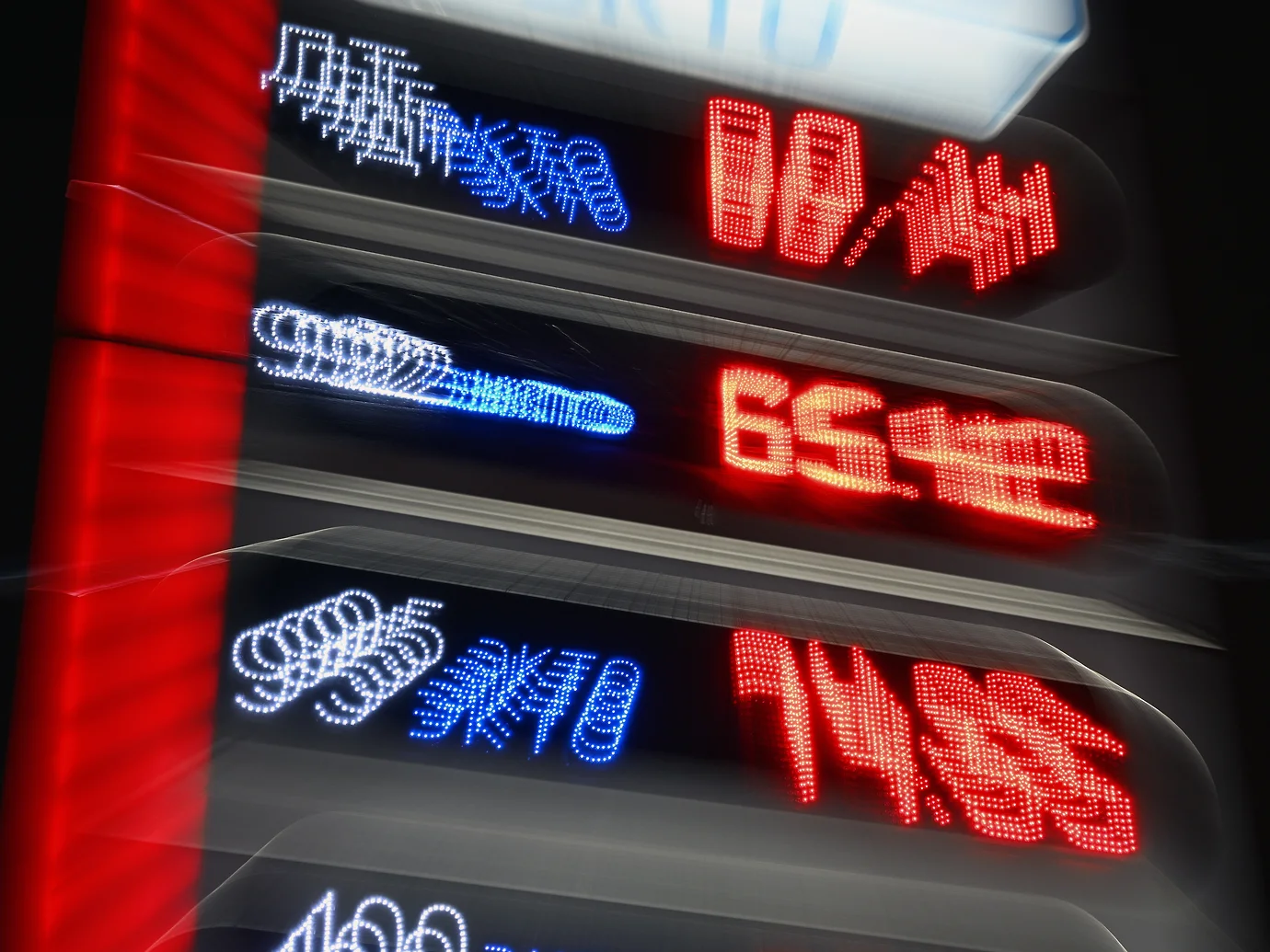
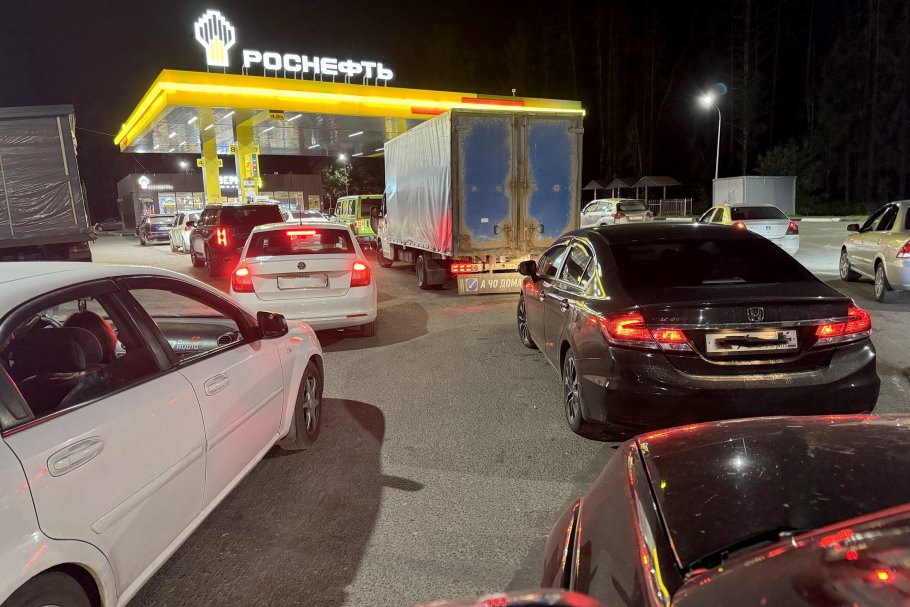
The Russian fuel market is currently experiencing a significant shortage of A-95 gasoline. The causes of this situation include unplanned repairs at oil refineries, a decrease in primary processing, and seasonal increases in consumption. Market participants indicate that refineries are forced to redistribute production in favor of the more socially significant A-92 gasoline. As a result, the demand for A-95 is rising faster than supply ahead of the summer season, and off-exchange volumes are being sold at a 10% premium. However, even at these prices, it is reportedly challenging to acquire fuel, as insiders indicate.
According to a review by the National Exchange Price Agency, on May 8, during trading, 32.64 thousand tons of gasoline were sold, which is 5.9% lower than the previous trading day. Sales of A-92 decreased by 8.9%, to 20.34 thousand tons, while A-95 sales increased by 1.5%, to 12.24 thousand tons. The volume of unmet solvable demand for A-92 amounted to 23.46 thousand tons, and for A-95, it was 26.34 thousand tons, as stated in the review.
A source within the industry informed that a supply deficit for A-95 has already formed on the market in anticipation of the high consumption season.
According to this source, demand for this type of fuel grows more quickly than for A-92 during the summer months, as consumers tend to use cars specifically designed for A-95 gasoline during the holiday season. The source cites unplanned repairs at major oil refineries and reduced production of petroleum products as the reasons for the shortage. In this context, he continued, oil companies are prioritizing their own sales structures' resource allocation.
Andrey Dyachenko, the chief analyst at "Proleum," also noted the shortage of A-95 volumes in the exchange market. He estimates that primary processing is currently significantly reduced compared to planned levels, compelling oil companies to choose which gasoline production to support. However, he considers the situation "far from critical." According to his estimates, the actual fuel supply at gas stations is currently 7-10% lower than last year's levels, and the existing reserves and operational capacities are still adequate to meet final demand.
The Federal Antimonopoly Service (FAS) informed that, so far, no complaints about gasoline shortages have been received, and no fuel deficit has been observed. The issue of gasoline shortages was not raised at the recent Exchange Committee meeting. The Ministry of Energy stated that the situation in the domestic motor fuel market remains stable and controlled.
Currently, the domestic market is sufficiently stocked with light petroleum products, logistics are functioning reliably, and no supply disruptions have been recorded in the regions, they noted. "The industry is prepared to handle the seasonal demand growth period in an orderly manner, aided by measures taken by the government, including the ban on gasoline exports, as well as the continuing restriction on diesel fuel exports for non-producers," the ministry added.
A market source indicated a change in fuel consumption patterns in Russia — mass updates of vehicles with Chinese models, sensitive to product quality, have led to a sharp increase in demand specifically for A-95. According to the source, the notion of the "social significance" of A-92 gasoline is outdated, as A-95 has become the primary product. Its production and logistics have become complicated due to incidents at refineries ahead of the peak season. Additionally, pressure on the market is exacerbated by the increase in domestic auto tourism during the May holidays.
Exchange prices remain relatively stable due to a functioning mechanism that limits price increases and decreases by 0.01% and 3%, respectively, from the current market price.
As of May 8, the price of A-92 gasoline within the index for the European part of Russia increased by 0.01%, reaching 65,990 rubles per ton, while A-95 rose by 0.16%, to 71,890 rubles per ton. At the same time, off-exchange volumes are being sold at a premium of about 10% over the exchange market price, yet supply in this channel remains quite limited, according to one of the insiders. "It is becoming extremely difficult to acquire A-95 on the exchange," he remarked. “Demand is several times—possibly more than ten times—higher than supply.”
Sergey Tereshkin, CEO of Open Oil Market, also points to a recovery in the automotive market, which is leading to higher gasoline prices and a need for increased production. Furthermore, the analyst notes that A-95 is not factored into damping calculations—the subsidies are tied to prices of A-92 and diesel fuel. Therefore, the risks of rising prices for A-95 are always greater, regardless of the physical availability of fuel, added Mr. Tereshkin.
The analytical group "Ufaoil" emphasizes that the increase in gasoline supply at the beginning of May was supported by the resumption of trading from major oil refineries. However, they continue, later volumes decreased again, partly due to a repeat suspension of exchange sales by certain refineries. Additional pressure on the market comes from extended delivery times and reduced available offerings in large wholesale, experts add. Delivery times in early May increased by an average of two to four weeks, reports a market source. According to his assessment, unplanned repairs at major enterprises may take at least one month. This situation, he adds, prevents market participants from building up long-term reserves, which heightens the risk of fuel shortages in the summer.
Source:
Kommersant