The government is considering the possibility of reintroducing a complete ban on gasoline exports starting April 1 of this year. This issue was discussed at a meeting on March 27, dedicated to the fuel market situation, with Deputy Prime Minister Alexander Novak, according to "Vedomosti." Previously, Novak stated that authorities are discussing various tools to ensure domestic fuel market stability, including a complete ban on gasoline exports.
The complete ban affects not only traders (trading companies) but also direct producers—refineries. A full export ban was previously implemented from August 31, 2025, and, following several extensions, was in place until February 1 of this year. Since February 1, refineries have been allowed to export gasoline abroad. However, as we can see, this was only for a short period.
The return of a full ban was anticipated. The rise in prices on stock exchanges and retail accelerated in March, traditionally spurred by increasing spring demand, and unusually, by events in the Middle East, which sent global oil and petroleum product prices to multi-year highs. In Russia, since the end of February, stock market prices for gasoline peaked with a 16% increase, while diesel fuel prices rose by 22%. Currently, prices have even slightly declined, likely in response to the first news regarding the complete export ban.
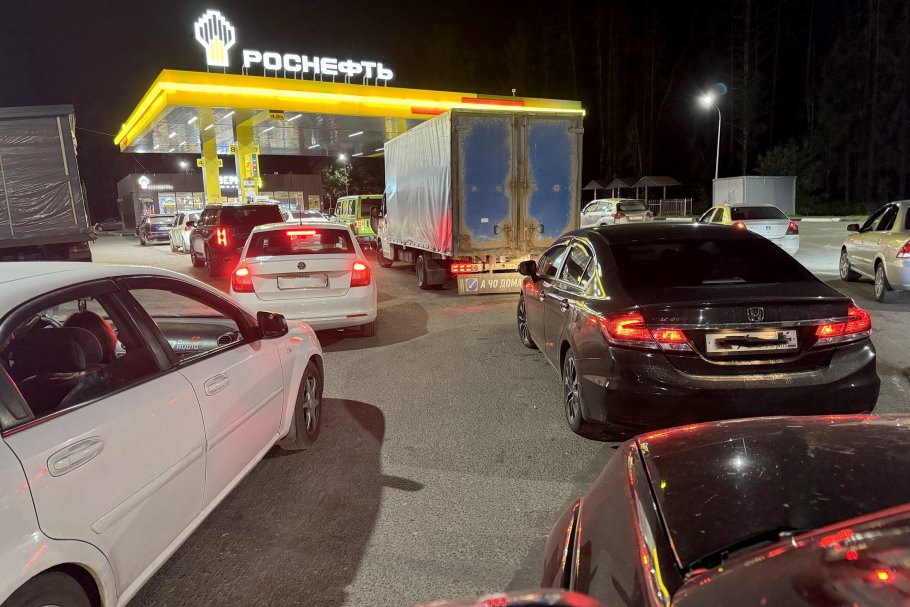
Retail price increases are expected to halt; however, this will not lead to a significant decrease in prices. Nevertheless, the government is primarily focused on the retail market. At filling stations, the average gasoline price has risen by 2.77% since the end of last year. This growth rate has practically caught up with the country’s average inflation rate, which reached 2.78% as of March 23.
Experts interviewed by "RG" predict a clear reaction to the export ban. Stock market quotations are expected to slow down their growth and may even decline. While the increase in retail prices will pause, significant price reductions are not anticipated. Price dynamics will align with inflation, but not more than that. However, with the end of summer and fall approaching, prices typically escalate significantly faster than in spring.
The export ban leaves producers with no choice regarding to whom they can sell their products. Previously, there was an external market with higher prices and a domestic one with lower prices; now there is no choice. Moreover, the external market is closed, meaning that all volumes originally intended for export remain within the country—demand does not keep up with supply. Therefore, producers have no option but to reduce prices. But this is only temporary.
In an interview with "RG," Yuri Stankevich, the Deputy Chairman of the State Duma Committee on Energy, noted that the export ban is a rapid response tool that can temporarily stabilize the market but does not resolve structural problems. For consumers, it means a pause in price growth rather than a noticeable reduction in prices. For the industry, this is yet another factor of uncertainty.
Now everything has changed—from supply directions to geopolitics. According to Dmitry Gusev, Deputy Chairman of the Supervisory Board of the "Reliable Partner" Association and member of the Expert Council of the "AZS Russia" competition, a complete export ban is necessary in terms of stabilizing the market, but strategically flawed. Instead of stimulating oil refining and creating conditions to encourage oil companies to increase the depth and volume of oil processing, we are closing down exports. We are becoming unreliable suppliers of petroleum products in external markets. Additionally, given the current price levels, we are not profiting from petroleum products, although we could be. We are forced to rely solely on crude oil revenues.
As noted by Sergey Frolov, Managing Partner of NEFT Research, in the context of the unpredictable situation with possible unplanned refinery shutdowns, coupled with a lack of significant gasoline production reserves and seasonal demand increases, an export ban will only slow price growth. A significant decrease in prices should not be expected, affecting both wholesale and retail markets.
It is important to mention that from a profit standpoint, most large refineries in our country have not focused on the domestic market but rather on exports. This is partly because we send half of the oil and petroleum products produced in our country abroad. It is far more profitable to export processed products with added value than to sell raw materials. This perspective has been encouraged by the state’s fiscal policy. The large tax maneuver (BTM) has reduced export duties on crude oil and light petroleum products (gasoline, diesel, aviation fuel) to zero (set to end in 2024), but has increased the levies on gross oil production. Essentially, crude oil is extracted, taxes are paid, and added value is gained from producing gasoline and diesel, which are then exported.
While export bans can temporarily alleviate recurring fuel crises in the country, only increasing gasoline and diesel production can truly "cure" them. When there is enough supply for both external and internal markets, resources are available for this. However, no investor will commit to building a new refinery, knowing that their market for sales and profit can be shut off at any moment.
As Frolov observes, since the onset of the tax maneuver, investments in oil refining have been unattractive, and with the current manual management and geopolitical unpredictability, the investment attractiveness of oil refining hovers in negative territory.
Oil refining is a capital-intensive business with a long investment cycle, Stankevich remarks. The industry is highly interested in the predictability of export and tax policies, stable margins, and seamless operation of transport infrastructure. When the export window is closed periodically, especially during favorable external conditions, companies lose profits, which inevitably reduces the return on investment in modernizing refineries and their recovery after continuous drone attacks, he claims.
In the short term, bans even demotivate the increase in fuel output if domestic prices become less attractive compared to export alternatives. In the long term, increased refining is driven not by bans, but by technological modernization, tax incentives, stable exports, and the development of domestic demand, according to Stankevich.
According to Sergey Tereshkin, CEO of Open Oil Market, the industry as a whole needs new solutions to boost the profitability of oil refining and thereby reduce price pressure. One option could be to reduce the excise tax on the "federal" portion: currently, 74.9% of excise revenues from gasoline and diesel fuel go to regional budgets, while only 25.1% go to the federal budget. A 25% reduction in excise taxes would improve the economics of oil refining. Regarding the sector's investment prospects, security guarantees for fuel infrastructure and lifting external restrictions on the import of refinery equipment are essential. Without these measures, companies will find it challenging to sustainably increase fuel output, and regulators will struggle to maintain price stability.
Source: RG.RU