Latest Energy Market News as of April 24, 2026: Oil and Gas Market Dynamics, Power Sector Developments, and Investments in Renewable Energy Sources
Oil, Gas, and Energy News for Friday, April 24, 2026, presents a dominant theme: global energy markets are trading not only on the balance of supply and demand but also on the physical risk of supply. For investors, oil companies, fuel firms, traders, refineries, and energy sector participants, this indicates a shift into a state of heightened volatility, where oil prices, gas markets, petroleum products, electricity, and renewable energy sources are interconnected more than in typical periods.
By Friday morning, the global energy sector appears as follows: oil is holding above a psychologically significant level, the gas market is operating under a logic of flexibility shortages, refining is facing risks regarding diesel and jet fuel, and the electricity sector is rapidly adapting to increased load and expensive molecules. Consequently, energy once again becomes the main channel for transmitting geopolitical influences into inflation, industry, and corporate margins.
- Oil: the market remains in a state of high premium due to logistics and military risks.
- Gas and LNG: Europe and Asia are restructuring their procurement, but system flexibility remains constrained.
- Petroleum Products and Refineries: the maximum risk is currently shifting toward diesel and jet fuel.
- Electricity and Renewables: rising demand accelerates investments in networks, gas generation, solar generation, and storage solutions.
The Oil Market Once Again Operates Under Geopolitical Laws
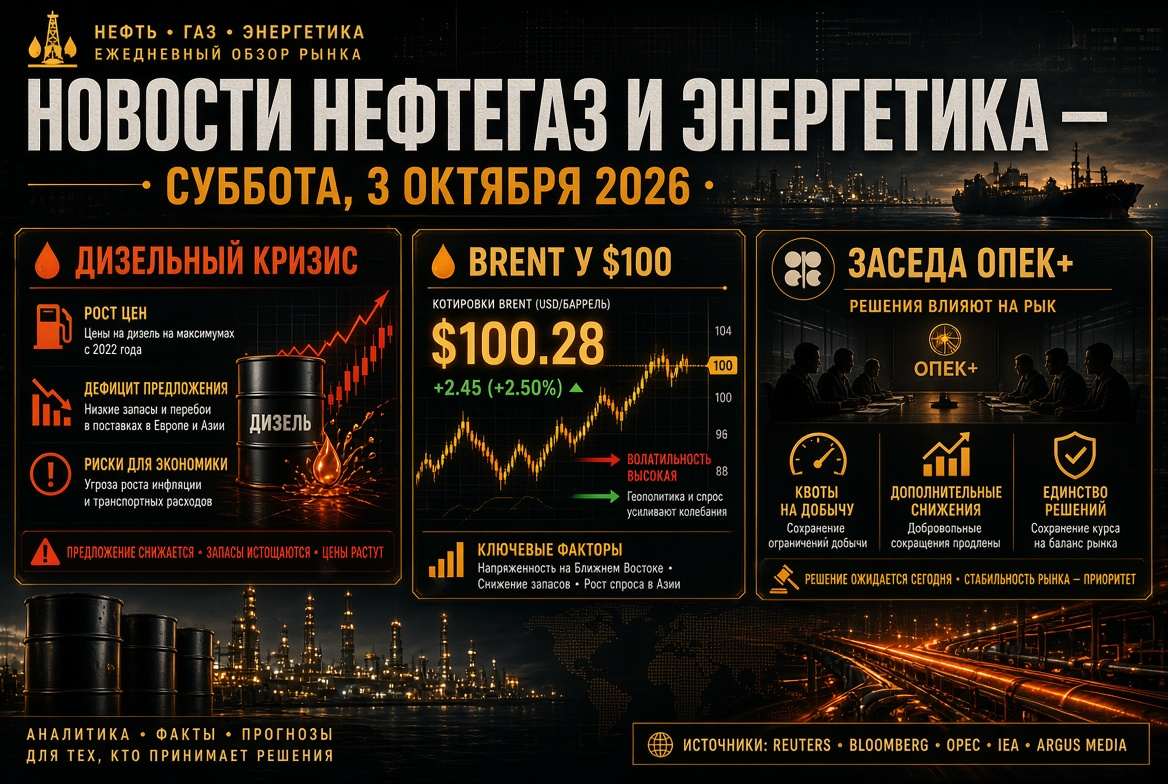
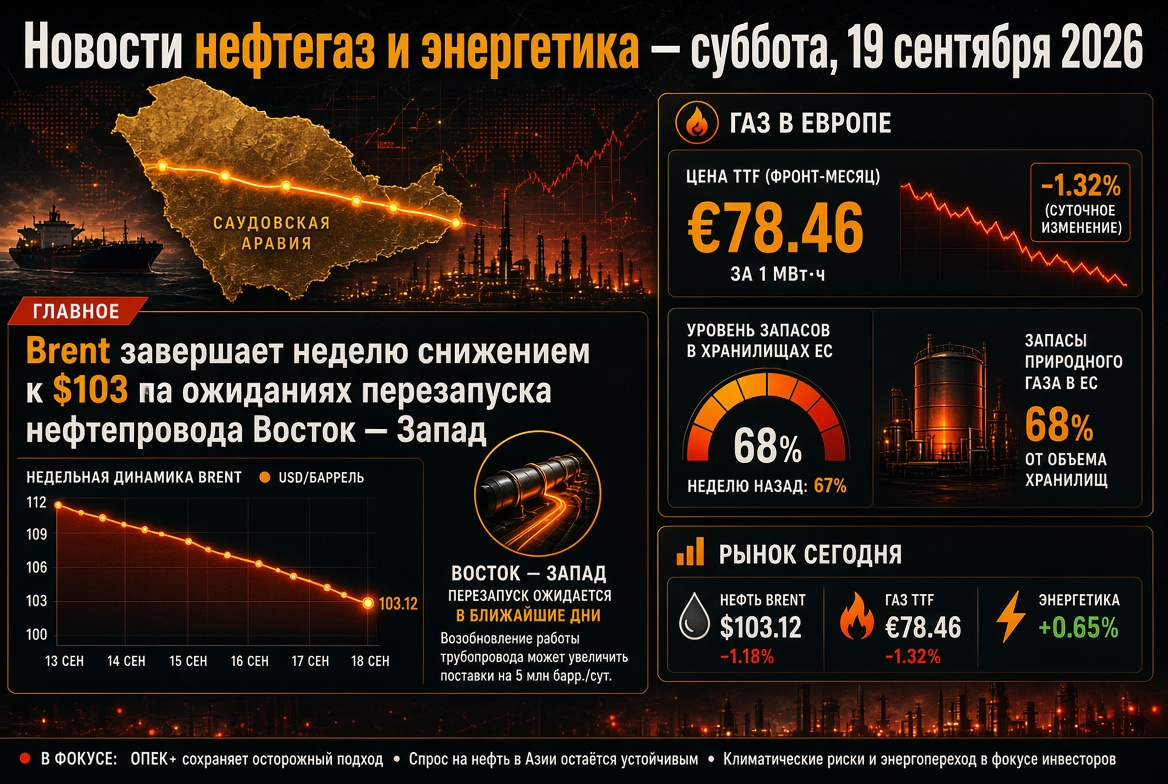
The global oil market enters Friday with heightened geopolitical sensitivity. The key factor is the continuing restrictions and high uncertainty surrounding shipping through the Strait of Hormuz, which provided approximately one-fifth of global maritime oil supplies before the crisis. This has transformed from mere news background: risk premiums are embedded in quotes, in physical differentials, and in buyers' decisions regarding crude substitution.
For oil companies and investors, another crucial point is that the current rise in oil prices does not appear to be a sustainable bull cycle of the classic type. International and private analysts are already cutting consumption forecasts. This indicates that the market is receiving less available supply while facing weaker demand in the second quarter. In other words, oil prices are rising not due to the strength of the global economy but due to shocks related to supply and logistics.
Against this backdrop, OPEC+ remains cautious. Formally, the group continues its gradual increase in quotas, but for the market, this is more of a political signal than a substantial increase in barrels. As long as logistics in the region are not normalized, additional volumes on paper do not equate to additional oil in tankers. Thus, in the short term, the market will focus less on cartel decisions and more on the actual navigability of routes, ship insurance, and the state of export infrastructure.
Gas and LNG Enter a Phase of Strict Re-evaluation of Routes
While price dominates the oil market, flexibility and substitution take center stage in the gas and LNG markets. Europe enters the injection season after winter with a more strained starting position than the previous year, shifting emphasis to the speed of filling storage, coordinating purchases, and temporary support measures for consumers and industries. For the gas market, this means one thing: the summer season is no longer a "calm window," but part of the struggle for winter security.
In Asia, the scenario is similarly indicative. LNG imports into the region are declining, and China effectively acts as a buffer for the system: domestic demand is cooling, some cargoes are being resold, and the market gets a temporary breather. However, this breather is deceptive. If summer electricity demand in Asia picks up, the market will once again face competition for spot cargoes. This already signifies rising costs for sensitive importers and a return to more expensive fuel types.
Pakistan stands out as a notable example, having returned to the spot LNG market amid fuel shortages to meet rising electricity demand. For the global energy sector, this is an important signal: developing markets remain the first victims of volatility in gas. For gas suppliers and traders, this raises the cost of flexibility, portfolio diversification, and access to alternative logistics.
Petroleum Products and Refineries Take Center Stage
The primary risk for the petroleum products sector currently lies not in crude oil itself, but in refining. Asian refineries are reducing throughput because they are forced to replace Middle Eastern medium-sulfur grades with lighter feedstock from the U.S., West Africa, and Kazakhstan. This restructuring worsens the yield of middle distillates. Here, the market is hit the hardest: less diesel, less jet fuel, and increased margins for scarce fractions.
This is especially crucial for the diesel market. Diesel remains a critical product for freight logistics, industry, agriculture, and part of the electricity sector in developing countries. If the shortage of middle distillates persists, diesel and jet fuel will become the primary channels for transmitting shocks into final tariffs and inflation.
European refineries are operating in a complex dual reality. On one side, the region needs maximum refining and fuel inventory control. On the other side, rising raw material costs are eroding margins, especially for less sophisticated refineries. Thus, for the refining sector, the coming weeks will be determined not by the absolute price of oil, but by spreads on diesel, jet fuel, and the ability to rapidly adjust the product mix.
Electricity Becomes the Second front in the Energy Crisis
The electricity market is increasingly operating independently, yet pressure from oil and gas directly affects it. Load growth in the U.S. and parts of other markets continues due to electrification, industrial demand, and particularly data processing centers. This marks an important structural shift: the energy sector can no longer rely on the flat consumption profile characteristic of the previous decade.
Hence, a new investment logic emerges. Companies that can simultaneously build networks, gas generation for peak and backup needs, solar generation, and storage hold a better position. This is why the market closely watches not only fuel prices but also the project portfolios of utilities. For investors, this means that shares in electricity, network equipment, energy storage, and certain gas generation segments remain an important defensive area within the global energy sector.
Moreover, the electricity sector can no longer be analyzed separately from macroeconomics. The higher the volatility in gas, the greater the pressure on tariffs, government subsidies, and discussions about energy accessibility for industry. Therefore, in 2026, the electricity market is not just about increasing demand; it is also about new industrial policies.
Renewables and Storage Shift from Climate Topic to Energy Security Category
Renewable Energy Sources (RES) in the current cycle appear not only as a decarbonization narrative but also as a tool for hedging energy prices. In Europe, interest in rooftop solar, home storage, and combined self-supply solutions has noticeably increased. This is no longer a niche consumer trend; it is a rational response to high electricity costs and dependence on imported fuels.
Structurally, this shift is supported by a longer trend. According to IEA forecasts, solar generation and wind will cover an increasingly larger part of demand growth, and in the European Union, renewable sources are effectively meeting all consumption increases in the medium term. For the global market, this means that investments in RES, storage, inverters, networks, and system flexibility are becoming not an "alternative," but part of the fundamental energy infrastructure.
A changing approach to pricing also deserves attention. More countries are striving to decouple the link between expensive gas and electricity prices, shifting green generation to longer and more stable pricing mechanisms. For investors, this is a positive signal: the market is seeking not only new capacities but also a new model for monetizing energy.
Coal Remains a System Insurance Rather Than a New Long-term Bet
Coal in 2026 is not returning as an unconditional favorite but is once more serving as an emergency cushion. When gas is expensive or physically constrained, many systems rely on existing coal capacities to avoid electricity shortages during peak demand periods. This is particularly evident in Asia, where coal remains the foundation of the energy balance.
India serves as a case in point: the country maintains large coal stocks and is preparing its system for a summer load increase, understanding that gas may not always provide the necessary flexibility at acceptable prices. For fuel producers and market participants, this indicates that the coal segment may remain tactically strong, but strategically its story remains limited by the growth of RES, network modernization, and future strengthening of environmental requirements.
Russia and Eurasia Remain Significant for the Global Energy Market
The Eurasian direction remains crucial for the global energy balance. Despite infrastructure limitations and attacks on assets, Russia continues to supply oil to the world market, but its infrastructure has become a weak link. Attacks on ports, terminals, and refineries have already reduced production and processing, thereby adding another layer of risk to global supplies.
For buyers, this means a straightforward conclusion: even if Russian barrels continue to flow, the reliability of the channel can no longer be evaluated based solely on the discount price. Now, the significance of export routes, the resilience of port logistics, blending capabilities, and the readiness of Asian refiners to accept more volatile deliveries matters. Hence, Russian oil remains an important part of the global balance but is traded not on the basis of "cheaper than Brent," but rather on "availability plus operational risk."
What This Means for Investors, Refineries, and Energy Market Participants
As of the morning of Friday, April 24, 2026, the most critical conclusions for the global energy market are as follows:
- Oil remains expensive due to supply risks rather than demand overheating. This makes the market particularly sensitive to news related to logistics and diplomacy.
- The most vulnerable link now is petroleum products. Diesel, jet fuel, and complex refining appear more important than the abstract rise in Brent prices.
- Gas and LNG are entering a season of high competition for flexibility. Portfolio players with access to alternative sources and routes are prevailing.
- Electricity, networks, storage, and RES are gaining additional momentum. This is no longer only a climate story; it’s a direct response to a new wave of energy instability.
- Coal and backup capacities temporarily strengthen their role in energy systems. However, this is a tactical insurance measure rather than a reversal of the long-term energy transition.
The outlook for the oil, gas, electricity, RES, coal, petroleum products, and refineries markets for tomorrow appears as follows: global energy is entering a phase where the price of a barrel, cubic meter, and megawatt-hour is increasingly determined not only by fundamentals but also by the resilience of the entire supply chain. For investors and energy companies, this enhances the value of diversification, logistical optionality, complex refining, and infrastructural resilience.