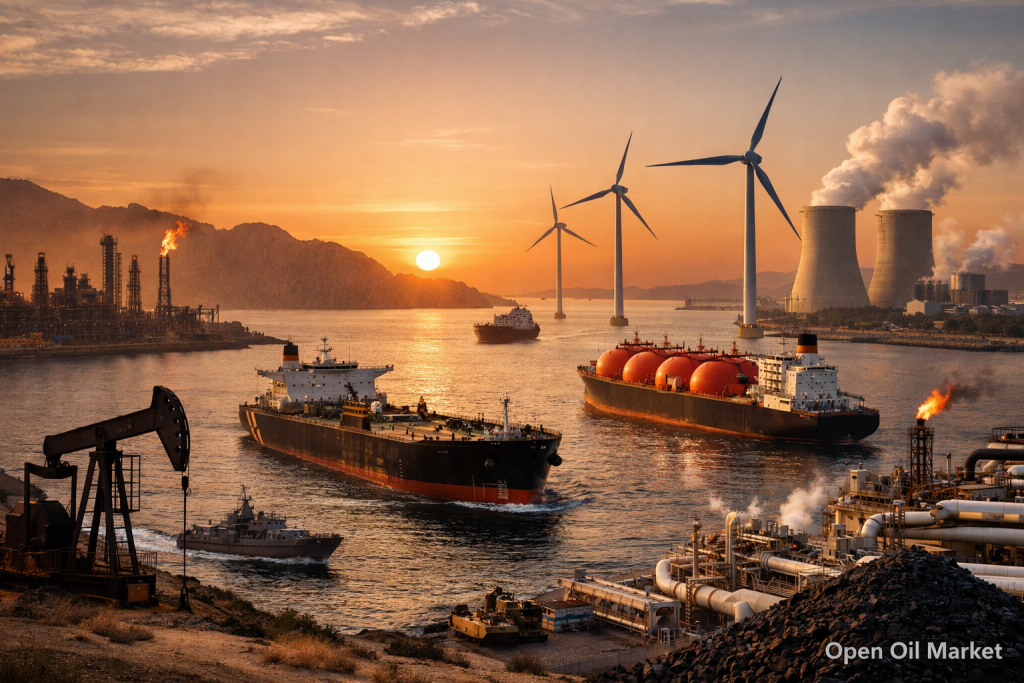
Current News on Oil, Gas, and Energy as of April 12, 2026, Including Market Developments in Oil, Gas, LNG, Electricity, Refineries, and Renewable Energy Amidst Geopolitical Instability
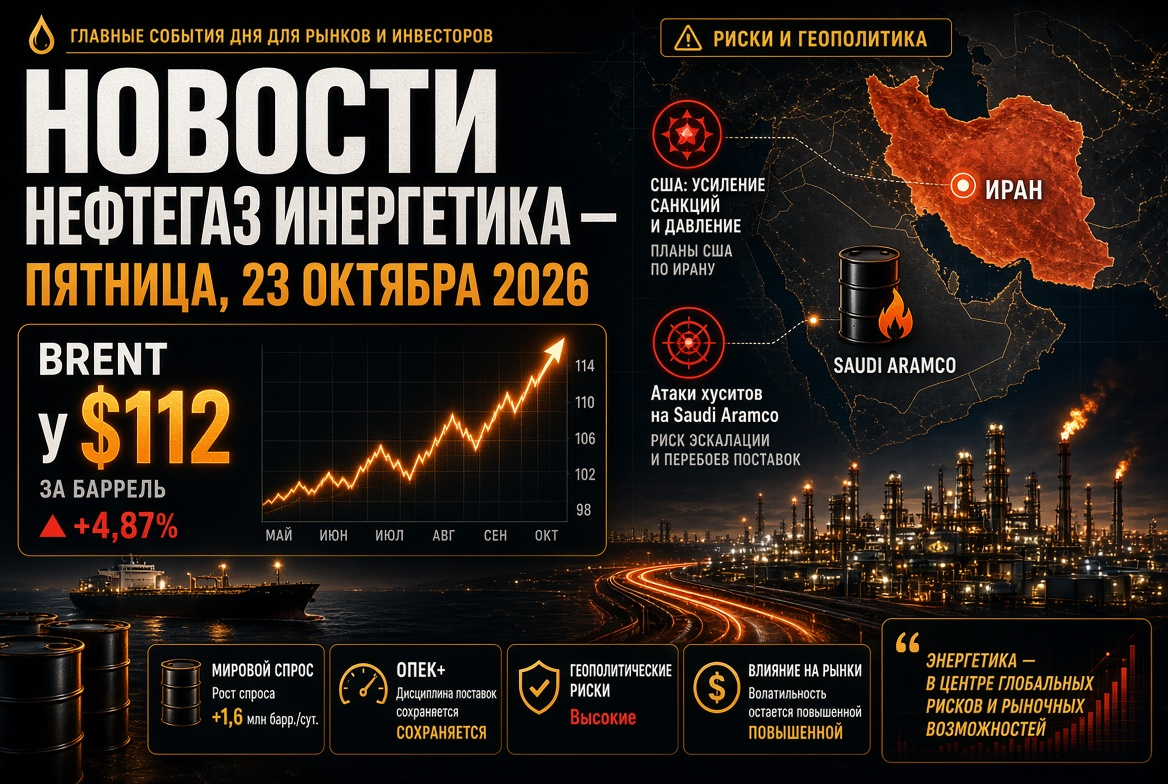
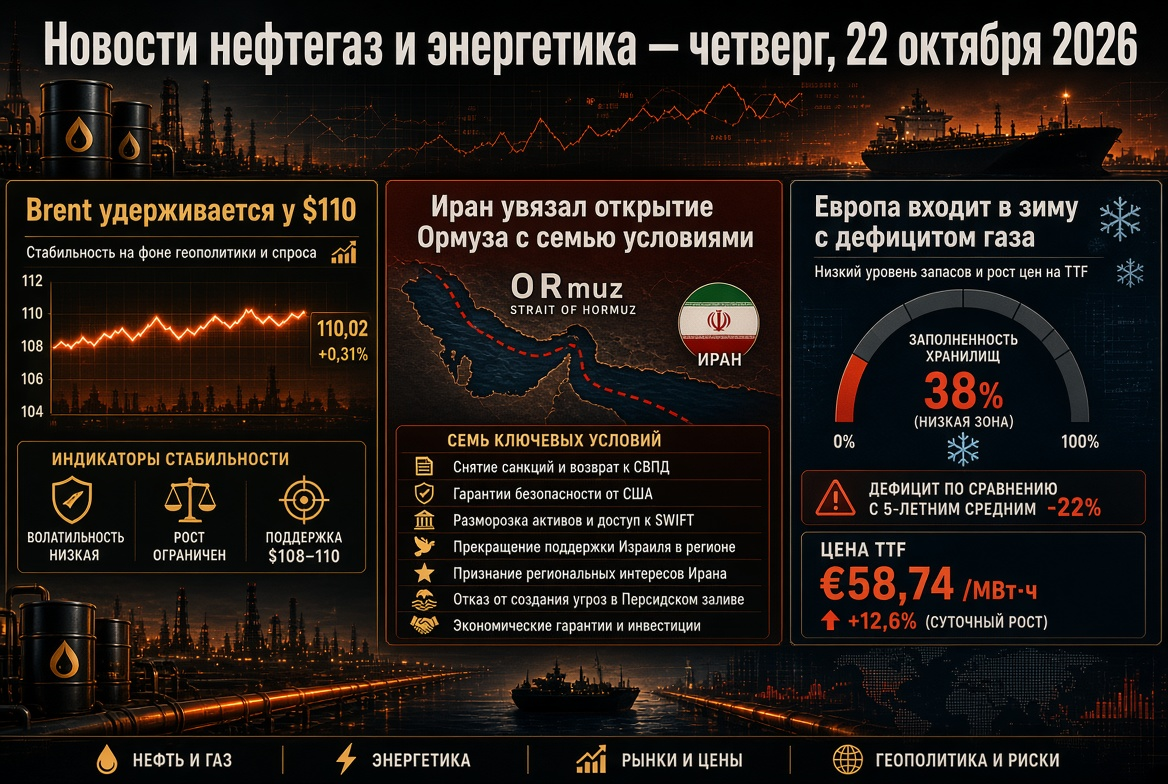
By the start of Sunday, the oil market remains in a state of high volatility. Following a sharp spike in prices amid threats of prolonged disruptions to shipping through the Strait of Hormuz, quotes have adjusted downwards. However, the premium for geopolitical risk has not dissipated. For the global oil market, this means that even with a partial easing of tensions, the price of a barrel remains sensitive to any news concerning tanker passages, cargo insurance, and the restoration of export infrastructure.
Market participants should focus on three key insights:
- The market continues to assess the risk of oil supply disruptions from key export corridors;
- The physical commodity market remains tighter than the futures market;
- Any new escalation capable of triggering a sharp price increase within one to two trading sessions.
This is particularly crucial for oil companies, traders, and buyers of petroleum products, as in such an environment, short-term price movements no longer reflect solely the fundamental balance of supply and demand. They are increasingly influenced by logistics, fleet availability, and the speed of export flow recovery.
OPEC+ and Supply: The Market Expects Not Just Barrels, but Real Export Availability
Another key factor remains OPEC+ policies. Formally, the market receives signals about producers' readiness to increase output; however, for investors and the oil and gas sector, what matters more is not the announced volumes but the ability for these barrels to physically reach the market. In the current configuration, oil and gas and energy depend not only on quotas but also on the resilience of routes, terminals, pipelines, and port infrastructure.
Against this backdrop, attention is focused on several areas:
- What portion of additional production can OPEC+ countries realistically export;
- Will increased demand for alternative grades outside the Persian Gulf persist;
- How will the price spread between the paper and physical oil markets change;
- How quickly can refineries in Europe and Asia adjust crude procurement.
For the energy sector, this indicates sustained premiums for producers and exporters with more resilient logistics and access to routes outside the main conflict zone.
Gas and LNG: Oil Shock Rapidly Transmits to the Gas Market
The gas and LNG segment has once again become closely tied to the oil market. Although at the beginning of 2026 analysts anticipated a softer gas balance due to increased global LNG supply, real dynamics have shown that geopolitical factors can swiftly alter the landscape. For Europe and Asia, the key concern remains supply reliability, rather than just the absolute price level.
In practice, this leads to several outcomes:
- LNG buyers are more actively insuring supply risks and embedding higher premiums in contracts;
- Asian countries are intensifying their interest in coal as a backup generation source;
- The European electricity market remains sensitive to gas pricing;
- For industrial consumers, the importance of long-term contracts and fuel source diversification is increasing.
For investors, this means that gas and LNG remain not merely separate commodity markets but key components of the entire energy chain—from electricity to chemicals and heavy industry.
Refineries and Petroleum Products: Processing Gains a Chance for Strong Margins, but Procurement Risks Rise
The refinery sector is entering a new phase, where high instability in the commodity market creates both opportunities and threats. On one hand, processors may benefit from widening spreads on petroleum products, especially if demand for diesel, jet fuel, and gasoline remains stable. On the other hand, increasing uncertainty regarding oil supply raises risks for procurement and hedging.
Currently, the following factors are particularly crucial for petroleum products and refineries:
- Accessibility of medium and heavy grades of crude;
- Freight and cargo insurance costs;
- Stability of export chains for diesel and aviation fuel;
- The ability of processors to quickly adjust crude baskets.
If the geopolitical premium remains intact, the margins for some refineries may remain elevated. However, in the case of a rapid normalization of supply, the petroleum products market could quickly shift from a deficit model to a more balanced one, which would decrease excess profits from processing. Therefore, for fuel companies, the focus is not only on crude price levels but also on the configuration of demand for final products.
Electricity: Gas Again Determines Prices Across Many Systems
The electricity sector continues to face a familiar issue: even where the share of renewable energy and nuclear generation is increasing, the end price of electricity in many regions is still determined by expensive gas-fired plants. This is particularly noticeable in the European market, where gas remains a price anchor for a significant portion of energy systems.
For electricity over the near term, the key drivers will be:
- Price dynamics for gas and LNG;
- Network load and balancing costs;
- The speed of electrification in transport, heating, and industry;
- Availability of cheap base-load generation and energy storage.
From the perspective of the global energy market, this reinforces interest in countries and companies that can ensure a more stable and less gas-dependent energy supply model. For investors, electricity today is no longer just a defensive segment but one of the main indicators of the depth of structural changes in the energy sector.
Renewable Energy and Energy Transition: Crisis Accelerates Demand for Energy Independence
The paradox of the current situation is that the shock in the oil and gas markets simultaneously supports the traditional energy sector while enhancing the investment rationale for renewables. High dependence on hydrocarbon imports again makes solar and wind generation, energy storage, and grid modernization not just a matter of climate policy but of strategic importance.
This creates a mixed but overall constructive environment for the renewable energy market:
- Political support for projects reducing fuel imports is growing;
- Interest in offshore wind energy and grid infrastructure is strengthening;
- Electrification of the economy is becoming part of the industrial strategy;
- At the same time, there remain risks of new taxes, regulatory burdens, and rising capital costs.
For this reason, the renewable energy sector in 2026 appears not as an alternative to oil and gas, but as a strategic complement in the new architecture of energy security.
Coal: A Backup Beneficiary of Gas Market Instability
While the long-term trajectory of global energy continues toward decarbonization, coal still plays the role of a hedge fuel. With rising prices for LNG and threats of gas supply disruptions, certain countries in Asia and Europe are prepared to more actively utilize coal power to manage peak loads and protect their energy systems.
This does not alter the long-term trend, but in the short term, it provides additional support for the coal market. For energy companies and industrial consumers, this means that the fuel balance in 2026 remains hybrid: oil, gas, electricity, renewables, and coal continue to compete while simultaneously hedging against each other.
What This Means for Investors and Energy Sector Companies
In the coming days, the global market will assess not merely formal statements but the actual speed of recovery of raw material and fuel flows. For investors, oil companies, participants in the petroleum products market, and refinery operators, the following benchmarks are currently priorities:
- Firstly, the resilience of passage through key export routes.
- Secondly, OPEC+'s reaction and the actual availability of additional barrels.
- Thirdly, price dynamics for LNG and its influence on electricity.
- Fourthly, refining margins and behavior in the petroleum products market.
- Fifthly, acceleration of investments in renewables, grids, storage, and energy independence projects.
Consequently, Sunday, April 12, 2026, sees the oil, gas, electricity, and the entire global energy sector at a juncture where short-term geopolitical considerations and long-term structural transformation are both at play. This combination makes the current moment critical for decision-makers in oil and gas, energy, refining, commodity trading, and infrastructure investment.