Global Oil, Gas, and Energy Sector News for Saturday, January 24, 2026: Oil, Gas, Electricity, Renewables, Coal, Sanctions, Global Energy Markets, and Key Trends for Investors and Energy Companies.
The significant events within the fuel and energy complex (FEC) on January 24, 2026, are attracting the attention of investors and market participants due to their scale and contradictory trends. Geopolitical tensions remain high as the U.S. and EU intensify sanction pressures in the energy sector, leading to a further redistribution of global oil and gas flows. Concurrently, a mixed picture is observed in global energy markets. Oil prices, having fallen in 2025, have stabilized at moderate levels—North Sea Brent is holding around $63–65 per barrel, while American WTI is in the $59–61 range. This is significantly lower than last year's levels (approximately $15–20 cheaper than in January 2025), reflecting a fragile balance between supply surplus and restrained demand. Meanwhile, the European gas market is grappling with severe winter cold: rapid fuel withdrawal from underground storage has reduced reserves below 50% capacity, causing prices to spike by approximately 30% since the beginning of the month. However, the situation is far from the energy crisis of 2022—accumulated reserves and LNG inflows have managed to cover increased demand, keeping price growth in check. The global energy transition is meanwhile gaining momentum: many regions are setting new records for electricity generation from renewable sources, though countries are still not relinquishing traditional resources for the reliability of their energy systems. In Russia, following last year’s spikes in fuel prices, authorities have extended emergency measures—including export restrictions and subsidies—into early 2026 to stabilize the domestic oil product market. Below is a detailed overview of key news and trends in the oil, gas, electricity, and raw materials sectors on this date.
Oil Market: OPEC+ Holds Back Production Amid Surplus Risks
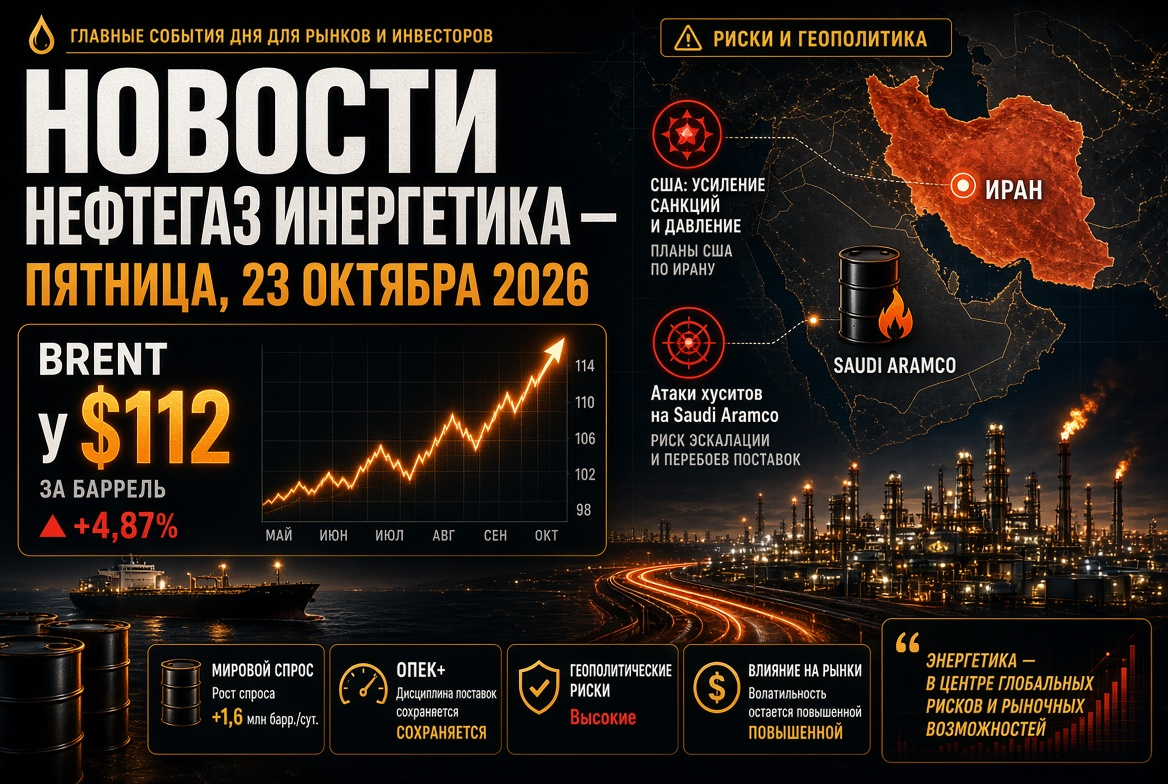
Global oil prices maintain relative stability at relatively low levels, influenced by fundamental supply and demand factors. Currently, Brent is trading around $63–65 per barrel, while WTI is hovering between $59–61. Current quotes are 15-20% lower than last year, reflecting market oversaturation following the peaks of 2022–2023 and moderate demand. Various key factors affect oil price dynamics simultaneously:
- OPEC+ Policy: Fearing a potential surplus, the alliance of major exporters is taking a cautious approach. In early January 2026, OPEC+ members confirmed their commitment to maintaining existing production limits at least until the end of the first quarter. Major countries (including Saudi Arabia and Russia) extended voluntary cuts, aiming to prevent market oversaturation amid seasonally low demand. This move reflects a desire to maintain price stability, marking a shift from the production increase observed a year earlier.
- Weak Demand Growth: Global oil consumption growth remains modest. According to the International Energy Agency (IEA), demand is expected to rise by only ~0.9 million barrels per day in 2026 (compared to ~2.5 million barrels per day in 2023). OPEC projects an increase of around 1.1 million barrels per day. Such moderate expectations are attributed to a slowing global economy and the effect of high prices in previous years, which have encouraged energy conservation. Structural factors also play a role, such as slower industrial growth in China and market saturation following the pandemic.
- Increased Stocks and Non-OPEC Supply: In 2025, global oil inventories significantly increased—analysts report that commercial crude oil and product inventories rose by an average of 1–1.5 million barrels per day. This is largely due to active production increases outside OPEC, primarily in the U.S. and Brazil. The U.S. oil industry reached record production levels (about 13 million barrels per day), while Brazil increased supplies with the introduction of new offshore fields. The excess supply created a "safety cushion" of high inventories that pressures prices despite occasional disruptions (such as temporary export reductions from Kazakhstan or regional conflicts in the Middle East).
The cumulative impact of these factors keeps the oil market close to a surplus state. Brent and WTI prices fluctuate in a narrow range, gaining no momentum for new increases or deep declines. Several investment banks forecast that under current trends, the average Brent price in 2026 could drop to the $50 area. Nevertheless, market participants continue to closely monitor geopolitical events—sanctions and situations in individual oil-producing countries—that could potentially alter the balance of supply and demand.
Gas Market: Europe Braces for Cold, Prices Surge
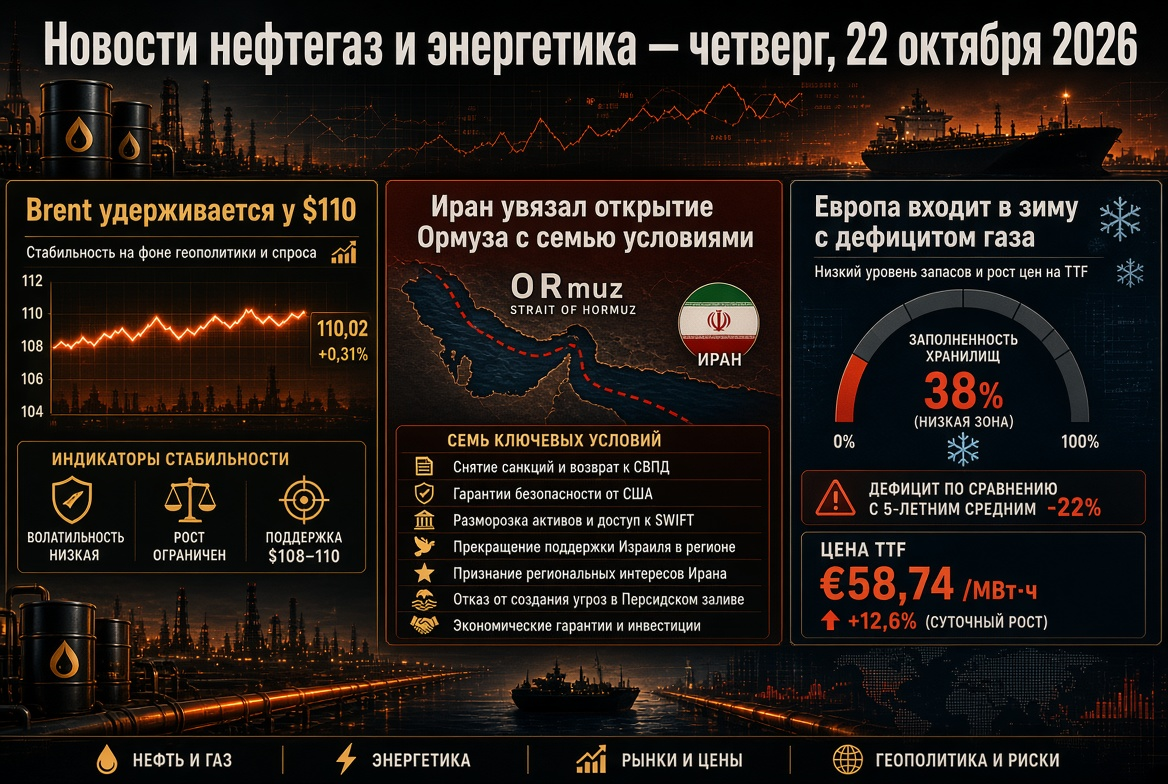
The gas market's focal point is Europe, which is facing a serious winter trial at the beginning of the year. By the start of the heating season, European countries boasted high reserves: underground gas storage (UGS) facilities were nearly 100% full by December 2025. However, the prolonged cold in January 2026 led to accelerated consumption of these reserves—by the end of the month, the total UGS fill level in the EU dropped below 50%. Such rapid gas withdrawals had not been seen in years, prompting the market to respond with price increases. Futures at the TTF hub soared to about ~€40/MWh (around $500 per thousand cubic meters), compared to around €30/MWh in December.
Despite the significant surge, current gas prices remain several times lower than the peaks of the 2022 crisis, when quotes exceeded €300/MWh. The European market is relatively resilient to demand shocks due to measures taken and external supply sources. During the height of the cold snap, substantial volumes of liquefied natural gas continued to flow in: LNG tankers are being redirected to Europe, compensating for the reduced withdrawals from storage. At the same time, gas demand has risen in other regions—North America and Asia—where abnormal cold is also evident. This has led to a global rally in gas prices: prices at Henry Hub in the U.S. reached their highest levels since 2022, while the Asian spot index JKM climbed to levels seen at the end of the previous year. However, thanks to established logistics and diversified supply sources, Europe is currently avoiding a gas deficit: even with decreasing reserves, supplies continue from multiple countries (Norway, North Africa, Qatar, the U.S., and others), mitigating the impact of the cessation of pipeline gas imports from Russia.
Experts note that after an extremely cold January, European storage facilities may finish the winter at significantly lower levels than a year ago. This will create a new challenge for their replenishment ahead of the next heating season, potentially supporting prices. At the same time, the launch of several new LNG projects worldwide in 2026–2027 is expected to increase supply and ease pressure on the market in the medium term. In the coming weeks, the situation in the gas market will depend on the weather: if February proves milder, price growth will likely slow, and the remaining reserves will suffice without issues. Thus, despite the current winter pressures, the European gas sector demonstrates resilience, navigating seasonal demand peaks without panic, albeit at slightly elevated prices.
International Politics: Sanction Pressure and Export Reorientation
Geopolitical factors continue to exert a significant impact on energy markets. At the beginning of 2026, the West remains unrelenting in its sanction efforts against the Russian oil and gas sector—on the contrary, new restrictive measures are being introduced. The European Union, in December 2025, approved a plan for a complete and permanent halt to imports of Russian energy resources: specifically, pipeline gas purchases from Russia must be reduced to zero by the end of 2026, and dependence on Russian LNG is also set to be phased out. Additionally, the EU has imposed a ban on importing products derived from Russian oil processed at foreign refineries—this measure aims to close loopholes through which Russian oil was indirectly entering the European market in the form of gasoline or diesel processed in third countries.
The United States, for its part, is hardening its rhetoric and is ready for new actions. The U.S. administration is considering additional sanctions against a number of countries and companies helping Moscow evade existing restrictions. Washington explicitly warns major purchasing countries (such as China and India) against increasing imports of Russian oil. Initiatives are being promoted in Congress to impose high tariffs on goods from countries that actively trade in energy resources with Russia. Although these proposals are still under discussion, the mere fact of increasing pressure raises uncertainty in global oil and gas trade.
In response, Russia continues to reorient its export flows toward friendly markets. Oil and LNG supplies to Asia remain at high levels: China, India, Turkey, and a number of other countries are the largest purchasers of Russian hydrocarbons, capitalizing on price discounts. Alternative currencies (yuan, rupee) and payment schemes that reduce dependence on the dollar and euro are increasingly used for settlements. Simultaneously, the Russian government has announced plans to develop its own tanker fleet and insurance mechanisms to minimize the impact of Western sanctions on oil export logistics. Also significant is the partial normalization of relations between Russia with Venezuela and Iran: these oil-producing countries are coordinating their positions in the market, aiming to jointly counteract U.S. sanction pressures.
Thus, the international arena remains characterized by confrontation affecting the energy sector. Sanctions and countermeasures are forming a new configuration of oil and gas flows: the share of exports to the West is decreasing, while the Asia-Pacific region is gaining ever-increasing significance. Investors are evaluating risks: on one hand, further escalation of sanctions could lead to disruptions and price fluctuations; on the other hand, any hints at dialogue or compromise (such as the extension of export deals through intermediaries or humanitarian exceptions) could improve market sentiment. For now, the basic scenario—continued tough Western policies and exporters' adaptation to new realities—is already embedded in prices and forecasts.
Asia: India and China Balancing Between Imports and Domestic Production
- India: New Delhi is striving to strengthen energy security and reduce dependence on hydrocarbon imports while carefully navigating external pressures. Since the onset of the Ukrainian crisis, India has sharply increased purchases of affordable Russian oil, which has enabled the provision of cheap raw materials to the domestic market. However, in 2025, facing the threat of Western sanctions and tariffs, the Indian government has somewhat reduced Russia's share in oil imports, increasing supplies from the Middle East and other regions. Concurrently, India is focusing on developing its own resources: back in August 2025, Prime Minister Narendra Modi announced the launch of a National Program for the Development of Deepwater Oil and Gas Fields. Under this initiative, the state company ONGC is already drilling ultra-deep wells offshore, aiming to uncover new reserves. At the same time, the country is rapidly developing renewable energy (solar and wind power plants) and LNG import infrastructure to diversify its energy balance. Nevertheless, oil and gas remain the foundation of the Indian fuel and energy balance, necessary for the functioning of industry and transportation. India is forced to delicately balance the benefits of importing cheap fuel against the risk of sanctions limitations from the West.
- China: The largest economy in Asia continues its drive for energy self-sufficiency, combining the increase of traditional resource production with record investments in clean energy. In 2025, China reached historical highs in internal production of oil and coal, striving to meet the rapidly growing demand and reduce import dependency. At the same time, the share of coal in electricity generation in China fell to a multi-year low (~55%), as enormous new capacities for solar, wind, and hydropower plants are being introduced. Analysts estimate that in the first half of 2025, China added more generating capacity based on renewables than the rest of the world combined. This has allowed for even a reduction in absolute fossil fuel consumption within the country. Nevertheless, in absolute numbers, China's appetite for energy resources remains colossal: in 2025, oil and gas imports remained one of the key sources of meeting needs, especially in the transport, industry, and chemical sectors. Beijing continues to actively enter long-term contracts for LNG supply and is also developing nuclear power, considering it an important element of its energy balance. It is expected that in the new 15th Five-Year Development Plan (2026–2030), China will set even more ambitious goals for increasing the share of non-carbon energy. At the same time, authorities clearly intend to maintain sufficient reserve capacities at traditional thermal power plants—Chinese leadership will not allow energy shortages, bearing in mind the experience of rolling blackouts in the past decade. As a result, China is moving along two parallel paths: on one hand, it is rapidly implementing clean technologies of the future; on the other hand, it maintains a solid foundation of oil, gas, and coal, ensuring the resilience of its energy system today.
Energy Transition: Growth of "Green" Energy and Balance with Traditional Generation
The global shift towards clean energy continues to accelerate, confirming its irreversibility. In 2025, new records for electricity generation from renewable sources (RES) were achieved worldwide. Preliminary estimates by industry analysts suggest that total production from solar and wind surpassed the power generation of all coal-fired power plants combined for the first time. This historic milestone was made possible by the explosive growth of RES capacities: in 2025, global solar generation increased by approximately 30% compared to the previous year, while wind generation grew by nearly 10%. The new “green” kilowatt-hours managed to cover most of the increase in global electricity demand, allowing for a reduction in fossil fuel combustion in several regions.
However, the rapid development of renewable energy comes with challenges. The primary challenge is ensuring the reliability of energy systems with variable sources. In periods when demand growth exceeds the addition of "green" capacities or when weather reduces generation (calm periods, droughts, extreme cold), countries are forced to resort to traditional generation to balance the grid. For example, in 2025, an economic revival in the U.S. led to a temporary increase in electricity generation at coal-fired plants, as existing RES proved insufficient to cover all additional demand. In Europe, weak winds and reduced hydropower resources in the summer and autumn of 2025 necessitated a brief increase in natural gas and coal combustion to maintain energy supplies. By winter 2026, severe cold spells across North America and Eurasia resulted in a spike in electricity consumption for heating—traditional gas and coal plants urgently ramped up generation to compensate for reduced RES output. These instances underscore that while the share of solar and wind is inconsistent, coal, gas, and, in some instances, nuclear capacities act as a safety net, covering peak loads and preventing outages.
Energy companies and governments worldwide are actively investing in solutions aimed at smoothing the variability of "green" generation. Industrial energy storage systems (powerful batteries, pumped storage stations) are being constructed; electrical networks are being modernized, and intelligent demand management systems are being implemented. All this enhances the flexibility and resilience of energy systems. Nevertheless, in the coming years, the global energy balance will remain hybrid. The rapid growth of RES goes hand in hand with retaining a significant role for oil, gas, coal, and nuclear energy, which ensure basic stability. Experts predict that it will only be by the end of this decade that the share of fossil resources in generation will begin to confidently decline as substantial new RES capacities come online and climate initiatives are realized. For now, traditional and renewable sources are working in tandem, simultaneously ensuring both decarbonization progress and uninterrupted energy supply for the economy.
Coal: Resilient Demand Despite Climate Goals
The global coal market demonstrates how inert energy resource consumption can be. Despite active decarbonization efforts, coal usage on the planet remains at record high levels. Preliminary data indicates that in 2025, global coal demand rose by approximately 0.5% and reached about 8.85 billion tons—a historical peak. The primary growth occurred in Asian countries. In China, which consumes more than half of the world's coal, electricity generation from coal-fired plants reduced in relative terms due to the record introduction of RES; however, it remains colossal in absolute volumes. Moreover, fearing energy deficits, Beijing approved the construction of several new coal-fired power plants in 2025, striving to create a reserve of capacities. India and Southeast Asian countries also continue to actively burn coal to meet growing energy demands, given that in many of them alternative generation is not keeping pace with economic growth.
After sharp price spikes in 2022, the coal market transitioned to relative stability in 2025. Energy coal prices at major Asian hubs (e.g., Australian Newcastle) remained significantly below the crisis peak levels, yet still somewhat above pre-crisis levels. This pricing environment encourages major producing countries to maintain high production and export volumes of coal. Indonesia, Australia, Russia, and South Africa—these leading exporters have increased supply in recent years, helping to meet high demand and prevent market shortages. International experts believe global coal consumption will plateau by the end of this decade, and then begin to decline—as climate policies strengthen and coal generation is replaced by renewables. However, in the short term, coal remains a key part of the energy balance for many countries. It provides baseload electricity generation and heat for industry, and thus until a true replacement emerges, coal-fired power plants will continue to play an indispensable role in maintaining the economy.
The Russian Oil Products Market: Continued Measures to Stabilize Prices
By the beginning of 2026, a relative stabilization has emerged in the Russian internal fuel sector, achieved through unprecedented government measures. In August-September 2025, wholesale prices for gasoline and diesel in the country reached historic highs, exceeding levels from the crisis year of 2023. The reasons include a combination of high summer demand (peak transportation and harvesting season) and fuel supply compression—factors cited include unscheduled repairs and accidents at several major oil refineries (oil processing plants), including as a result of drone attacks, which curtailed gasoline production. Facing threats of shortages and price shocks for consumers, authorities swiftly intervened in market mechanisms, launching an emergency plan to normalize the situation:
- Export Ban: In mid-August 2025, the Russian government imposed a full export ban on automotive gasoline and diesel fuel, applying it to all producers—from independent mini-refineries to the largest oil companies. This measure, extended several times (most recently until the end of February 2026), returned hundreds of thousands of tons of fuel to the domestic market that had previously been sent abroad monthly.
- Partial Resumption of Supplies: Starting in October 2025, as the domestic market saturated, strict restrictions began to be gradually eased. Major oil refineries were allowed to resume some export deliveries under strict government control, while for small traders and intermediaries, export barriers largely remained. Thus, the export channel was opened in a measured way to prevent new price spikes domestically. In fact, even at the beginning of 2026, the export of oil products from Russia remains partially limited—the authorities are deliberately holding back fuel volumes in the domestic market to ensure its saturation.
- Fuel Distribution Control: One of the steps has been to tighten control over the movement of oil products within the country. Producers were required to first address domestic market needs and prohibited from engaging in mutual exchange purchases between companies (previously, such transactions contributed to rising exchange prices). The government, in collaboration with relevant agencies (Ministry of Energy, Federal Antimonopoly Service), developed mechanisms for direct contracts between refineries and fuel stations, bypassing exchange intermediaries. This aims to ensure a more direct and fair path for fuel to retail fuel stations and avoid speculative price increases.
- Subsidies and “Damping” Mechanism: Financial instruments have been employed to curb prices. The state has increased budgetary subsidies for oil refining enterprises and expanded the use of the damping mechanism (reverse excise tax), which compensates companies for lost income when redirecting products to the domestic market instead of exporting. These payments encourage oil companies to send sufficient volumes of gasoline and diesel to Russian fuel stations, without fearing significant losses due to missed export revenue.
The complex of measures enacted has already yielded tangible results by the beginning of 2026. Wholesale fuel prices have retreated from their peak values, and retail price growth at fuel stations has been moderate—throughout 2025, gasoline and diesel prices rose on average by 5-6%, which is roughly in line with overall inflation. The domestic fuel deficit has been avoided: fuel stations across the country, including remote rural areas during peak autumn fieldwork, have been sufficiently supplied with fuel. The Russian government asserts that it will continue to maintain tight control over the situation. At the first signs of a new imbalance, new export restrictions may be promptly imposed, or fuel interventions from state reserves may be conducted. For energy sector market participants, such policies signify a relative predictability of domestic prices, although oil product exporters must contend with partial restrictions. Overall, the stabilization of the domestic fuel market enhances confidence that even amid external challenges—sanctions and volatility in global prices—domestic gasoline and diesel prices can be kept within acceptable bounds, protecting the interests of consumers and the economy.