Global Energy News as of February 10, 2026: Oil and Gas Price Dynamics, OPEC+ Decisions, LNG Market, Oil Products and Refineries, Electricity, Renewable Energy, and Coal. Summary and Analysis for Investors and Market Participants.
The global energy sector at the beginning of 2026 is showing relative stability despite conflicting factors. Oil prices are holding at moderate levels, and the market balances between projected excess supply and persisting geopolitical risks. Europe is experiencing volatility in the gas market due to low reserves and weather factors, while the energy transition is gaining momentum: renewable energy sources (RES) are breaking records in implementation, and coal has reached peak demand. Below are the key news and trends in the oil and gas sector and energy for the current day.
Global Oil Market: Surplus and Price Stability
The oil market entered 2026 with signs of excess supply. According to the IEA, a significant oil surplus is expected in the first quarter – up to 4 million barrels per day (about 4% of global demand). This is due to the fact that total oil production is growing faster than demand: OPEC+ countries were increasing supplies back in 2025, along with rising exports from the USA, Brazil, Guyana, and other producers. As a result, global stocks may begin to rise, putting downward pressure on prices.
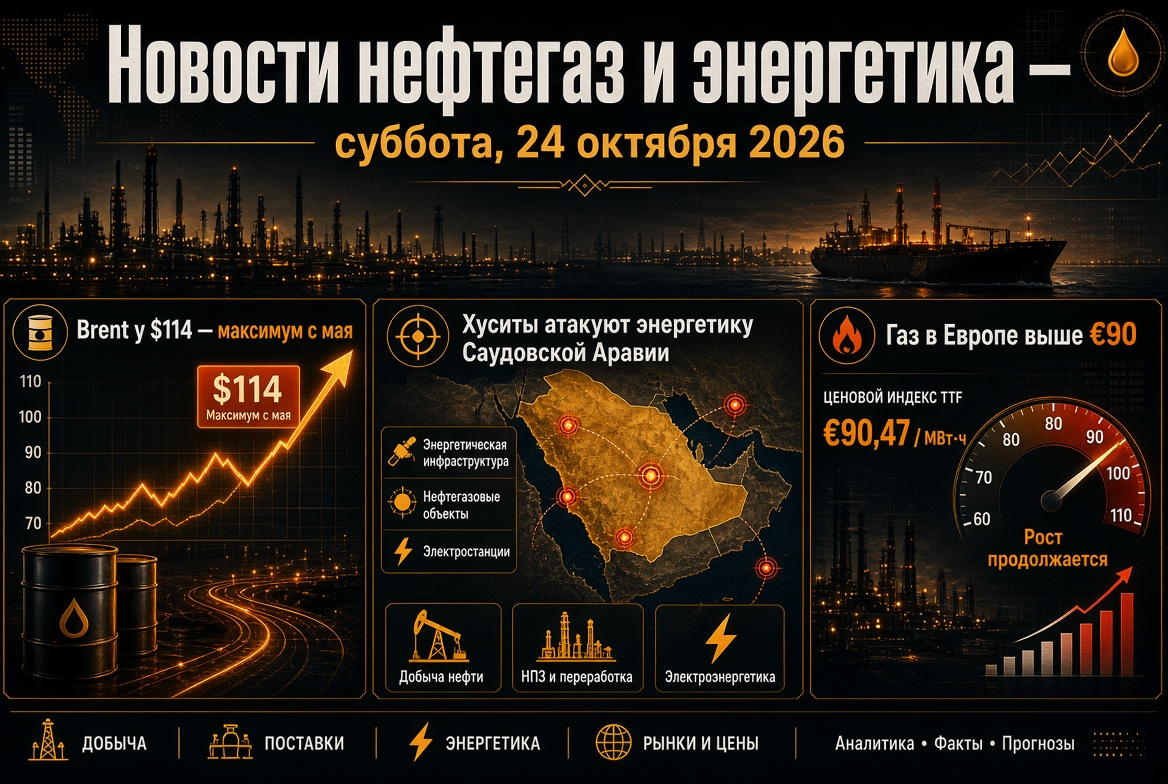
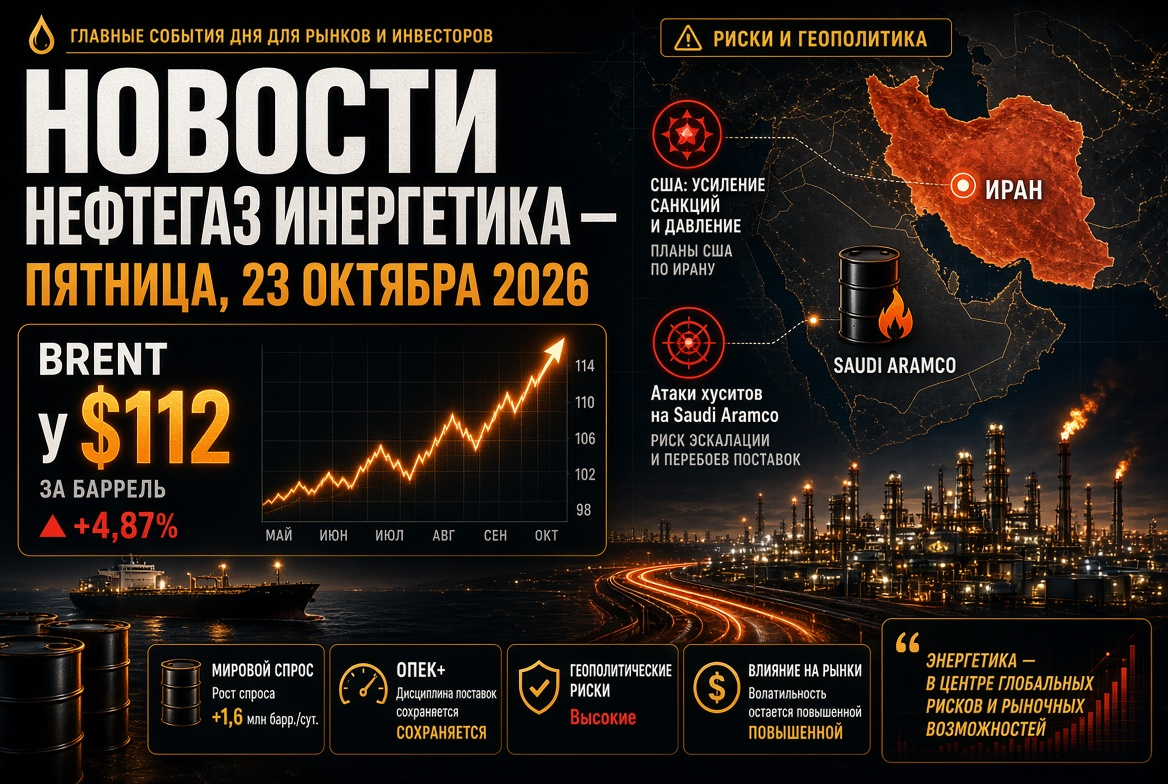
However, oil prices remain relatively stable for now. Since the beginning of the year, Brent quotes have increased by approximately 5-6%, partly due to geopolitical concerns. Brent is trading around $60-65 per barrel, while WTI is around $55-60 per barrel, close to the levels at the end of 2025. Several risk factors are preventing the market from declining: in early January, the USA detained Venezuelan President Nicolás Maduro, urging oil companies to invest in production in the country. This has temporarily led to supply disruptions of Venezuelan oil. Additionally, Washington hinted at the possibility of strikes on Iran's oil infrastructure, and production in Kazakhstan has decreased due to technical issues and drone attacks on fields. These events have created a geopolitical premium in oil prices and maintained investor interest.
To maintain balance, OPEC+ is adhering to a cautious strategy. The cartel and its allies, including Russia, decided after a series of production increases to take a pause: a decision has been made to keep quotas unchanged at least until the end of March 2026. Major exporters are striving to prevent market oversaturation: in their opinion, the fundamental market indicators are "healthy," commercial oil stocks remain relatively low, and the goal is to maintain price stability. If necessary, OPEC+ retains the right to promptly adjust production – either upwards (returning previously cut volumes of 1.65 million barrels per day) or to new cuts, should market conditions demand it. Meanwhile, demand for oil continues to grow moderately: the global demand forecast for 2026 has been improved to ~0.9-1.0 million barrels per day increase due to economic normalization and lower prices than a year ago. Overall, the oil market is entering the year with a fragile balance: the anticipated surplus is mitigated by OPEC+ efforts and the threat of supply disruptions, keeping oil within a relatively narrow price corridor.
Natural Gas Market: Low Reserves and High Volatility
The global gas market at the beginning of 2026 is experiencing significant fluctuations, particularly in Europe. After a calm autumn, when prices remained within a narrow range (€28-30 per MWh at the TTF hub), volatility returned in January. In the first weeks of the new year, gas prices in the EU sharply increased – peaking on January 16, quotes exceeded €37 per MWh. This was caused by a combination of factors: forecasts of cold weather and impending strong frosts at the end of January increased demand, while the level of gas reserves turned out to be significantly lower than usual. By mid-January, European underground gas storage was down to about 50% of capacity (compared to ~62% a year earlier and a five-year average of 67% for the same date). This represents the lowest filling level in recent years (following the crisis winter of 2021/22), and market participants realized that without active imports, Europe faces significant depletion of reserves.
Additionally, gas prices were influenced by supply disruptions of liquefied natural gas (LNG) from the USA at the beginning of the year, caused by technical and weather factors, as well as geopolitical risks – heightened tensions around Iran. Simultaneously, demand for LNG in Asia increased due to the cold weather, intensifying competition for spot fuel shipments. Collectively, these factors prompted traders to close short positions, driving up prices. However, by the end of January, the situation somewhat stabilized: after the first cold wave passed, the price retreated to around €35 per MWh. Analysts note that volatility has returned to the EU gas market, though panic peaks as seen in 2022 have not yet re-emerged.
- Low reserves: As of the end of January, EU storage facilities are filled at only about 45% (the lowest level for this time of year since 2022). If withdrawals continue at the current rate, reserves could drop to 30% or lower by the end of winter. This means an urgent need to inject approximately 60 billion cubic meters of gas during the summer period to achieve a filling level of 90% by November 1 (the new EU energy security target).
- LNG Imports: The main resource for replenishment will be imported liquefied gas supplies. Over the past year, Europe has increased LNG purchases by approximately 30%, reaching record levels of ~175 billion cubic meters. In 2026, this figure is expected to continue growing: the IEA anticipates global LNG production to grow by around 7%, reaching new historical highs. New export terminals are coming online in North America (USA, Canada, Mexico), and by 2025-2030, a total of up to 300 billion cubic meters of new capacity is planned to be introduced (about +50% to the current market volume). This will help partially compensate for the loss of Russian volumes.
- Abandonment of Russian Gas: The EU officially plans to completely cease imports of Russian pipeline gas and LNG by 2027. Even now, the share of Russia in European imports has declined to ~13% (down from 40-45% before 2022). In 2025-2026, the embargo will be tightened, which will further reduce gas supplies in Europe by tens of billions of cubic meters. This deficit is expected to be covered by LNG from the USA, Qatar, Africa, and other sources. However, analysts warn that this dependence on transatlantic supplies carries risks: according to IEEFA research, the USA accounted for 57% of LNG supplies to the EU in 2025, and this share may rise to 75-80% by 2030, contradicting diversification goals.
- Price Anomalies: Interestingly, the futures price structure for gas in Europe is currently demonstrating the reverse situation – summer contracts for 2026 are trading higher than winter contracts for 2026/27. This backwardation contradicts normal logic (when winter gas should be more expensive than summer) and may hinder storage operators from economically justifying injections. Possible explanations include the market pricing in expectations of stable year-round LNG supplies or anticipating government intervention (subsidies, storage filling mandates). However, experts warn that if price signals do not normalize and reservoirs are not filled with adequate volumes, Europe risks entering the next winter without the required buffer, which would be fraught with new price spikes.
Overall, the natural gas market remains well-resourced but highly sensitive to weather and politics. A massive effort will be required to replenish stocks in the summer, and much will depend on the dynamics of global LNG trade and the coordination of measures at the EU level. For now, the current softness in prices (compared to the crisis year of 2022) reflects a certain calm among traders – but this calm may prove deceptive if winter extends or new supply disruptions arise.
Oil Products and Oil Refining (Refineries)
The oil products segment is experiencing mixed trends at the start of the year. On the one hand, global demand for oil products, especially aviation fuel and diesel, remains high due to economic recovery and increased transportation activity. On the other hand, supply is increasing due to rising refining activity in Asia and the Middle East, although this is influenced by sanctions and incidents. In the first months of the year, global oil refineries traditionally enter the maintenance season: many refineries undergo planned repairs. As a result, total refining in Q1 declines, temporarily reducing demand for oil and contributing to an increase in the raw material surplus. The IEA notes that the upcoming mass maintenance of refineries enhances oil excess in the market – without additional production cuts, it will be difficult to avoid stock accumulation during this period.
At the same time, refining margins remain quite good overall. At the end of 2025, global refining capacities were operating at high utilization rates: for example, oil refining in China reached a record of ~14.8 million barrels per day (on average for 2025, +600,000 barrels compared to 2024). This is linked to the commissioning of new plants and China's desire to increase oil product exports. South Korea also achieved a record diesel export level in 2025 – Asian producers are filling the gap created after the redistribution of flows from Russia. Strong demand for diesel fuel (especially in transportation and industrial sectors) supports high prices for distillates and profitability for refineries focusing on diesel output. In contrast, there is some weakening in the gasoline market: excess capacity and a slowdown in traffic growth have led to gasoline margins in Asia and Europe dropping to their lowest levels in the past year. However, the situation may change with the upcoming summer driving season.
Russian Oil Products and Sanctions: It is worth noting the changed flows of Russian oil products onto the global market under the influence of sanctions pressure. In late 2025, the USA imposed additional sanctions against the largest Russian oil companies, including Rosneft and Lukoil, complicating trade in their processed products. According to industry sources, at the beginning of 2026, the export of Russian fuel oil to Asia slowed down: heightened compliance monitoring and fear of secondary sanctions led many buyers to avoid direct deals. The volume of fuel oil supplies to Asian countries in January fell for the third consecutive month and was about half that of a year ago (approximately 1.2 million tons compared to 2.5 million tons in January 2025). Some cargoes are being redirected to storage and floating storage in anticipation of resale, while some tankers are taking longer routes around Africa, avoiding disclosing their final destination. Traders note that the sales scheme for Russian products has become complicated – often multi-step chains are used with reloading in neutral waters to obscure the origin of the fuel.
In addition to sanctions, military measures have also contributed to reducing exports of products from Russia: Ukrainian drone strikes on border oil refineries in Russia in the autumn of 2025 damaged several installations, reducing output. As a result, the supply of Russian fuel oils and other heavy oil products in the Asian market has slightly decreased at the beginning of 2026, which has even provided some support to regional prices for these types of fuel. Nevertheless, the key markets for Moscow remain Southeast Asian countries, China, and the Middle East – these are still the main volumes that flow there, while Western sanctions prevent a return to traditional markets.
Overall, the global market for oil products is gradually adjusting to a new geography. A significant portion of the growth in refinery capacities in the coming years is expected to occur in the Asia-Pacific region, the Middle East, and Africa – around 80-90% of new refineries are coming online there. This intensifies competition in the fuel market. Conversely, in Europe, some facilities have reduced operational performance due to high energy prices and the cessation of supplies of cheap Russian resources. The EU completely banned the import of Russian oil products as early as early 2023, and over the past two years, European refineries have shifted to other grades of oil, albeit at the cost of increased expenses. By the end of winter 2026, prices for key oil products are at relatively stable levels: diesel fuel is trading at consistently high rates due to limited global stocks, while prices for gasoline and fuel oil are showing moderate dynamics. The upcoming return of refineries from maintenance in spring could increase product supply, but much will depend on the demand season and the global economy.
Coal: Record Demand and Signs of Decline
Despite the active growth of renewable energy sources, coal still plays a significant role in the global energy landscape. According to the International Energy Agency, global coal demand reached a record high in 2025 – approximately 8.85 billion tons per year (equivalent to ~+0.5% versus 2024). Consequently, coal consumption has broken records for the second consecutive year, largely due to economic recovery following the pandemic and increased demand for electricity. However, experts note that this peak may become a "plateau": it is expected that global coal consumption will begin to slowly but steadily decline by the end of the decade.
Trends vary by region. In China – the largest consumer of coal (accounting for over half of global volume), coal usage in 2025 was consistently high, and only a slight decline is projected by 2030 due to extensive deployment of RES and nuclear plants. India, the second-largest market, unexpectedly reduced coal burning in 2025 – for only the third time in 50 years. This was aided by extremely strong monsoons: heavy rainfall filled reservoirs and record hydroelectric generation decreased the need for coal-generated electricity, and slowing industrial growth also played a role. At the same time, the USA increased coal consumption in 2025 – the rise was attributed to high natural gas prices, making coal generation more economically viable in certain regions. Additionally, the political factor played a role: President Donald Trump, who took office in early 2025, signed an order supporting coal-fired power plants, preventing their closure and stimulating production. This measure temporarily revived the coal industry in the USA, although long-term competitiveness of coal there is declining.
In Europe, however, coal usage continued to decline in 2025 as EU countries strive to meet climate goals and replace coal with gas and RES. The share of coal in electricity generation in the EU fell below 15%, and this trend accelerated after 2022, when Europe drastically reduced imports of Russian coal (from 50% to 0% of consumption). Overall, the IEA believes that global coal consumption will plateau in the coming years and then decline: renewable sources, natural gas, and nuclear energy are gradually displacing coal from the energy sector, especially in electricity generation. As early as 2025, global generation from RES equaled the volume of coal generation for the first time. Nevertheless, the transition will be gradual. Experts warn that if electricity demand grows more quickly or if delays occur in the deployment of clean capacities, demand for coal may temporarily exceed forecasts. Much will depend on China, which consumes 30% more coal than the entire rest of the world combined; any fluctuations in the Chinese economy instantly reflect on the coal market.
For now, the coal mining sector is performing reasonably well: prices for coal remain at sufficiently high levels due to demand in Asia. However, mining companies and energy producers are already preparing for the inevitable transformation. Investments are increasingly directed not toward new mines, but toward retrofitting enterprises, carbon capture technologies, and social programs for coal-dependent regions. In the long run, phasing out coal is viewed as one of the key steps towards achieving climate goals aimed at limiting global warming.
Electricity and Renewable Sources: Green Leap
The electricity sector is entering a new era of accelerated development of renewable technologies. According to the IEA's "Electricity 2026" report, we will see radical shifts in generation structure within this decade. By 2025, global electricity production from RES (primarily solar and wind farms) equaled that from coal-fired stations, and starting in 2026, clean sources begin to outpace coal. It is anticipated that by 2030, the combined share of renewable energy and nuclear power in global electricity production will reach 50%. Rapid growth is primarily driven by solar energy: new photovoltaic stations are being added annually, contributing over 600 TWh of generation each year. When combined with wind energy, the total growth in renewable generation is expected to reach around 1000 TWh per year (+8% annually compared to current volumes) by 2030.
At the same time, global electricity demand is also spiking sharply – averaging 3-4% per year from 2024 to 2030, which is 2.5 times faster than the growth of overall energy consumption. Reasons include the industrialization of developing countries, mass adoption of electric transportation (electric vehicles, electric public transport), and digitization (data centers, increased use of air conditioning and electronics). Thus, even with rapid growth of RES, fossil generation cannot be completely displaced instantly: to balance energy systems, the production of electricity from gas plants is increasing. Natural gas is seen as a "transitional fuel," and gas generation will grow until 2030, albeit at a slower pace than renewables.
Infrastructure and Reliability: Such high dynamics present challenges for infrastructure. Existing electric grids and energy storage systems require significant investments to integrate intermittent sources like solar and wind. The IEA emphasizes that to meet growing demand and ensure reliability, annual investment in electrical networks must increase by 50% by 2030 (compared to levels seen in the previous decade). There is also a need for breakthroughs in accumulation technologies and load management to smooth peaks and fluctuations in RES generation.
Europe vs USA: Climate Policy and Wind: The global energy transition is uneven: disparities appear in the policies of different countries. In the European Union, the green agenda remains a priority – even in the wake of the energy crisis of 2022, the EU is accelerating the implementation of RES. By the end of 2025, electricity generation from wind and solar stations in the EU exceeds fossil fuel generation for the first time. European governments aim to further increase capacities: nine countries (including Germany, France, the UK, Denmark, the Netherlands, and others) have agreed on joint large-scale projects in the North Sea to reach 300 GW of installed capacity of offshore wind farms by 2050. Aiming to ensure at least 100 GW of offshore wind energy through cross-border projects by 2030. Such expansion of RES, it is hoped, will ensure stable, secure, and affordable energy supply, create jobs, and reduce dependency on fuel imports.
However, challenges have not been absent: rising interest rates and increasing material costs in 2024-2025 led to some tenders for wind farm construction (for example, in Germany and the UK) receiving no bids – investors demanded better project economics. European leaders acknowledge the problem and are ready to enhance support: additional guarantees, targeted subsidies, and contract-for-difference mechanisms are being discussed to make wind farm construction more attractive for businesses.
In contrast, in the USA, there has been a partial rollback of government support for clean energy. The new administration, which came into office in 2025, is skeptical about a number of green initiatives. President Trump has publicly criticized the European course on RES, labeling wind turbines as "unprofitable" and asserting (without evidence) that "the more wind turbines, the more money the country loses." Accordingly, American authorities are shifting focus to supporting traditional sources: in addition to supporting coal, offshore wind energy projects are now under close scrutiny. In December 2025, the U.S. Department of the Interior unexpectedly suspended several large offshore wind farm projects, citing new data regarding potential national security threats (such as interference with military radar). This decision included the nearly completed Vineyard Wind project off the Massachusetts coast. Major energy companies that are investors in wind farms (Avangrid/Iberdrola, Orsted, and others) have legal recourse against the moratorium. In January 2026, they secured initial victories: a federal judge blocked the administration's order, allowing construction of Vineyard Wind (which is already 95% complete) to resume. Legal proceedings continue, and the industry hopes that projects will not lose much time. Nevertheless, the uncertainty created by such steps could cool investor interest in U.S. RES, while Europe demonstrates resolve to move forward.
Other RES Directions: Renewable energy encompasses more than just wind and solar. In many countries, there is a revival of interest in building energy storage infrastructure (industrial batteries), developing hydropower, and geothermal installations. There is also renewed interest in nuclear power as a zero-carbon source. For example, private investors are supporting new small modular reactor projects. In Italy, the startup Newcleo raised €75 million in February for the development of innovative compact reactors operating on recycled nuclear fuel. The company has already secured €645 million since 2021 and plans to accelerate its development: constructing a pilot reactor and entering the U.S. market – one of the most dynamic markets for advanced nuclear technologies. Such initiatives signal that the nuclear industry can play an important role in decarbonization alongside RES.
As a result of efforts towards the energy transition, noticeable effects on electricity prices are already emerging in several regions. For instance, in Europe, at the end of 2025, wholesale electricity prices fell compared to autumn – due to seasonal demand declines and high output from renewable sources (windy and warm weather). However, reliability issues persist: Ukraine's energy infrastructure is in a dire state due to ongoing bombardments, leading to power supply interruptions during winter. Globally, half of new generating capacity introduced worldwide now comes from solar and wind stations. This reassures stakeholders that although fossil fuel will remain in the balance for a long time, the energy transition is taking on an irreversible character.
Geopolitics and Sanctions: Hopes and Reality
Political factors continue to significantly influence the situation in energy markets. The sanction standoff between the West and major energy resource suppliers – Russia, Iran, and Venezuela – remains in force, although some market participants express hopes for a softening. Some positive signals have emerged: the detainment and ousting of Nicolás Maduro paves the way for potential normalization in the Venezuelan oil sector. Investors anticipate that with the political regime change in Caracas, the USA will gradually ease sanctions and allow a substantial return of Venezuelan oil to the market (the country's resources are among the largest in the world). This could potentially increase the supply of heavy oil and help stabilize prices for crude oil and oil products. However, in the short term, Maduro's ousting has led mainly to disruptions: Venezuela's exports decreased by about 0.5 million barrels per day in January, significantly affecting Asian refineries that consume its oil.
The situation around Iran remains tense. Rumors about possible U.S. or Israeli strikes on Iranian nuclear facilities are stirring the market: Iran is a key oil producer in OPEC, and any military actions could disrupt export terminals or scare away shipping companies. Although direct conflict has thus far been avoided, rhetoric has intensified, and traders are pricing in a certain premium in case of contingencies in the Strait of Hormuz.
Against this backdrop, the Russian-Ukrainian conflict has now entered its fourth year and continues to impact the energy sector. Europe has essentially ceased receiving energy resources from Russia, restructuring its logistics towards alternatives, while Russia has redirected oil and gas exports towards Asia. However, the Russian industry is facing new challenges: as mentioned, the expansion of U.S. sanctions at the end of 2025 complicated operations even with friendly buyers in Asia. Many prefer to wait for a softening of sanctions or request larger discounts due to the risks involved. Additionally, there have been more frequent drone attacks on infrastructure – besides strikes on refineries, attacks on oil depots and pipelines have been recorded. As a result, industry monitoring indicates that oil production in Russia began to decline slightly in December and January. While in 2025 Russia successfully restored production volumes (after the collapse of 2022-23), by early 2026, a decline has been noted for the second consecutive month. Analysts attribute this to both the exhaustion of easy rerouting options and the difficulties in maintaining fields under sanctions. Russian oil exports by sea remain at a consistently high level by volume, though they require increasingly longer routes and a larger fleet of "shadow" tankers, which are at risk of enhanced scrutiny.
Thus, geopolitical uncertainty remains a significant factor. Nevertheless, there exists a cautious optimism in the market: some experts believe that the sharpest phases of the energy standoff have already passed. Importing countries have adapted to new conditions, and exporters are seeking ways to bypass restrictions. At the same time, diplomatic efforts aimed at de-escalation have yet to yield tangible results. Investors continue to closely monitor news from Washington, Brussels, Moscow, and Beijing. Any signals regarding possible negotiations or easing of sanctions could significantly affect market sentiments. Until then, politics will continue to introduce an element of volatility: whether due to new sanctions packages, unexpected agreements, or flare-ups of conflicts – energy markets respond instantly to these events with price fluctuations and other shifts in raw material flows.
In conclusion, it can be said that hopes for a softening of the sanctions standoff in 2026 remain just that – hopes; key restrictions are still in place, and market participants are learning to operate amid geopolitical fragmentation. At the same time, the moderate stability of oil and gas prices achieved through OPEC+ efforts and market adaptation offers reason to believe that the industry will navigate the current period without shocks, provided no new large crises occur.
Investments and Corporate News in the Sector
Investors in the energy sector are focused on both the high profitability of traditional oil and gas companies and large investments in energy transition projects. Below are some key corporate sector and investment events:
- Record profits for oil and gas companies: The largest oil companies finished 2025 with high financial results. For example, ExxonMobil's net profit for 2025 was $28.8 billion. Saudi Arabia's Saudi Aramco consistently earns around $25-30 billion quarterly (in only Q3 2025 – $28 billion). These colossal revenues have enabled companies to continue large share buyback programs and dividend payments, as well as invest in new extraction projects. Oil and gas giants are investing in the development of fields – from the shale formations of the Permian Basin in the USA to deep-water projects off the coast of Brazil and gas in East Africa. At the same time, many are declaring investments in low-carbon directions (renewable energy, hydrogen, CO2 capture), although the share of such investments remains small compared to their primary business.
- Deals and projects in renewable energy: Globally, capital continues to flow into "green" projects. Governments are entering into large agreements with investors: for example, Egypt signed contracts worth $1.8 billion in January for renewable energy development. Plans include the construction of a 1.7 GW solar power plant with a 4 GWh storage system in Upper Egypt (a project by Scatec), as well as the establishment of a factory by Chinese firm Sungrow for industrial battery production in the Suez Economic Zone. Egypt aims to increase the share of renewable generation to 42% by 2030, and international partners are helping to reach this ambitious target. Such projects reflect high activity in emerging markets.
- New Technologies and Startups: Innovative energy companies are also attracting funding. Apart from the mentioned Italian nuclear startup Newcleo, there are developments in hydrogen and synthetic fuels. For example, the Chilean-American company HIF Global is promoting the construction of a green hydrogen and electro-fuel (methanol) production plant in Brazil at a cost of $4 billion. Recently, leadership announced that it has been able to optimize the project and significantly reduce capital costs – the construction is divided into phases, each costing less than $1 billion. The project in the Port of Açu (Brazil) aims to launch the first line by mid-2027, producing ~220,000 tonnes of "electromethanol" per year from hydrogen and captured CO2. Such initiatives attract the attention of automakers and airlines interested in new fuel sources.
- Mergers and Acquisitions: Consolidation processes are ongoing in the resource sector. In 2025, two major transactions in the oil industry changed the landscape: American ExxonMobil and Chevron announced the acquisition of shale companies Pioneer Natural Resources and Hess Corp, respectively, strengthening their positions in the USA. In early 2026, talks continued in related industries – for instance, a mega-merger of mining giants Rio Tinto and Glencore (valued at ~$200+ billion) was discussed, also aimed at merging coal assets; however, the parties ultimately abandoned merger plans. Major players are striving to increase scale and synergy, but antitrust risks and integration complexities may hinder such megadeals.
- Investment Climate: Overall, investments in the energy sector remain at high levels. According to BloombergNEF estimates, total global investments in the energy transition (RES, electricity grids, storage, electric vehicles, etc.) reached parity with investments in fossil fuel by 2025 for the first time. Banks and funds are reorienting their strategies toward sustainable financing, though oil and gas will continue to receive a significant share of capital for a long time. For investors, a key question now is finding a balance between the traditional profitability of oil and gas and promising "green" directions. Many are adopting a dual strategy: capitalizing on high oil/gas prices while simultaneously investing in future renewable markets to not miss out on the next growth wave.
Corporate news in the sector also includes the publication of financial reports for the past year, personnel appointments, and technological breakthroughs. Riding the wave of profits, some companies are announcing dividend increases and stock buybacks, which please shareholders. At the same time, oil and gas companies, under public pressure, are adopting new emission reduction targets and investing in climate initiatives, attempting to improve their image and positioning in a changing world. Thus, the energy business globally strives to demonstrate resilience and flexibility: to generate record profits today while laying the foundation for success in a low-carbon economy tomorrow.
Expectations and Forecasts
As the end of winter 2026 approaches, experts in the oil and gas sector are giving cautiously optimistic forecasts. The main scenario for the coming months is the maintenance of relative stability in hydrocarbon prices. Authorities and market participants have drawn lessons from the turmoil of the early 2020s, creating response mechanisms: from strategic reserves and OPEC+ agreements to energy efficiency programs. Price forecasts from specialized agencies suggest a possible slight decline in oil prices in the second half of 2026 if the anticipated surplus supply materializes as planned (the EIA expects Brent prices to decline gradually to $55 per barrel by year-end). However, any significant disruptions – for example, escalation of conflicts in the Middle East or hurricanes that incapacitate LNG facilities – could temporarily spike prices.
In the gas sector, much will depend on the course of the summer: a mild summer and high LNG output will ease the task of filling storage facilities, which could keep European gas prices in the average range of €25-30 per MWh. However, competitive struggles with Asia over new LNG volumes and uncertainty regarding weather (for instance, the risk of droughts affecting hydro generation or early cold spells) introduce additional uncertainty. Nevertheless, if reserves are close to targets by autumn, Europe will enter the next winter more confidently than in previous years.
The active development of renewable energy will continue. 2026 is likely to become another record year for the installation of solar and wind capacities, especially in China, the USA (despite political obstacles – thanks to initiatives by individual states), and the EU. The world may approach having one in every two new power stations be RES. This will gradually change market structures: the demand for natural gas in electricity generation may grow more slowly, and coal may decline faster than forecasts if RES construction outpaces plans. The market is particularly focused on the development of energy storage and hydrogen technologies – breakthroughs in these areas could accelerate the energy transition.
Politically, market participants will be keeping an eye on potential negotiations and elections. In 2026, presidential elections are expected in several supplier countries, which could influence their energy policies. Any steps toward peace agreements or easing some sanctions could radically reshape trade flows – for example, the return of Iranian oil to the market or an increase in Venezuelan exports would alter balances. Conversely, tightening sanctions or new conflicts (for instance, around Taiwan or in other regions) could introduce new risks for critical raw material supplies.
Overall, investors and analysts are inclined to believe that 2026 will be marked by adaptation and resilience. Energy markets are no longer as chaotic as they were during the peak of turmoil and demonstrate the ability for self-regulation. With prudent policies – both from governments and companies – the energy sector will continue to provide the global economy with the essential fuels and energy while gradually transforming internally under the influence of new technologies and evolving demands.