Latest News on Startups and Venture Investments as of April 3, 2026, with Analysis of AI Mega-Rounds, Infrastructure, and Global Market Trends
The key feature of the beginning of the second quarter of 2026 is that the startup market is formally expanding, although almost all momentum is concentrated in a limited number of verticals. The focus remains on:
- generative AI and foundational models;
- chips, computational infrastructure, and data centers;
- defense and dual-use startups;
- quantum technologies;
- enterprise AI and applied AI agents.
For venture funds, this means that the traditional early-stage market has not disappeared, but has become significantly more selective. Capital is flowing not to areas where growth is merely present, but to those with the potential to become an infrastructure standard, achieve monopoly margins, or integrate into the supply chains of major tech platforms.
AI Mega-Rounds Continue to Shape the Agenda
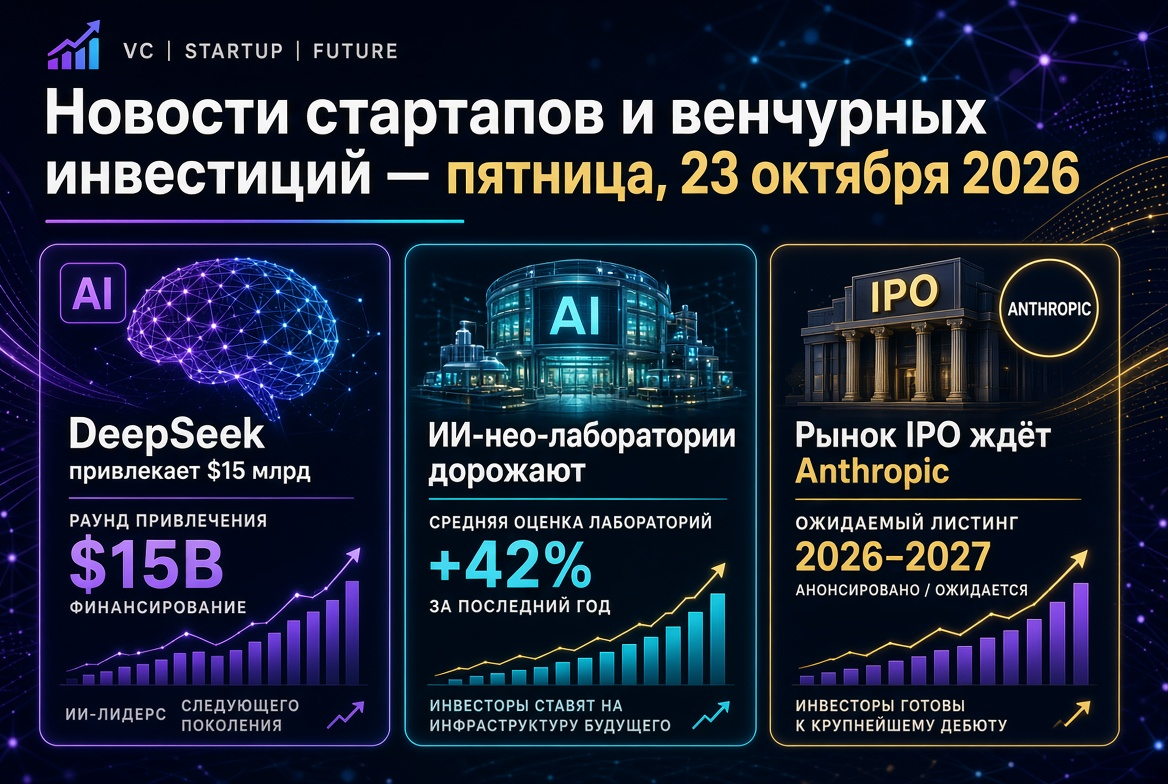
While discussions in 2024-2025 revolved around the sustainability of the AI boom, by April 2026, doubts have largely faded: artificial intelligence has become the central magnet for global venture capital. Notably, this discussion is not limited to software but encompasses the entire tech stack—from models and AI agents to chips, network architecture, and energy for computation.
A significant shift toward larger infrastructure checks is especially noteworthy. Venture investors are increasingly funding not just products, but entire technology layers that could become scarce assets within three to five years. This change is also altering the logic of startup valuations: today, premium valuations are awarded to companies capable of controlling computational power, GPU supply channels, proprietary models, or critically important application software for large corporate clients.
Chips and Computational Infrastructure Becoming Core Targets for Funds
The most notable recent deals confirm that the startup market is increasingly shifting toward a hardware-heavy model. South Korea's Rebellions recently secured a large pre-IPO round, highlighting the high interest in AI semiconductors and companies poised to become alternatives to dominant players in accelerators and bespoke solutions for AI workloads.
Concurrently, the focus remains on startups operating at the intersection of computing and physical infrastructure. This is why investors are paying close attention to projects offering new models for scaling data centers, energy supply, and placement of computational resources. Even the most ambitious ideas—including orbital AI infrastructure—are beginning to be seen less as pure exoticism and more as options for addressing future shortages in energy, land, and cooling.
This is an important signal for the venture investment market: the thesis that “AI will eat software” is gradually being supplemented by the thesis that “infrastructure will absorb a significant portion of venture returns.”
Enterprise AI Becoming More Pragmatic and Closer to Monetization
Another notable shift is that the market is increasingly funding not just fundamental AI teams, but also applied enterprise AI startups. Investors want to see solutions that can be quickly integrated into corporate processes: automation, orchestration of AI agents, data access management, security, and integration with existing IT architecture.
This sends an important signal to early-stage funds:
- Not just “AI for everything” projects are winning, but products with clear corporate ROI;
- Attention is shifting to teams that can quickly penetrate enterprise sales;
- Valuations are increasingly supported not by hype, but by speed to revenue.
The startup market is becoming more mature: even at early stages, investors want to see not only a strong technology but also a realistic pathway to contracts, retention, and margin expansion.
Defence Tech and Strategic Tech Establish as a New Investment Class
Defence technologies have ceased to be a niche for specialized funds. Significant interest in Shield AI demonstrates that defence tech has firmly entered the ranks of priority growth areas. This is especially relevant for venture investors because the segment combines several attractive characteristics:
- Long-term structural demand from governments;
- High barriers to entry for competitors;
- Strong synergies with AI, sensors, autonomous systems, and robotics;
- Scalability potential through dual-use models.
In practice, this means that the startup market is increasingly splitting into two categories: companies creating user-friendly applied software, and those building critical technological infrastructure for governments, corporations, and security systems. The latter category is now attracting longer-term and more stable capital.
Europe and China Strengthening Their Venture Growth Models
The European startup market has significantly strengthened its position in AI and deep tech. The continent is seeing an increasing share of capital flowing into artificial intelligence, quantum technologies, climate solutions, and technological sovereignty. This creates an interesting opportunity for global funds: Europe remains cheaper than the US in terms of valuations but is already producing companies capable of competing for global markets.
At the same time, China is accelerating its own cycle of venture investments, focusing on government-supported funds and strategic directions—AI, robotics, quantum technologies, and semiconductors. For international investors, this means increased competition not only for capital but also for talent, manufacturing capacities, and technological independence.
In other words, the venture market is becoming less dependent on a single Silicon Valley. Global capital still regards the US as a center of liquidity, but new centers of strength are already emerging in Europe and Asia.
The Exit Window Gradually Returns
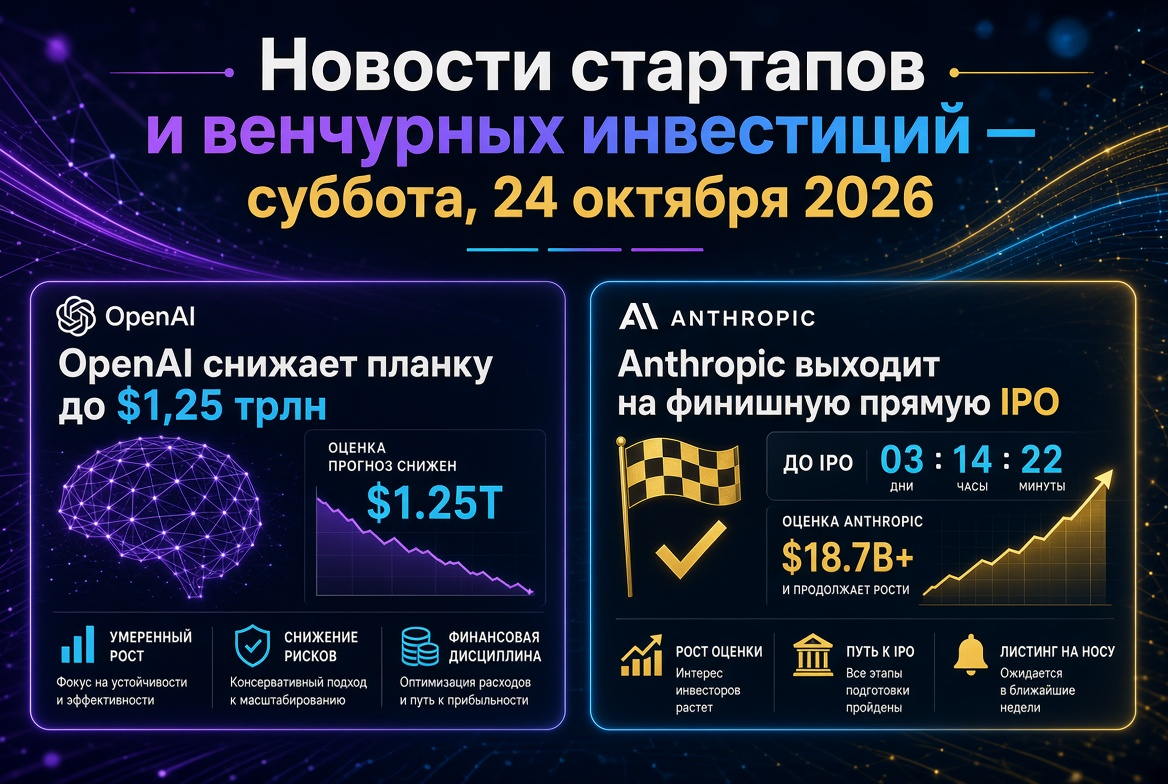
For funds, a crucial question is not only where to enter, but also where to exit. This is why the market is closely monitoring the revitalization of IPO discussions. Interest in large listings of tech companies is growing, supporting a general reevaluation of late-stage prospects. The more stable the exit window becomes, the more willing investors will be to support scale-up rounds and aggressive growth.
Against this backdrop, it is important not only to note the preparation for large placements but also the changing sentiment in the capital markets: investors are once again open to discussing significant growth stories, provided they are backed by strong infrastructure, category leadership, and a clear strategic moat.
What This Means for Venture Investors and Funds
As of April 3, 2026, the startup and venture investment market appears simultaneously hot and demanding. There is more money in the system, but access has become less uniform. Winning is no longer merely about having good teams; it is about companies meeting at least one of three criteria:
- Controlling a scarce technological resource;
- Operating in a strategically important sector;
- Being able to quickly translate technology into substantial revenue.
For funds, the most prudent strategy today appears to be:
- Maintaining a focus on AI, but avoiding overvalued generalized narratives without monetization;
- Seeking infrastructure and hardware-driven assets with long cycles of advantage;
- Not ignoring defence tech, quantum, and industrial AI;
- Monitoring regional valuation imbalances between the US, Europe, and China;
- Preparing for 2026 to be a year not only of funding rounds but also of exits.
The bottom line is clear: venture investments are accelerating once more, but this is no longer the broad risk appetite of past cycles. It is a market of high concentration, large stakes, and strategic selection. For investors who can discern between fads and infrastructural advantages, this current phase could be one of the most intriguing in recent years.