Startup and Venture Investment News for Monday, June 29, 2026: Growth of AI Infrastructure, Major Venture Rounds, IPO Window, China, India, Deeptech, and Key Signals for Investors
The global venture market enters the last week of June 2026 in a state of strong, yet increasingly uneven recovery. Startups related to artificial intelligence, computing infrastructure, robotics, space technologies, and semiconductors continue to attract the majority of capital. Investors are increasingly asking not whether there is growth, but rather how sustainable current valuations are and where the line between technological breakthrough and a new investment bubble lies.
For venture funds, family offices, and institutional investors, the key theme on Monday, June 29, 2026, is the concentration of capital in AI infrastructure and the growing demand for liquidity through IPOs. Following a record first quarter, large AI rounds, and a resurgence in public offerings, the market remains open for strong companies, but demands significantly more from unit economics, revenue quality, and the ability of startups to convert technological hype into sustainable profits.
Venture Market: Capital Has Returned, but Distribution is Highly Selective
The main trend of 2026 is the return of large capital to venture investments, but not in the previous broad format. While money was distributed across various sectors in prior cycles, a significant portion of financing is currently concentrated around a limited set of themes: artificial intelligence, AI infrastructure, robotics, defense technologies, space, chips, and enterprise software.
According to sector assessments, global venture funding reached record levels in the first quarter of 2026, with AI startups being the primary recipients of capital. This indicates that the venture market has formally recovered, but the recovery has been asymmetric: the strongest companies are securing mega-rounds, while startups lacking a clear technological advantage, revenue, or a strategic buyer face tougher negotiations.
- Growth funds are actively entering late stages if they see IPO or strategic sale potential.
- Seed and Series A investors are becoming more cautious in evaluating projects without proven monetization.
- Corporate investors are increasing interest in startups that can bridge technological gaps in AI, cybersecurity, and manufacturing.
AI Infrastructure Remains a Magnet for Venture Capital
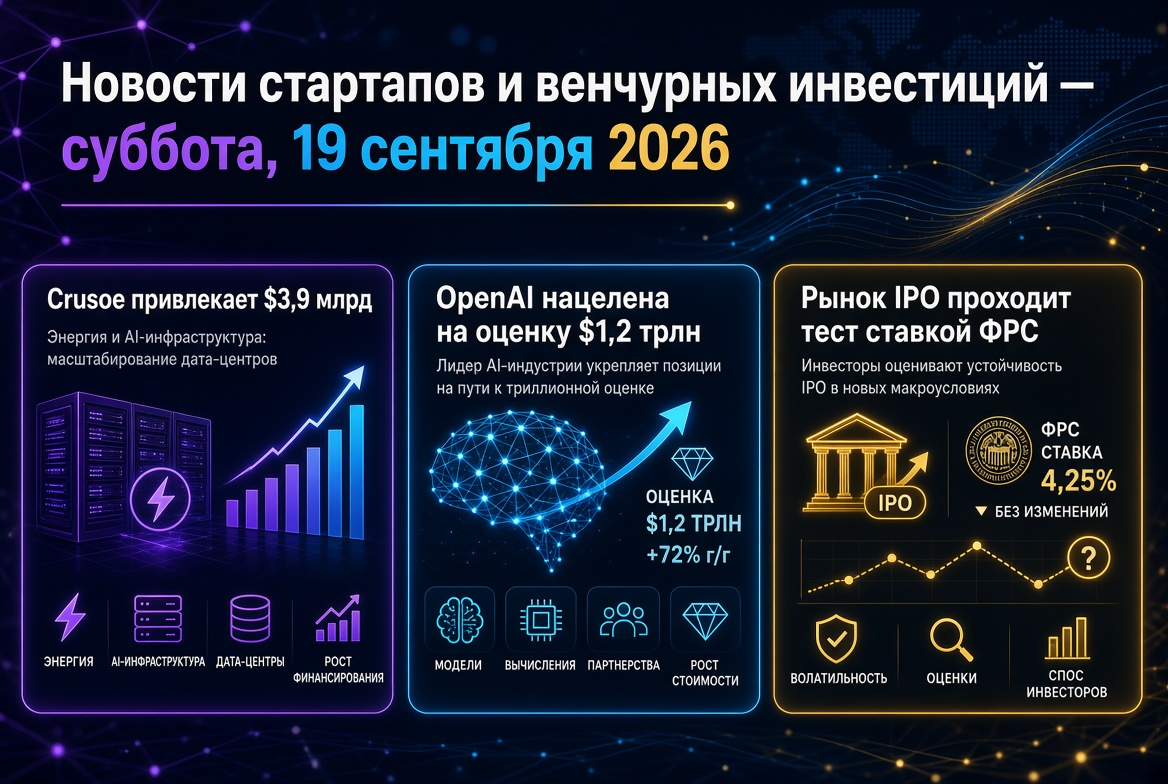
Artificial intelligence continues to be the main driver of venture investments, but the market focus is gradually shifting from generalist models to infrastructure. Investors are looking for companies that earn revenue from computing, inference optimization, data centers, networking infrastructure, data storage, tools for AI agents, and corporate security.
A notable event in June was the interest in Baseten—a company in the AI infrastructure inference segment. The startup is reportedly close to raising a large round with a valuation of up to $13 billion, highlighting the scale of demand for solutions that enable companies to launch AI products faster and cheaper. At the same time, this example showcases the risks of overheating: valuations of such companies are growing faster than the market can verify the sustainability of their revenues.
This creates a new dilemma for venture investors. On one hand, AI infrastructure is becoming synonymous with the "energy system" of the digital economy. On the other hand, intense competition for the best deals leads to complex round structures, varying entry prices for investors, and increased expectations for future growth.
New Unicorns: India, the USA, and Global Competition for AI Sovereignty
One of the important international signals is the rise of national AI champions. The Indian company Sarvam raised $234 million at a valuation of around $1.5 billion, making it a new AI unicorn. For the market, this isn't just another large round, but a confirmation of a broader trend: governments and large corporations are striving to control critically important AI technologies, language models, computing power, and local data.
Venture investments are increasingly intersecting with industrial policy. Startups in artificial intelligence, robotics, semiconductors, and space technologies enjoy advantages not only due to their products but also due to their strategic significance for national economies.
- India is strengthening its position in applied AI and local language models.
- The USA maintains leadership in frontier AI, infrastructure, and major private tech companies.
- China is accelerating support for AI, chips, robotics, and "industries of the future."
- Europe is betting on industrial AI, regulation, and deeptech.
Chinese Venture Market: "Industries of the Future" and Bubble Risk
China is becoming one of the most active regions of the venture market in June 2026. Support for startups in strategic sectors—space, quantum technologies, nuclear fusion, robotics, semiconductors, AI, and brain-computer interfaces—has led to a sharp increase in fund activity. Private equity and venture capital investments in China rose by nearly 60% in the first five months of the year, and new venture funds have already attracted more capital than in the entire previous year.
For global investors, this sends a mixed signal. On one hand, the Chinese market again offers scaling opportunities for investments in deeptech and industrial innovation. On the other hand, such rapid growth in valuations poses risks of overheating, particularly in companies without revenue, where the investment narrative is built on anticipated government contracts, technological promises, and expected IPOs.
The most interesting areas for funds remain:
- commercial space and satellite infrastructure;
- robotics and embodied AI;
- memory chips and specialized AI processors;
- quantum technologies and photonic computing;
- manufacturing startups for AI servers and data centers.
IPO Window: The Public Market is Again Important for Venture Exits
The resurgence of IPOs remains the second most significant factor after the AI boom. Venture funds have waited for years for liquidity to restore, and now the public market is once again a viable exit channel. The success of major tech and infrastructure IPOs provides a benchmark for private companies, but investors are no longer willing to buy into any growth without analyzing margins.
Lime, backed by Uber, is preparing for an IPO in the USA at a valuation of up to $1.66 billion. The company operates in 230 cities across 29 countries but remains an example of a challenging consumer startup: while there is scale and revenue, the business relies on seasonality, regulation, asset costs, and city permits. Therefore, Lime's offering will be an important test of demand for startups outside the AI sector.
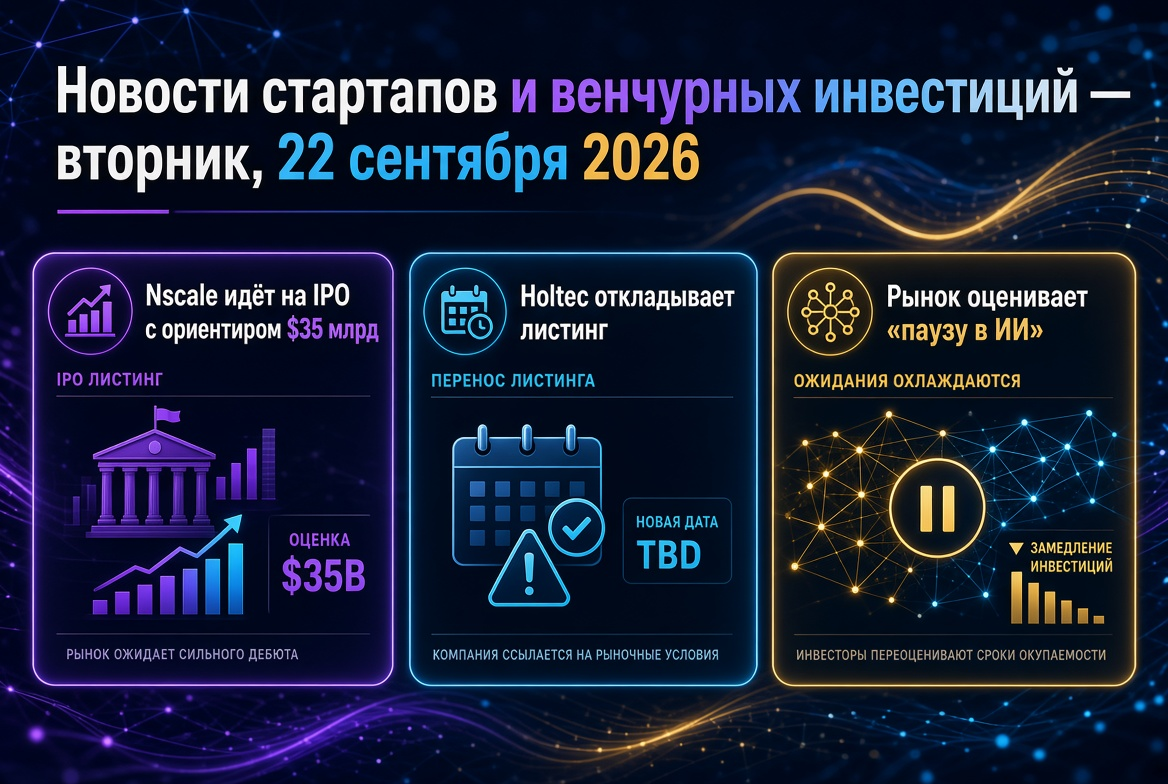
Particular attention is drawn to OpenAI: the company reportedly may postpone its public debut until next year. This is an important signal for the entire industry. Even the largest AI companies are trying to choose the right timing for going public carefully, in order to avoid entering a highly volatile window and to ensure their valuation isn't locked in before completing the next growth phase.
M&A and Strategic Investments: Corporations Buy Technologies, Not Just Revenue
Amid high valuations and liquidity shortages, M&A transactions are becoming an increasingly vital tool for the venture ecosystem. Major tech firms, industrial groups, and defense corporations are actively looking to startups as a way to quickly access technologies, talent, and intellectual property.
The most likely areas of consolidation in the second half of 2026 are:
- AI infrastructure—acquisition of companies that reduce computation and inference costs.
- Cybersecurity—deals surrounding the protection of AI agents, data, and corporate boundaries.
- Industrial AI—integration of startups into energy, manufacturing, logistics, and defense sectors.
- Fintech—consolidation of payment, credit, and B2B services.
- Space and robotics—acquisitions of teams with unique engineering capabilities.
Europe and Emerging Markets: Focus on Industrial AI and Local Champions
The European venture market is showing more moderate dynamics than the USA and China, but its structure is becoming qualitatively more interesting. There is greater emphasis on industrial AI, robotics, climate technologies, energy, cybersecurity, and enterprise software. For funds, this is a less speculative but potentially more sustainable model: startups are more frequently selling solutions to corporate clients and integrating into real production chains.
Emerging markets are also becoming more noticeable. India is strengthening its position in AI and fintech, Southeast Asia is attracting capital into digital commerce, B2B services, and customer communication automation, while the Middle East continues to leverage sovereign capital to create technology hubs. For venture investors, this represents an expansion of deal geography, but also necessitates a deeper analysis of currency risks, regulations, and the quality of local exits.
What is Important for Venture Investors and Funds on June 29, 2026
Monday, June 29, 2026, opens a week in which investors will evaluate not only news about new rounds but also the resilience of the entire venture architecture. The startup market is again active, but capital is concentrated in the hands of a limited number of companies and sectors. This raises the competition for the best assets while simultaneously increasing the risk of misvaluation.
For funds, the key markers remain:
- Quality of revenue—recurring revenue, long-term contracts, and proven monetization are more important than presentation growth.
- Cost of computation—for AI startups, it is critical to understand how margins change with scaling.
- Path to liquidity—IPOs and M&A are at work again, but the public market demands financial discipline.
- Regulatory resilience—especially in AI, fintech, robotics, defense technologies, and data.
- Geopolitical factor—investments in deeptech increasingly depend on national strategies and restrictions on cross-border capital.
The overall picture for the global startup ecosystem remains positive yet ambiguous. Venture investments are growing again, AI infrastructure is generating new mega-valuations, the IPO market is reviving, and emerging regions are receiving more attention. However, it is crucial for investors to maintain discipline at this juncture: in this new phase of the market, it will not be those who merely buy into the hype surrounding artificial intelligence that win, but those who can distinguish the infrastructure platforms of the future from overvalued companies dependent on short-term investment euphoria.