Global Startup and Venture Capital News for Wednesday, February 4, 2026: Major Funding Rounds, AI and Deeptech Deals, Venture Fund Activity, and Key Trends in the Global VC Market
The global startup and venture capital market continues to gain momentum at the start of 2026. After the downturn of recent years, private capital is once again actively flowing into technology companies around the world, record deals are being struck, and eagerly anticipated IPOs are back on the agenda. Major investors are stepping onto the scene with new massive funds, governments are ramping up support for innovation, and optimism is returning to the startup ecosystem. At the same time, competition is intensifying—both venture giants and new players are vying for the best projects, which is stimulating further market growth.
Venture activity is rising in all regions. The US retains its leadership position (particularly due to the boom in artificial intelligence investments), while in the Middle East, investment volumes have skyrocketed due to generous contributions from sovereign funds. In Europe, the number of deals is rising (for the first time, Germany has surpassed the UK in terms of venture investments), while in India and Southeast Asia, record funding rounds are taking place against the backdrop of a relative decline in activity in China. The startup ecosystems in Russia and neighboring countries are striving to keep pace with global trends by launching local funds and support programs, although the current market volumes there remain modest. Overall, 2026 is opening under the banner of a new venture boom, but investors are still carefully assessing the risks and potential of startups, focusing on business quality.
- The return of megafunds and major investors. Leading venture firms are raising record-sized funds and significantly increasing their investments, refilling the market with capital and rekindling risk appetite.
- Unprecedented AI megafunding rounds and a wave of new 'unicorns.' Exceptionally large investments in the artificial intelligence sector are driving startups' valuations to historic heights, leading to the emergence of numerous new 'unicorn' companies.
- The rejuvenation of the IPO market: a race for tech companies to go public. Successful public debuts of tech leaders and announced plans for IPOs confirm that the 'window of opportunity' for exits has reopened.
- Diversification of investments across sectors. Venture capital is actively being directed not only to AI but also to fintech, climate technologies, biotech, defense technologies, the crypto industry, and other promising fields.
- A wave of consolidation and M&A deals. Major mergers, acquisitions, and strategic investments are reshaping the industry landscape, creating new opportunities for exits and accelerated growth for startups.
- Local focus: Russia and the CIS. Despite external constraints, new funds and initiatives aimed at supporting local startups are emerging in the region, gradually attracting investors' attention to local projects.
The Return of Megafunds: Big Money Back in the Market
The largest investment players are triumphantly returning to the venture market, signaling a renewed appetite for risk. Global funds are announcing unprecedented capital-raising rounds: Japanese SoftBank has launched its third Vision Fund, about $40 billion in size, focused on advanced technologies while American firm Andreessen Horowitz (a16z) has raised over $15 billion for new funds focused on AI, defense, and other key areas, less than two years after its previous round. Others are not lagging: Lightspeed Venture Partners has closed funds totaling more than $9 billion—a record for the firm's 25-year history. Even Tiger Global, having recovered from recent setbacks, has returned to the market with a new fund of about $2.2 billion, once again affirming its ambitions.
Sovereign investors are also becoming active: state funds from the Middle East are pouring billions of dollars into technology projects and launching large-scale initiatives for developing startup ecosystems. For instance, in 2025, venture investments in the Gulf countries surged approximately 74%—Saudi Arabia, the UAE, and Qatar are establishing regional tech hubs, investing oil dollars into innovation. Simultaneously, new venture funds—both corporate and public-private—are cropping up globally focused on supporting promising startups.
The influx of such 'big capital' is filling the market with liquidity and intensifying competition for the most lucrative deals. For startups, this means wider access to funding, while for the industry as a whole, it indicates a return to trust: the presence of hundreds of billions of dollars in 'dry powder' demonstrates investors' faith in the continued growth of the tech sector.
Unprecedented AI Megafunding Rounds and New 'Unicorns'
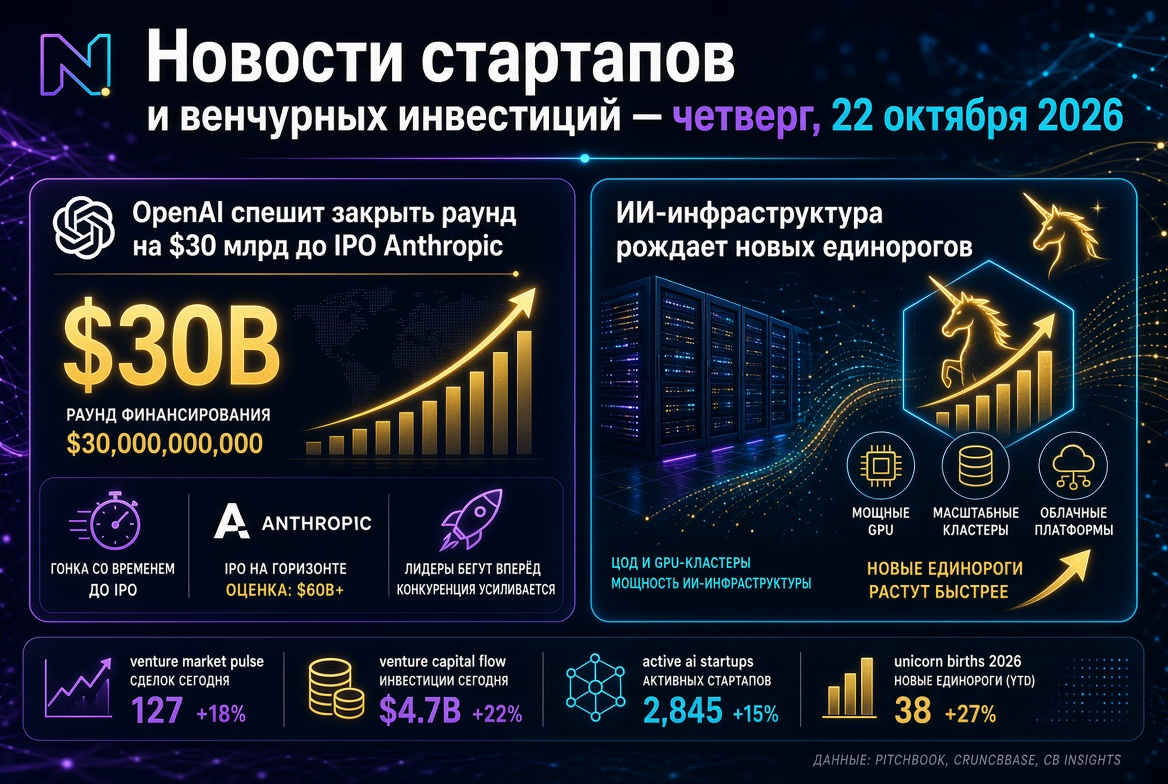
The artificial intelligence sector remains the main driver of the current venture boom, setting historical records in deal volumes. Investors are eager to place their bets in the forefront of the AI revolution and are willing to finance enormous rounds to support the leaders of the race. Already, in the first weeks of 2026, deals of unprecedented scale have been announced: OpenAI (the creator of ChatGPT) is negotiating a new funding round of up to $100 billion at a valuation of around $800 billion—such a private capital raise has never been seen before. It is expected that SoftBank may contribute a significant share (up to $30 billion) in this megafunding round, with the participation of corporations like Nvidia, Microsoft, and Amazon, as well as Middle Eastern funds like Abu Dhabi Investment Authority and MGX also being discussed.
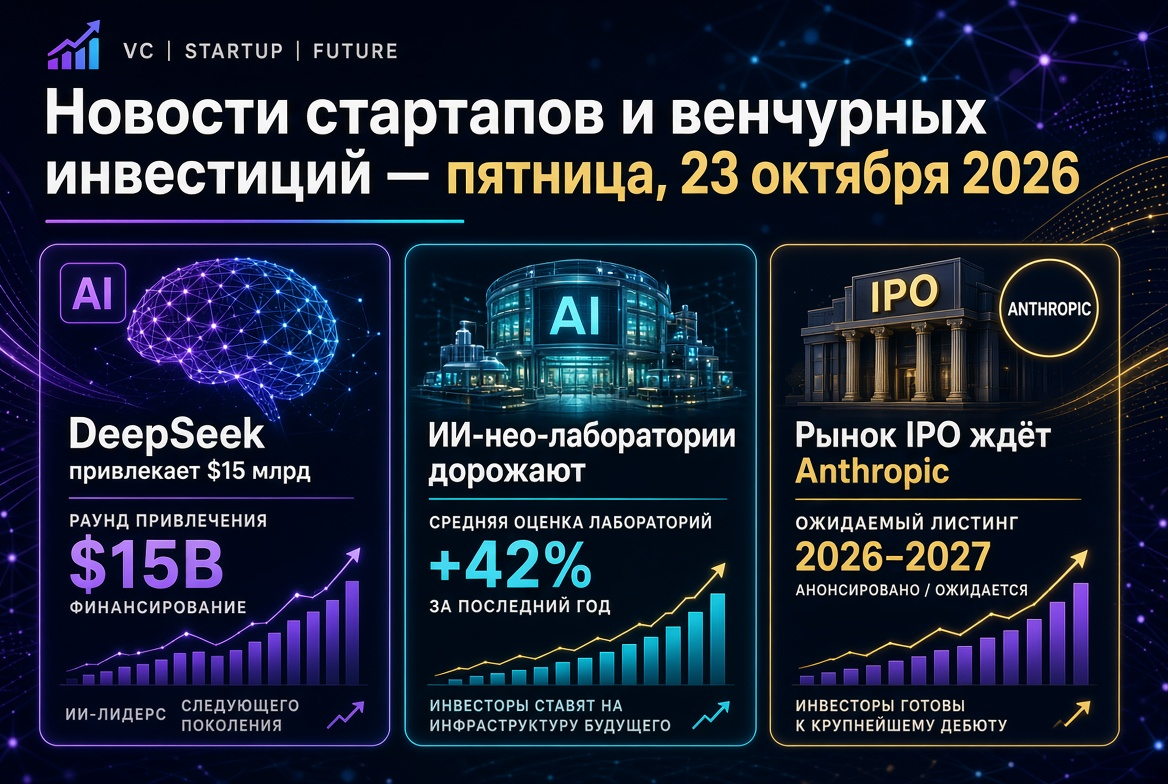
OpenAI's largest competitor, the startup Anthropic, is also attracting unprecedented funds: it's securing up to $15 billion at a valuation of around $350 billion, seeking to keep pace in the race. Thus, the two leading AI companies are essentially competing for the title of the most valuable startup in history, paving the way for a new wave of 'unicorns.' Riding on this wave of excitement, other ambitious projects are also finding investors, with precedents emerging where even at the seed stage, startups are raising hundreds of millions of dollars (for instance, in the USA, the lab Humans&, founded by ex-Big Tech employees, raised $480 million in seed funding—a record for an initial round).
These colossal investments are rapidly expanding the 'unicorn' club. Just in recent months, dozens of companies worldwide have surpassed the $1 billion valuation—especially numerous new unicorns are emerging in the fields of generative AI, cloud services, and defense technologies. While experts warn of overheating risks and inflated expectations, so far, the appetite for AI investments shows no signs of waning. Moreover, venture capitalists are increasingly financing not only applied AI products but also the infrastructure for them—from powerful chips and data centers to security and regulatory tools. Overall, this investment boom is stimulating progress in the industry but requires market participants to closely monitor business model sustainability to prevent enthusiasm from turning into a sharp overheating.
The IPO Market Awakens: A Race for Major Startups to Go Public
After a long lull in the global IPO market, movement is reemerging. Successful public debuts of tech companies at the end of 2025 demonstrated that the window of opportunity for going public has opened. In Asia, Hong Kong is setting the momentum, with several major startups raising billions through IPOs in recent months—investors in the region are once again willing to participate in placements. The situation in the US and Europe is also improving: American fintech 'unicorn' Chime successfully went public on Nasdaq in January 2026 (with a stock price increase of around 40% on the first day of trading), and shortly before that, the long-awaited IPO of payment service Stripe took place, restoring faith in public markets.
Now, even larger offerings are on the horizon. Elon Musk's space company SpaceX is officially planning an IPO in mid-2026, targeting to raise up to $50 billion at a valuation of around $1.5 trillion—if these plans materialize, SpaceX's listing will become the largest in history, nearly double the record set by Saudi Aramco ($29 billion in 2019). Furthermore, the leaders in the AI race are eager to seize the current window: it has been revealed that OpenAI and Anthropic are seriously preparing to go public by the end of 2026, with OpenAI attempting to outpace its competitor. Rumors are circulating that Elon Musk may merge his AI startup xAI with SpaceX before the IPO to strengthen the position ahead of the public offering.
The revival of activity in the IPO market is of great significance for the venture ecosystem. Successful listings return capital to investors, allowing funds to lock in profitable exits and redistribute resources into new projects. Since there have been fewer 'quick' exits via acquisitions in previous years, the long-awaited opportunity to take a startup public is welcomed by all market participants. Of course, investors remain selective—only the most mature and promising companies are being offered to the public—but the mere fact that technological unicorns are once again poised for IPOs instills a measured optimism in the industry. If external conditions remain favorable, 2026 could become a record year in terms of the number and volume of tech IPOs.
Diversification of Investments: Fintech, Climate, Biotech, and More
While artificial intelligence leads among trends, venture capitalists in 2026 are actively broadening their sector focus, reducing the market's dependence on a single sector. Following the explosive growth of AI investments, interest in other areas is once again rising:
- Fintech: a resurgence of large rounds in financial technology projects worldwide—from the USA and Europe to India and Africa. Banking services, payment platforms, and business solutions are once more attracting significant capital.
- Climate technologies: record investment in 'green' energy, energy storage, agritech, and sustainable development projects amidst a global focus on ecology.
- Biotech and healthcare: a new influx of funds into biotechnology startups, medtech, and digital healthcare in light of scientific breakthroughs and lessons learnt from the pandemic—investors are returning to the sector in search of long-term growth.
- Defense and aerospace technologies: an uptick in financing for startups linked to national security, aerospace technologies, drones, and cybersecurity—especially considering government priorities and geopolitical challenges.
- Crypto Industry: a gradual revitalization of interest in blockchain projects, cryptocurrency-based fintech, and Web3 as the digital asset market stabilizes and new regulatory frameworks are developed.
Thus, the venture market at the start of 2026 is characterized by a wide distribution of capital across various niches. Funds are seeking growth points not only in AI but also in finance, climate, medicine, defense, and other fields. This multi-sector approach makes the startup ecosystem more resilient and reduces the risk of a 'bubble' in any one segment.
Consolidation and M&A Deals: Market Consolidation
High startup valuations and fierce competition for technological leadership are leading to a new wave of consolidation. Large corporations and mature unicorns are increasingly acquiring promising teams or merging with them to accelerate growth and obtain critically important technologies. Several multibillion-dollar deals have already been announced, reshaping the power dynamics in the industry. For example, Google has agreed to acquire Israeli cybersecurity startup Wiz for approximately $32 billion—this is the largest startup acquisition in the history of the sector. In January, American bank Capital One announced its acquisition of fintech platform Brex for $5.15 billion, marking one of the most significant M&A deals in the fintech sector. Apple also does not lag behind: the tech giant is strengthening its positions in AI by acquiring the AI developer for wearables Q.ai for around $1.6 billion (the largest purchase by Apple in the last decade).
Such acquisitions demonstrate that even market leaders are willing to spend tens of billions of dollars to maintain a competitive edge in new technological races. The wave of M&A is altering the landscape: high-growth startups get a chance to scale under the wings of large companies, and venture investors finally see exits and capital return. Consolidation enhances industry efficiency, allowing combined players to compete better globally. However, some analysts warn that if valuations remain inflated, excessive consolidation could stifle innovation—hence, in the deals of 2026, participants are striving to find a balance between rapid growth and preserving the entrepreneurial spirit of startups.
Russia and the CIS: Local Initiatives Amidst Global Trends
Despite external constraints, the venture ecosystem in Russia and the CIS is also showing signs of revival, striving to follow global trends. In the region, several new funds totaling around 10-12 billion rubles have been announced, aimed at supporting early-stage technology projects. Major banks and corporations are joining the initiatives, creating accelerators and venture divisions. Development institutions (such as the Skolkovo Foundation) are expanding grant and co-investment programs, partially compensating for the outflow of Western capital.
Local startups are starting to attract more significant funding. A notable example is the Kuban-based foodtech service Qummy, which secured around 440 million rubles in funding at a valuation of about 2.4 billion rubles, and the Moscow-based company Motorica (developer of high-tech prosthetics) raised over 800 million rubles from a private investor. Furthermore, authorities have officially allowed investors from 'friendly' countries to invest in Russian startups once again, gradually restoring foreign capital interest in the region. Although absolute venture funding volumes in Russia and the CIS are still modest compared to Silicon Valley or China, they are steadily growing. Local investors are focusing on areas that are in demand under the current conditions: artificial intelligence, import substitution technologies, cybersecurity, and industrial B2B services. Thus, the local market is attempting to leverage the global upturn, laying the foundation for future growth even amid constraints.
Conclusions: Cautious Optimism in the Venture Industry
The rapid start to 2026 is fostering a mood of cautious optimism among market participants. On one hand, record funding rounds, the return of megafunds, and the emergence of successful IPOs signal that the worst period of decline is over and the venture market has shifted to growth. On the other hand, the lessons of recent years compel investors to remain prudent: capital is still allocated selectively, and startups need to demonstrate viability and effective monetization. Within the existing huge reserves of 'dry powder' (funds ready for investment) lies the risk of overheating if money is invested without proper analysis.
Overall, the industry is entering a new phase of development, where the focus is on quality growth. The primary beneficiaries are startups that can combine innovation with a sustainable business model. Venture funds are increasingly paying attention to diversifying portfolios and managing risks so that the new upturn does not repeat the mistakes of the previous bubble. As the macroeconomic situation stabilizes, interest rates approach their peak, and geopolitical uncertainty gradually decreases, the appetite for risk may strengthen. If these conditions persist, 2026 promises to be a time of opportunity: strong teams with breakthrough ideas and thoughtful strategies now have a chance to attract capital and elevate their businesses to new levels. The venture market looks ahead with cautious optimism, hoping for further revitalization while adhering to principles of sustainability and discipline.