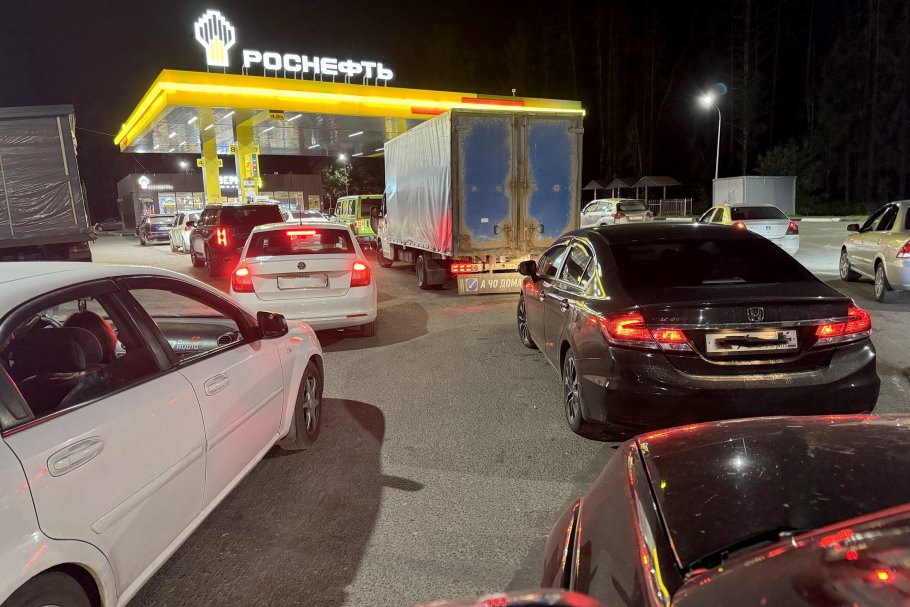
However, a period of stability may be a fleeting dream; a liter of diesel fuel (DT) rose by 51 kopecks during the same week, contributing to a total increase of 1 ruble and 47 kopecks (1.7%) over the last four weeks. Since the beginning of the year, diesel has seen a price increase of 6.1%, exceeding the consumer inflation rate of 5.23% for the same period. Gasoline experienced its price spike earlier, and by November 5, its average price increase had more than doubled the inflation rate (12.1%).
By the end of this year, gasoline is on track to break the price increase record set in 2019, which was the year the price damper (subsidies to oil producers for fuel supplies to the domestic market) was introduced. At the same time, the government established a "gentlemen’s agreement" with oil companies, stipulating that prices at gas stations should not rise above the annual consumer inflation rate.
Last year, average gasoline prices exceeded the annual consumer inflation rate by 1.6% and are likely to surpass that level this year as well. Since 2019, the government has repeatedly adjusted the damper parameters, favoring reductions in payments to oil companies until this year. During this year’s peak gasoline crisis, a decision was made regarding a temporary ban on the nullification of damper payments (when market prices exceed the threshold), which was a step toward supporting the industry. It is likely that this decision, combined with seasonal decreases in demand, impacted the market, leading to a halt in the increase of gasoline prices at gas stations.
At this point, two major questions arise regarding gasoline that may concern everyone: how long will this market calm last, and can retail gasoline prices decrease by the end of the year? For diesel, there are also two pertinent questions: how long will it continue to rise in price, and by how much?
The halt in the increase of retail gasoline prices followed a decline from historical highs in its wholesale quotes. The price of AI-92 decreased by 16.5% wholesale, while AI-95 dropped by 8.3%. However, at the peak of price increases, their quotes rose by 43.7% for AI-92 and 49.6% for AI-95 since the beginning of the year. Thus, relative to those peaks, the price declines have been minor.
The primary factor that could influence retail and wholesale fuel prices is an increase in production at oil refineries.
According to Yuri Stankevich, Deputy Chairman of the State Duma Energy Committee, regarding the volatility of gasoline prices, 2025 can indeed be described as a unique year compared to recent times. The cause has been the force majeure events in the latter half of the year (stoppages at oil refineries due to drone attacks). The decline in wholesale prices will primarily affect the financial status of independent gas stations (not owned by major oil companies, which account for about half of the gas stations in Russia). Retail prices at these stations have differed from those at vertically integrated oil companies (VINC, which cover the entire production cycle, from extraction and refining to selling finished fuel at retail) by 10-20 rubles. Hence, a price drop is expected, as mandated by the Federal Antimonopoly Service of Russia, emphasizes Stankevich.
Analyst Sergey Kaufman from Finam suggests that independent gas stations may see a slight decrease in gasoline prices as their margins return to positive territory. Meanwhile, at VINC gas stations, a noticeable decrease in prices is unlikely. Although the situation in the wholesale market has eased, it remains tough. Furthermore, since July, gasoline margins at gas stations have been negative, meaning these stations may be compelled to maintain high price levels to compensate for previous losses, the expert clarifies.
Dmitry Gusev, Deputy Chairman of the Supervisory Board of the "Reliable Partner" association and a member of the expert council of the "Russia’s Gas Stations" competition, believes that retail gasoline prices will not decline further as they are already at the minimum possible level. As long as fuel prices remain linked to inflation, expectations for their reduction are unrealistic; increases are virtually pre-programmed. Unless there’s an overall deflation in the country, a point which would be a question for the Central Bank.
From the perspective of Mark Shumilov, an analyst in resource sectors at Renaissance Capital, the main driver for normalizing gasoline prices will remain the recovery in fuel production at refineries after maintenance work. Following this, gasoline prices at gas stations could stabilize at more manageable levels.
The situation with diesel is somewhat different. Kaufman notes that in Russia, the transition to winter diesel is traditionally challenging, causing a pronounced seasonality in diesel price increases. Currently, this seasonal factor is further compounded by reduced volumes of oil refining due to attacks on refineries. The expert predicts that price pressure on diesel may remain elevated for another 2-2.5 months, potentially resulting in an overall price increase of about 8.5-9.5% by the end of the year.
It can be argued, however, that drone attacks on refineries primarily affect gasoline production, which has always had a domestic supply that exceeds demand by only 12-15%. Diesel production nearly doubles the domestic demand, and even under the most pessimistic assessments by Western news agencies, the impacts of drone attacks have affected no more than 30% of Russia's refining capabilities. Furthermore, the export of diesel to non-producers (traders) is temporarily banned. Thus, even now, diesel output exceeds domestic market requirements. Traditionally, diesel price increases tend to slow down and eventually halt by early December.
According to Sergey Tereshkin, Chief Executive of the fuel marketplace OPEN OIL MARKET, autumn is typically a peak season for the diesel market. The primary consumers of diesel are freight transport, which transitions from summer and intermediate to winter diesel fuel at the end of the year. Consequently, October and November foster expectations of rising diesel prices, even in the face of a significant oversupply of refining capacity in the Russian market. Considering the trends of recent weeks, the price increase for diesel fuel may reach 9% by the end of 2025. This is above the inflation rate, which is unlikely to exceed 8% by year-end, the expert concludes.Source: RG.RU