Current Cryptocurrency News for Thursday, January 8, 2026: Bitcoin Recovery, Altcoin Growth, Institutional Trends, Top 10 Cryptocurrencies, and Global Regulatory Changes.
As of the morning of January 8, 2026, the cryptocurrency market shows the first signs of recovery following a volatile end to the previous year. The price of Bitcoin (BTC) has once again surpassed the $90,000 mark, pushing the total capitalization of digital assets above $3 trillion. Following Bitcoin, major altcoins are strengthening as well—many of the top coins have gained 5-10% in the first week of the new year. Investor sentiment is gradually improving: the prolonged "extreme fear" phase is giving way to cautious optimism. Institutional players are returning to increasing their investments against the backdrop of a more favorable macroeconomic environment, and regulators around the world are continuing to clarify the rules of the game, reducing uncertainty within the sector.
Market Overview: Recovery and Investor Sentiment
Back in mid-2025, the cryptocurrency market was on the rise; however, a noticeable correction occurred in the second half of the year (approximately 30% from Bitcoin's peak levels). By the end of December, Bitcoin had consolidated around $85,000, and the total cryptocurrency market capitalization had dropped below $3 trillion. Investors were on edge: the "fear and greed" index for cryptocurrencies set a record for duration in the fear zone. Now the situation is beginning to change. In the first days of 2026, BTC bounced back above $90,000 (+8% from the local bottom), restoring the market capitalization to approximately $3.1–3.2 trillion. The sentiment index rose from extremely low levels to around 40, which still indicates fear predominance but is significantly better compared to the previous month. Among the positive factors are changes in monetary policy: the US Federal Reserve has transitioned from peak interest rates to cuts (current range 3.25–3.50%), easing pressure on risk assets. Additionally, the year-end tax selling season has concluded, and buyers are returning to the market, expecting that the worst is behind. Many analysts note that the prolonged fear period may indicate a local bottom has been reached, as historically such sentiments have often preceded upward trend reversals.
Bitcoin: Strengthening Positions
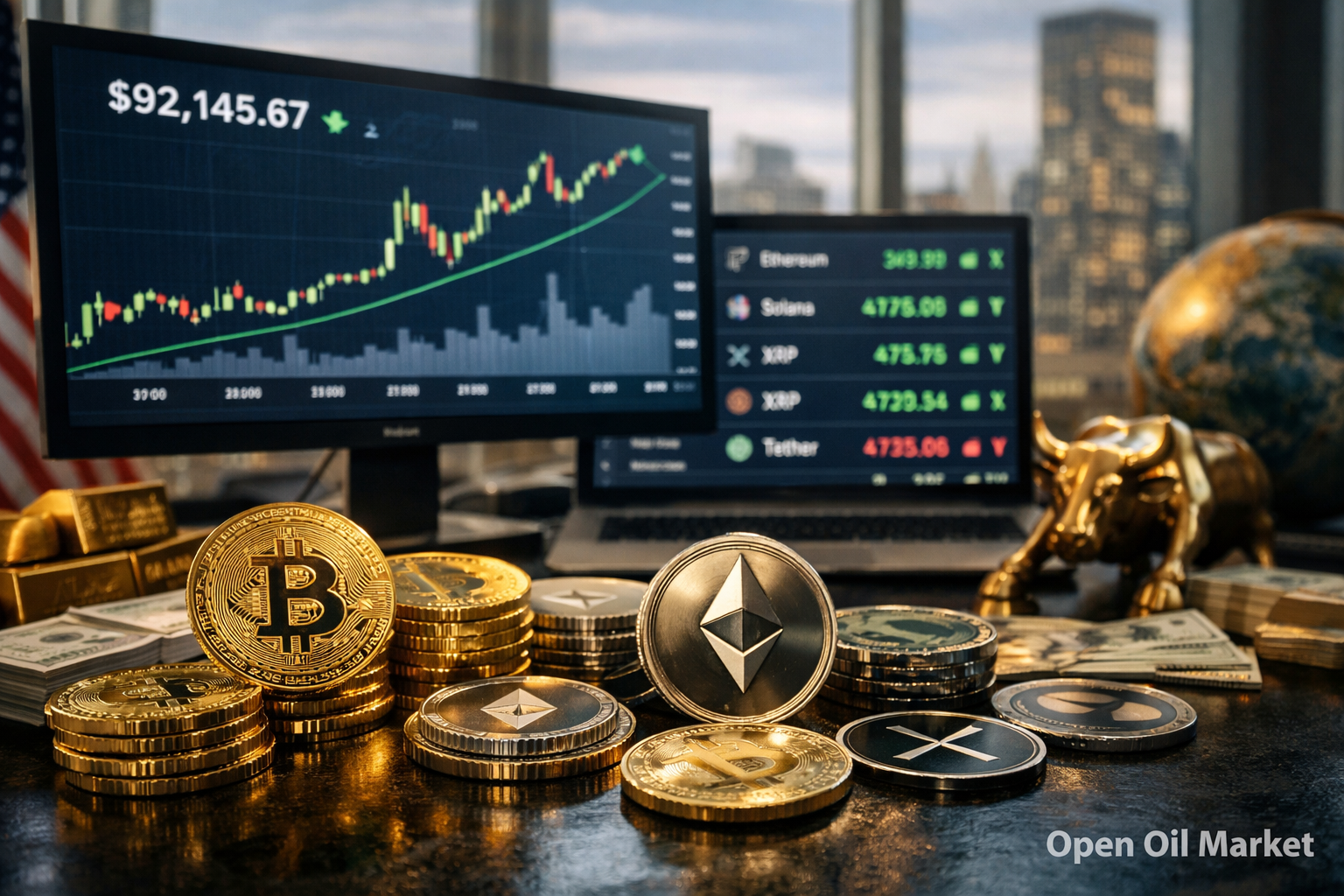
Against the backdrop of improved sentiment, Bitcoin (BTC) is strengthening its positions. After falling to around $85,000 in December, the leading cryptocurrency is once again trading near $92,000. Although this is still below its historical maximum (~$126,000, reached in August 2025), the dynamics at the start of 2026 are encouraging for investors. BTC's market capitalization exceeds $1.8 trillion, accounting for approximately 58-60% of the total cryptocurrency market capitalization. Bitcoin's dominance has slightly decreased compared to the end of last year (when investors sought a "safe haven" in BTC) but remains high, reaffirming Bitcoin's status as digital gold and a barometer for the industry. The current rise in BTC is supported by a combination of macroeconomic and sector-specific factors. On one hand, expectations of further interest rate cuts and more lenient monetary policy increase the appeal of a limited-supply asset. On the other, the market is positively influenced by news of institutional investment inflows (through regulated funds and the derivatives market). A number of optimists believe that in 2026, Bitcoin could not only recover but also set new historical records if current trends persist.
Ethereum and Altcoins: Returning to Growth
Following Bitcoin, Ethereum (ETH) and other leading altcoins are showing a cautious rise. The price of Ethereum, the second-largest cryptocurrency by market capitalization, has confidently surpassed the psychologically important level of $3,000 and is currently moving in the range of $3,300–$3,500. Recall that in August 2025, ETH briefly reached a new peak of around $4,950 but then fell with the rest of the market; now Ethereum is gradually reclaiming lost positions. Among other significant altcoins, a predominantly positive dynamic is observed. Binance Coin (BNB) is holding above $800, remaining in the top five despite legal pressures on the Binance exchange. XRP, associated with the Ripple payment platform, is trading near $2.20—investors are maintaining confidence after Ripple's landmark legal victory over the SEC in 2025, which removed prolonged uncertainty surrounding this token. Solana (SOL) saw a price increase of approximately 15% in the first week of January, returning to levels around $150: the growth is supported by the ongoing success of Solana's integration into the payments space and a revival of the DeFi ecosystem. Overall, most top altcoins have gained recently, although their prices remain below historical highs. Nonetheless, risk appetite is gradually returning: investors are starting to show renewed interest in technologies and tokens that had seen significant declines previously, expecting that as Bitcoin stabilizes, altcoins will traditionally show leading growth.
Global Regulation: Progress and Clarity
The regulatory environment surrounding cryptocurrencies continues to evolve towards greater clarity. In 2025, several key precedents laid the groundwork for a new phase in regulation. In 2026, this trend is gaining momentum: lawmakers and regulatory bodies in various countries are striving to integrate the crypto industry into existing legal frameworks without stifling innovation. For example:
- USA: A bipartisan bill to structure the crypto market is progressing in Congress and could be enacted in 2026. It aims to clearly delineate the powers of the SEC and CFTC regarding digital assets, establish uniform rules for cryptocurrency exchanges, and protect investors. Federal requirements for stablecoins are also expected, ensuring consistent standards for reserves and oversight nationwide.
- Europe: Since the beginning of the year, the MiCA (Markets in Crypto-Assets) regulation has fully come into force within the European Union, establishing uniform requirements for crypto assets and service providers across all EU member states. Crypto companies are already receiving licenses under the new system, enhancing market transparency and investor trust. Europe is focusing on the controlled development of the industry: projects are required to comply with capital, reporting, and anti-money laundering norms.
- Asia and Other Regions: Some Asian countries are witnessing a liberalization of crypto regulation. Hong Kong and Singapore are implementing clear licensing processes for cryptocurrency exchanges, attracting major players to their platforms. In the Persian Gulf (e.g., UAE), cryptocurrency hubs are being established with favorable conditions for blockchain businesses. Meanwhile, authorities in China maintain strict restrictions on cryptocurrency trading, focusing on the development of their own digital currency (CBDC).
Collectively, these steps are shaping a more mature global regulatory basis for cryptocurrencies. For the first time in the industry’s history, key jurisdictions are nearing the establishment of clear "rules of the game." It is expected that in 2026, regulators will focus more on implementing already approved norms rather than enacting new laws, and coordination between countries will improve. Increased legal clarity reduces risks for institutional investors and promotes further capital inflow into cryptocurrency markets.
Institutional Investors: Expanding Presence
Despite recent turbulence, major institutional players continue to exhibit sustained interest in cryptocurrencies and blockchain technologies. Many have perceived the 2025 correction as an opportunity to increase their positions. For instance, one of the largest investment holding companies, Fidelity Investments, publicly confirmed that it had increased its Bitcoin holdings during the price decline—the head of the company referred to BTC as "digital gold" and a strategic asset. Such declarations from prominent financiers bolster trust in the crypto market among conservative investors. A significant milestone has been the emergence of exchange-traded products on crypto assets accessible to institutions. Major managers, including BlackRock and Invesco, launched the first spot Bitcoin-ETFs and exchange-traded notes linked to cryptocurrencies in 2025. As a result, traditional funds and pension programs have gained a regulated tool for investing in digital assets—billions of dollars are estimated to have flowed into the new crypto ETFs in just a few months. Analysts note that exchange-traded funds are already buying up a significant portion of newly issued Bitcoins and Ether, indicating growing institutional appetite.
The integration of blockchain into traditional financial infrastructure is also gaining momentum. Major payment systems and banks are experimenting with the use of cryptocurrencies to expedite transactions. A notable example is Visa's collaboration with the Solana network, where banks have begun to use Solana for instant international transfers. According to the Solana Foundation, the volume of transactions conducted via Visa on the basis of Solana has already reached around $3.5 billion annually, demonstrating the practical benefits of crypto technologies in global payments. Beyond the financial sector, interest in blockchain is also rising among technology corporations exploring the potentials of integrating decentralized solutions into their products and processes.
It is also worth noting the strategy of public companies associated with the crypto industry. For example, the analytics firm MicroStrategy, which holds one of the largest corporate Bitcoin reserves (over 150,000 BTC), remains committed to a "buy and hold" policy and has no intention of selling its assets despite the decline in prices. Cryptocurrency mining companies are also adapting to new conditions: some are diversifying their business by investing in adjacent areas. For instance, one of the leading mining firms has made a multi-billion-dollar deal to launch data centers supporting artificial intelligence projects—this step demonstrates the convergence of the crypto industry with other high-tech sectors. Overall, the activity of institutional investors and corporations indicates long-term confidence: even in a correction phase, major players continue to view cryptocurrencies as a strategic asset class and a foundation for innovation.
Top 10 Most Popular Cryptocurrencies: Market Leaders
Below is the top 10 largest cryptocurrencies by market capitalization as of January 8, 2026, along with their key characteristics:
- Bitcoin (BTC) – The first and largest cryptocurrency, dominating approximately 60% of the entire market. BTC is trading around $92,000 after a recent recovery; market capitalization exceeds $1.8 trillion. Bitcoin serves as a digital analog of gold and a barometer for sentiment across the entire industry, setting the tone for the rest of the market.
- Ethereum (ETH) – The second largest cryptocurrency by market capitalization (~14% of the market). A smart contract platform that underpins the DeFi ecosystem, NFTs, and numerous decentralized applications. ETH is trading around $3,400, recovering from the decline at the end of the year; capitalization is around $410 billion. Ethereum powers thousands of projects and remains a key "fuel" for the crypto economy.
- Tether (USDT) – The largest stablecoin pegged 1:1 to the US dollar. USDT's market capitalization is around $170 billion, reflecting enormous demand for a digital equivalent of the dollar for trading and hedging risks. The coin maintains a stable price of ~$1.00 and serves as one of the main sources of liquidity in the cryptocurrency market.
- Binance Coin (BNB) – The token of the leading cryptocurrency exchange Binance and the native currency of the BNB Chain blockchain. At a price of ~$850, BNB's capitalization is approximately $130 billion. The coin is used for paying fees, participating in launchpad projects, and other services within the Binance ecosystem. Despite regulatory challenges, BNB holds its place in the top 5 due to its broad application and community support.
- XRP (XRP) – A cryptocurrency tied to the Ripple payment platform for cross-border banking transfers. Following Ripple's legal victory over the SEC, which eliminated the uncertainty surrounding the token's status, XRP has regained its place among the leaders. The price holds around $2.20, and market capitalization is estimated at ~$115 billion. The token attracts attention from the banking sector as a tool for fast and inexpensive transactions.
- USD Coin (USDC) – The second-largest stablecoin from a consortium led by Circle. Tightly pegged to $1.00, it has a capitalization of around $75 billion. USDC is popular among institutional investors and in DeFi due to its transparent reserves and regulatory compliance, serving as a reliable bridge between traditional finance and the cryptocurrency market.
- Solana (SOL) – A high-performance blockchain known for fast transactions and low fees. SOL remains in the top 10: current price is around $150 with a market capitalization of ~ $80 billion. In 2025, Solana attracted attention due to a partnership with Visa and growth in DeFi projects based on its platform. The recovery of SOL at the beginning of 2026 indicates sustained investor interest in the ecosystem despite past technical disruptions and competition.
- TRON (TRX) – A smart contract platform and multimedia dApp, especially popular in Asia. The market value of TRX is around $27 billion (price ~$0.30). The Tron network is known for its active use in issuing stablecoins (a significant portion of USDT circulates on its blockchain) and a steady growth in user numbers. TRX retains its place in the top 10 thanks to continuous ecosystem development and community support.
- Dogecoin (DOGE) – The most famous meme cryptocurrency, which started as a joke but has become a notable player in the market. DOGE is trading around $0.15; capitalization is ~ $20 billion. Despite its humorous origins, Dogecoin is backed by enthusiasts and influential figures like Elon Musk, leading to occasional price spikes. DOGE remains highly volatile, yet the coin continues to surprise with sustained interest and has remained in the top 10 for several consecutive years.
- Cardano (ADA) – A blockchain platform developed with a focus on a scientific approach and rigorous development methodologies. ADA is trading around $0.45 (market capitalization ~ $16 billion), which is significantly lower than peak levels in previous years. However, Cardano maintains one of the largest communities and regularly implements technological updates (e.g., scalability improvements and new DeFi features). This allows the project to hold its place among the market leaders despite a more modest price.
Outlook and Conclusions
The current state of the cryptocurrency market carries contradictions. On one hand, price charts and sentiment indicators still reflect caution and recent prevailing fear. On the other hand, fundamental factors appear more positive than they may seem at first glance: the industry has weathered a significant correction but has not lost its long-term potential. Many analysts are optimistic: with improvements in the macroeconomic situation and continued institutional inflows, cryptocurrencies are expected to resume growth. Some experts predict that by the first half of 2026, Bitcoin could approach or exceed its historical highs, coinciding with the traditional four-year market cycle and increasing integration of blockchain into global finance.
Meanwhile, market participants should consider the ongoing volatility and potential new shocks. Regulatory activity will remain a key factor: clarity in the rules can speed up the inflow of institutional capital, but strict oversight may temporarily limit the most risky innovations. In the coming months, price technical rebounds (within the still unfinished correction) and consolidation periods are likely, especially if Bitcoin continues to trade below the psychological mark of $100,000. However, long-term trends are favorable for the crypto industry. In the coming years, further market infrastructure expansion, increased adoption of crypto technologies in the traditional economy, and the next Bitcoin mining reward halving (in 2028) are expected. These factors serve as drivers that could give the market new momentum in the future.
In conclusion, despite temporary difficulties, the cryptocurrency market remains global and dynamic. Business-minded investors are now weighing risks and opportunities carefully: some view the recent correction as a necessary "reset" of an overheated market, while others see it as a chance to enter a promising asset class at more attractive prices. The crypto industry is entering a new stage of maturity—with clearer regulation, participation from large capital, and real use cases for technology. This means that in 2026, digital assets will continue to be in focus for both novice and professional investors worldwide.