Oil and Gas and Energy News for 19 March 2026: Brent Oil Price Rise, Geopolitical Risks, Strait of Hormuz, LNG Crisis, Gas Market in Europe, Oil Products, and Refineries
The global fuel and energy complex enters a phase of increased turbulence as of 19 March 2026. For investors, oil companies, refineries, traders, producers of oil products, and electricity market participants, the central theme remains the geopolitical premium in raw materials quotations. The prices of oil, gas, and oil products are rising not only due to emotional market reactions but also due to actual disruptions in logistics, risks to export infrastructure, reduced LNG supplies, and increasing pressure on processing supply chains.
Against this backdrop, energy resurfaces as the main macroeconomic driver: inflation, transportation costs, industrial manufacturing costs, refinery margins, and the tariff stability of electricity dependencies rely on Brent and LNG prices. For the global fuel and energy market, it is not only the price level that matters but also the depth of restructuring flows between regions and the ability of states to quickly switch between oil, gas, coal, nuclear, and renewable generation.
Oil Market: Geopolitical Premium Again Becomes a Key Price Factor
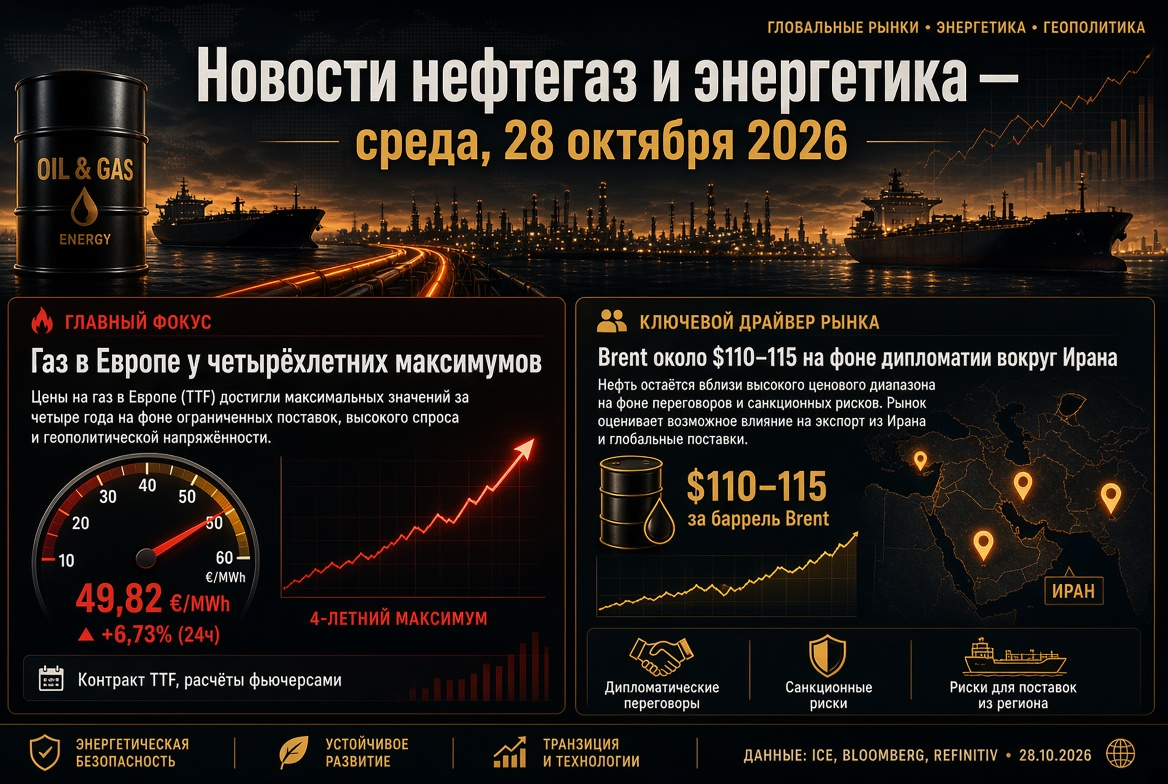
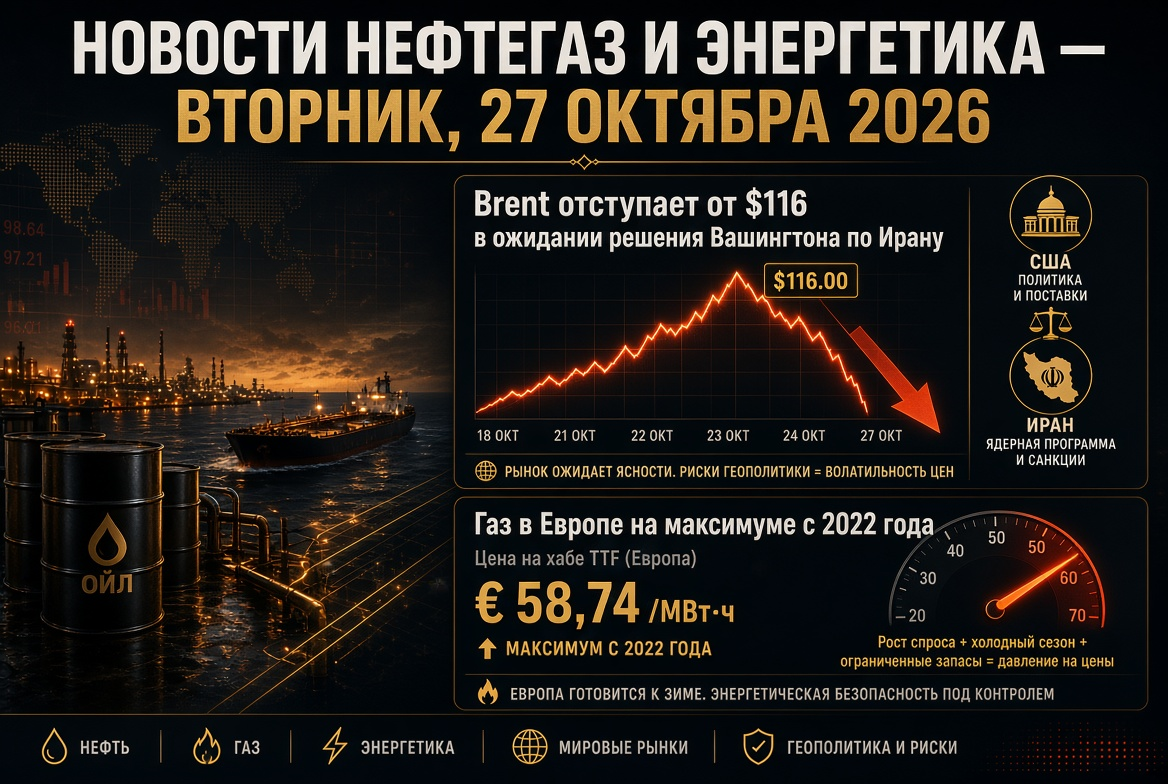
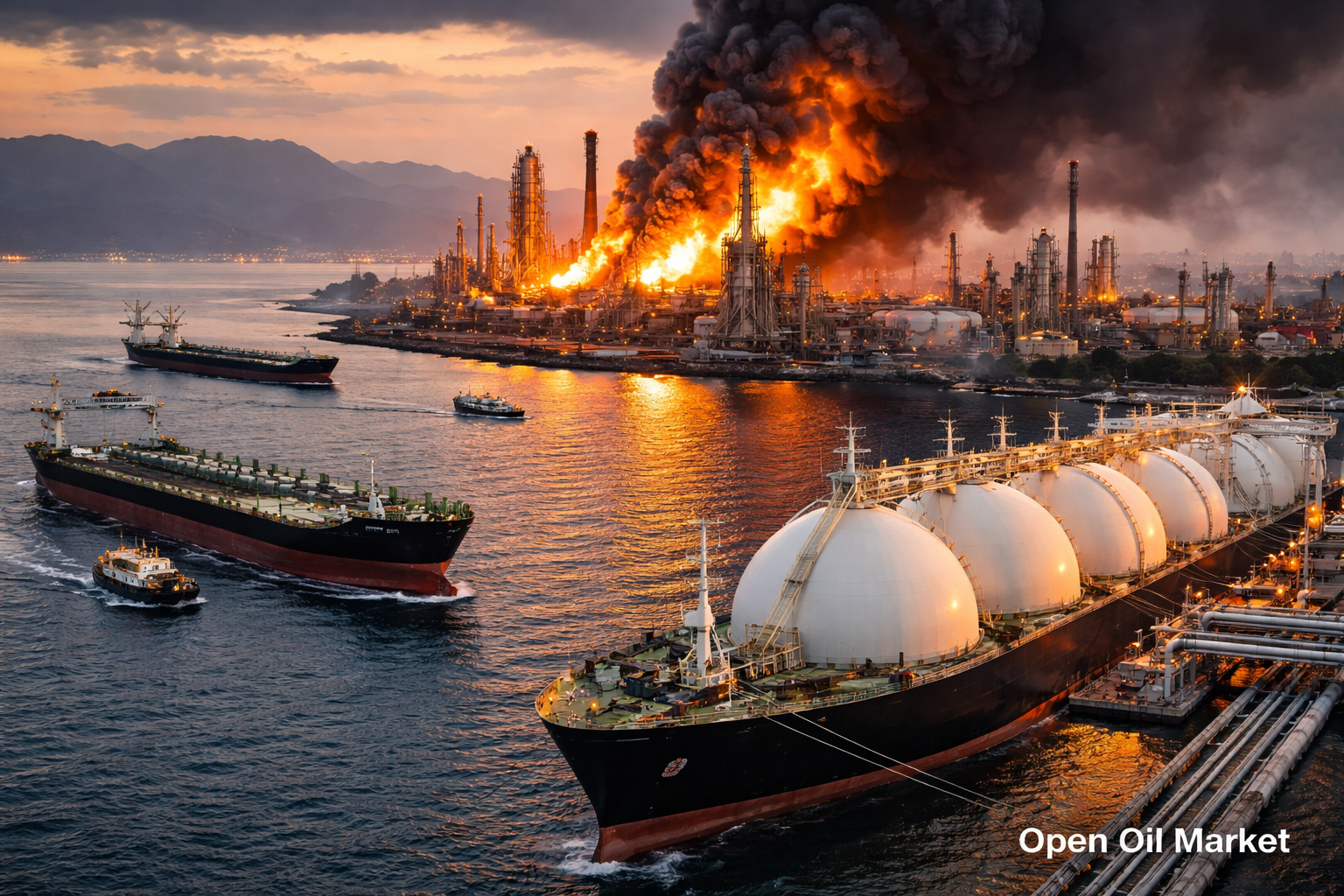
The key event for the global oil and gas market has been a new escalation concerning energy infrastructure in the Persian Gulf. Following strikes on facilities near South Pars and Asaluyeh, the market began to factor in not a short-term spike in volatility but the risk of longer-lasting supply disruptions for oil and gas. Therefore, the movement of Brent above psychologically significant levels appears not merely as a speculative episode but as a response to a real threat to the largest export hub on the planet.
- Oil remains sensitive to any information regarding the Strait of Hormuz.
- The risk premium quickly reassesses long-term expectations for supplies.
- For fuel and energy market participants, the availability of export routes for raw materials is as crucial as production volumes.
If tensions persist in the upcoming sessions, the oil market will trade not under the classic logic of demand and supply balance but based on the availability of physical barrels. For oil companies, this means increased revenue, but for refining, transportation, and end consumers, the situation becomes significantly more complex.
Strait of Hormuz, Export Routes, and New Balance of Global Supply
The Strait of Hormuz remains a critical point in global energy supply. This corridor carries a significant portion of the world's oil and LNG trade; thus, any disruption to shipping automatically impacts raw material prices, shipping insurance, freight costs, and delivery times for oil products. For global energy, this is not a local conflict but a risk of redistributing flows between the Middle East, the USA, Europe, and Asia.
The market currently operates effectively in three regimes simultaneously:
- Fear of crude oil and condensate shortages;
- Reassessment of gas and LNG availability;
- Rising costs of refined products—primarily diesel, jet fuel, and gasoline.
This is why it is crucial for investors to focus not just on Brent and WTI quotations, but also on differentials, freight rates, U.S. export flows, refinery utilization, and price dynamics in the diesel segment. For the raw materials market, it is currently the middle distillates that pose one of the most vulnerable links.
Gas and LNG: Tensions in Qatar and a New Phase of Gas Competition
The natural gas and LNG segment appears even more sensitive than oil. Reduced availability of Middle Eastern LNG intensifies the competition for free volumes between Europe and Asia. This means that for the global gas market, it is not just a price increase but a change in priorities for cargo distribution, regasification capacities, and long-term contracts.
For energy market participants, the following consequences are particularly important:
- Heightened competition for spot LNG cargoes;
- Increased costs for gas generation;
- Growing role of coal, nuclear generation, and renewable energy in balancing energy systems;
- Pressure on import-dependent economies in Asia and Europe.
For the gas market, this indicates that the next few weeks may witness not only price surges but also structural rearrangement of contracts. In such an environment, countries and companies with diversified purchasing strategies, developed storage infrastructure, and the ability to quickly adjust fuel balances will come out on top.
Europe: Gas Storage, Electricity, and Industrial Protection
The European market is entering a new phase with reduced resilience. Low levels of gas storage by the end of March increase sensitivity to any additional reductions in LNG supplies. For industries, electricity sectors, and trading, this means that the summer gas injection season may commence with a stricter pricing base than the market anticipated at the beginning of the year.
Concurrently, Europe is attempting to balance price stability and energy transition. On one hand, the EU does not want to undermine the market architecture of electricity. On the other, rising prices compel authorities to seek emergency mechanisms to protect households, energy-intensive industries, and the grid sector.
For the European energy sector, this translates to:
- Maintaining high sensitivity to gas imports;
- Increased interest in accelerating the introduction of grid infrastructure;
- Further development of solar and wind generation as elements of energy security, not just climate policy.
Renewables, Coal, and Nuclear: The Energy Transition is Not Cancelled but Becomes More Pragmatic
A pragmatic approach to the energy transition is increasingly evident in the global energy market. In Europe, solar and wind generation already occupy a stronger position in the energy balance than all traditional fossil sources combined by the end of last year. However, the current crisis demonstrates that during periods of gas shortages, the system must maintain a reserve in the form of coal, nuclear generation, and flexible thermal capacities.
Therefore, 2026 may not be the year of phasing out traditional energy but the year of a new combination of sources:
- Renewables reduce import dependency;
- Nuclear generation returns predictable base load capacity;
- Coal is temporarily used as a crisis buffer;
- Gas remains the balancing fuel but becomes more expensive and politically sensitive.
This approach is particularly pronounced in Asia, where import-dependent countries are increasingly re-evaluating their generation structure to mitigate the impact of expensive LNG on electricity and industrial costs.
Asia: Import-Dependent Economies Enhance Energy Balance Protection
For Asian countries, the events of March have served as a reminder of how critical supply diversification is. South Korea has already signaled its readiness to more actively use coal and nuclear generation to reduce LNG dependence. This is a notable move: even technologically advanced economies return to the principle of energy reliability during a crisis, rather than focusing solely on climate optimization.
Currently, priorities for Asian countries include:
- Guaranteed supplies of oil and LNG;
- Containment of domestic prices for gasoline, diesel, and electricity;
- Seeking alternative suppliers of oil products and raw materials;
- Supporting the petrochemical industry, refineries, and export-oriented industries.
This means that the Asian demand for energy resources is not vanishing; it is simply changing in structure. Suppliers capable of quickly substituting Middle Eastern volumes of oil, oil products, and LNG are likely to benefit in the market.
Refineries and Oil Products: The Diesel Market Becomes Vulnerable Again
While the crude oil market is living in anticipation, the oil products market is already facing tangible supply squeezes. This is especially true for diesel. For industries, logistics, agriculture, and maritime shipping, the diesel component is becoming one of the main channels of inflation. Any disruptions in refinery operations or reduced exports of distillates instantly intensify pressure on the global economy.
An additional risk factor is the tensions in U.S. refining. Potential disruptions at large American refineries, including facilities in the Midwest, heighten the significance of domestic refining margins and make the gasoline and diesel markets even more jittery. At the same time, statistics regarding U.S. inventories show a rise in commercial oil stocks, but a simultaneous decrease in gasoline and distillate stocks. For the market, this signals that while there is raw material available, the finished product remains relatively scarce.
What This Means for Investors and Energy Market Participants
As of 19 March 2026, the global oil, gas, and electricity market is in a phase where macroeconomics and geopolitics have become fully intertwined once again. For investors and companies in the energy sector, this means the necessity to view the sector not as a single market but as a system of divergent segments.
- Oil production benefits from high prices but is dependent on export logistics.
- Refineries face volatile margins and risks associated with product shortages.
- The gas market remains the most sensitive to physical disruptions.
- Electricity generation accelerates the transition to a more diversified model.
- Renewables strengthen their positions, but do not replace backup capacities during crises.
The main takeaway for the global energy market is clear: energy security is once again becoming a key investment theme. In the coming weeks, the market for oil, gas, coal, LNG, oil products, and electricity will assess not only production volumes but also the resilience of infrastructure, routes, refineries, terminals, and national energy systems. It is this new resilience premium that will determine the behaviour of the global commodity and energy sector.