Current News in Oil, Gas, and Energy as of April 22, 2026: Oil, Gas, LNG, Electricity, Renewable Energy Sources, Refineries, and Key Trends in the Global Fuel and Energy Sector
The global fuel and energy sector is entering April 22, 2026, with heightened sensitivity to logistics, geopolitics, and fuel costs. For the oil market, the key factor remains not so much the formal balance of supply and demand but the physical availability of flows, the resilience of export infrastructure, and the ability of processing facilities to quickly adapt to new supply routes. In the gas and LNG sectors, there is an increasing division of the market into regions with differing price security, while in electricity generation, there is an acceleration in detaching tariffs from volatile gas prices.
For investors, oil companies, gas traders, refineries, electric power holdings, and participants in the renewable energy market, this means one thing: 2026 is no longer a year of “average scenarios.” Victory will not only be claimed by resource owners but also by companies with strong logistics, flexible processing, a robust procurement structure, and access to cheap generation. Below, we highlight the key events and trends shaping the global fuel and energy sector as of April 22.
Oil Market: Prices Remain High, But Fundamentals Are Contesting Geopolitics
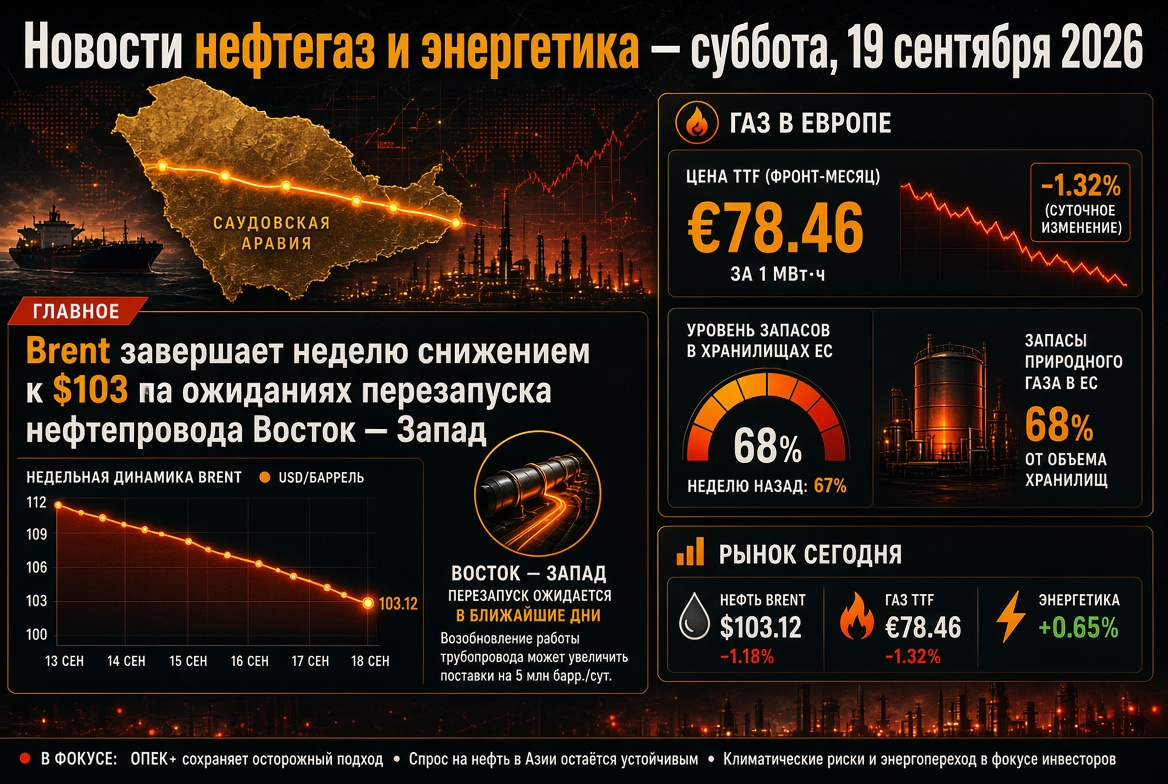
Oil continues to bear a noticeable risk premium. The market is still factoring in the possibility of supply disruptions, but simultaneously, demand weaknesses are becoming more pronounced. This creates an unusual configuration: prices remain high, yet the long-term sustainability of such levels is increasingly questioned by traders and analysts.
- First Factor: The persistent vulnerability of export routes and tanker logistics.
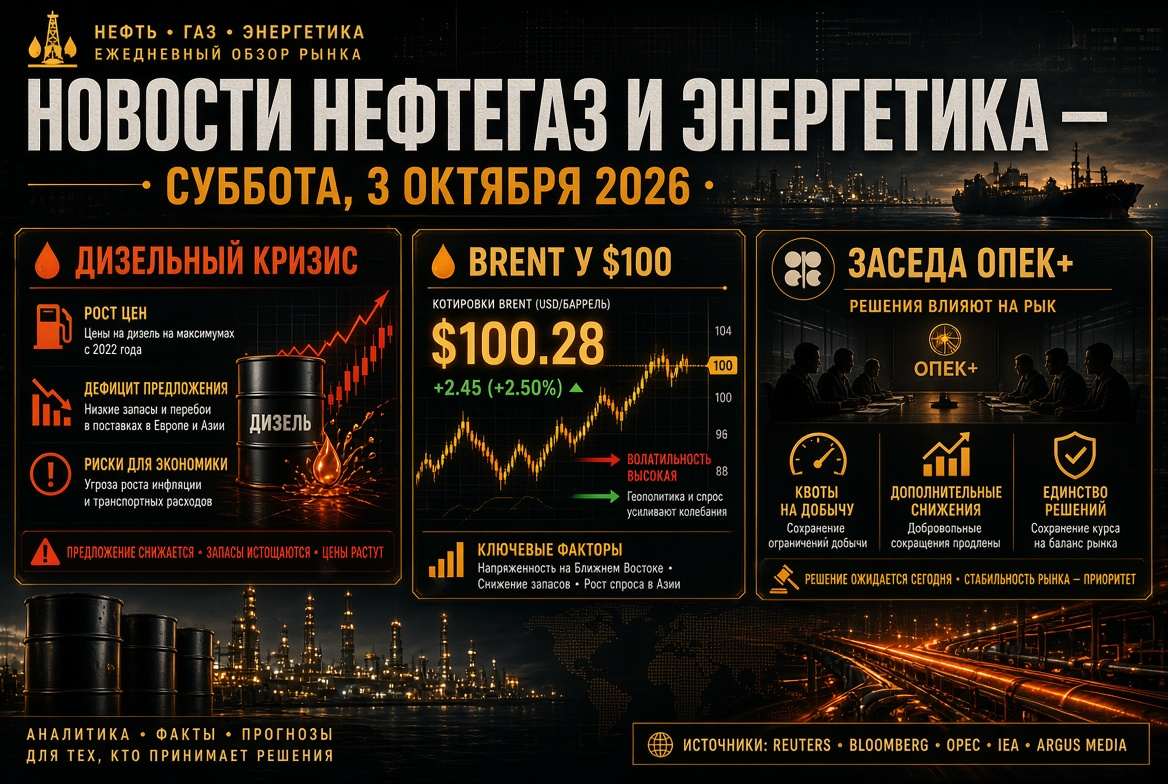
- Second Factor: The cautious stance of OPEC+, which is formally returning barrels to the market but doing so in a very measured manner.
- Third Factor: The downward revision of the forecast for global oil consumption amidst high oil product prices, weakness in parts of industrial demand, and pressure on the transportation sector.
Against this backdrop, the oil market appears not as a classic bull cycle but as a market undergoing stress re-evaluation. If logistical risks begin to ease, part of the geopolitical premium may quickly dissipate. However, until that occurs, even moderate supply disruptions will continue to support Brent, oil products, and insurance rates for transportation.
OPEC+ and Supply: Formal Quota Increases Don’t Indicate Rapid Physical Export Growth
For participants in the raw materials sector, the headline regarding OPEC+ decisions matters less than the actual ability of coalition members to bring additional volumes to the market. The increase in production scheduled for May appears more as a controlled political signal of readiness to stabilize the market rather than an immediate influx of significant crude volumes.
The key logic now is as follows:
- The alliance maintains control over market expectations;
- Countries with overproduction are accelerating compensatory cuts;
- Physical logistics remains a constraint no less than the quotas themselves.
This is why oil companies and traders are increasingly evaluating not nominal production but the export feasibility of volumes. For the global oil market, this means an increased difference between "paper" and real supply. For oil companies, there’s a need to consider the risk that the risk premium may vanish faster than procurement and contracts can be reshaped.
Russia, Ports, and Pipelines: The Infrastructure Factor Becomes a Price Driver Again
A separate storyline for the energy market remains the Russian oil infrastructure. The decrease in production and disruptions in the export system exacerbate the volatility of supplies of certain grades of oil and semi-finished products. For the global market, this is important not only concerning direct volume but also through its influence on flows in Europe, the Mediterranean, and Asia.
When ports, refineries, and pipeline routes come under pressure, the market experiences multiple effects:
- The cost of alternative logistics increases;
- Demand for more accessible export grades strengthens;
- Refiners increase premiums for reliable supplies;
- Diesel, aviation fuel, and other oil products react faster than crude oil itself.
For refineries, this creates an environment in which facilities with a flexible raw material basket, access to marine terminals, and the ability to quickly change product output succeed. For oil companies, it serves as a reminder that in 2026 infrastructure becomes once again a part of the pricing model.
Gas and LNG: The Global Market Becomes More Expensive for Importers and More Profitable for Suppliers with Established Infrastructure
The gas and LNG market is experiencing heightened regional asymmetry. Europe is striving to maintain a high level of imports and create a buffer, whereas Asia is acting much more cautiously, while the U.S. operates close to maximum export capacity. As a result, the global gas map increasingly depends on who can quickly contract volumes and who must react to spot price spikes.
Currently, there are three defining trends in the global gas market:
- European buyers continue to maintain high demand for LNG for energy security;
- Some Asian consumers are curbing spot market activity and conserving volumes due to high prices;
- Additional supply flexibility is constrained as major export capacities are already operating at high loads.
This is particularly significant for electricity generation, chemicals, fertilizers, and gas generation. The gas market is becoming less comfortable for countries and companies that rely on imports without a long-term price shield. Simultaneously, the attractiveness of projects related to regasification, storage, pipeline diversification, and flexible LNG portfolios grows.
Refineries and Oil Products: The Main Gains Shift from Extraction to Processing
One of the most notable trends in April is the strengthened role of processing. While the market in 2025 often focused on extraction and quotas, the center of attention now shifts to refineries, fuel exports, and margins on individual products. The situation is particularly strong in diesel and aviation fuel, where shortages are felt more acutely than in crude oil.
For the oil product market, this means the following:
- Refineries with access to stable raw materials gain an advantage over processors dependent on unstable Middle Eastern streams;
- The processing margin is supported not only by crude oil prices but also by the physical scarcity of certain fuel types;
- Diesel, marine fuel, and aviation fuel become key indicators of tension within the fuel and energy sector.
For fuel companies and traders, this signals that profitability in 2026 will largely be determined not by the absolute price of oil but by the ability to swiftly capitalize on premiums in the oil products market. For refineries, this constitutes one of the best operational periods in recent years, especially where export logistics and high processing depth are present.
Electricity: Europe Expedites the Decoupling of Prices from Gas, while Nuclear Receives New Arguments
The electricity market is evolving just as rapidly as oil and gas. In Europe, political and regulatory pressures are intensifying: aiming to reduce the dependence of final electricity prices on expensive gas, accelerate investments in networks and clean generation, and ensure stable nuclear capacities are not prematurely withdrawn from the system.
For the electric power sector, this represents a significant shift. Previously viewed primarily as a climate initiative, renewable energy sources are increasingly perceived as elements of price protection for industries and households. Nuclear energy, in turn, reinforces its status as a reliable base load source.
- For European utilities, this translates to a reassessment of tariff models and contracts.
- For industry, it represents an opportunity for more predictable electricity costs in the medium term.
- For investors, interest strengthens in networks, storage solutions, nuclear generation, and long-term contracts for low-carbon electricity.
Renewable Energy Sources and Coal: The Energy Transition Continues, but the System Becomes More Pragmatic
The global energy sector is not relinquishing renewable energy sources, but it is making the energy transition noticeably more pragmatic. Solar and wind generation continue to increase their share, yet simultaneously, countries are more actively utilizing coal and nuclear where there's an urgent need to close power deficit risks or replace expensive gas.
This is not a departure from the green agenda but rather its adaptation to a new reality. The essence of the process can be described as follows:
- Renewable energy remains the primary focus for capacity expansion and reducing dependence on imported fuel;
- Coal temporarily strengthens its position as a reserve and crisis resource;
- Nuclear and storage solutions shift from being "additional options" to systemic solutions.
For the renewable energy market, there's another significant point: inexpensive equipment and increasing interest in projects do not always equate to heightened developer profitability. In 2026, developers are increasingly hindered by tariff barriers, regulatory limitations, increased capital costs, and competition for access to grids. Hence, investment selection in the renewable sector is becoming more stringent than before.
What Market Participants in the Fuel and Energy Sector Should Track as of April 22, 2026
For the global markets of oil, gas, electricity, renewable energy sources, coal, oil products, and refineries, several indicators are critical in the coming days:
- The Negotiation Background Surrounding the Middle East — as it will determine whether the current risk premium remains in oil and LNG.
- The Practical Implementation of OPEC+ Decisions — what matters more is not the declared quotas but the actual export flows.
- The State of Ports, Pipelines, and Refineries — logistics remains the primary transmission mechanism for price shocks.
- The Margin on Diesel and Aviation Fuel — this serves as the best indicator of tension in processing.
- The Dynamics of Gas and LNG in Europe and Asia — gas competition is once again becoming a key factor for electricity and industry.
The outcome for the global fuel and energy sector as of April 22 is unequivocal: the market remains jittery, but the structure of the winners is already visible. The most resilient companies are those capable of generating profits from logistics, processing, export flexibility, and access to cheap electricity. In extraction, there is still potential for high revenue, but it is increasingly oil products, refineries, LNG infrastructure, networks, and low-carbon generation that are becoming the centre of the new energy economy in 2026.