Current Startup and Venture Investment News as of April 22, 2026: Growth of AI Mega-Rounds, Infrastructure Development, and IPO Prospects
As of April 22, 2026, the global startup and venture investment market appears noticeably stronger than just a quarter ago. The focus has shifted from individual funding rounds to a new market structure: large capital is concentrating around artificial intelligence, computational infrastructure, deep-tech projects, defense technologies, energy, and those segments where revenue can be rapidly scaled or where a critical position in the tech supply chain can be acquired.
For venture capitalists and funds, this signifies a transition to a new phase. The venture market is once again signaling growth, but this growth is unevenly distributed. Leaders are receiving sky-high valuations and gaining access to long-term capital, while second-tier companies must prove not just technological novelty but also the ability to weave into real corporate budgets, infrastructure cycles, and future IPO or M&A scenarios.
Today’s venture market agenda is shaped by several interconnected themes: the acceleration of AI funding, a shift in interest towards infrastructure, revitalization of fundraising by venture funds themselves, and improved exit prospects. These directions are currently determining where new funding rounds will head, how AI startups will be re-evaluated, and which segments of the startup ecosystem will be able to claim premium multiples.
- The global venture capital market entered 2026 with record funding volumes, but money is concentrated in a limited number of large deals.
- Artificial intelligence remains the primary magnet for capital, yet the focus is shifting from models to applied products, chips, networks, data centers, and corporate automation.
- Europe and Asia have not fallen out of the global race: AI rounds, semiconductor deals, and state-supported technological initiatives are gaining momentum in these regions.
- The IPO window is gradually opening, which is especially important for late-stage companies and funds that require a new liquidity cycle.
The Global Venture Market: Growth Has Returned, but Capital Has Become More Selective
The main news for the startup market is that venture investments are once again demonstrating scale comparable to peak periods; however, this growth does not translate into uniform improvement across the entire ecosystem. Cash flow has strengthened, particularly in the upper segment of the market—where there are clear technological champions, large corporate partners, or critical infrastructure assets for the AI economy.
For venture funds, this creates a dual picture. On one hand, the overall atmosphere is improving: institutional investors are once again seeing growth potential in the tech sector. On the other hand, standard late-stage and even some Series B/C deals are now competing not only among themselves but also against gigantic AI mega-rounds that are literally siphoning capital, attention, and valuations.
- Demand for quality startups remains high.
- The average market remains challenging and is more demanding regarding metrics.
- Victorious are companies that control scarce technological resources: models, computing power, energy, network infrastructure, or industry data.
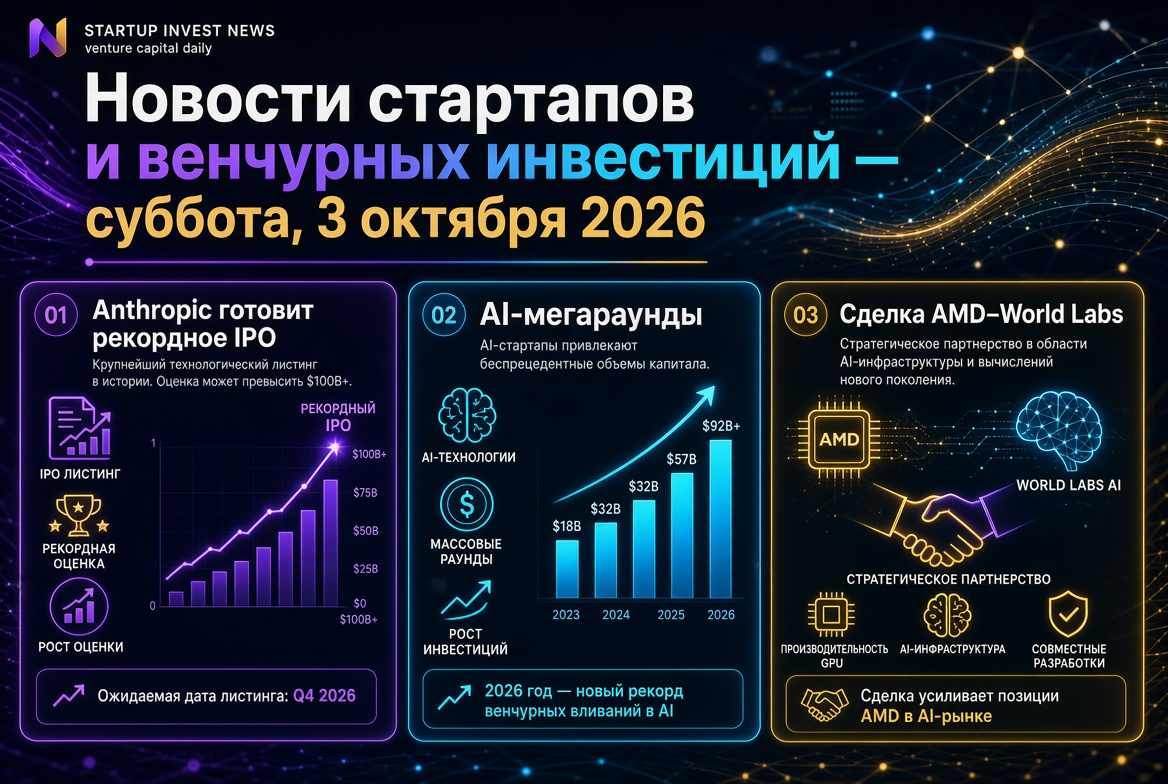
AI Mega-Rounds Change the Logic of Startup Valuations
Artificial intelligence continues to set the pace for the entire venture investment market. The focus is now not only on generative models per se but also on the entire ecosystem surrounding them: cloud infrastructure, specialized chips, corporate AI agents, engineering tools, and vertical products with rapid implementation in the enterprise environment.
Notably, the largest players are increasingly being financed not according to classical venture logic, but at the intersection of venture, infrastructure capital, and strategic agreements. This elevates the benchmark for the market as a whole. If previously a premium was awarded for rapid user growth, investors are now more willing to pay for access to computational resources, secured corporate contracts, sustainable monetization, and the ability to integrate into long-term AI supply chains.
It is precisely for this reason that the valuations of segment leaders are rising faster than those of most other startups. For funds, this is a signal: the AI startup market in 2026 is no longer just a story about software; it's about controlling critical technological infrastructure and the distribution of power.
AI Infrastructure Becomes Its Own Class of Venture Deals
One of the most notable trends in April is the shift of capital from abstract interest in artificial intelligence to specific bets on infrastructure. Investors are increasingly putting money into startups that resolve narrow but costly problems: accelerating corporate development, forecasting in supply chains, network bandwidth, energy consumption, and chip availability.
Strong signals to the market have come from transactions in the enterprise AI and AI infrastructure segments. Startups working at the intersection of engineering teams, logistics, and computational networks are receiving capital not as experimental projects but as vital components of the new technological stack. This is particularly important for funds seeking not just hype around AI, but also clear B2B models with large contracts and high probability of recurring revenue.
- Investors are ready to finance not only models but also the "shovels" for the AI economy.
- Enterprise AI is strengthening its positions due to rapid payback and clear ROI for clients.
- Semiconductors, networks, and orchestration solutions are becoming a distinct zone of competitive struggle.
Venture Funds Are Again Raising Large Pools of Capital
The new stage of the market is confirmed not only by startup rounds but also by how the venture funds themselves are behaving. Major players are once again raising significant funds and publicly reinforcing the AI mandate. This suggests that over the next 12–24 months, the startup market will receive additional liquidity, and the competition for the best deals will intensify.
For venture investors, this is more important than it may seem at first glance. When funds return to large fundraising, they are essentially laying expectations for a long cycle of investments, exits, and re-evaluations. In other words, the industry is shifting from a sole focus on capital preservation to preparing for expansion.
It is particularly noteworthy that money is being raised not only for classic software but also for so-called physical AI—startups at the intersection of industry, robotics, network infrastructure, defense, energy systems, and real-world automation. This broadens the map of opportunities for startups that previously might have seemed too capital-intensive for traditional venture mandates.
Europe Strengthens Its Position in AI and Semiconductors
The European venture market in spring 2026 appears more resilient than in past periods. Yes, the number of deals may be less than in previous cycles of active growth, but the quality of capital has improved, and the share of artificial intelligence in the overall investment structure has significantly increased. For global funds, this means that Europe is no longer just a source of "cheap talent" and is increasingly becoming a platform for expensive deep-tech stories.
Investor attention is focused on AI hardware, energy-efficient chips, cybersecurity, and B2B platforms with industrial applications. In these segments, European startups have the chance to occupy a niche between American hyperscale companies and Asian manufacturing chains. For funds, this presents an interesting entry point: valuations often still trail those in the U.S., while the technological value of assets is globally relevant.
If this trend continues, Europe could strengthen its role in 2026 not only as a growth market but also as a supplier of strategic technologies for the global AI industry.
Asia Returns to the Game Through State Momentum and Large Tech Bets
The Asian startup and venture investment market is also showing signs of recovery, but on its own terms. Here, the role of the state, national tech programs, and large corporate platforms is stronger. China, in particular, is ramping up its pace in financing tech companies, especially where there is a crossover of artificial intelligence, clouds, semiconductors, and national industrial strategy.
For global investors, this is an important signal. The Asian market is not just restoring volumes—it is changing the structure of capital demand. Whereas many international funds previously viewed the region as a source of user growth, it is now increasingly becoming a stage for technological sovereignty. This implies a longer investment horizon, a more complex regulatory environment, but also larger opportunities in applied AI, hardware, and infrastructure.
In practice, this increases the likelihood that by 2026, Asia will provide a portion of the largest late-stage deals outside the U.S. as well as become a source of new IPO candidates in the tech sector.
Deep Tech, Energy, and Space Step Into the Spotlight and Seek Premium Valuations
Another important shift is the increasing interest in deep-tech areas, where previously deals progressed more slowly due to capital intensity and lengthy implementation cycles. Today the situation is changing. Energy startups, next-generation nuclear technologies, space companies, and defense platforms are being viewed more frequently not as exotic cases but as integral components of a broader economic infrastructure transformation.
This is logical: the AI boom demands not only models and applications but also energy, satellite communication, new data processing systems, manufacturing capabilities, and secure physical platforms. This is why capital is beginning to redistribute in favor of startups capable of servicing the next technological cycle as a whole, rather than just a single software layer.
- Energy tech is gaining an additional impulse due to increasing demand from AI infrastructure.
- Space tech benefits from improved exit expectations and large late-stage rounds.
- Deep tech projects are coming closer to the venture market mainstream.
The IPO Window is Gradually Opening, Changing the Sentiment of the Entire Market
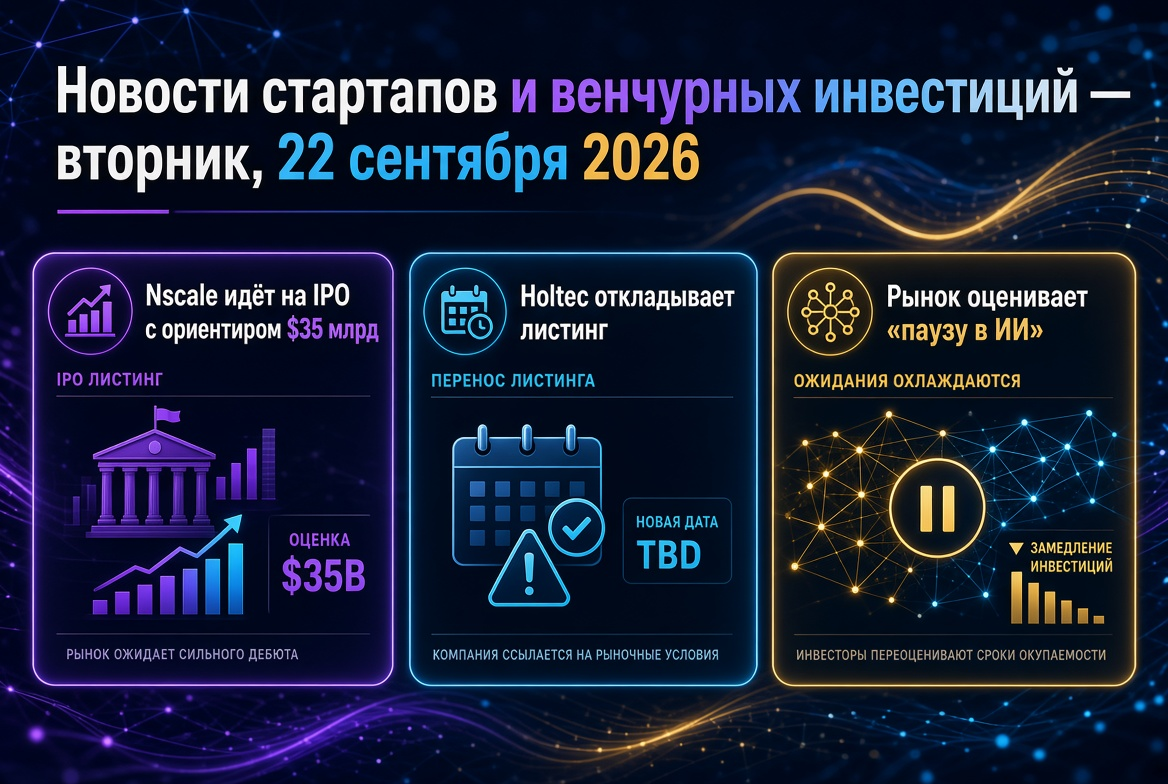
For venture funds, the exit question is just as crucial as new funding rounds. This is why signs of revitalization in the IPO market are currently being seen as one of the most constructive signals of spring 2026. Public moves by technology companies, including AI and software stories, indicate that the market is once again ready to discuss the listings of growth companies with significant revenue scale, a clear narrative, and high technological relevance.
The opening of the IPO window is important for several reasons. First, it enhances the value of mature assets in the private market. Second, it creates new benchmarks for late-stage valuations. Third, it restores fund confidence that the asset retention cycle won’t be endless. This is why even a limited recovery of listings can rejuvenate the entire startup and venture investment market much more effectively than dozens of average rounds.
- Funds gain the opportunity to prepare their portfolios for liquidity rather than solely for internal continuations of rounds.
- Late stages become interesting for investment again.
- The main beneficiaries will be companies with revenue, infrastructural roles, and strong positions in the AI supply chain.
Conclusion for Venture Investors and Funds
As of April 22, 2026, the venture market appears not only alive but structurally more mature. Money has returned, but now it is flowing to where there is technological irreplaceability, infrastructure control, and the potential for significant exits. AI startups remain at the center of attention; however, the winners will not only be model developers but the entire stack—from clouds and chips to logistics, energy, industrial software, and space infrastructure.
For venture funds, this is an environment in which it is important to act selectively. The best opportunities are concentrated in companies that can become part of the new technological framework of the global economy. It is precisely there that the strongest funding rounds, the most interesting re-evaluations, and, likely, the most important IPOs of the new cycle will form in the coming quarters.