Startup and Venture Investment News for Friday, 30 January 2026: Major Investment Rounds, Venture Fund Activity, Global Trends, and Key Deals in the Global Startup Market.
At the start of 2026, the global venture market has gained steady momentum after several years of decline. Investors worldwide are once again actively financing technology startups—record deals are being made, and IPO plans are coming to the forefront. Major players are returning with significant investments, and governments are ramping up support for innovation. As a result, private capital is once again flowing vigorously into startup ecosystems around the globe.
Venture activity is currently on the rise across all regions. The USA is leading confidently (especially in the artificial intelligence sector), venture investment in the Middle East has doubled, and Germany has surpassed the UK in the number of deals for the first time in Europe. India, Southeast Asia, and Gulf countries are attracting record amounts of capital amid a relative decrease in activity in China. The startup ecosystems in Russia and the CIS countries are also striving to keep up, despite external constraints. A global early-stage venture boom is forming, although investors are still acting selectively and cautiously.
Below are the key events and trends shaping the venture market agenda for 30 January 2026:
- The return of mega funds and big investors. Leading venture firms are raising unprecedented large funds and sharply increasing investments, flooding the market with capital and igniting risk appetite.
- Record deals in AI and new "unicorns." Unusually large investment rounds are driving startup valuations to unseen heights, particularly in the artificial intelligence segment.
- Revival of the IPO market. Successful tech company IPOs and new filings confirm that the long-awaited "window" for exits has reopened.
- Diversification of sector focus. Venture capital is being directed not only to AI but also to fintech, climate projects, biotechnology, defense developments, and even crypto startups.
- A wave of consolidation and M&A deals. Major mergers, acquisitions, and strategic investments are reshaping industry landscapes, creating new exit opportunities and accelerating growth.
- Local focus: Russia and CIS countries. New funds and initiatives are being launched in the region to develop local startup ecosystems, attracting investor attention despite restrictions.
Mega Funds and Big Money: Global Investors Are Back in Business
The largest investment players are triumphantly returning to the venture arena, signaling a renewed risk appetite. Japan's SoftBank, for example, has doubled down on the AI sector and made a "all-in" bet on OpenAI, investing around $40 billion in total—one of the largest private investments in tech sector history. Top venture funds are also building huge reserves: Andreessen Horowitz (a16z) raised about $15 billion in new funds, increasing its assets under management to over $90 billion and directing capital toward cutting-edge areas (AI, cryptocurrencies, defense technologies, biotech, etc.). Meanwhile, sovereign funds from Middle Eastern countries, primarily the UAE and Saudi Arabia, have significantly increased their technology investments—pouring billions into both global funds and directly into startups. A multitude of new venture funds is emerging worldwide, attracting substantial institutional capital. This influx of "big money" is bringing liquidity to the startup market, providing resources for new funding rounds and supporting the growth of promising companies’ valuations. The return of mega funds and large institutional investors not only intensifies competition for the best deals but also instills confidence in the industry regarding the continuous flow of capital.
Record Investment in AI and a New Wave of "Unicorns"
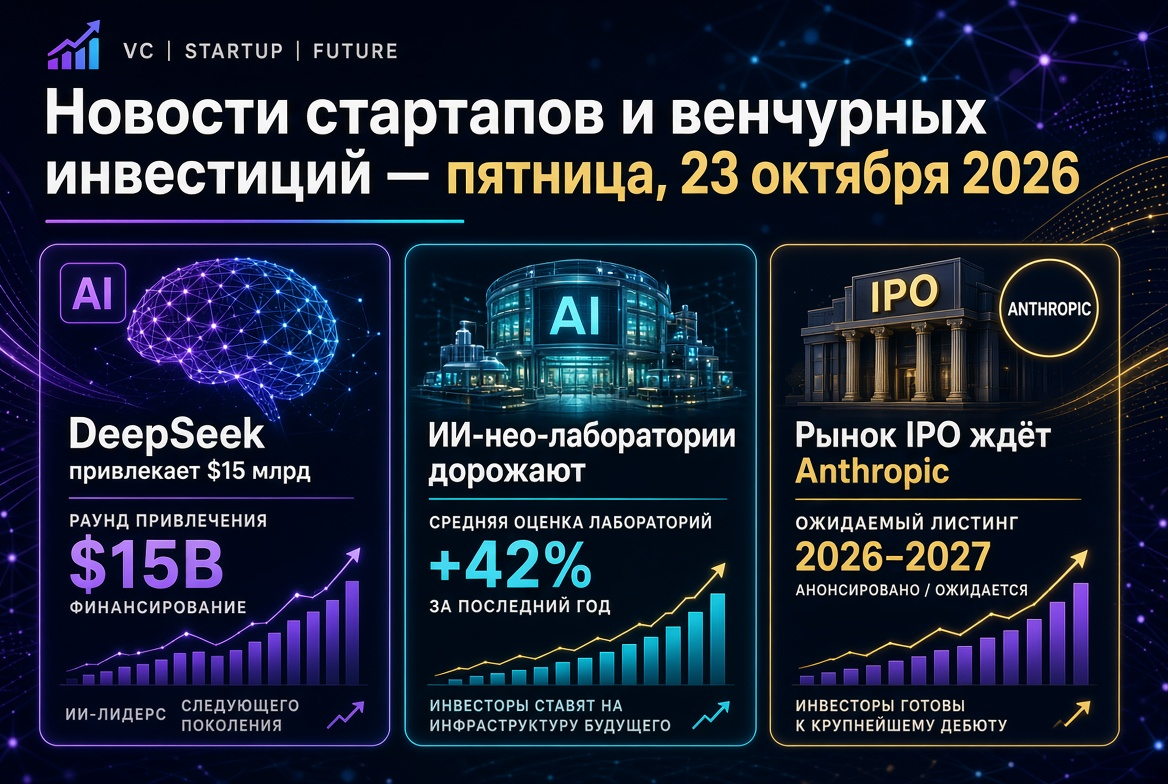
The artificial intelligence sector remains the main driver of the current venture upturn, showcasing record levels of funding. Investors are eager to secure positions among the AI race leaders, directing colossal amounts of money into the most promising projects. For instance, Elon Musk's startup xAI recently raised an unprecedented $20 billion in investments (with Nvidia as a key investor) for the massive expansion of data centers and acceleration of AI developments. Furthermore, OpenAI is negotiating an even larger round—discussing the raising of up to $50 billion at a valuation of around $750-800 billion, underscoring the excitement surrounding industry leaders. Notably, venture investments are being directed not only toward end-user AI applications but also towards the infrastructure supporting them: the market is ready to bankroll even the "shovels and pickaxes" of the new AI ecosystem—from specialized chips to cloud platforms for model training.
The current investment boom is birthing a wave of new "unicorns"—startups valued over $1 billion. In recent weeks, several companies have rapidly achieved this status. For example, the American startup Higgsfield, which develops AI-based video generation, has become a "unicorn," raising about $80 million at a valuation exceeding $1.3 billion (just a year after launching sales). Meanwhile, the Belgian company Aikido Security, specializing in cybersecurity, achieved a $1 billion valuation while attracting only $60 million in a Series B round—an unprecedentedly quick journey to "unicorn" status for Europe. While experts are warning of the risks of market overheating, investor appetite for AI startups remains strong.
The IPO Market Comes Alive: SpaceX Prepares for Record Listing
The global market for initial public offerings (IPOs) is emerging from a lull and gaining traction. In Asia, Hong Kong has launched a new wave of IPOs: several major tech companies have gone public in recent months, raising billions of dollars collectively. For example, the Chinese battery giant CATL successfully raised ~$5 billion in its listing, demonstrating that investors in the region are once again ready to actively participate in IPOs.
The situation is also improving in the US and Europe. The American fintech "unicorn" Chime debuted on the stock exchange, and its shares surged approximately 30% on the first day of trading. Soon after, design platform Figma conducted an IPO, attracting around $1.2 billion at a valuation of approximately $15-20 billion; its shares also rose confidently in the early trading days. In the second half of 2025, other well-known startups—including payment service Stripe—also prepared for public market exits, filing for listings. Even the crypto industry decided to benefit from the revival: fintech company Circle successfully went public last summer (its shares then soared), while cryptocurrency exchange Bullish filed for a listing in the US with a target valuation of around $4 billion.
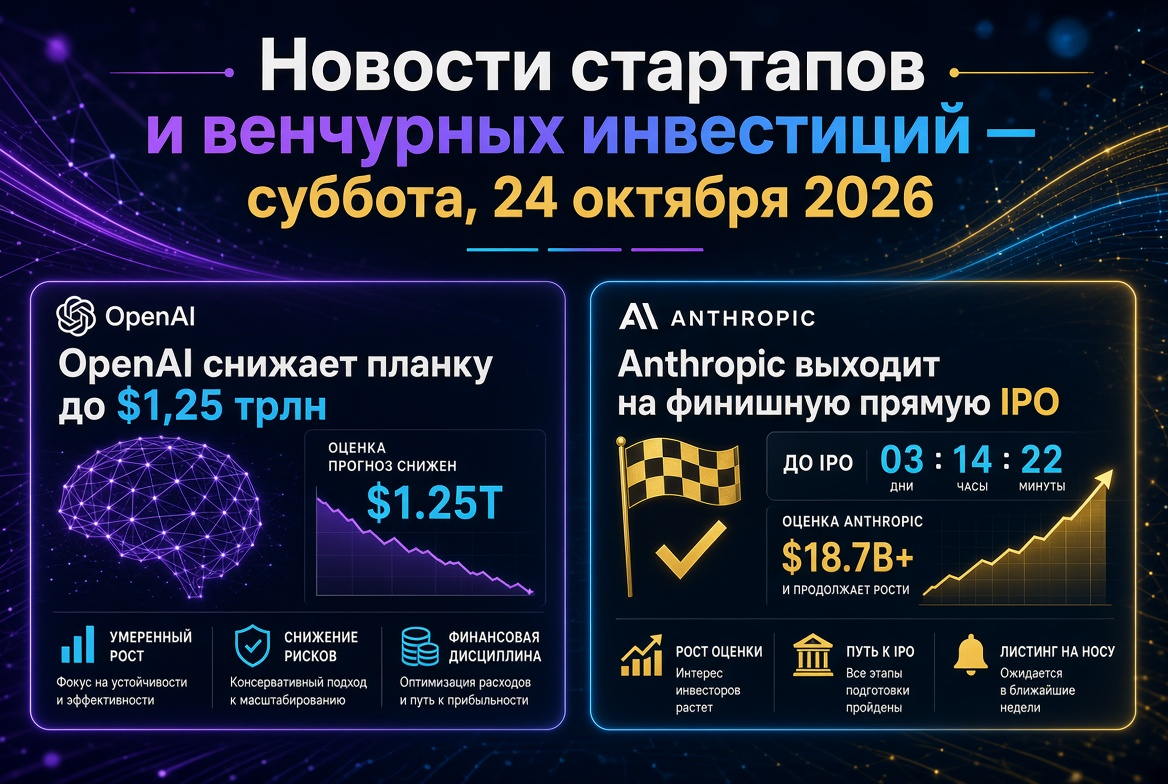
Now, potentially the largest IPO in history is on the horizon: Elon Musk's space company SpaceX is planning a public debut in mid-2026, aiming to raise up to $50 billion at a valuation of around $1.5 trillion. This amount is nearly double the previous world record (Saudi Aramco raised ~$29 billion in 2019) and could make SpaceX's listing the largest ever. Leading Wall Street banks are already discussing participation in this mega deal. There are also rumors that AI giants—such as Anthropic or even OpenAI itself—are beginning to prepare for potential IPOs in the future. The resurgence of activity in the IPO market is crucial for the venture ecosystem: successful public exits enable funds to realise profitable exits and redirect freed capital into new projects, thereby closing the startup investment cycle.
Diversification of Investments: Beyond Just AI
In 2026, venture investments are covering an increasingly broad range of sectors and are no longer limited to just AI. Following last year's downturn, fintech is experiencing a revival: large funding rounds are occurring not only in the US but also in Europe and emerging markets, fueling the growth of promising financial technology services. Concurrently, interest in climate and "green" technologies is strengthening—projects in clean energy, agrotech, and ecology are attracting record investments amidst a global trend toward sustainable development. The appetite for biotechnology and digital health is also returning: new medical developments and online platforms are once again attracting capital as valuations in this sector recover. In addition, as security concerns have increased, investors are actively supporting defense and aerospace startups, and a partial restoration of trust in the cryptocurrency market has allowed some blockchain startups to secure funding again. As a result, venture capital is diversifying across sectors, directing funds into a variety of niches:
- Fintech: Revival of activity and large deals in financial technologies globally.
- Climate and Environmental Technologies: Record investments in green energy, agrotech, and other climate projects.
- Biotech and Health: New influx of investments in biotechnology, medtech, and digital health amid scientific breakthroughs.
- Defense Technologies: Increase in funding for startups in security, defense, space, and cybersecurity.
- Crypto Startups: Renewed interest in blockchain projects and cryptocurrency-based fintech as trust strengthens.
The expansion of sector focus suggests that in 2026, the venture market aims to encompass a wider range of innovations, and investors are seeking new growth points beyond a single dominating theme.
Consolidation and M&A: Scaling Up Players
High valuations of startups and fierce competition for markets are pushing the industry towards consolidation. Significant mergers and acquisitions (M&A) are once again taking center stage, reshaping the balance of power. For example, Google has agreed to acquire the Israeli cybersecurity startup Wiz for approximately $32 billion—a record sum for the Israeli tech sector. Such mega-deals demonstrate tech giants' eagerness to acquire key technologies and talent.
Overall, the current activity in acquisitions and significant strategic investments indicates market maturation. Mature startups are increasingly merging with each other or becoming targets for acquisition by corporations, while venture investors are finally obtaining opportunities for long-awaited profitable exits. The wave of consolidation is reshaping the industry landscape, allowing high-growth companies to scale under the wing of larger players and enhancing exits for funds.
Russia and CIS: Local Initiatives Amid Global Trends
Despite external restrictions, startup activity is reviving in Russia and neighboring countries against the backdrop of overall global trends. Specifically, several new venture funds totaling around 10-12 billion rubles have been announced, aimed at supporting early-stage technology projects. Local startups are beginning to attract significant capital: for instance, the Krasnodar foodtech project Qummy raised about 440 million rubles at an estimated valuation of approximately 2.4 billion rubles, while the company Motorica, which develops modern rehabilitation tools, secured over 800 million rubles in investments from a private investor (the largest deal of 2024 in Russia). Additionally, at the end of 2025, Russia once again allowed foreign investors to invest in domestic startups, gradually rekindling interest from overseas capital.
Although the volumes of venture investments in the region are still modest compared to global levels, they are gradually increasing. Some large companies are contemplating public offerings of their technology divisions as market conditions improve; VK Tech, for instance, recently publicly indicated the possibility of an IPO in the foreseeable future. New government support measures and corporate initiatives are aimed at giving additional momentum to the local startup ecosystem and integrating it into global trends.
Cautious Optimism and Quality Growth
Overall, the current sentiment in the venture market is moderately optimistic: successful IPOs and major deals indicate that the period of decline is behind, although investors remain selective and prefer startups with sustainable business models. Strong capital inflows into AI and other sectors instill confidence, but funds are striving to diversify investments and more strictly control risks to ensure that the new upswing does not lead to overheating. Ultimately, the industry is entering a new phase of development with a focus on quality, balanced growth.